Top picks in Mississippi Gulf Coast
The places most worth your time here.
Connect your Cour circle to see which places friends and family recommend here.
Connect Cour →Landmarks
118 places worth the detour
Includes 4 ghost landmarks— places that existed here and don’t anymore
tap the eye to open · swipe or use buttons to browse
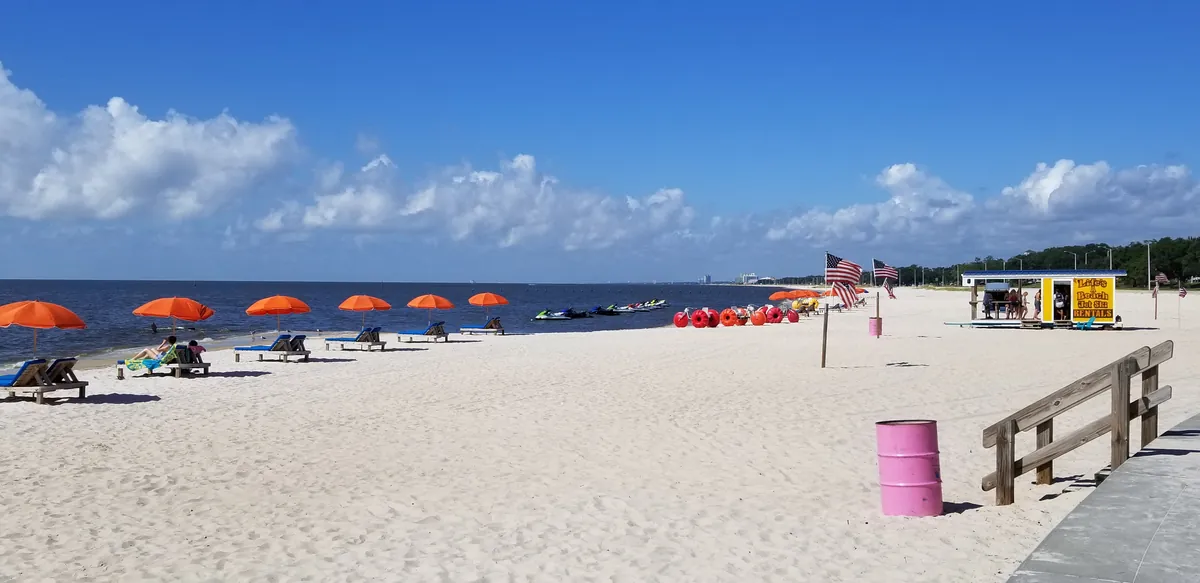
The Mississippi Gulf Coast sits at the northern rim of the Gulf of Mexico, where the Mississippi Sound separates a thin strand of land from the open water. This is not dramatic geography — no bluffs,…
Read the full storyOn the map
Tours
The first permanent European settlement in the Mississippi Valley was not New Orleans — it was here, on the north shore of Biloxi Bay, in 1699. This trip traces three centuries of colonial layering from the French fort site at Ocean Springs through the Spanish fort at Pascagoula, past the lighthouse that has survived every hurricane since 1848, to the home where the president of the defeated Confederacy wrote his memoirs.
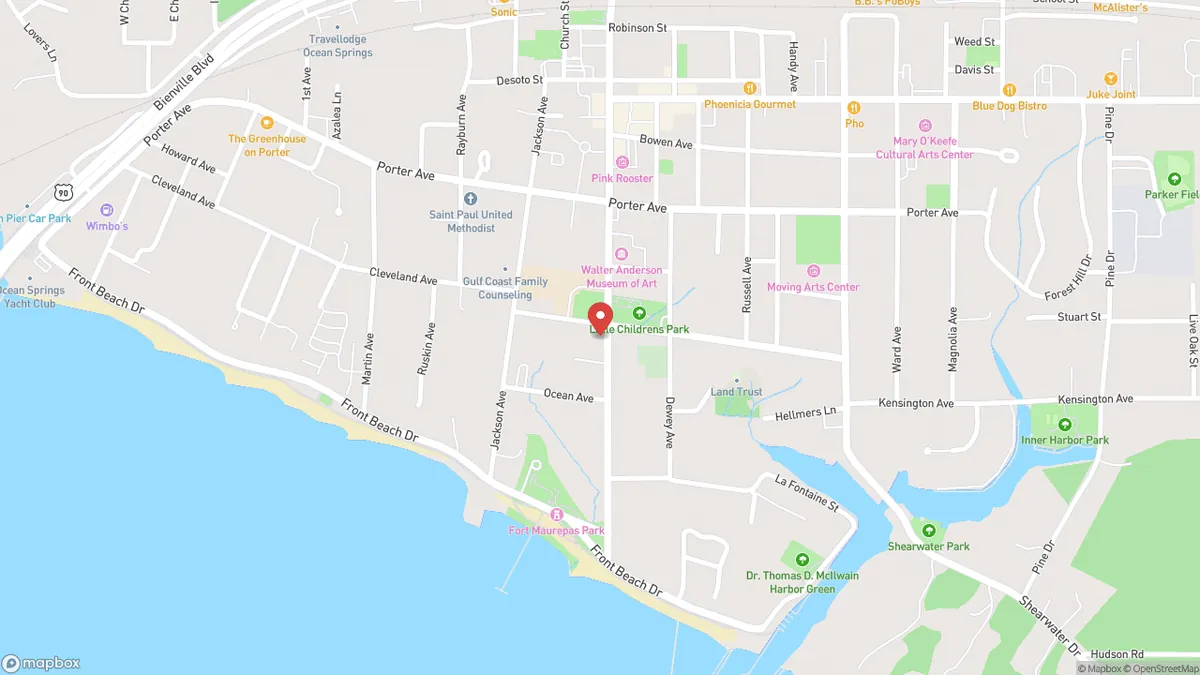
Walter Anderson painted Horn Island in secret for decades. George Ohr threw pots so radical the art world didn't catch up for 70 years. Louis Sullivan designed winter cottages here that changed American architecture. Ocean Springs became an artist colony not because someone planned it, but because the light and the water kept attracting people who could see.
In 1959, Dr. Gilbert Mason led Black residents into the whites-only surf of Biloxi Beach — wade-ins that ran parallel to the national sit-in movement and were met with gunfire. This trip follows the civil rights story the coast doesn't advertise: the doctor's office, the juke joint that hosted damn near every Black act barred from white venues, the freedmen's community that survived 160 years, and the Pulitzer poet who wrote the reckoning.
The eye of Katrina crossed the coast at Waveland with a 28-foot storm surge. Camille hit Pass Christian in 1969 with 200 mph winds. This trip drives through the geography of both storms — from the museum built inside Ground Zero to the pier that was rebuilt, the mansions that weren't, the lighthouse that bent but didn't break, and the 500-year-old oak that survived them all.

Natasha Trethewey watched the Klan burn a cross on her mother's lawn in Gulfport and became U.S. Poet Laureate. Jesmyn Ward wrote the hurricane into American literature from DeLisle. Grisham set a novel on Biloxi's Vieux Marché. Neil Simon trained at Keesler and turned it into a Broadway play. Jimmy Buffett grew up in Pascagoula before he found the beach he was looking for. Sixty miles of shoreline, five very different stories.
The western end of the coast is where artists moved in after Katrina cleared the real estate and the creative class replaced what the storm took. Bay St. Louis has the galleries, the folk art museum, and the juke joint that Ray Charles played. Waveland has Ground Zero and the state park. Between them, INFINITY Science Center has a Saturn V rocket that was never launched — the most powerful rocket ever built, sitting in a pine forest by the highway.
Reading
Fort Maurepas stood here in 1699 — the oldest settlement on the Mississippi Gulf Coast, a toehold that became, two centuries later, something France never intended: a haven for artists. The Anderson family arrived in the early 1900s and made it an art colony. Louis Sullivan, father of the skyscraper, built vacation cottages here. Peter Anderson founded Shearwater Pottery in 1928; three generations of the family have hand-thrown every piece since, and the showroom at the end of Shearwater Drive remains the only place in the world to buy their work. His brother Walter rowed alone to Horn Island — 12 miles offshore — to paint birds, waves, and storms that no one else saw. When Walter died in 1965, his family found a locked cottage, walls and ceiling covered in murals he made for no audience. You can stand in that room. It is still there.
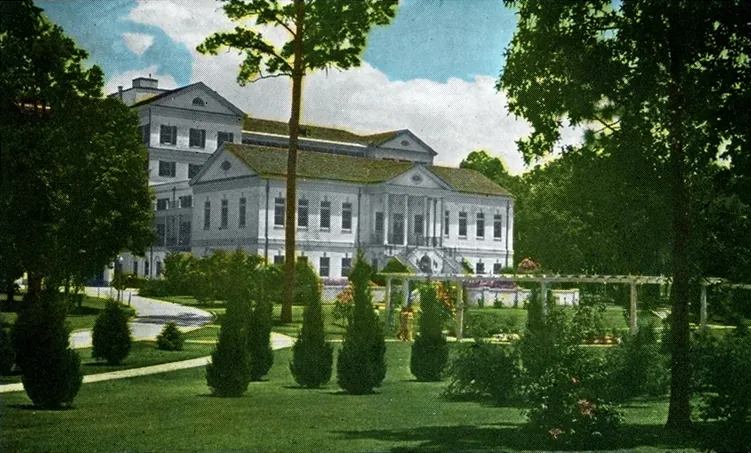
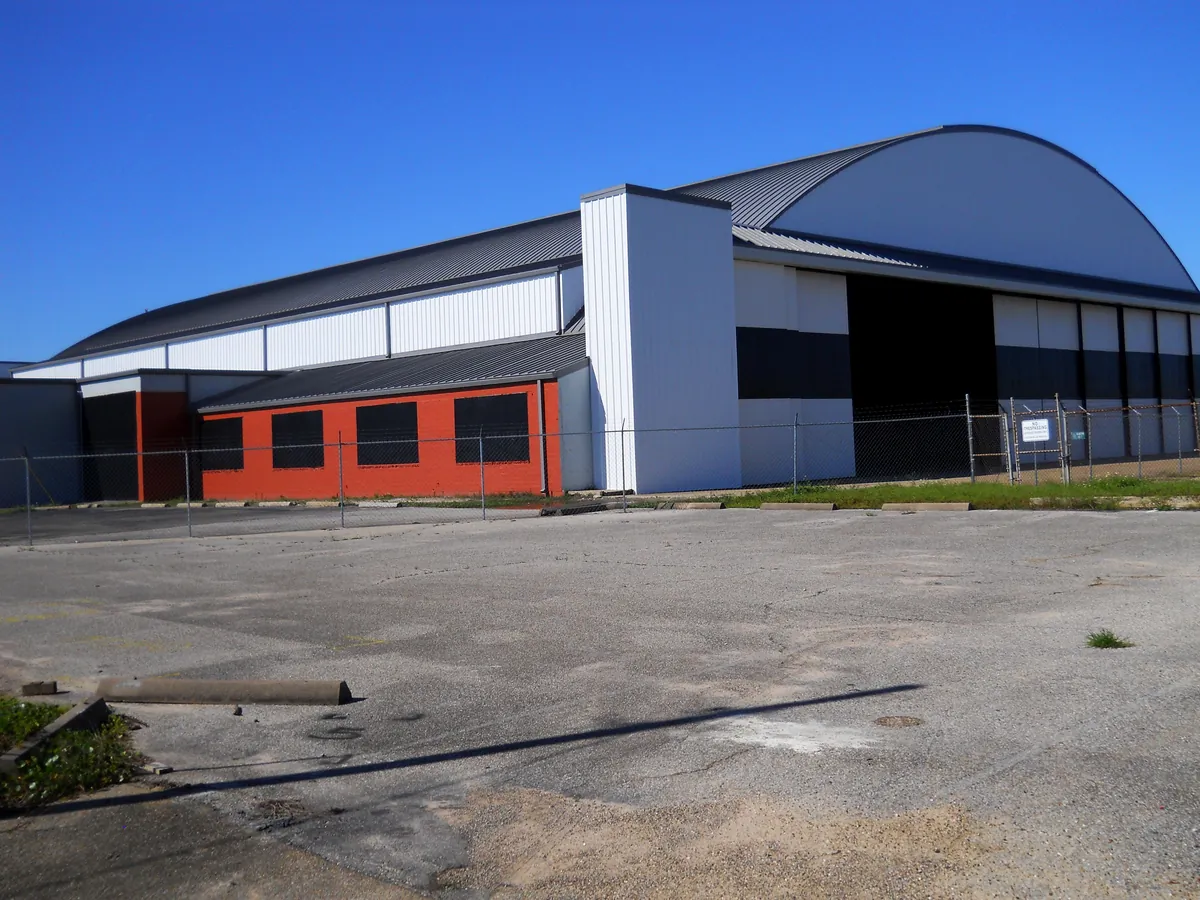
Robert Ingalls built a shipyard on the Pascagoula River in 1938 and turned a fishing village into an industrial city within a decade. That pattern — federal investment reshaping a coast that had held just 2.5 percent of Mississippi's population at statehood — runs the length of the shoreline. Keesler Air Force Base opened in Biloxi in 1941. The federal government had already put up a VA hospital on Veterans Avenue in 1932, adjacent to what Keesler would become, and another on Beach Boulevard in Gulfport on the grounds of a WWI Naval Training Station. A B-29 training hangar went up in Gulfport in 1944. Katrina flooded the VA campuses, damaged ships under construction at Ingalls, and destroyed most of Beach Boulevard. The cranes at Ingalls survived. The Colonial Revival hospital buildings in Biloxi survived. The coast rebuilt. What the military built here, it largely kept.
On May 14, 1959 — a year before the Greensboro sit-ins — Dr. Gilbert Mason walked into the Gulf of Mexico off Biloxi and was ordered out. The 26-mile beach had been built with federal taxpayer money in 1953; adjacent homeowners claimed the sand as private property. Mason came back. On April 24, 1960, a white mob attacked 125 demonstrators with chains, pipes, and guns. Police arrested the protesters, not the attackers. The wade-ins continued through 1963 while national cameras pointed elsewhere. The Justice Department sued the city in May 1960; the case moved through courts for eight years. In 1968, the Fifth Circuit ruled the beach public, and every inch of it opened. Mason ran his medical practice on Division Street through all of it. That building still stands. So does the beach.
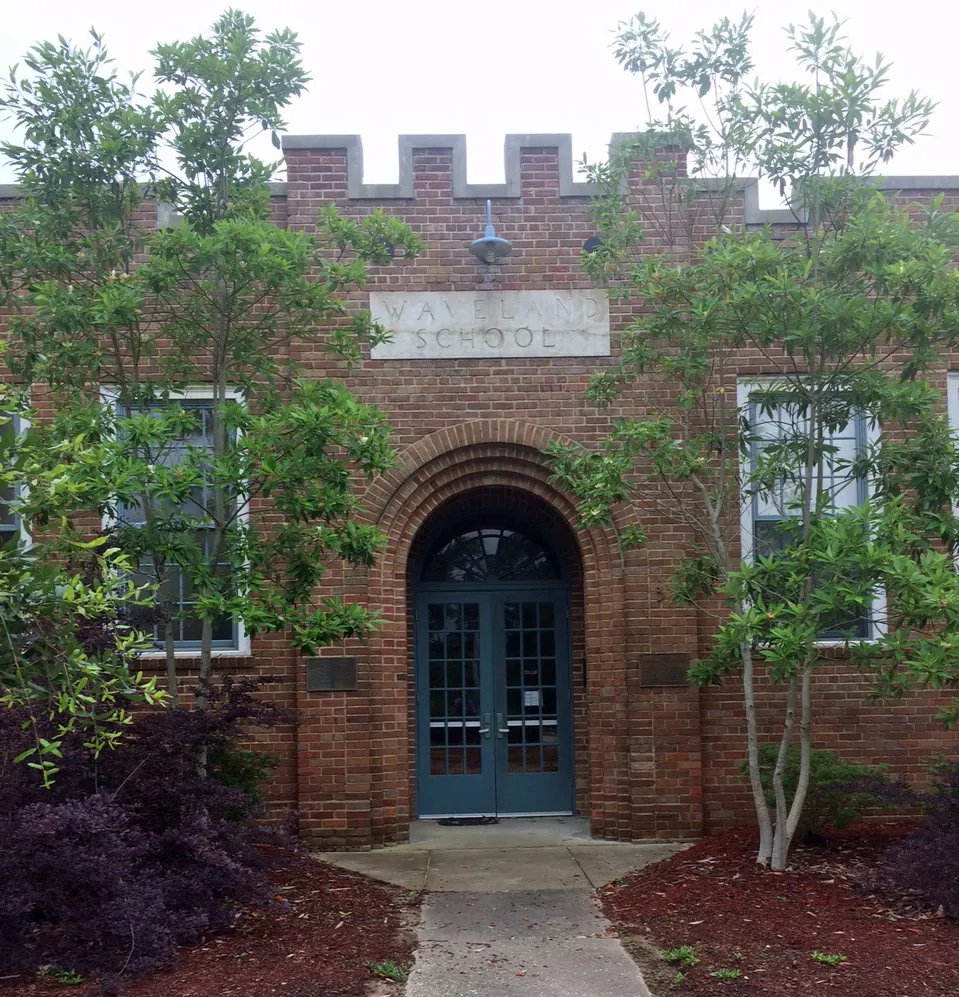
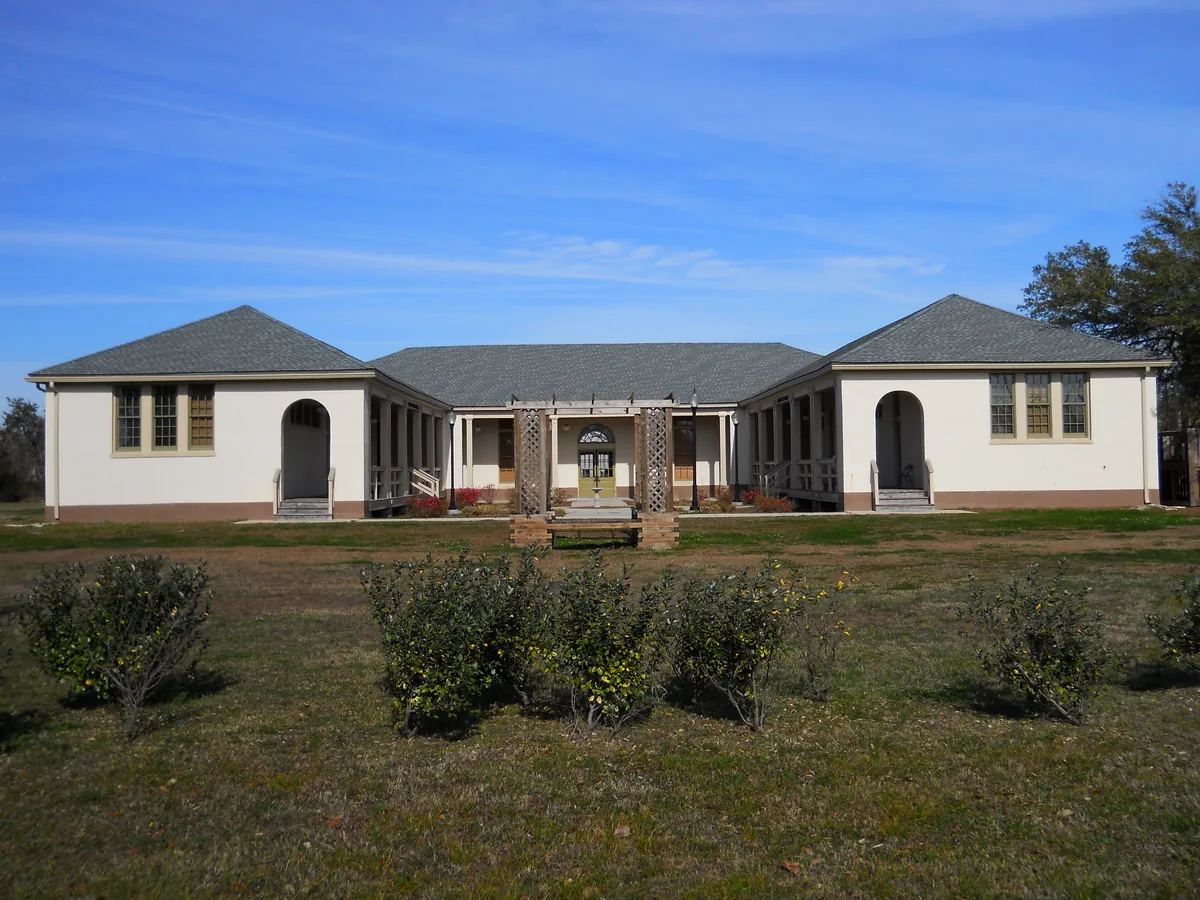
The Mississippi Gulf Coast doesn't just survive storms — it watches the ground itself disappear. A lighthouse built in 1859 on Round Island stood in open water for decades after the island eroded away; it was rescued and moved to the Pascagoula waterfront in 2010. Twelve miles off Biloxi, the Isle of Caprice ran bootleg liquor and gambling through the 1920s, drawing tour boats full of people to a sandbar that mainland laws couldn't reach. By 1932 it was gone — erosion and a hurricane took it. NOAA marks the passes where it stood. No ruins, no marker. Then Katrina made landfall at Waveland on August 29, 2005, and 95 percent of the town went with the surge. The 1927 elementary school held. It's a museum now. The coast has always been this — land that vanishes and people who stay anyway.
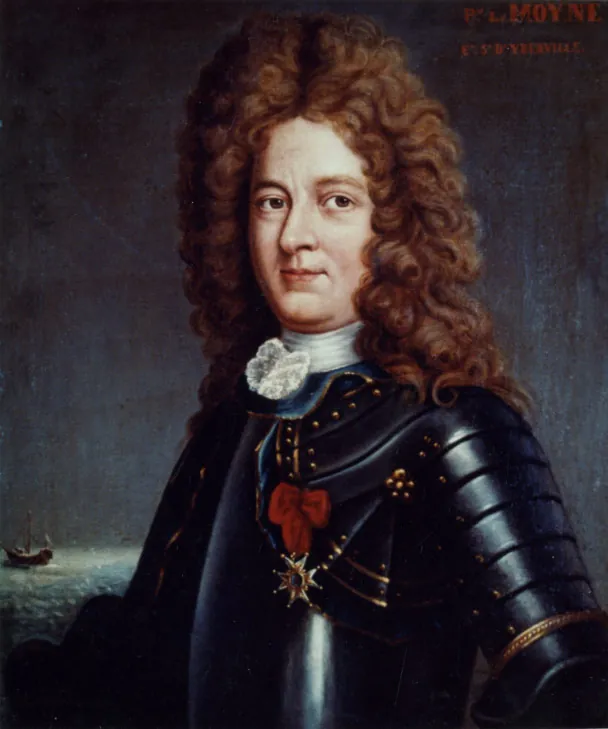
Iberville anchored at Ship Island on February 10, 1699 — twelve miles offshore, nothing on the mainland yet. Three days later his men reached the coast. By April, his commandant Jean de Sauvole had built Fort Maurepas on the north shore of Biloxi Bay: the first permanent European settlement in the Mississippi Valley, the first capital of French Louisiana. It lasted barely three years before the capital moved to Mobile. No structure remains — only a historical marker on the bluff above where it stood. What the French left behind wasn't stone; it was sequence. This coast staged the entire colonial project before New Orleans existed, before Mobile was settled, before Natchitoches was founded. The city of D'Iberville still carries the founder's name. The bay still carries the name of the Biloxi people who were here when he arrived. The fort is gone. The names stayed.
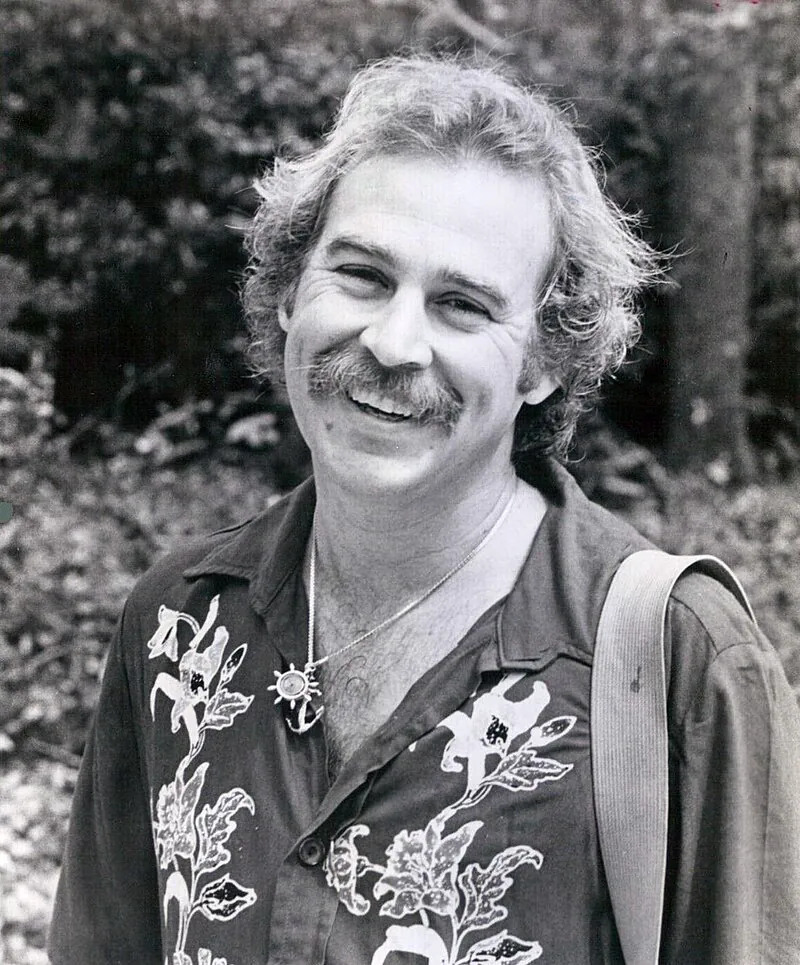
Jimmy Buffett was born in Pascagoula on Christmas Day, 1946, and grew up on the Mississippi Gulf Coast before building an empire on the idea that life should feel like a permanent beach day. The Margaritaville brand is worth billions, but the sound started here — Gulf water, shrimp boats, and a kid who wanted out but never forgot where he came from. His childhood home is a private residence in the Pascagoula area and is not open to visitors, but the coast he grew up on is still the coast he sang about. Buffett died in September 2023 at age 76. No formal museum or marker exists at the birthplace, though his influence runs through every beach bar and marina from here to Key West.
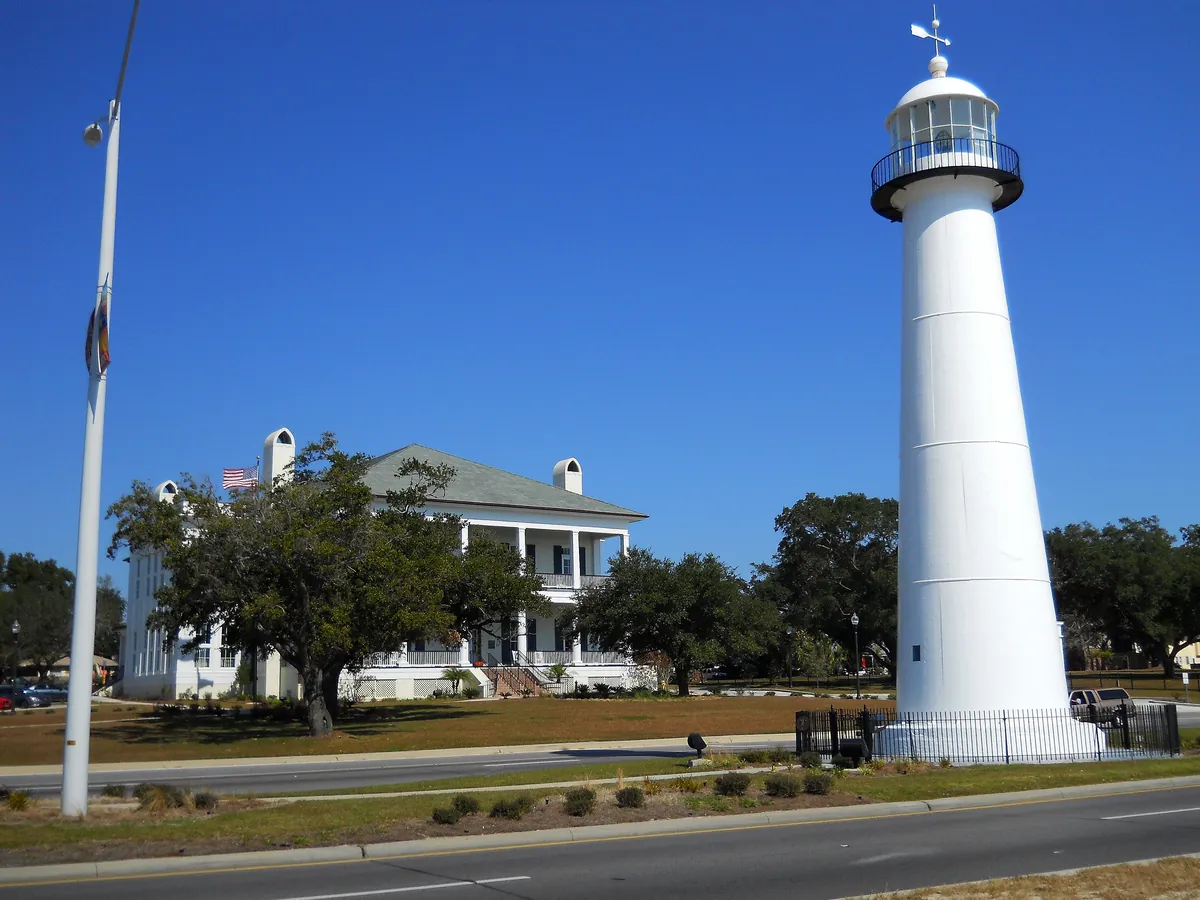
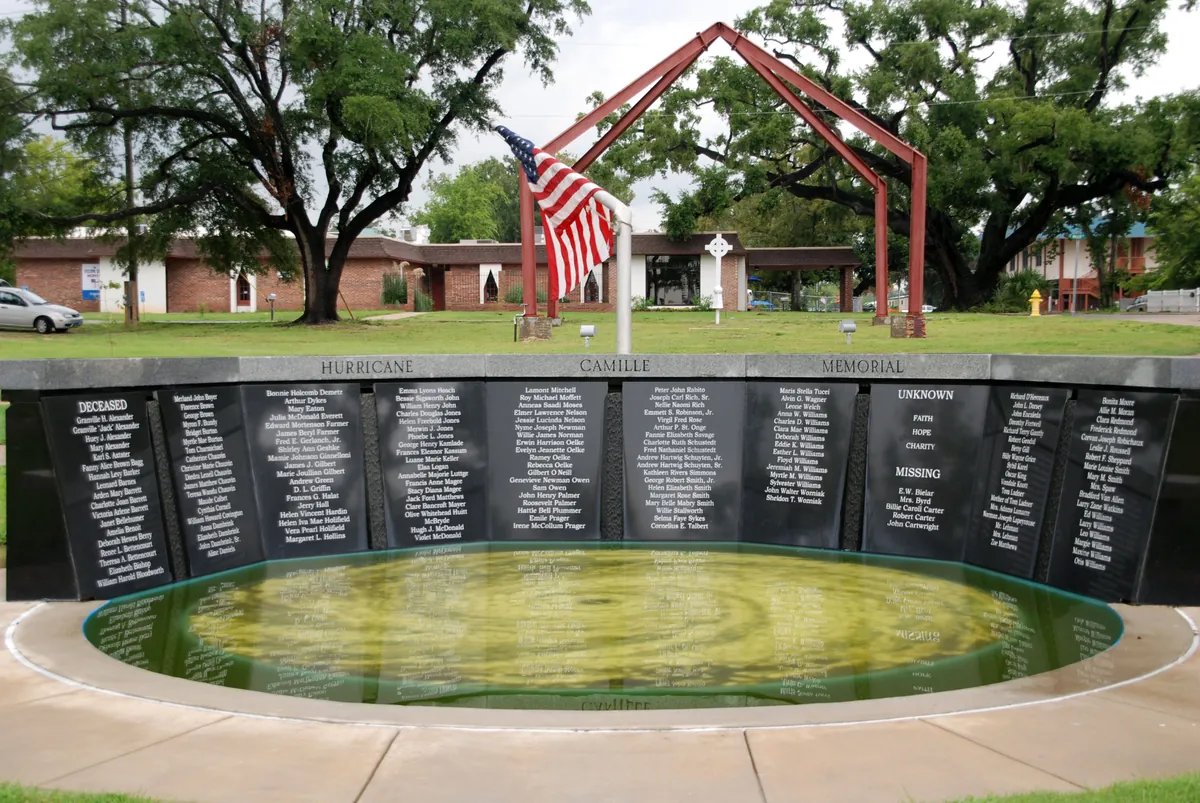
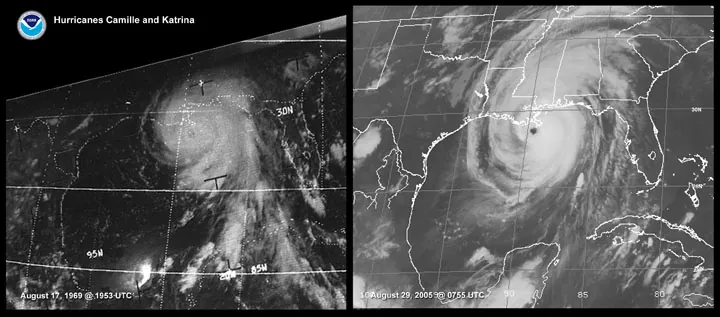
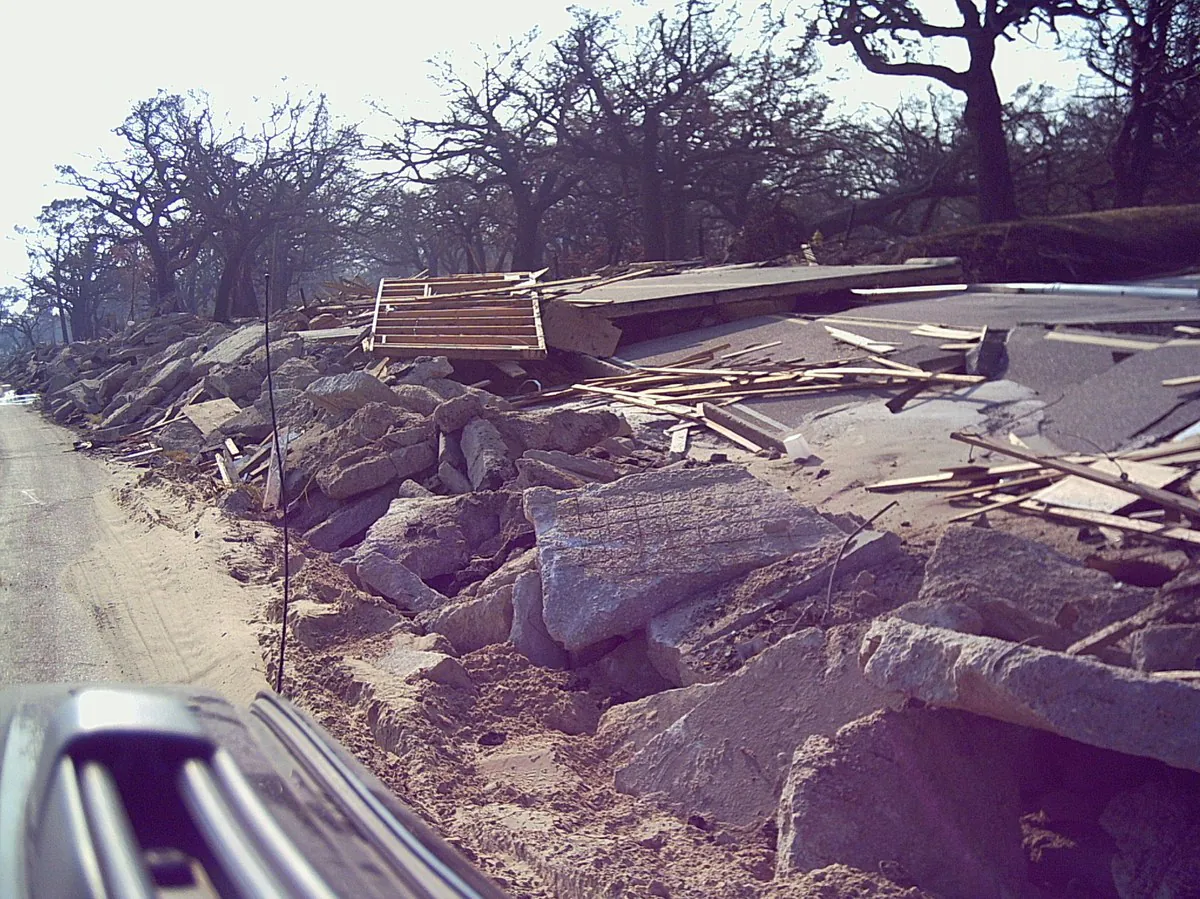
Hurricane Camille made landfall at Pass Christian on August 17, 1969, with sustained winds near 190 mph — the second-strongest hurricane ever to hit the U.S. mainland at the time. It killed 143 people on the Mississippi coast and obliterated nearly every structure within a half-mile of the beach. The Richelieu Apartments in Pass Christian became a national symbol of misplaced confidence: two dozen people threw a hurricane party on the top floor. None survived. Thirty-six years later, Katrina's 28-foot storm surge did it again — wiping the same coastline clean from Waveland to Pascagoula. Entire neighborhoods vanished. The Biloxi lighthouse, built in 1848, was one of the only structures left standing on the beachfront. Both storms revealed the same truth: this coast sits at the edge of the buildable world, and the people who live here know it. They rebuild anyway. The post-Katrina coast is newer than most visitors expect — nearly every beachfront building dates to 2006 or later. That newness is itself a monument to what was lost.
On April 24, 1960, over a hundred Black residents walked onto the whites-only sand beach in Biloxi and waded into the Mississippi Sound. What followed was one of the most violent episodes of the civil rights era on the Gulf Coast — a mob armed with chains, pipes, and guns attacked the demonstrators. At least ten people were shot. Dr. Gilbert Mason, a Biloxi physician, had organized the action after being arrested for swimming at the beach in 1959. He kept coming back. The wade-ins continued through 1963, years before the national media paid attention. The beaches were eventually desegregated, but the story never gained the recognition of Greensboro or Birmingham. A memorial on the Biloxi beachfront now marks the site, but Mason's campaign remains one of the least-known major civil rights actions in American history. The beach you walk on today was integrated by people who bled for the right to stand in the water.
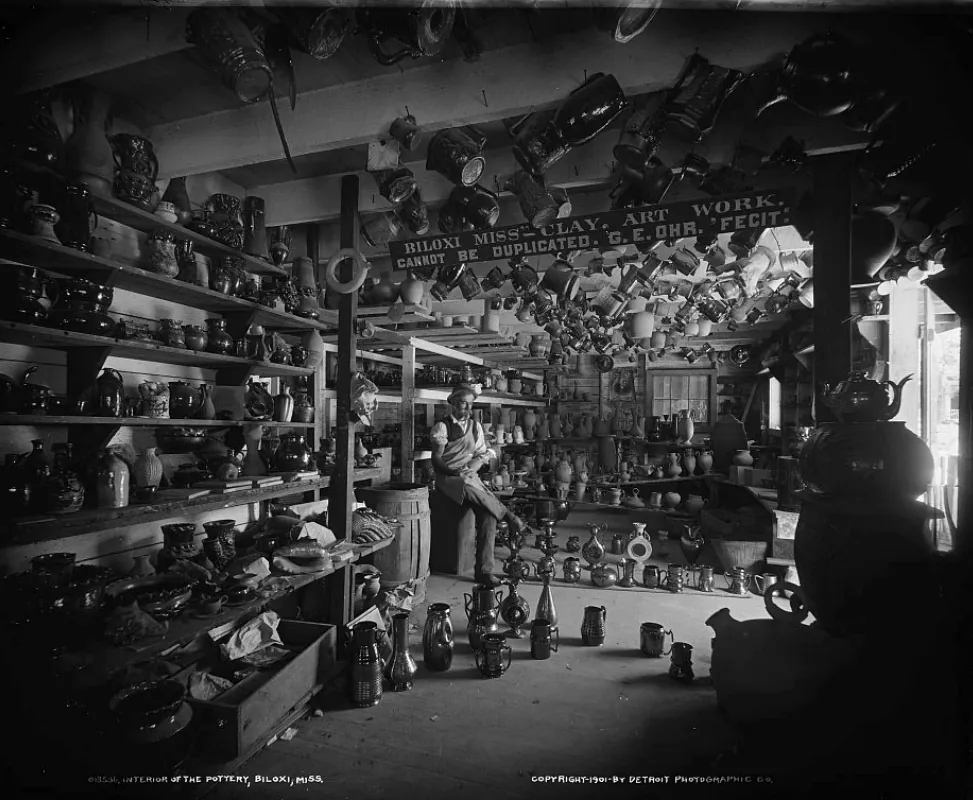
George Ohr threw pots in Biloxi from the 1880s until a fire destroyed his studio in 1894. He rebuilt and kept working. His pieces were impossibly thin, asymmetrical, crumpled, and glazed in colors no one else was using — decades before the art world had a name for what he was doing. He called himself the greatest potter in the world. Nobody bought the work. He stored thousands of pieces in his sons' auto repair shop and told his family not to sell them until the world caught up. It took until the 1970s. A New Jersey antiques dealer found the cache — roughly 6,000 pieces — and the art market finally agreed with Ohr's self-assessment. Single pieces now sell for six figures. The Ohr-O'Keefe Museum of Art in Biloxi, designed by Frank Gehry, houses the permanent collection in a building as deliberately unconventional as the pottery inside it. Ohr died in 1918, fifty years too early to see himself proven right.
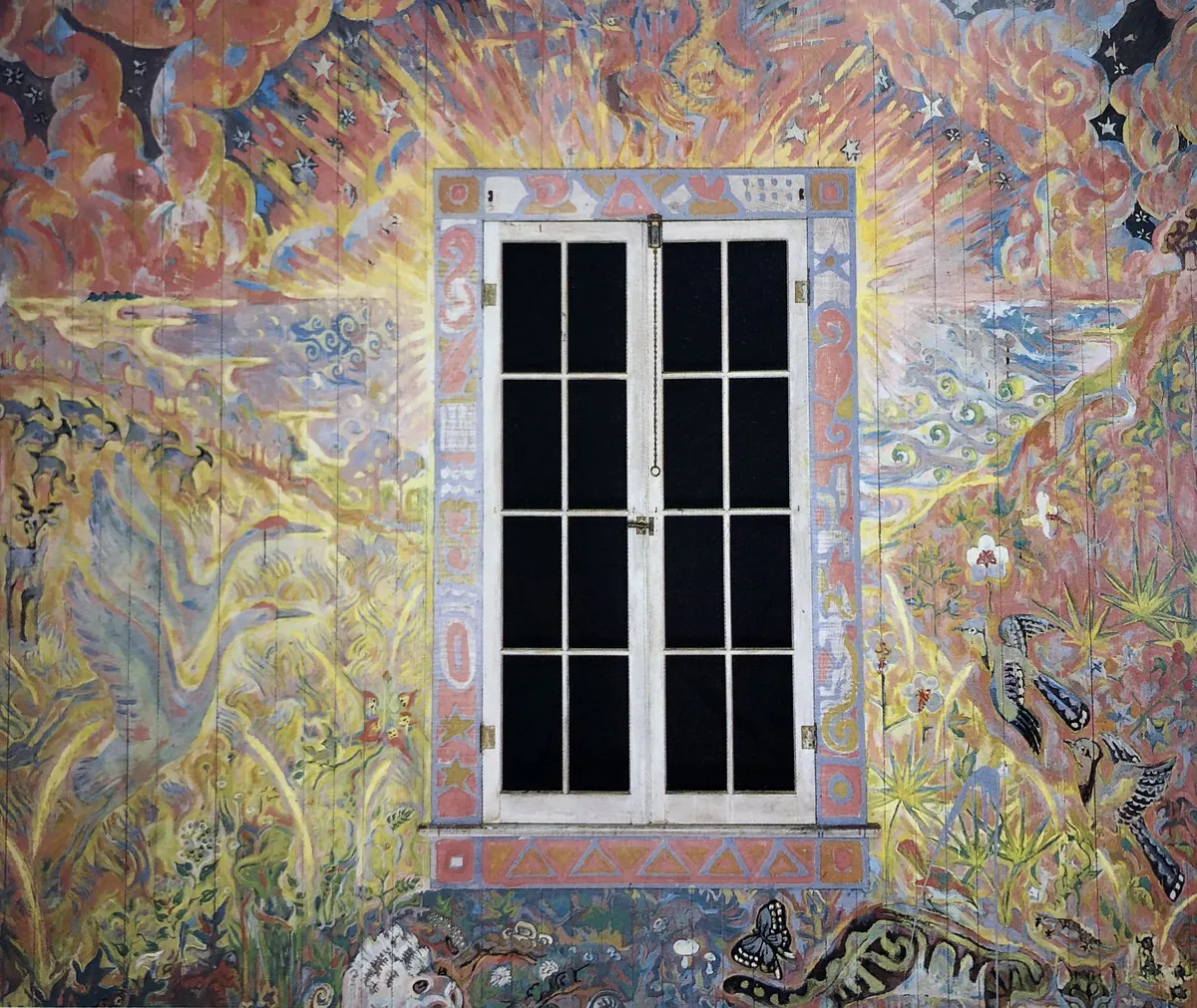
Walter Inglis Anderson spent years rowing a small boat alone to Horn Island, twelve miles offshore in the Mississippi Sound, to paint the birds, waves, and light he found there. He slept on the sand, ate what he caught, and filled journals with watercolors of an intensity that shocked the people who found them after his death in 1965. But the real discovery came later. His family opened a locked room in the Ocean Springs cottage where he had lived and found the walls and ceiling covered floor to ceiling with murals — a private cosmos of herons, shrimp boats, pelicans, and coastal storms that he had painted for no audience at all. The room is now preserved at the Walter Anderson Museum of Art in Ocean Springs. You can stand inside it. Anderson also painted the vast community center murals in Ocean Springs — 3,000 square feet of Gulf Coast life rendered by a man who preferred the company of egrets to people. His Horn Island journals, published posthumously, are among the most remarkable nature writings produced in the American South.
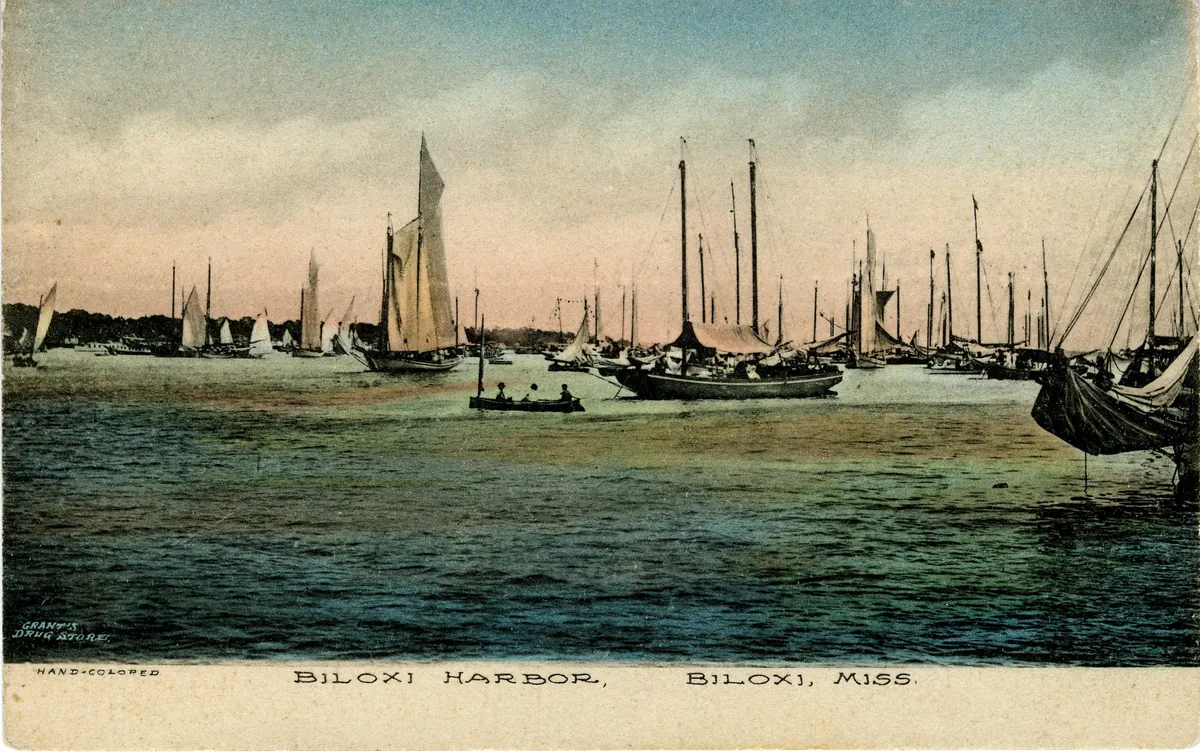
The Mississippi Gulf Coast was once the shrimping capital of the world. Biloxi alone processed more shrimp than any city on earth through the mid-twentieth century — the factories lined the back bay, and the smell of boiling shellfish carried for miles. The industry drew waves of immigrant labor: Slavic, Vietnamese, Cajun, and Central American workers who shaped the coast's food culture as much as any planter or politician. The Blessing of the Fleet, held each spring, dates to the early 1900s when the local Catholic bishop began blessing the shrimp boats before the season opened. The fleet is smaller now — imports, hurricanes, and the 2010 oil spill hit hard — but working boats still tie up at the Biloxi Small Craft Harbor, and the Vietnamese shrimping community remains one of the largest on the Gulf. When you eat Gulf shrimp on this coast, you're eating the remnant of an industry that built half the towns you're driving through.
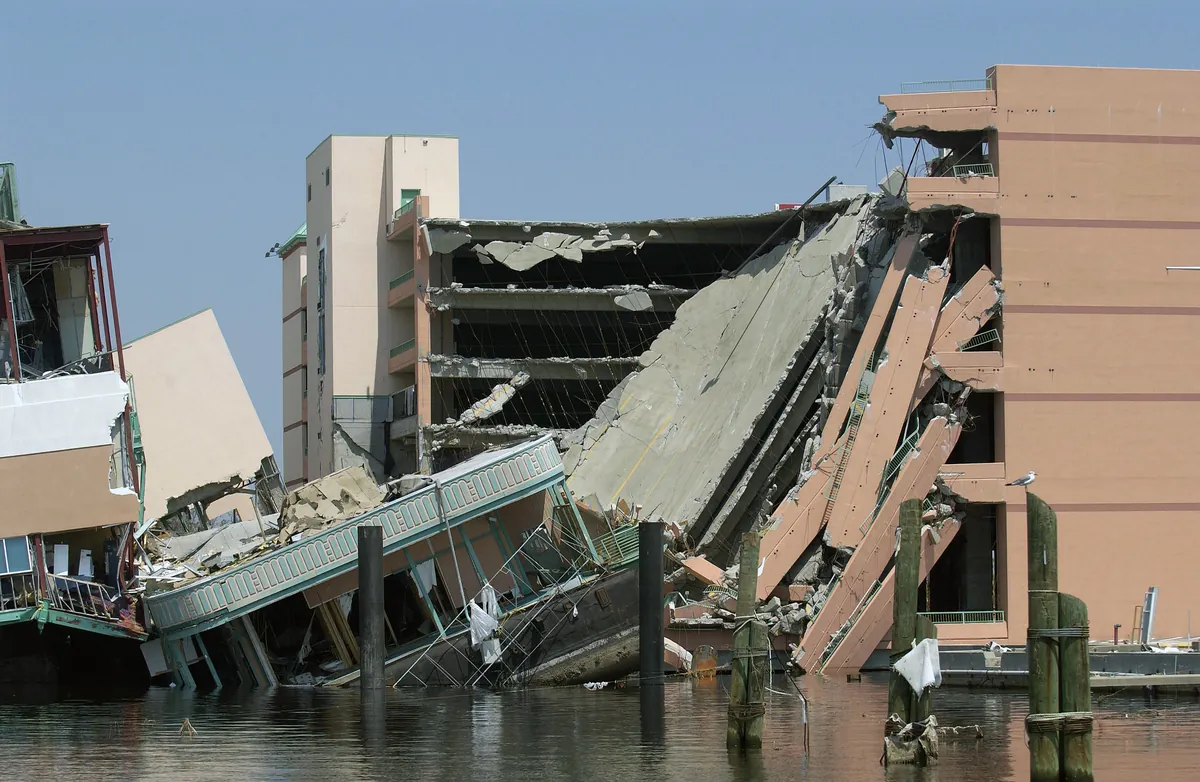
Mississippi legalized dockside casino gambling in 1990, and the Gulf Coast transformed almost overnight. The catch was that casinos had to float — they were technically vessels on navigable water, built on barges in the back bays and harbors of Biloxi and Gulfport. By 2005, gaming revenue on the Mississippi coast rivaled Atlantic City. Then Katrina pushed the casino barges inland — one landed on top of a Holiday Inn. The state legislature responded by allowing casinos to build on land within 800 feet of the waterline. The result is the beachfront you see today: a row of massive resort casinos that replaced the modest motels and seafood joints that Camille and Katrina had already erased. The casinos are the coast's largest employers and its most visible architecture. Whether that trade was worth it depends on who you ask — but there is no understanding the modern Mississippi Gulf Coast without understanding that gambling money rebuilt it.
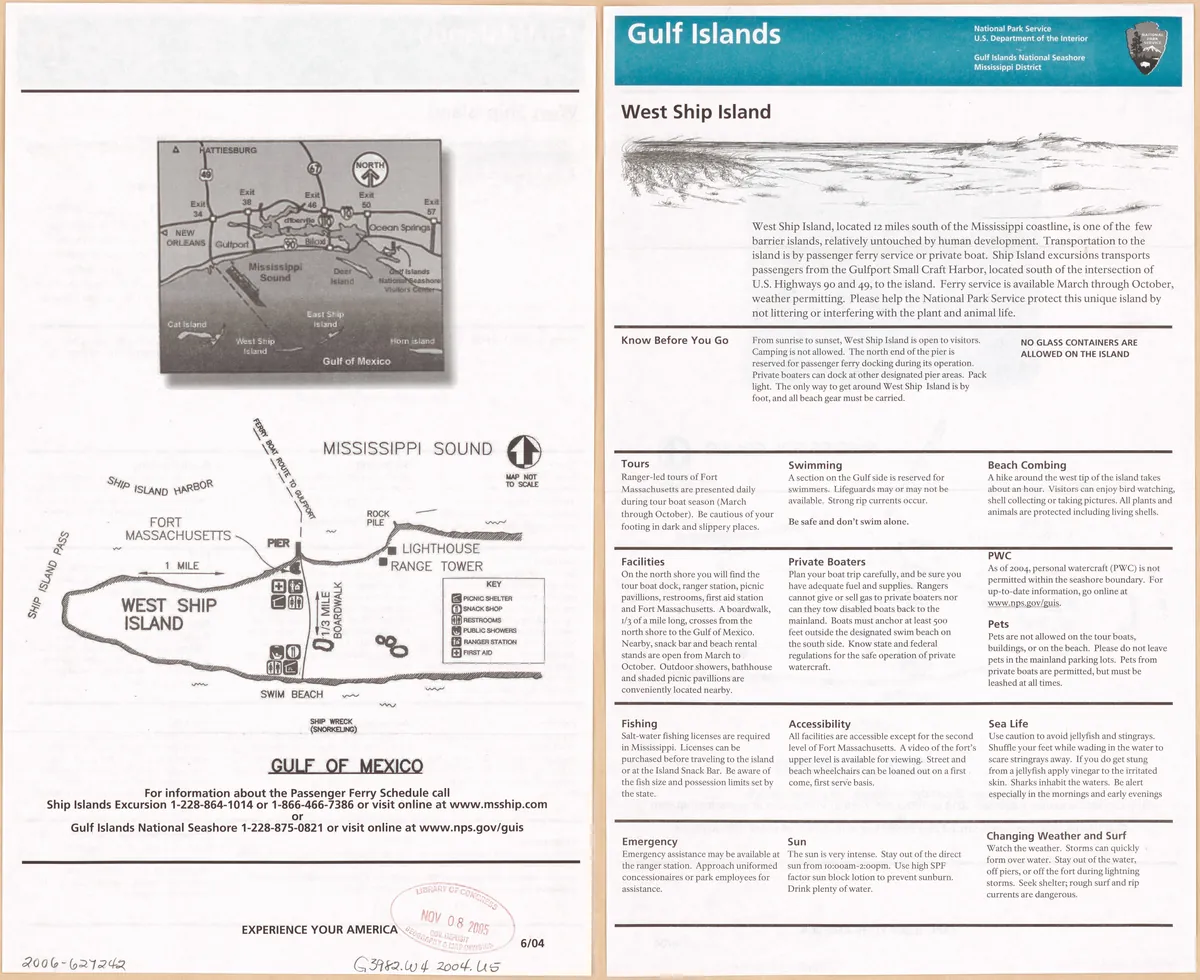
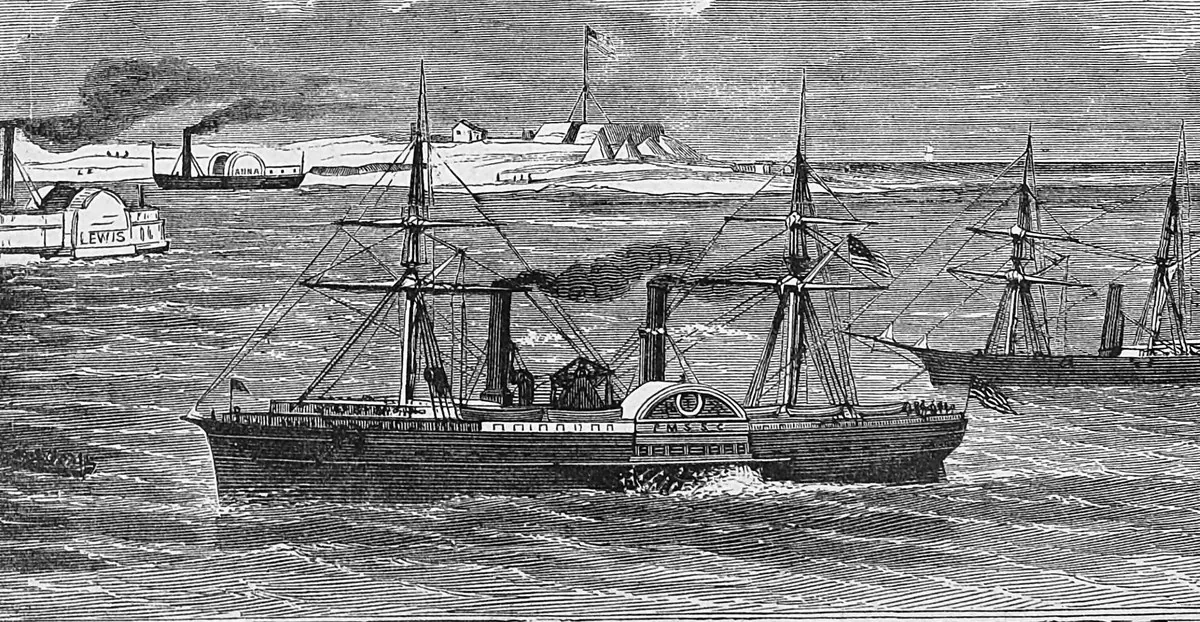
Ship Island sits twelve miles off the coast of Gulfport, and for three centuries it has been the front door to the Mississippi Gulf Coast. Iberville anchored here in 1699 before founding the first French settlement on the mainland. Fort Massachusetts was built on the island in the 1850s and held by the Union throughout the Civil War — one of the staging points for the capture of New Orleans. Confederate prisoners of war were held here. The island was a quarantine station for yellow fever ships. Camille split it in two in 1969, creating a gap that the Army Corps of Engineers finally closed with a massive sand restoration in 2023. Today Ship Island is part of the Gulf Islands National Seashore, accessible only by ferry from Gulfport. The fort is intact, the beaches are undeveloped, and the water is the clearest you will find on the Mississippi coast. Every layer of Gulf Coast history touched this island, and it looks almost exactly the way Iberville found it.
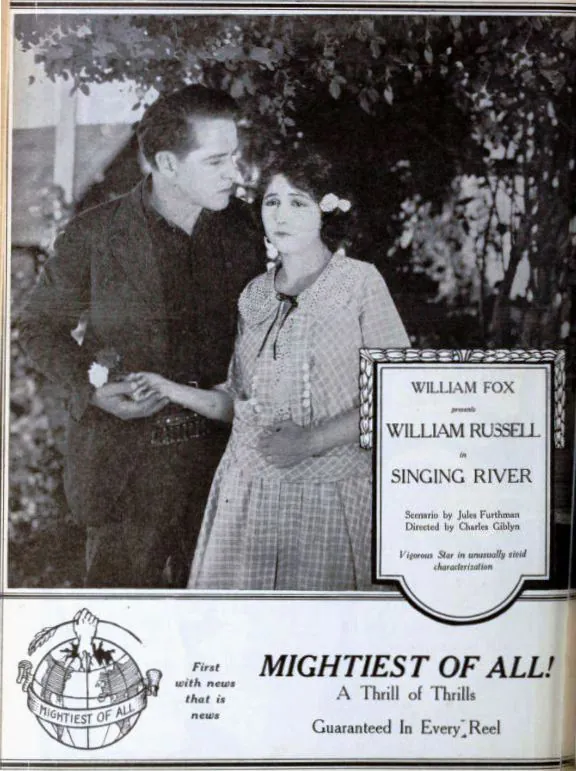
The Pascagoula River is called the Singing River because, according to a legend that predates European contact, you can hear it hum. The traditional story — passed down through multiple tellings with variations — says the Pascagoula people walked singing into the river rather than face conquest by the Biloxi nation. The sound, a low sustained hum audible on quiet summer evenings near the river's mouth, has been reported by residents and visitors for centuries. Scientists have attributed it to fish, sand friction, or gas escaping from the riverbed. No explanation has been universally accepted. The Pascagoula people themselves are largely absent from the historical record after European contact — their name survives in the river, the city, and the legend, but the nation was scattered by the pressures of colonization and war. The river remains one of only two major undammed rivers in the lower 48 states, flowing freely from its headwaters to the Mississippi Sound. On a still evening at the mouth, people still say they can hear it.
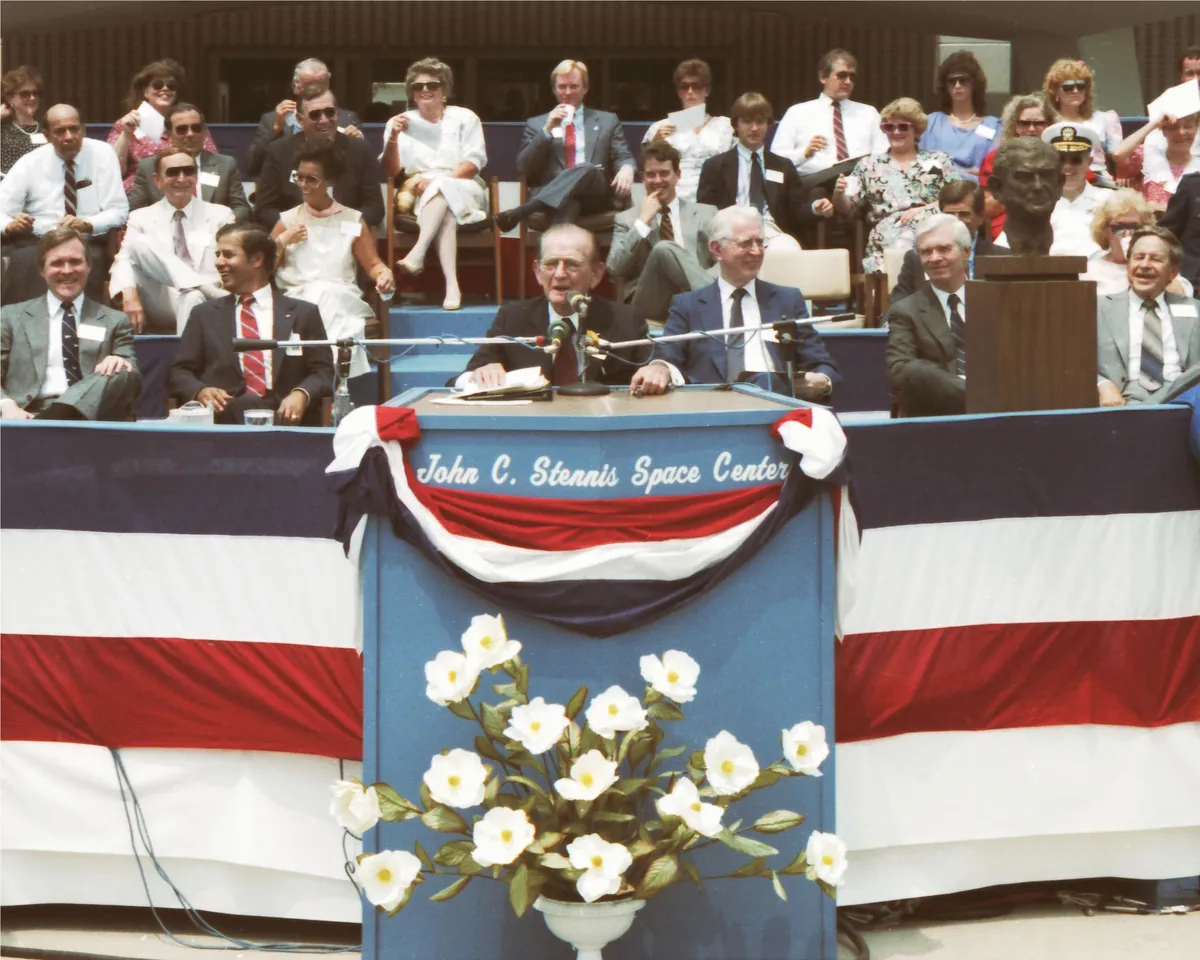
Every Saturn V engine that powered an Apollo mission to the moon was test-fired in Hancock County, Mississippi. NASA chose the site in 1961 because it was remote enough that the acoustic shockwaves from the most powerful engines ever built would not flatten a city. The government bought out an entire community — the town of Gainesville and surrounding settlements ceased to exist — and created a 125,000-acre acoustic buffer zone around the test stands. The facility, now called Stennis Space Center, still tests rocket engines for NASA and commercial launch providers. SLS core stage engines for the Artemis program were tested here. The INFINITY Science Center at the entrance is the visitor-facing facility — it houses a full-scale Saturn V stage and offers bus tours of the test stands. Stennis is also the largest employer in Hancock County, and the buffer zone has become one of the most ecologically significant undeveloped tracts on the Gulf Coast — an accidental wilderness created by the space race.
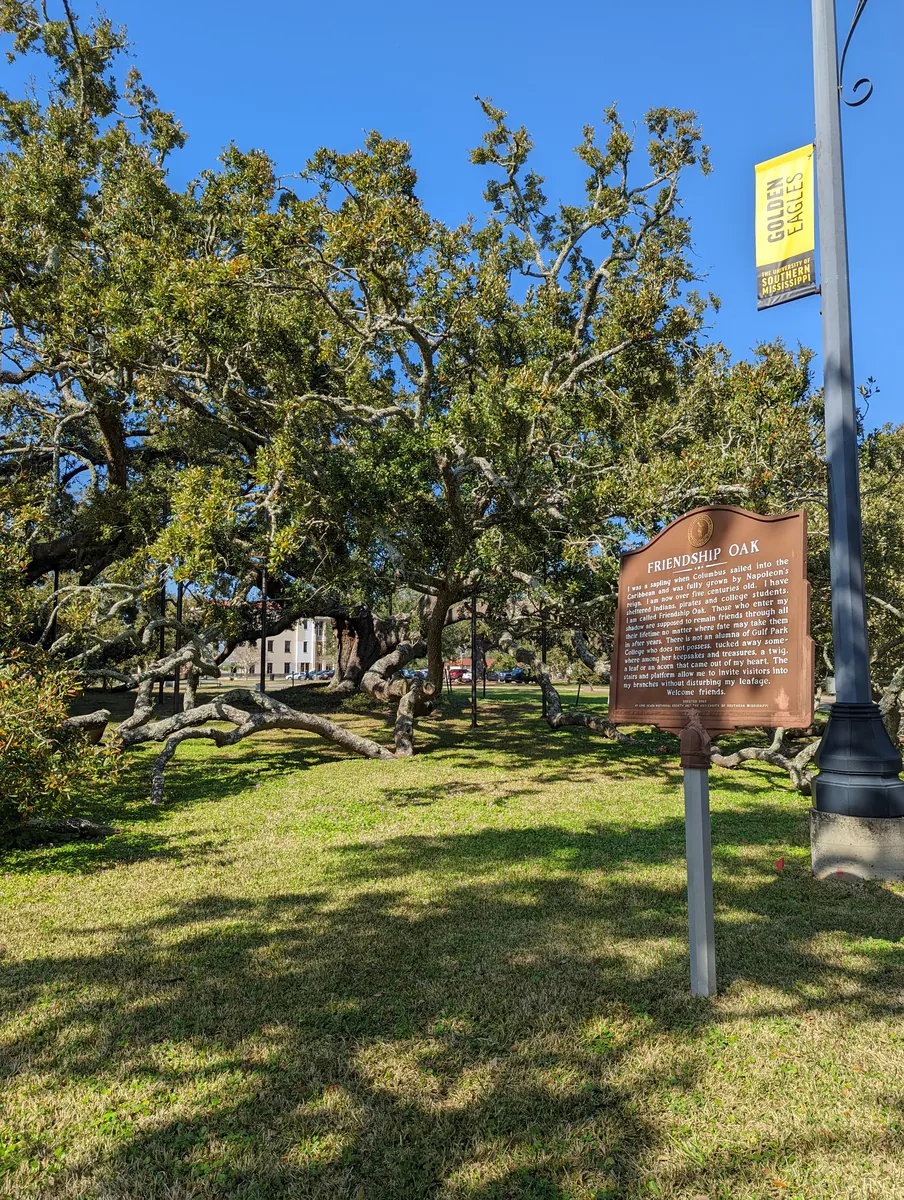
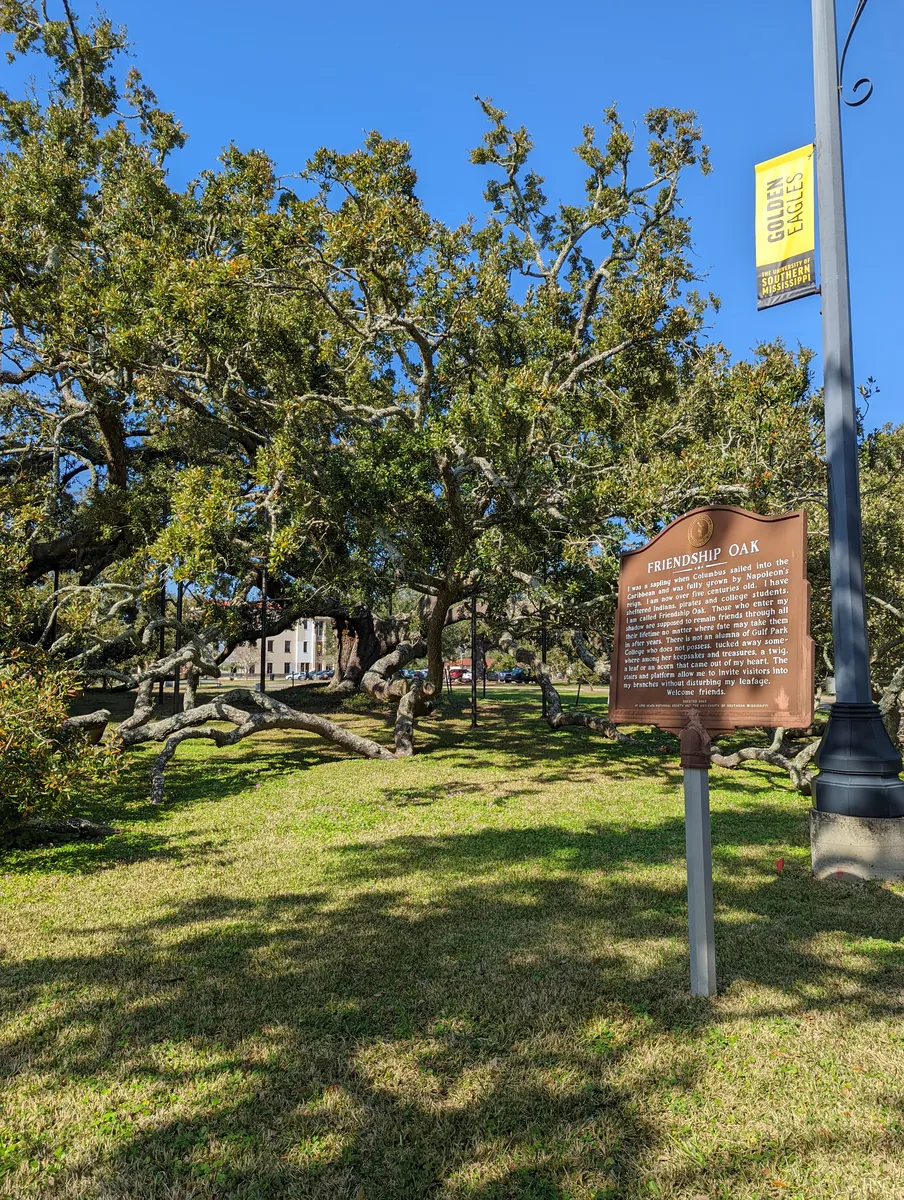
The Friendship Oak on the campus of the University of Southern Mississippi's Gulf Park campus in Long Beach has been alive for over 500 years. Its canopy spans 156 feet. It was growing before Columbus crossed the Atlantic, before Iberville landed at Ship Island, before the French, Spanish, British, and Americans took turns claiming the coast below its branches. Camille's 190-mph winds in 1969 stripped it bare but did not bring it down. Katrina's 28-foot storm surge flooded the campus around it. The tree survived both. Local tradition holds that anyone who enters its shade will remain friends forever — hence the name, given when the campus was founded as Gulf Park College for Women in 1921. The Friendship Oak is not the oldest live oak on the Mississippi coast, but it is the most visited and the most symbolically loaded. It has outlasted every building, every government, and every storm that has come through. It is still growing.
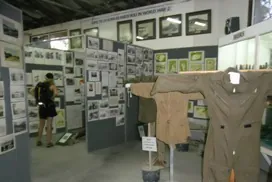
Keesler Air Force Base has been training military personnel in Biloxi since 1941, when the Army Air Corps built it on the site of a municipal golf course. It was named for 2nd Lieutenant Samuel Keesler Jr., a Greenwood, Mississippi native killed in aerial combat over France in 1918. During World War II, the base trained tens of thousands of aircraft mechanics and B-24 bomber crews. After the war, Keesler became the Air Force's primary electronics and communications training center — a role it still holds. The base is one of Biloxi's largest employers, and its personnel are woven into the city's economy, neighborhoods, and restaurants in ways that most visitors never see. Katrina devastated the base in 2005 — nearly every building was damaged — but it was rebuilt and operational within months. The military presence on the Mississippi coast predates the casinos, the shrimping industry's peak, and the resort era. Keesler is the institutional constant that has outlasted every reinvention of the beachfront economy.

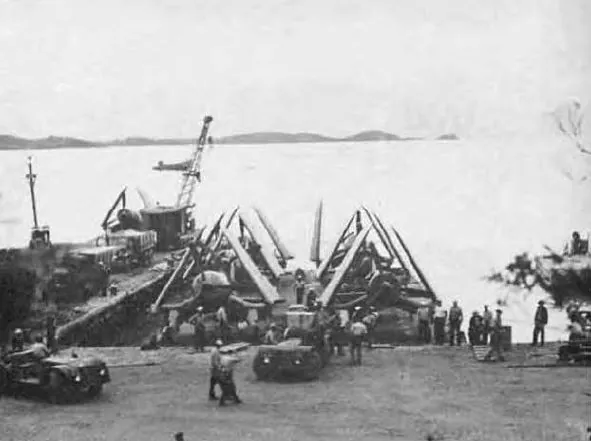
The Naval Construction Battalion Center in Gulfport has been home to the Seabees since 1942. The Seabees — CBs, for Construction Battalions — are the Navy's combat engineers, the units that build airstrips, bridges, and bases in war zones while under fire. Their motto: 'We Build, We Fight.' The Gulfport center trained Seabees for every American conflict from World War II through Afghanistan. The Seabee Heritage Center on base preserves the history of the battalions, including the story of the African American Seabees who served in segregated units during WWII and fought for the right to serve in combat roles. The base itself is one of Gulfport's economic anchors — thousands of military and civilian personnel live and work there. After Katrina, the Seabees were among the first to begin clearing debris on the coast, doing exactly what they were trained to do: build in the aftermath of destruction.
During Prohibition, the Mississippi Gulf Coast became one of the most active rum-running corridors in the South. The geography was perfect: a shallow, island-studded sound with hundreds of bayous, inlets, and marshes where small boats could disappear. Liquor came in from ships anchored beyond the three-mile limit, off-loaded onto fast boats that ran it through the barrier islands to shore. Cat Island, Ship Island, and the Chandeleur chain served as transfer points. Local fishermen and shrimpers supplemented their income by running loads, and enforcement was thin — the coastline was too long and the hiding places too many. Biloxi's speakeasies operated with minimal interference. Mississippi had been legally dry since 1908, a full twelve years before the rest of the country, which meant the coast's smuggling infrastructure was mature by the time national Prohibition started. The state did not fully repeal prohibition until 1966 — thirty-three years after the 21st Amendment. Some counties remain dry today.
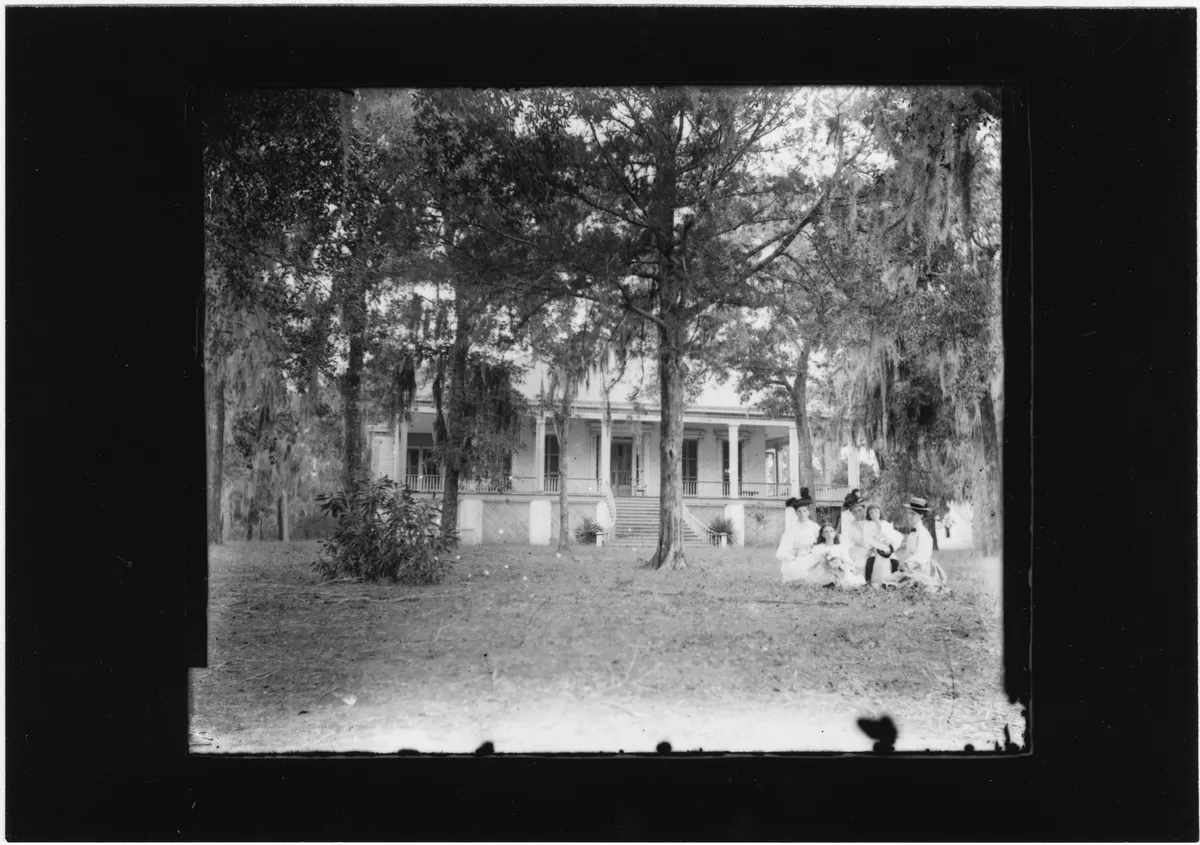
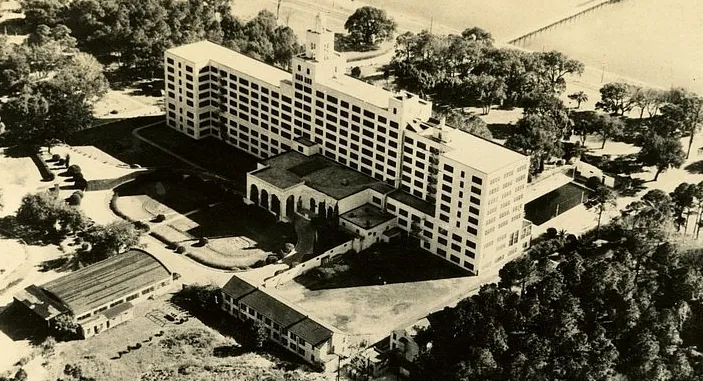
Before the casinos, before Camille, the Mississippi Gulf Coast was the resort coast — a string of grand hotels, beachfront estates, and summer colonies that drew presidents, plantation owners, and New Orleans families escaping yellow fever season. The Biloxi Hotel, built in 1848, was one of the first resort hotels in the South. The White House of the Confederacy in Biloxi — Beauvoir — was Jefferson Davis's retirement home, but it sat in a neighborhood of summer mansions, not in isolation. Pass Christian's Scenic Drive was lined with the summer houses of wealthy New Orleanians. Woodrow Wilson vacationed on the coast. So did Theodore Roosevelt and Harry Truman. The Louisville & Nashville Railroad connected the coast to the rest of the South, and the beachfront highway — now Highway 90 — was the promenade. Camille destroyed most of the grand architecture in 1969. Katrina finished the job. What you see now is the third iteration of a resort coast that has been built, leveled, and rebuilt since before the Civil War.
Lost places
Happening this month
Tickets & Shows
Before you go
A retired man, a gagging dog, strip malls, and Chili's leftovers. Miller maps the actual Gulf Coast — not the postcard.
Local TV crew rode out the storm on the beach and kept broadcasting. This is what the Coast looked like before, during, and after — told by people who lost their own homes making it.
Plan your trip
The only thing left to do is go.
Some of these are partner links — if you book through them, Portage may earn a commission at no extra cost to you.
Plan your visit
Editorial content compiled with AI assistance. Place details verified against public records.