Bay St. Louis & Waveland — The Western Shore
The western end of the coast is where artists moved in after Katrina cleared the real estate and the creative class replaced what the storm took. Bay St. Louis has the galleries, the folk art museum, and the juke joint that Ray Charles played. Waveland has Ground Zero and the state park. Between them, INFINITY Science Center has a Saturn V rocket that was never launched — the most powerful rocket ever built, sitting in a pine forest by the highway.
The route
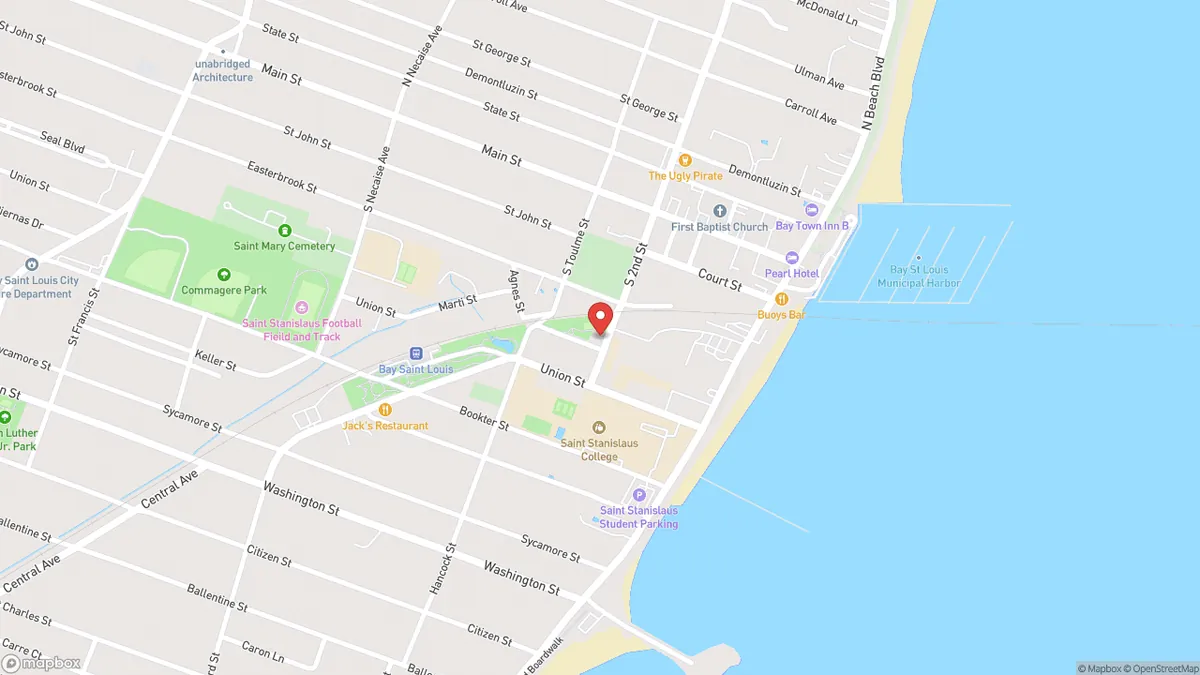 1Architecture·c. 1800s–present·NRHPOld Bay St. Louis Historic District
Four historic districts stood here when the National Park Service certified them in 1980. After Hurricane Katrina rearranged the foundations on August 29, 2005, FEMA consolidated all four into one expanded boundary — 504 acres, 939 resources, a single district that acknowledges what survives and what doesn't. Around 30% of the Beach Boulevard buildings were destroyed. Many more had already gone in Hurricane Camille in 1969. What remains dates mostly between 1860 and 1960: Central-passage houses, Queen Anne, Colonial Revival, Spanish Revival, Craftsman. The live oaks that shade Main Street survived both storms. Some are over 200 years old. The art colony was unplanned. Galleries and studios filled storefronts that insurance companies had written off. Second Saturday art walks now draw visitors from New Orleans, 60 miles east. The district was listed on the National Register of Historic Places on July 8, 2010. You'll find Cedar Rest Cemetery, which dates to 1860, and Main Street United Methodist Church, built around 1895. The Hancock Bank Building and the Bay St. Louis Ice, Light & Bottling Works Building both date to 1900. The A&G Theater opened in 1927. The Louisville and Nashville Railroad Depot was built in 1929. Walkable downtown, free street parking. Start at the corner of Main and Beach — the galleries and cafes radiate from there. Multiple travel publications have named this one of America's Coolest Small Towns since the post-Katrina rebuild, which is another way of saying people came back and made something.
 2Military·1814Battle of the Bay of St. Louis — War of 1812
On December 13, 1814, British warships entered the Mississippi Sound. Captain Nicholas Lockyer commanded more than 1,200 troops, 45 launches and barges, and 43 cannons. The Royal Navy was moving on the Bay of St. Louis, the opening thrust of the campaign to take New Orleans. Commodore Daniel T. Patterson commanded the New Orleans naval station. He sent Lieutenant Thomas A. P. Catesby Jones with a gunboat flotilla -- 182 men, 23 cannons -- to contest the Sound. John Baptiste Toulme fired a cannon from the Bay St. Louis bluff in defense. The Battle of Lake Borgne followed around 1:00 a.m. on December 14, 1814. The engagement lasted two and a half hours. Six Americans were killed, thirty-five wounded. Seventeen British were killed, seventy-seven wounded. The USS *Alligator* was captured. American gunboats grounded on Malheureaux Island. The battle delayed the British advance and gave Andrew Jackson critical time to fortify the Chalmette Battlefield before the Battle of New Orleans in January 1815. The Mississippi Sound was the last American waterway invaded by a foreign military. No marker stands at the battle site. It happened on open water. Juan de Cuevas defended Cat Island and is buried in the Old Biloxi Cemetery. You come here to stand where the Sound opens to the Gulf and understand that this coastline was the hinge -- the delay here changed what happened upriver.
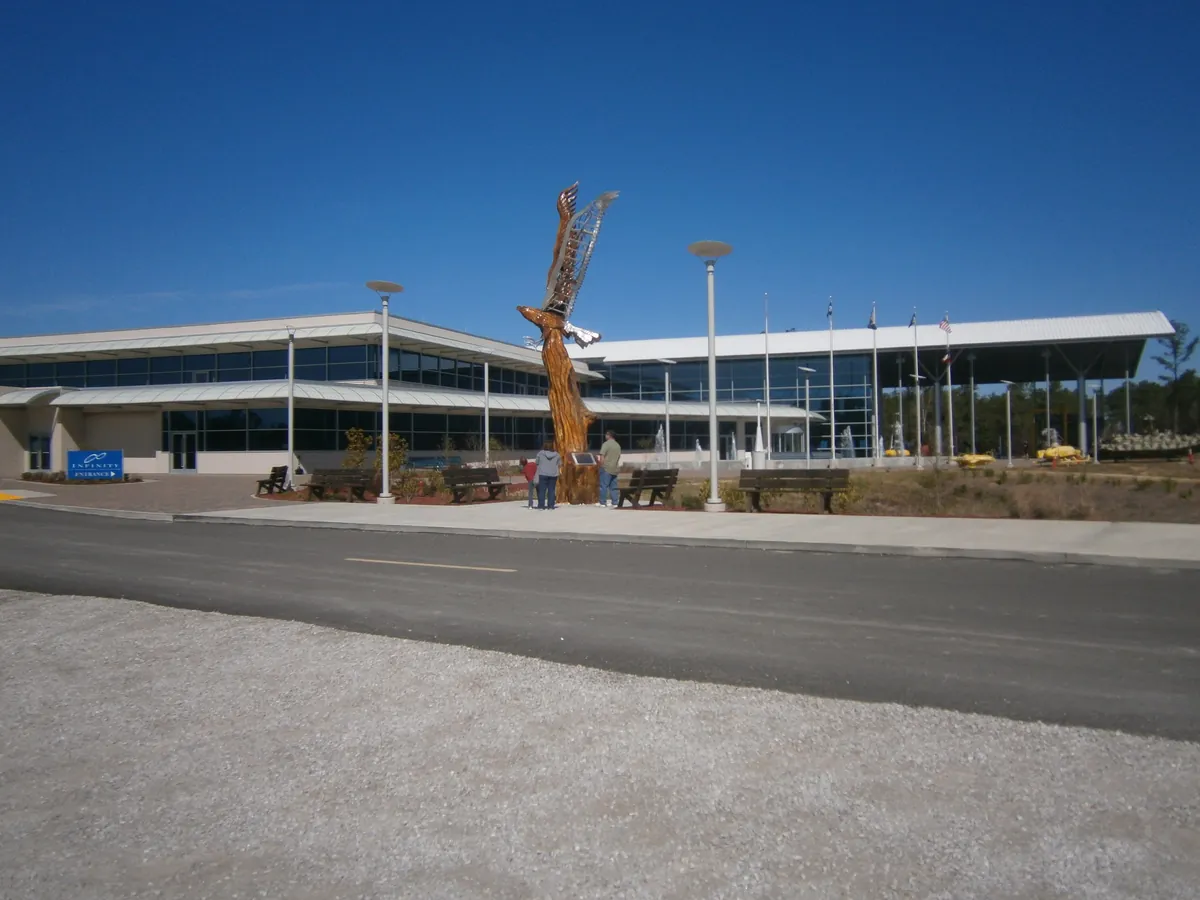 3Museum·1961 / 2012Stennis Space Center
The 138-foot rocket stage lying outside looks like it fell from the sky. It was built for a moon mission that never flew. S-IC-15 would have generated 7.5 million pounds of thrust as the first stage of Apollo 19. The mission was cancelled in 1970. Fred Haise, the Apollo 13 astronaut born in Biloxi, would have commanded it. He helped bring the stage here in 2016. That stage was built thirty miles east, at Michoud Assembly Facility in New Orleans East. You can't go there. NASA has assembled the country's largest rockets inside it since the early 1960s — Saturn V first stages, Shuttle external tanks, now SLS cores for Artemis — in a building whose floor covers 43 acres. When a stage is finished, it leaves on a barge through the Louisiana marsh, down the Intracoastal Waterway, because nothing that size moves any other way. Michoud builds them. Stennis proves them. Every Saturn V that reached the moon was test-fired thirty minutes west at Stennis Space Center. NASA announced formation of the Mississippi Test Facility on October 25, 1961 — the Apollo motors were too loud for Marshall Space Flight Center's existing stands near Huntsville. They needed isolation, and they found it in the high terrace bordering the East Pearl River. Before the first test stand was poured, five towns were erased: Gainesville, Logtown, Napoleon, Santa Rosa, Westonia, plus the northern portion of Pearlington. The effort acquired 3,200 parcels — 786 residences, 16 churches, 19 stores, three schools. The 13,500-acre test area sits inside a 125,000-acre acoustical buffer zone. The silence of vanished towns still doing its work. Inside the 72,000-square-foot building: the Apollo 4 command module and a moon rock from Apollo 15. You can touch it. Bus tours reach the test stands where RS-25 engines are being certified for Artemis. The A-1 Test Stand was renamed the Fred Haise Test Stand in March 2020 — the astronaut's name on the place that would have certified his ride. Free to get in. Bus tours cost extra and sell out. Book ahead.
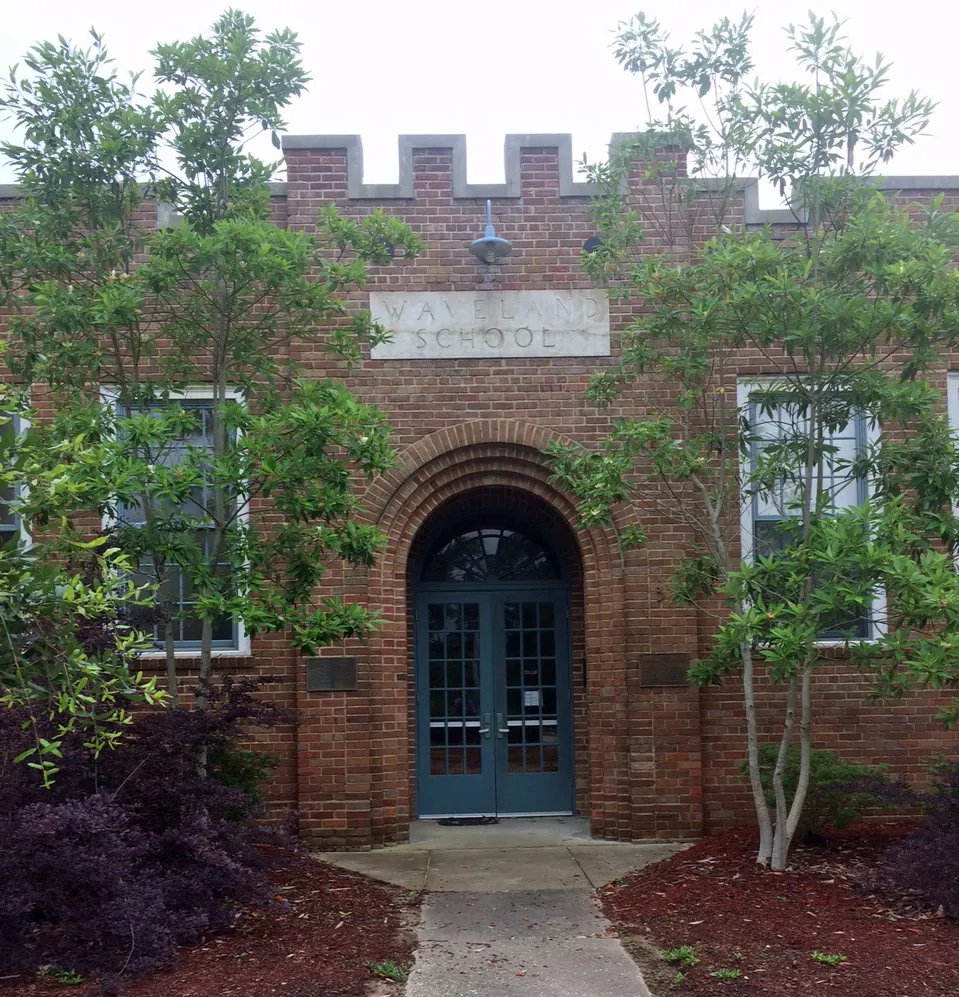
- 4Museum·1927 (school) / 2011 (museum)·NRHPGround Zero Hurricane Museum
The museum sits in the 1927 Waveland Elementary School, one of the few structures that survived when the eye of Hurricane Katrina passed directly overhead on August 29, 2005. Ninety-five percent of Waveland was destroyed. The population dropped from 6,674 to under 3,000. The school building that held is now on the National Register of Historic Places. Inside, the exhibits trace Hancock County history from indigenous peoples through the space program — not just a disaster museum, though the storm's story is here. Waveland was the exact point of landfall. What came through that day, and what didn't, tells you what the Coast is made of. The building itself is proof: brick and mortar that stood when almost nothing else did. Admission is free. Open Monday through Saturday. Plan 45 minutes to an hour. You're standing in a town that lost nearly everything and rebuilt anyway. The museum is small, but the fact that it exists at all — in this building, in this town — is the point.
- 5Nature & Parks·1976Buccaneer State Park
The wave pool sits where Katrina left nothing. In 2005, the hurricane wiped every structure off this beachfront — bathhouses, rec center, campgrounds — and the state rebuilt from ground zero. What came back is one of the few places on the Gulf Coast where a wave pool, 250 campsites, and the Gulf of Mexico beach occupy the same unbroken tract, no casino or highway in between. Ship Island is visible on the horizon from the sand. The park's name references real pirates who used Hancock County as a base — the coast's buccaneering past is not a theme. The rebuilt facilities include an 18-hole disc golf course, a 1.8-mile nature trail through coastal marsh and pine flatwoods, and a 4.5-acre waterpark. Day-use fee charged. Campsite reservations at mdwfp.com. In Waveland, straddling the line toward Clermont Harbor off U.S. Highway 90 and Beach Boulevard.