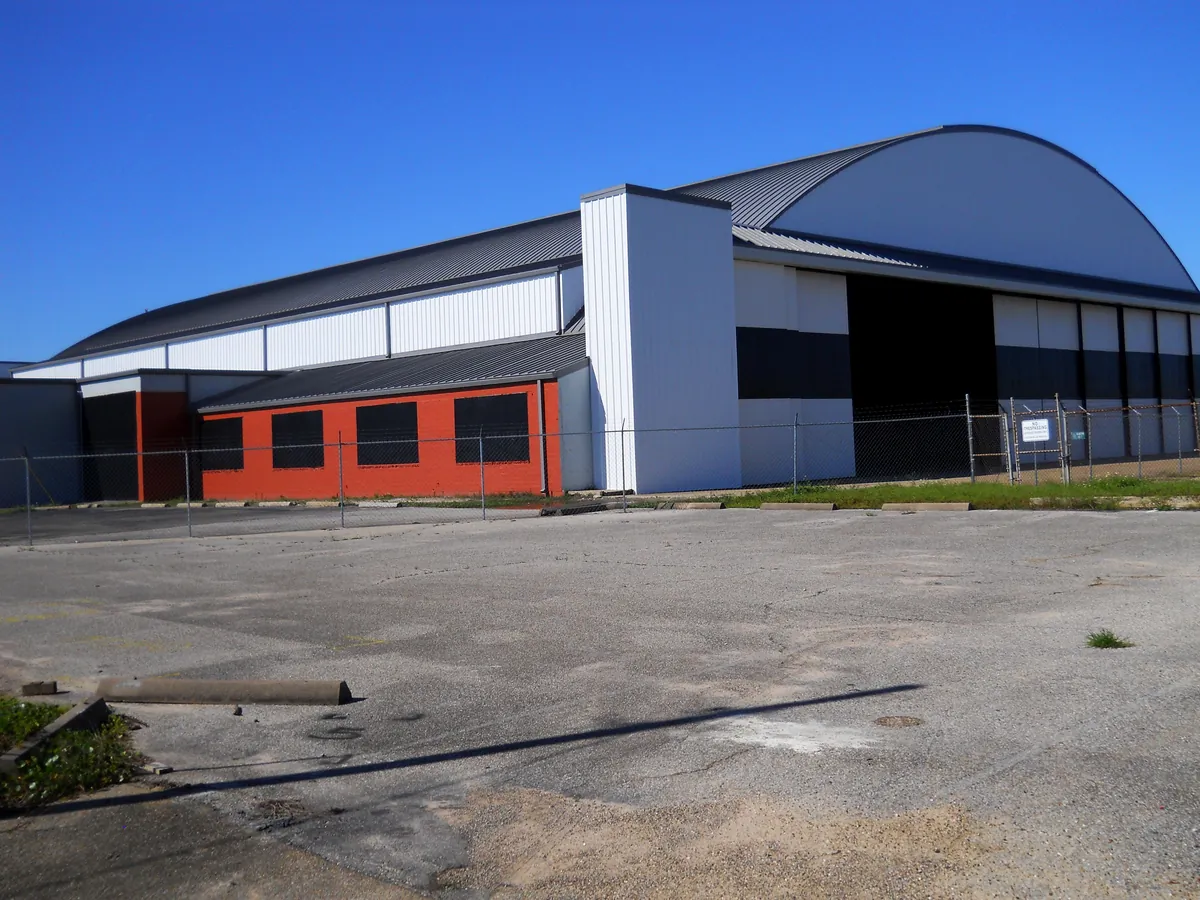
The concrete and steel hangar on Hewes Avenue was built in 1944–45 to train combat crews on the B-29 Superfortress — the aircraft that dropped the atomic bombs on Japan. Gulfport Army Air Field was one of dozens of WWII airfields that transformed Gulf Coast towns overnight, part of the war effort that pulled the region into the twentieth century alongside Keesler Air Force Base and the military installations that followed. The base itself opened in 1942 to train crews on B-17s. Two years later, the War Department expanded the field to accommodate the B-29, and this hangar went up to house it.
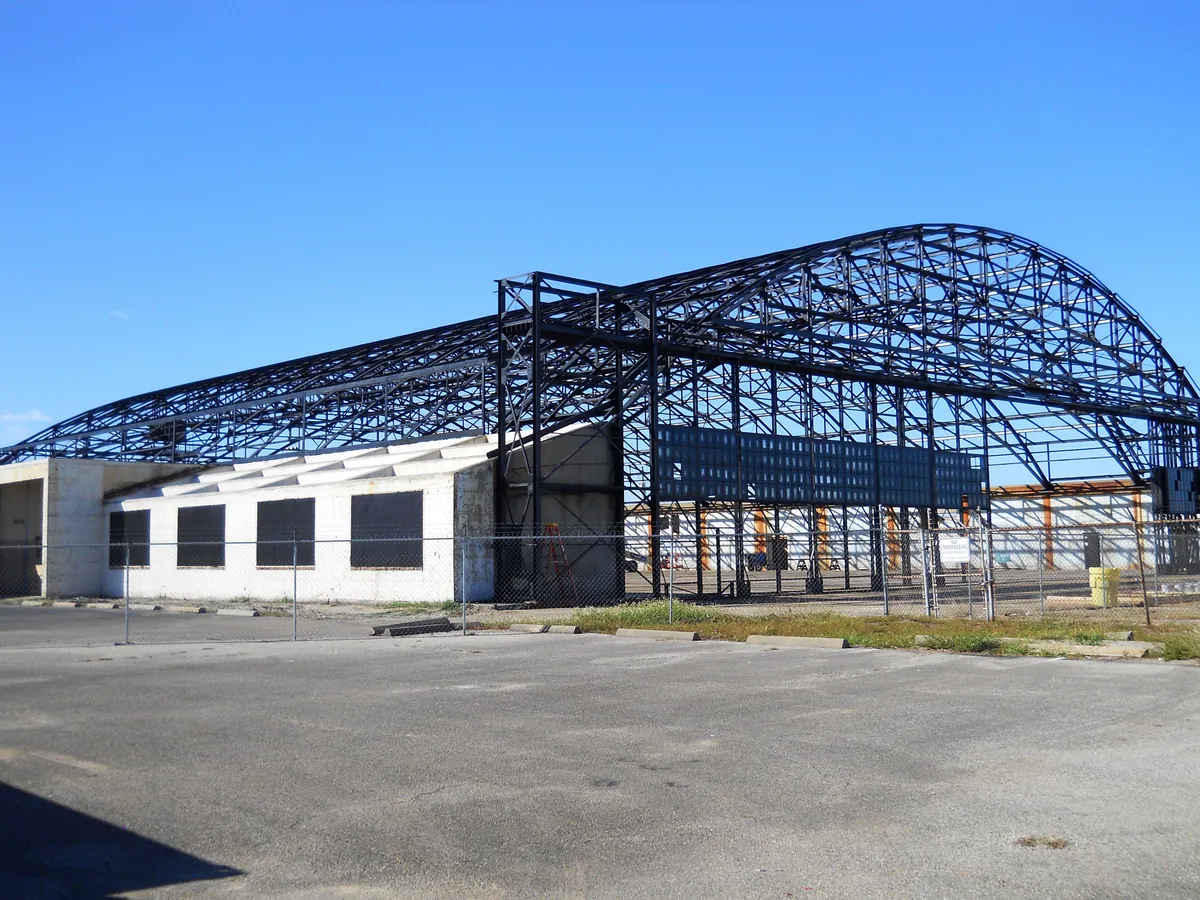
The structure runs 200 feet north to south, 80 feet wide, with a large vaulted roof and one-story lean-to additions along the east and west sides. Two-inch gypsum planks cover the roof, sealed with bitumen. Sheet metal wraps the exterior. Sliding wood doors, sheathed in metal, gave access to the floor.
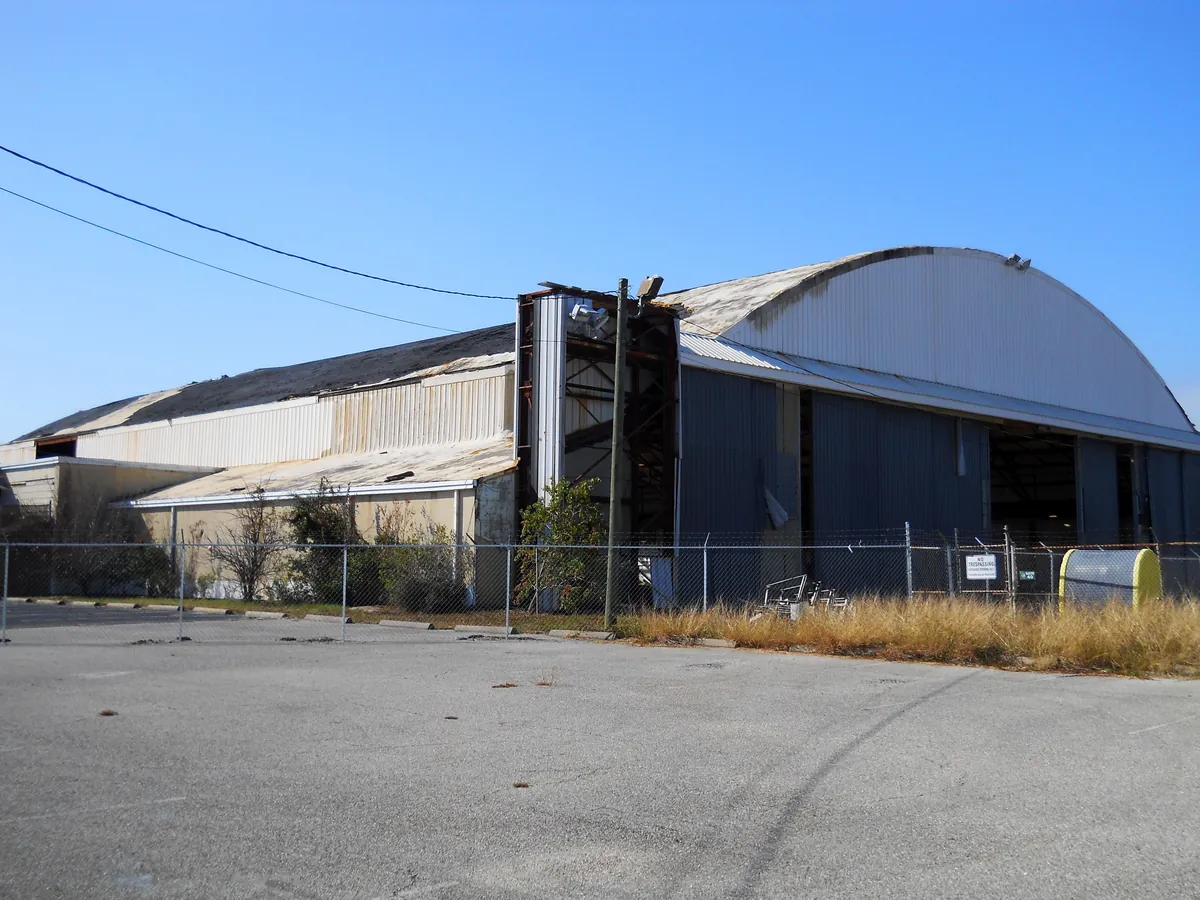
When the war ended, the War Assets Administration transferred the air field to the City of Gulfport in 1949. The western lean-to became the municipal airport passenger terminal — travelers walked through from about 1947 until 1963. After that, the hangar passed through aviation lease tenants until Hurricane Katrina damaged it heavily in August 2005. Restoration began in 2015 and finished in May 2016. That same month, the Gulfport–Biloxi Regional Airport Authority signed it over to the Mississippi National Guard.
It's the most intact surviving structure from the original air field. You can see it from the road — it's not a public museum — but it's listed on the National Register of Historic Places and designated a Mississippi Landmark. You're looking at the building that trained the crews.
- ·Built 1944–45 to train B-29 Superfortress combat crews — the aircraft that dropped the atomic bombs on Japan.
- ·The Gulfport Army Air Field was one of dozens of WWII airfields that transformed Gulf Coast towns overnight.
- ·Most intact surviving structure from the original air field.
- ·Listed on the National Register of Historic Places.
- ·The base later became the Naval Construction Battalion Center — home of the Seabees.
- ·On Hewes Avenue in Gulfport. Viewable from the road — not a public museum.
More archive
Memories
Editorial content compiled with AI assistance. Place details verified against public records.