
The Literary Coast — Five Writers, One Shoreline
Natasha Trethewey watched the Klan burn a cross on her mother's lawn in Gulfport and became U.S. Poet Laureate. Jesmyn Ward wrote the hurricane into American literature from DeLisle. Grisham set a novel on Biloxi's Vieux Marché. Neil Simon trained at Keesler and turned it into a Broadway play. Jimmy Buffett grew up in Pascagoula before he found the beach he was looking for. Sixty miles of shoreline, five very different stories.
The route
- 1Literary·1966–presentNatasha Trethewey — Native Guard, Gulfport
On April 26, 1966, Natasha Trethewey was born in Gulfport. Her parents had traveled to Ohio to marry — interracial marriage was illegal in Mississippi at the time. Her birth certificate noted her mother's race as "colored" and her father's as "Canadian." The U.S. Supreme Court struck down anti-miscegenation laws with Loving v. Virginia a year later. In 2007, Trethewey won the Pulitzer Prize in Poetry for Native Guard. The collection recovers the story of the Louisiana Native Guards, an all-black Union regiment composed mainly of former slaves who guarded Confederate prisoners of war. The regiment was stationed on Ship Island, the same barrier island where Pierre Le Moyne d'Iberville first landed in 1699 to establish the French colony that became Louisiana. Trethewey's mother, Gwendolyn Ann Turnbough, was part of the inspiration for the collection, which is dedicated to her memory. Turnbough was murdered in 1985 by her second husband when Trethewey was nineteen. Trethewey served two terms as U.S. Poet Laureate, from 2012 to 2014. She was the first laureate to take up residence in Washington, D.C., when she did so in January 2013. In 2010, she published Beyond Katrina, an account of the hurricane's impact on the Mississippi Gulf Coast, where she grew up. The book combines nonfiction with poetry to document the damage to her friends, family, and neighbors. A Mississippi Writers Trail marker stands in Gulfport. Ship Island, the landscape she wrote about in Native Guard, is accessible by ferry.
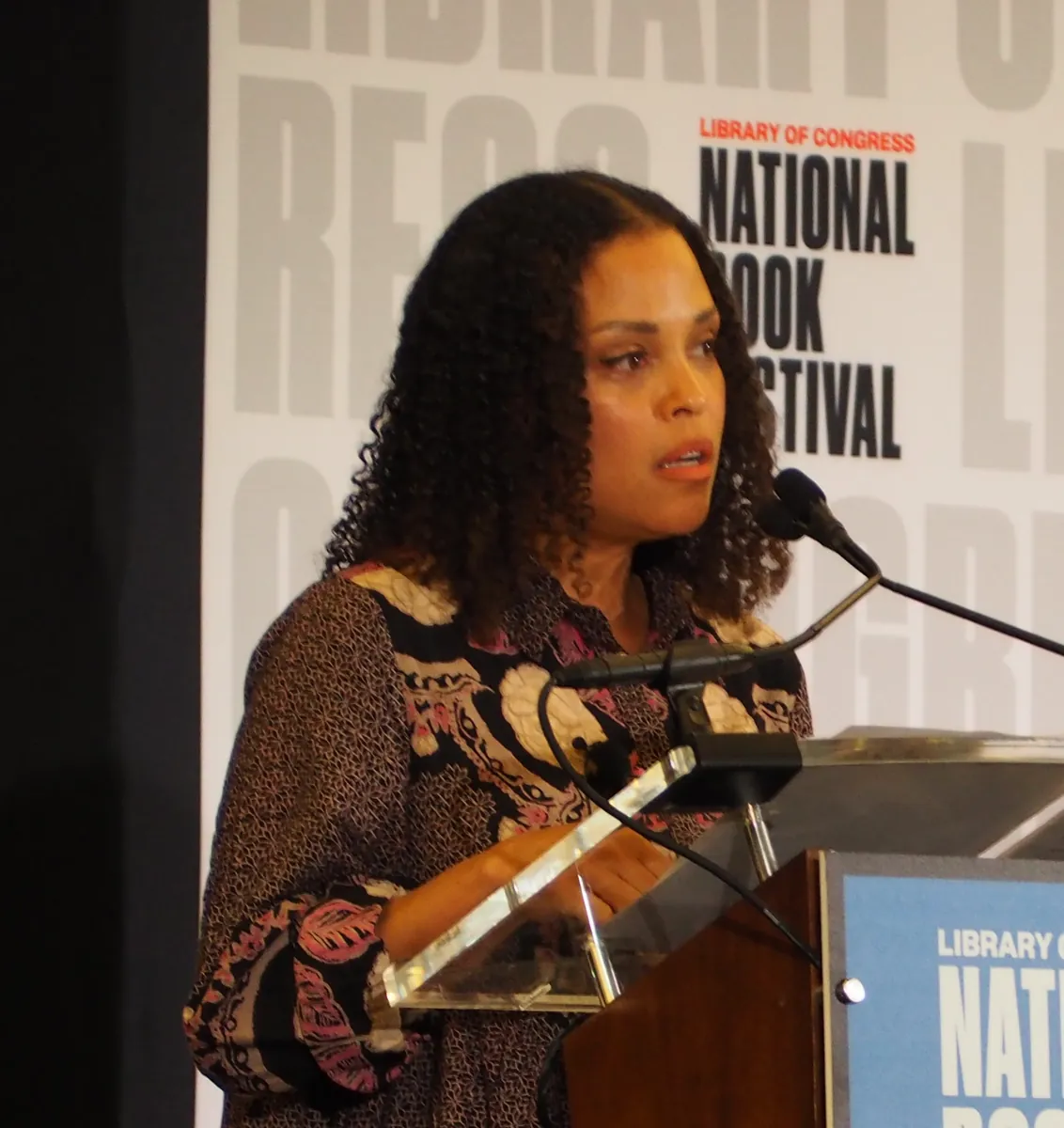 2Literary·1977–presentJesmyn Ward — Bois Sauvage, DeLisle
In 2011, Jesmyn Ward won the National Book Award for Fiction for *Salvage the Bones*. Six years later, she won it again for *Sing, Unburied, Sing*. She is the first woman and first Black American to win the National Book Award for Fiction twice. The achievement is rooted in DeLisle. Ward's parents were originally from the small community between Pass Christian and Bay St. Louis — when Ward was three, they returned from Berkeley. The landscape she grew up in became Bois Sauvage, the fictional town at the center of her first three novels. The name is fiction; the place is real. *Salvage the Bones* chronicles pregnant teenager Esch Batiste, her three brothers, and their father during the ten days leading up to Hurricane Katrina, the day of the storm, and the day after. Ward knew that story from the inside. In 2005, her family's house in DeLisle flooded rapidly. They set out in their car toward a local church, but ended up stranded in a field full of tractors. When the owners of the land eventually checked on their possessions, they refused to invite the Wards into their home, claiming they were overcrowded. Another family down the road took them in. Ward went on to work at the University of New Orleans. Her daily commute took her through neighborhoods ravaged by the hurricane. She was unable to write creatively for three years — the time it took her to find a publisher for her first novel, *Where the Line Bleeds*. When she won the National Book Award in 2011, mainstream reviewers had largely ignored the novel. Ward told CNN the victory came as a surprise. A Mississippi Writers Trail marker stands in DeLisle. Ward now holds the Andrew W. Mellon Professorship in the Humanities at Tulane. In 2017, she received a MacArthur "genius grant." She wrote the coast's Katrina story from the people the national media drove past.
- 3Literary·2022John Grisham's Biloxi — The Boys from Biloxi
John Grisham owns a beachfront home on Amelia Island in Florida, but the Mississippi Gulf Coast claims two of his novels. *The Runaway Jury*, published in 1996, follows a tobacco trial inside a Biloxi courtroom. *The Boys from Biloxi*, published in 2022, traces the Dixie Mafia through gambling dens and contract killings. Both novels use real Biloxi geography — the courthouses, the strip, the harbor. Grisham practiced criminal law for about a decade and served in the Mississippi House of Representatives from 1983 to 1990. In 1984, he heard a twelve-year-old girl tell a jury what had happened to her — about having been raped and beaten. He later wrote that he remembered staring at the defendant and wishing he had a gun. Over the next three years, he wrote *A Time to Kill*. The case was not his own. The Mississippi Gulf Coast that surfaces in Grisham's fiction is the one the casinos replaced: seafood factories, bootleggers, corruption allowed at certain resorts when gambling was still illegal. The coast gained prominence in the early 1900s as a gambling and tourist destination. Gaming became legal in Harrison and Hancock counties during the early 1990s, bringing Vegas-style casino hotels and condo towers. The courthouses still stand. The poker rooms are gone. *The Runaway Jury* was adapted into a film, one of seven Grisham novels to reach the screen.
- 4Literary·1985 (play) / 1988 (film)Neil Simon's Biloxi Blues
*Biloxi Blues* opened on Broadway in 1985 with Matthew Broderick as Eugene Jerome, the eighteen-year-old Brooklyn conscript, and Barry Miller as Arnold Epstein, the gentle, intelligent soldier who becomes the story's central figure. The semi-autobiographical play follows Army basic training at Keesler Field in 1945 — heat, mosquitoes, and first encounters with race. The plot turns on Epstein's power struggle with Sergeant Merwin J. Toomey, a middle-aged, hard-drinking platoon leader. In one memorable scene, Epstein forces Toomey to perform two hundred push-ups in front of the platoon. Frank Rich called it extremely funny and Simon's first serious attempt to examine his conscience as an artist and a Jew. The play won the Tony for Best Play. Miller won Best Featured Actor. It ran 524 performances and 12 previews, closing June 28, 1986. Mike Nichols directed the 1988 film, with Broderick and Miller reprising their roles and Christopher Walken as Toomey. The play is the second chapter in Simon's Eugene trilogy, following *Brighton Beach Memoirs* and preceding *Broadway Bound*. What it gave the Coast was this: Biloxi's name in front of a national audience and a fixed WWII military identity. The region had been a French colonial beachhead — Pierre Le Moyne d'Iberville landed in 1699 and built Fort Maurepas, the first capital of French Louisiana. At Mississippi statehood in 1817, the coast comprised just 2.5 percent of the state's population, a frontier with Mediterranean cultural influences and ties to the wider world that the interior couldn't match. In the twentieth century, Keesler Air Force Base brought development. *Biloxi Blues* made that military transformation into a story people recognized. Keesler is still operational. The mosquitoes are still here too.
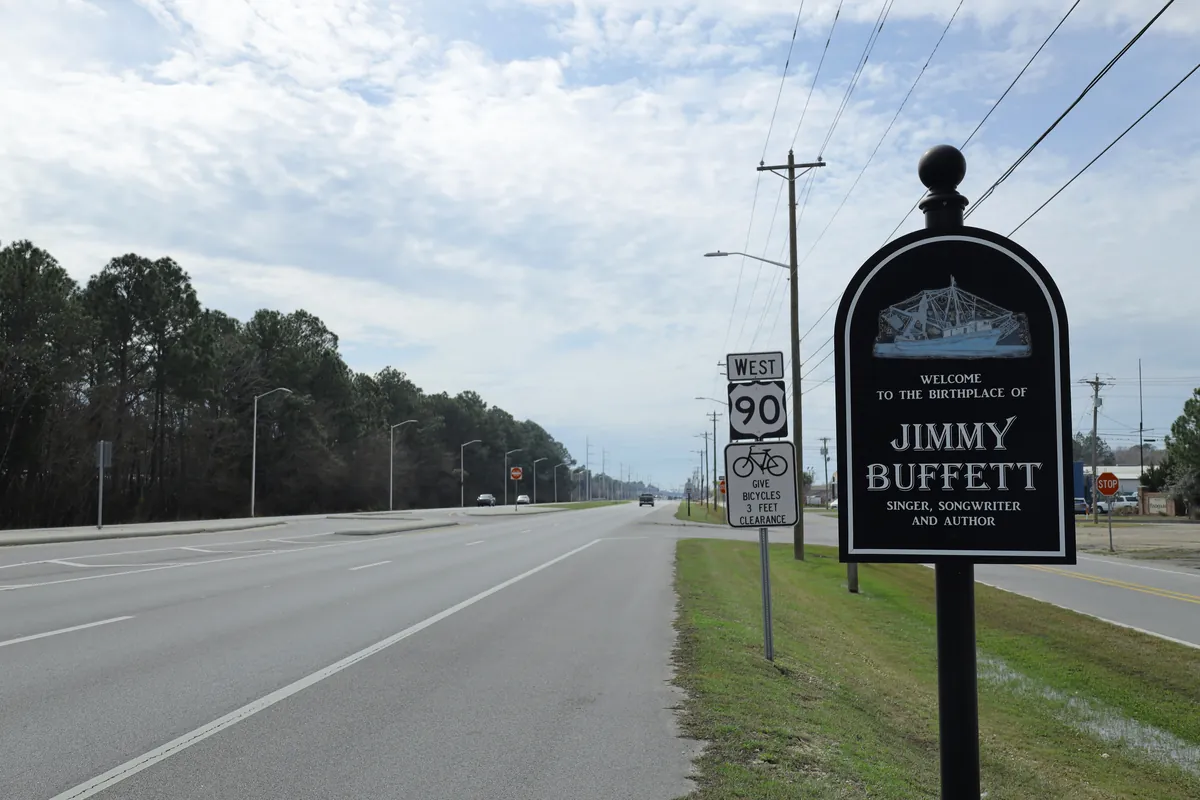 5Music·1946Jimmy Buffett Birthplace — Pascagoula
Jimmy Buffett was born on Christmas Day, 1946, in a private house in Pascagoula — no marker, no museum, just a residence where the man who built the Margaritaville empire entered the world. He grew up on the Mississippi Gulf Coast, a stretch of Mississippi Sound where the Pascagoula River meets the Gulf, a place that was still a fishing village when he was a child and a shipbuilding industrial center by the time he left. The sound he made — laid-back, salt-air, Gulf-haunted — started here. Pascagoula sits on the eastern edge of the Mississippi coast, a region that spent its first two centuries as a French colonial outpost and frontier, then became a shipyard powerhouse during World War II. The Coast's ethnic diversity and maritime ties to the wider world gave it a different character from the rest of Mississippi, and Buffett carried that out into the wider world himself. He wrote a song called "The Pascagoula Run." In 2015, he came back and played a free concert. He died in September 2023 at age seventy-six. The Margaritaville brand is worth billions. The coast he grew up on is still the coast he sang about — still here, still the same stretch of sound and shore.