Civil Rights — The Wade-Ins Nobody Remembers
In 1959, Dr. Gilbert Mason led Black residents into the whites-only surf of Biloxi Beach — wade-ins that ran parallel to the national sit-in movement and were met with gunfire. This trip follows the civil rights story the coast doesn't advertise: the doctor's office, the juke joint that hosted damn near every Black act barred from white venues, the freedmen's community that survived 160 years, and the Pulitzer poet who wrote the reckoning.
The route
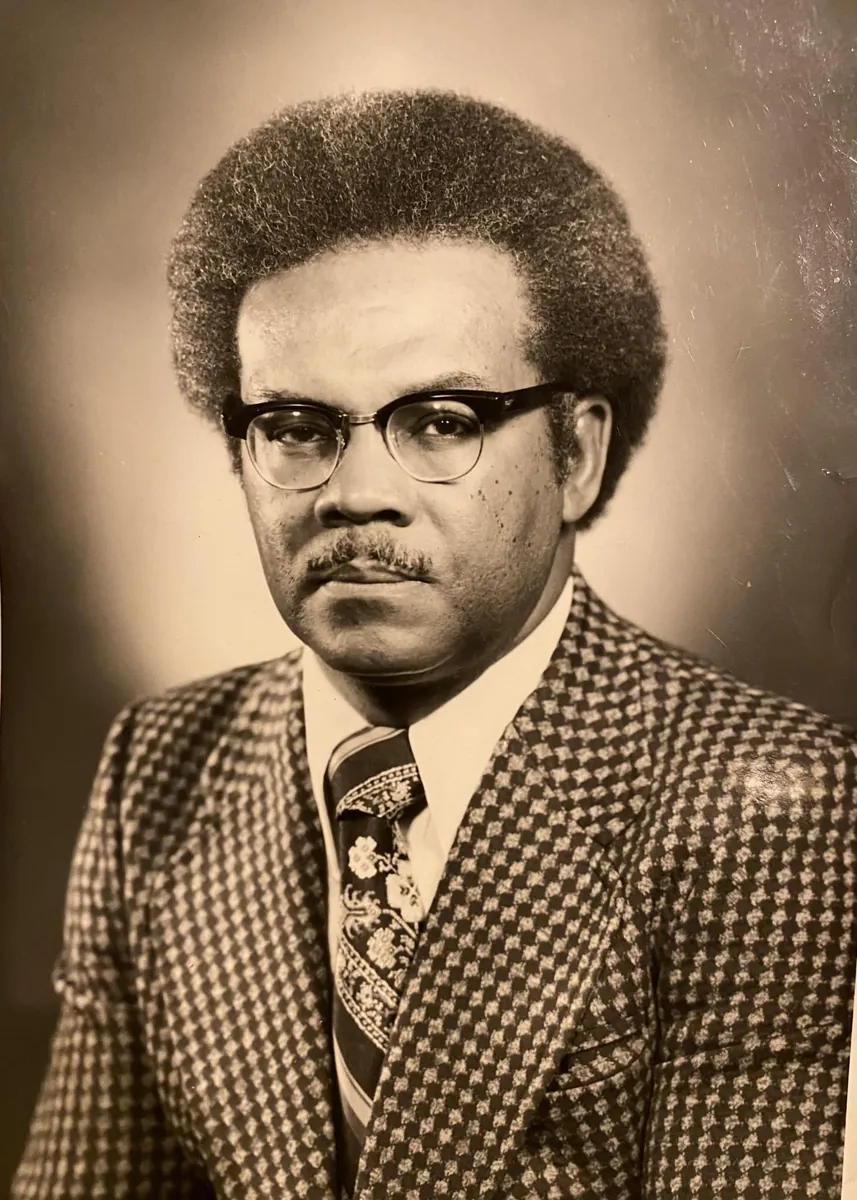 1Civil Rights·1950s–1960s·NRHPDr. Gilbert R. Mason Sr. Medical Office
Dr. Gilbert R. Mason arrived in Biloxi in 1955, the second Black physician in Harrison County, and opened a family practice on Division Street that became the staging ground for the first nonviolent civil rights protest in 1950s Mississippi. On May 14, 1959—a year before Greensboro—Mason, Dr. Felix Dunn, and their families walked into the Gulf to swim at the city's 26-mile public beach. Police arrested them and explained that adjacent homeowners claimed the sand as private property. Mason returned to the beach in April 1960 and was arrested again. A week later, on April 24, he and 125 demonstrators—elderly men and women, teenagers, children—gathered for a second wade-in. White mobs attacked them with chains, pipes, and guns. At least ten people were shot. Biloxi police watched without intervening. The day became known as Bloody Sunday. Mason led a third wade-in in spring 1963, two weeks after Medgar Evers' funeral. Nearly 2,000 white counter-protesters gathered, but this time police blocked the violence. The wade-ins continued through that year, long before national media turned cameras toward Mississippi. The U.S. Department of Justice filed suit against beach segregation in May 1960. The case dragged through courts until 1968, when the Fifth Circuit ruled that Mississippi beaches were public and subject to federal desegregation law. The state declined to appeal. Mason practiced medicine from this Division Street office for decades, eventually gaining full privileges at Biloxi Regional Hospital and serving as chairman of family practice. He led the Biloxi NAACP chapter for 34 years and the state NAACP for 33. In 2000, he published *Beaches, Blood, and Ballots*, a memoir of those early fights. The building is listed on the National Register. It stands in a residential neighborhood, viewable from the street—a working doctor's office that doubled as the operational center for a decade-long legal and physical battle to reclaim public waterfront.
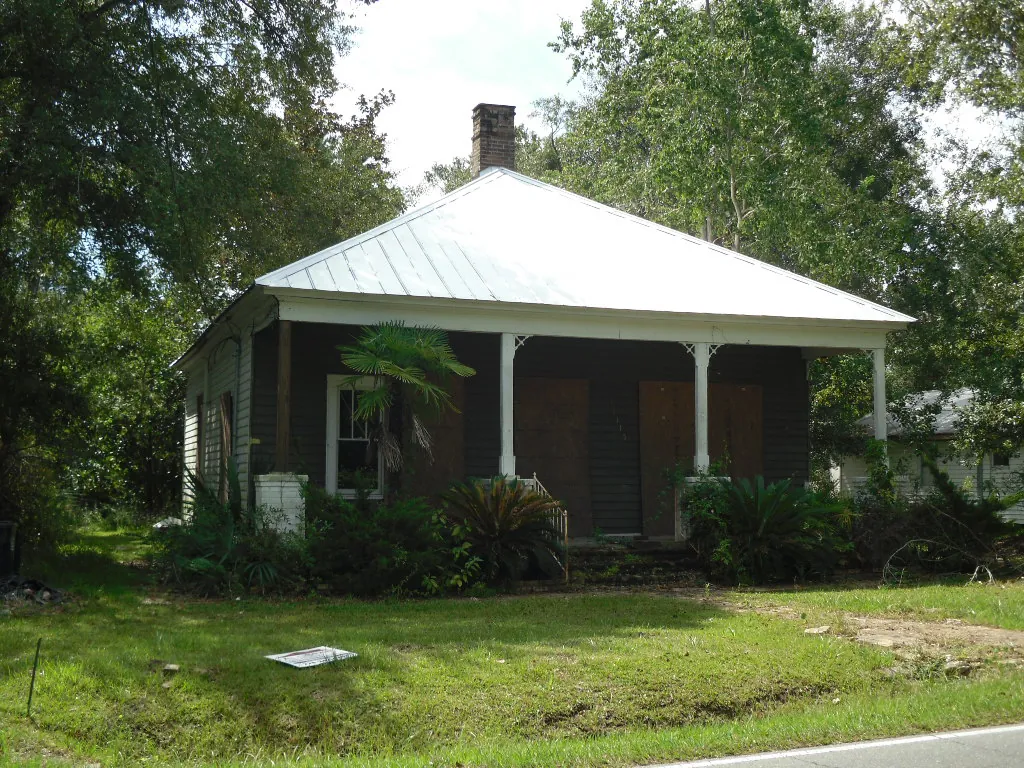 2Civil Rights·c. 1870·NRHPTurkey Creek Community Historic District
In 1866, a group of emancipated African Americans settled 320 acres along Turkey Creek, land formerly owned by Arkansas Lumber Company. Thomas and Melinda Benton acquired enough property that their holdings comprised half the community. Later settlers bought from the Bentons. The creek itself served as a transportation route. Residents planted gardens, grew fruit trees, raised livestock. That original settlement has held. Through Reconstruction, Jim Crow, hurricanes, annexation, airport construction, casino towers, the slow grind of development pushing northward from the coast — Turkey Creek endured. The Mississippi Gulf Coast spent the twentieth century becoming "America's Riviera," then a gaming center, then a post-Katrina rebuilding story. Turkey Creek remained Turkey Creek: one-story cottages along Rippy Road, live oak overhead, freshwater marsh and coastal hardwood forest still intact, religious and educational structures still standing. By the mid-1950s, infrastructure development associated with Gulfport's expansion began to encroach. Industries, highways, the airport. The community predated the founding of Gulfport itself, but the city annexed it in 1994. After Hurricane Katrina devastated the Mississippi Gulf Coast in 2005, business expansion accelerated northward, away from the coastline, into the community, garnering national attention. Turkey Creek Community Initiatives formed in response, receiving assistance from the Land Trust for the Mississippi Coastal Plain and Audubon Mississippi to protect what remained. In 2021, American Rivers listed Turkey Creek — the waterway itself, meandering 12.9 miles to Bayou Bernard — as one of America's 10 Most Endangered Rivers due to continuing threat of development. The district was added to the National Register of Historic Places in 2007 as both a cultural and environmental resource. It is a residential community. Drive Rippy Road respectfully, or walk it. What you are seeing is 320 acres that have been held for over 150 years.
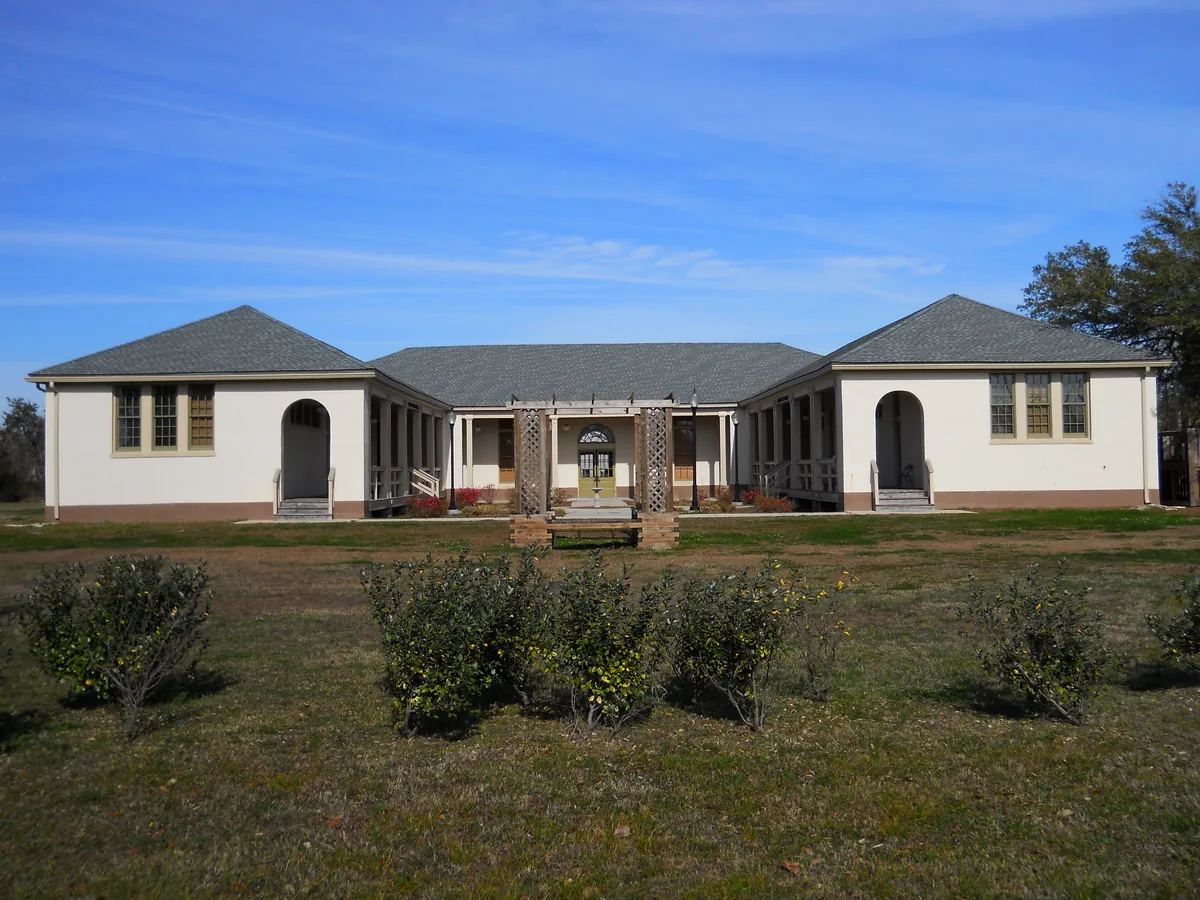
- 3Civil Rights·1927·NRHPJ.W. Randolph School
Around 1920, a Black civic organization in Pass Christian petitioned for a new school. In 1927-28, the school was constructed at a cost of $24,000. Construction financing was provided through public funding and private donations, including the Rosenwald Fund. Originally designated as the Harrison County Training School, the name was changed in 1939 to honor a former school principal, J.W. Randolph — a formerly enslaved man who became a Mississippi state legislator and schoolteacher. When school segregation came to an end in 1966, the building was rededicated as the Pass Christian Middle School. After 2000, it no longer served as a public school. In August 2005, the structure was severely damaged by winds and storm surge from Hurricane Katrina. The school was saved by a coalition of former students, community activists, and preservationists. Restoration efforts began in 2009 with funding from public and private grants. The renovated school was dedicated on January 22, 2013, to be used as a senior citizen center and for social events. In 2006, the structure was designated a Mississippi Landmark. In 2025 it was listed on the National Register of Historic Places.
 4Literary·1966–presentNatasha Trethewey — Native Guard, Gulfport
On April 26, 1966, Natasha Trethewey was born in Gulfport. Her parents had traveled to Ohio to marry — interracial marriage was illegal in Mississippi at the time. Her birth certificate noted her mother's race as "colored" and her father's as "Canadian." The U.S. Supreme Court struck down anti-miscegenation laws with Loving v. Virginia a year later. In 2007, Trethewey won the Pulitzer Prize in Poetry for Native Guard. The collection recovers the story of the Louisiana Native Guards, an all-black Union regiment composed mainly of former slaves who guarded Confederate prisoners of war. The regiment was stationed on Ship Island, the same barrier island where Pierre Le Moyne d'Iberville first landed in 1699 to establish the French colony that became Louisiana. Trethewey's mother, Gwendolyn Ann Turnbough, was part of the inspiration for the collection, which is dedicated to her memory. Turnbough was murdered in 1985 by her second husband when Trethewey was nineteen. Trethewey served two terms as U.S. Poet Laureate, from 2012 to 2014. She was the first laureate to take up residence in Washington, D.C., when she did so in January 2013. In 2010, she published Beyond Katrina, an account of the hurricane's impact on the Mississippi Gulf Coast, where she grew up. The book combines nonfiction with poetry to document the damage to her friends, family, and neighbors. A Mississippi Writers Trail marker stands in Gulfport. Ship Island, the landscape she wrote about in Native Guard, is accessible by ferry.