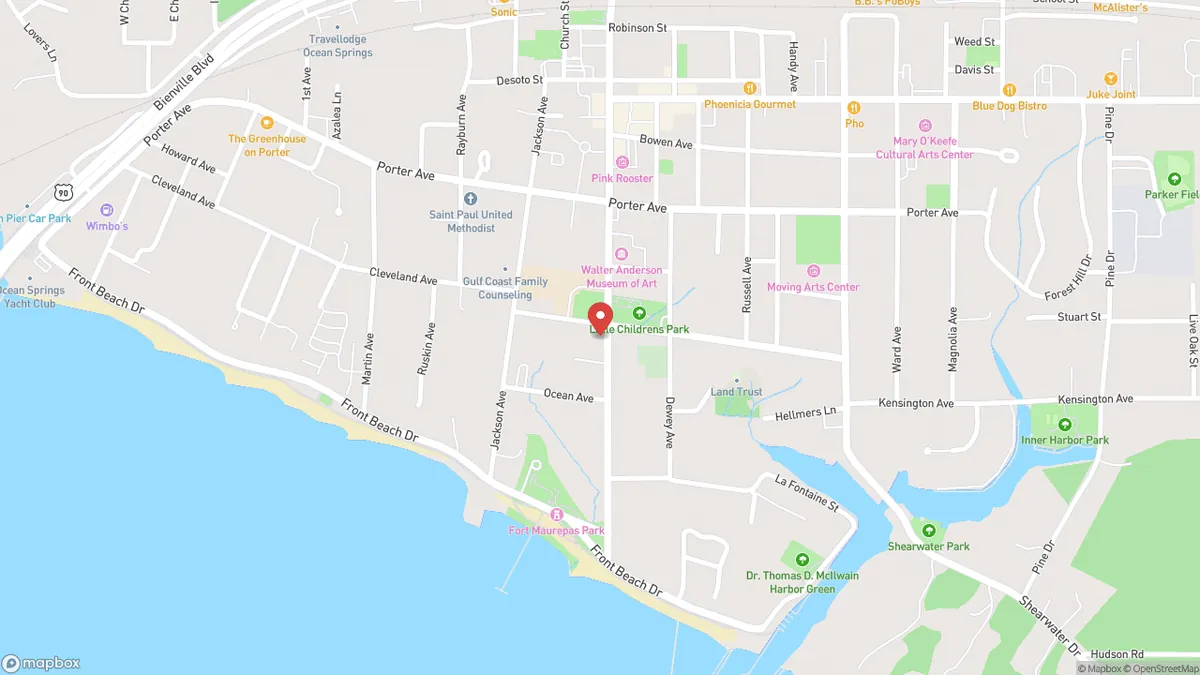
The Art Coast — Anderson, Ohr & Ocean Springs
Walter Anderson painted Horn Island in secret for decades. George Ohr threw pots so radical the art world didn't catch up for 70 years. Louis Sullivan designed winter cottages here that changed American architecture. Ocean Springs became an artist colony not because someone planned it, but because the light and the water kept attracting people who could see.
The route
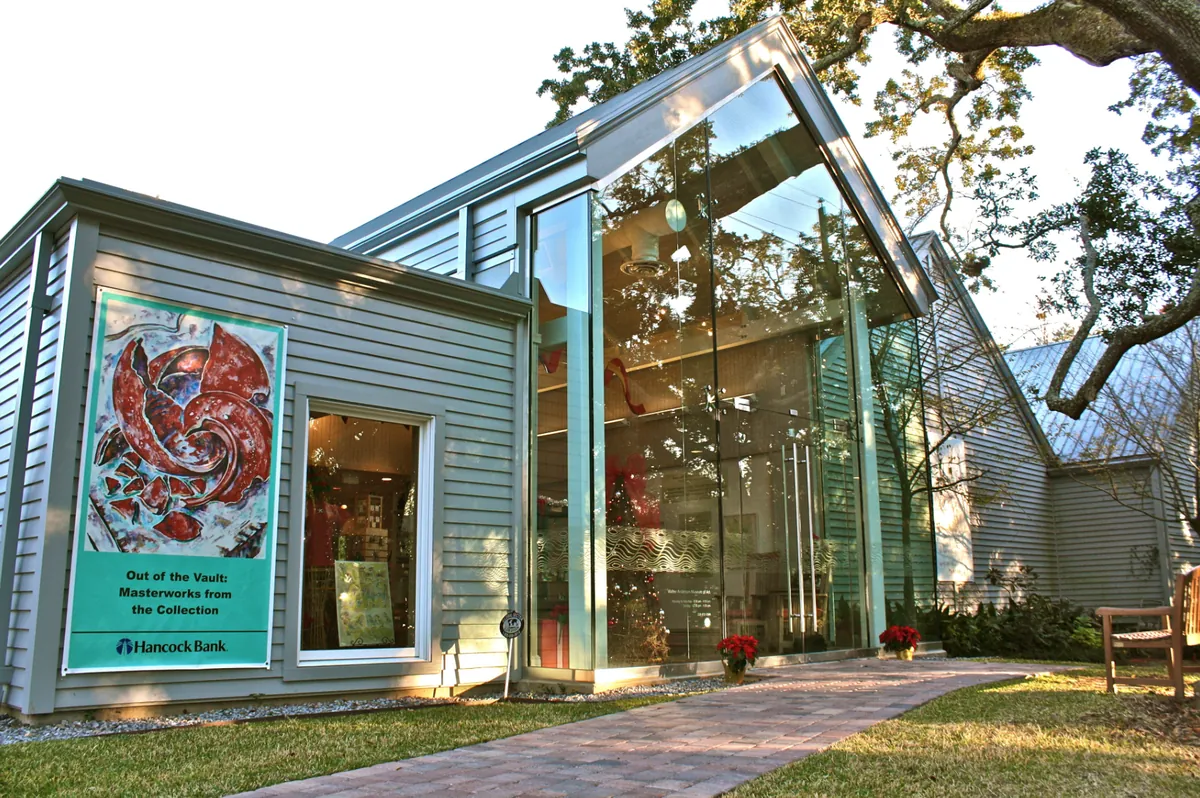 1Art·1991 (artist: 1903–1965)Walter Anderson Museum of Art
Walter Inglis Anderson rowed alone to Horn Island — 12 miles offshore — to paint birds, waves, and storms that no one else saw. When he died in 1965, his family found a locked cottage with walls and ceiling covered in secret murals. The museum preserves the Little Room murals as he left them. You can stand in the space he painted for no audience. This is the coast's formative tension made visible: a place that has always faced the Gulf alone, that has rebuilt after Camille and Katrina, that knows what it means to endure weather no one inland will understand. Anderson's Horn Island journals, published posthumously, are among the most remarkable nature writings from the American South. His depictions of coastal plants, animals, landscapes, and people have placed him among the most singular artists of the 20th century. The museum connects Anderson's most public project — the 3,000 square-foot Ocean Springs Community Center murals — with his most private work, the Little Room. The community center murals are a separate free visit. Since 2016, Mississippi hill country blues artist Luther Dickinson has staged performances of music inspired by Anderson's Seven Climates of Ocean Springs murals at the community center. The museum is also dedicated to Anderson's brothers: Peter Anderson, potter and founder of Shearwater Pottery, and James McConnell Anderson, painter and ceramist. The Friends of Walter Anderson was chartered in 1974. The museum was dedicated on May 4, 1991. Open Tuesday through Saturday, 9:30am to 4:30pm. Admission charged.
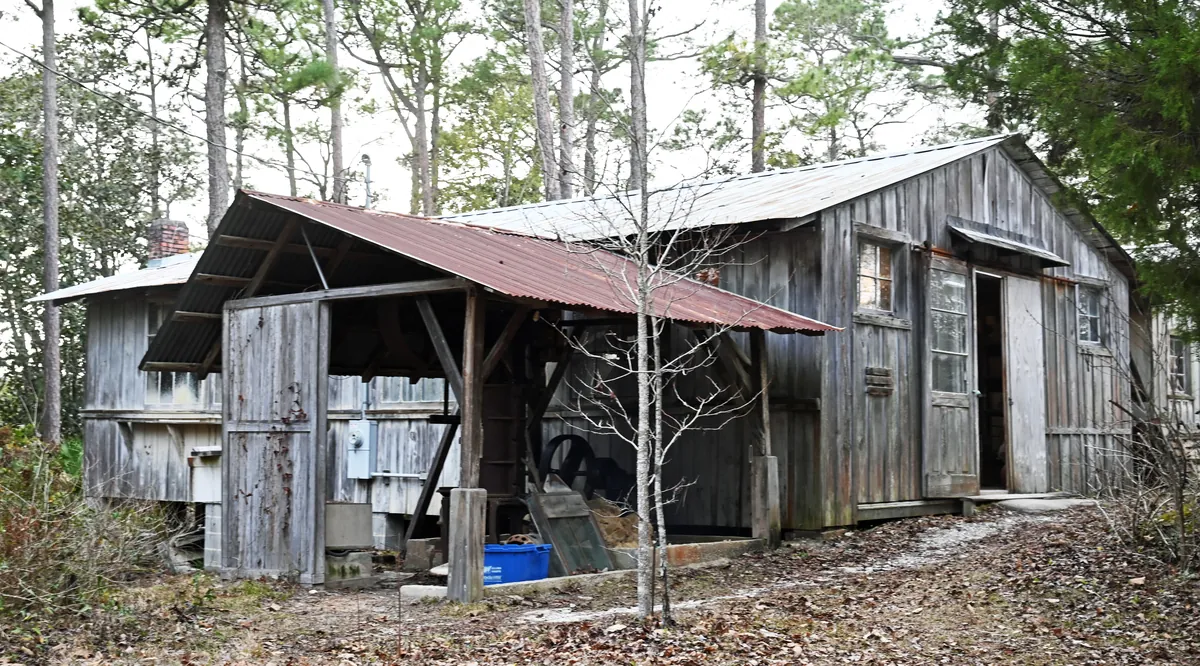 2Art·1928·NRHPShearwater Pottery
Peter Anderson founded Shearwater Pottery in 1928 on the family compound in Ocean Springs, with help from his parents. His brothers Walter Inglis Anderson and James McConnell Anderson became two of the pottery's most important designers. From that founding year to now, three generations of Andersons have hand-thrown pottery here using techniques Peter developed — art pottery, utilitarian ware, figurines, decorative tiles. Hurricane Katrina destroyed the workshop in 2005. Jason Stebly rebuilt and restored it. Pottery continues to be thrown by Peter's son James Anderson and James's son Peter Wade Anderson. Patricia Anderson Findeisen, Christopher Inglis Stebly, and Adele Anderson Lawton decorate pieces. Michael Anderson heads the Shearwater Annex. Marjorie Anderson Ashley is business manager. Nothing is mass-produced. Every piece is individually made and signed. The showroom on Shearwater Drive is the only retail outlet in the world for their work. The family compound is an NRHP-listed historic district. Follow Shearwater Drive to the end. Open Monday through Saturday.
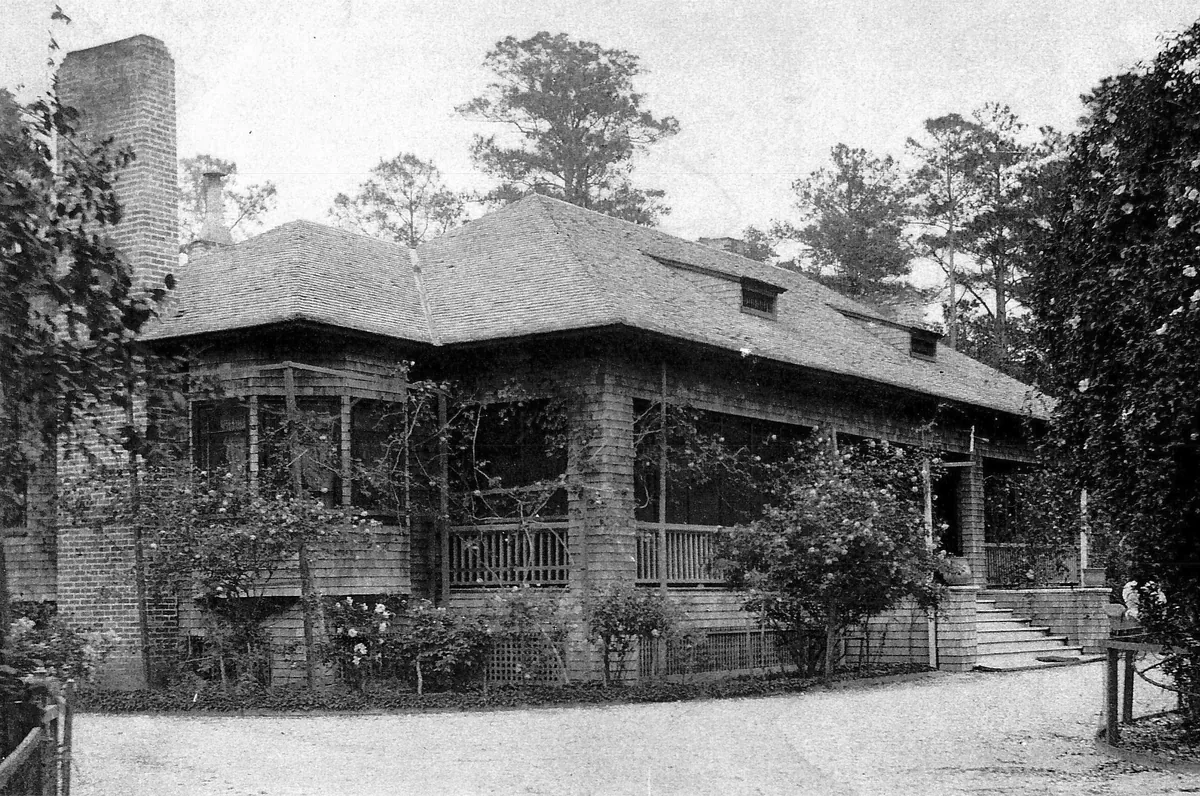 3Architecture·1890·NRHPSullivan-Charnley Cottage
Louis Sullivan designed this house in 1890 for James Charnley, a wealthy Chicago lumber baron. Sullivan — the man who would coin "form follows function" and become known as the father of the skyscraper — discovered Ocean Springs while vacationing in New Orleans, where he ran into the Charnleys. They urged him to visit the coastal paradise they'd recently explored. Ocean Springs was only a small village then, a peaceful retreat from Chicago. Sullivan and Charnley purchased adjoining gulf-side properties. Sullivan recalls in his autobiography quickly designing "two shacks" in March 1890, then giving the prepared plans to a local carpenter to construct. Frank Lloyd Wright was a young draftsman in Sullivan's office at the time, but there is little evidence Wright actually contributed to the 3,000 square foot cottage. Wright never visited the site. The T-shape bungalow broke from Victorian architecture. Horizontal design. Rooms that flow from one into the next. Natural materials and large glass windows throughout. The interior floors, walls and ceilings are constructed of local heart and curly pine; the exterior walls are clad using wood shingles. Large roof overhangs and covered porches at the south, west, and east sides provide protection from the sun while numerous doors and operable windows distribute onshore and offshore breezes to cool the residence. Fireplaces in each bedroom, the entry hall, and dining room supply warmth for cooler winter temperatures. In 1895, Charnley sold the property to Frederick W. Norwood, a Chicago businessman who dealt in general merchandise and lumber near Brookhaven. In 1897, the main house burned to the ground. Sullivan modified and rebuilt it to nearly the same design. Hurricane Katrina's storm surge in 2005 knocked the house off its piers, collapsed one side, and washed away the porch. The brick foundation piers pierced through the floor where the structure landed after being floated by floodwaters. The Mississippi Department of Archives and History and the Mississippi Department of Marine Resources partnered to fund the $2.3 million acquisition and restoration project. Contractor J.O. Collins completed the restoration under supervision of Albert and Associates Architects and MDAH Gulf Coast Field Office staff. Wright designed only four homes in Mississippi. Two were destroyed by hurricanes Camille and Katrina. Charnley-Norwood and Fountainhead in Jackson remain. Of these two, only Charnley-Norwood is open to the public. The Gulf Coast National Heritage Area Program manages the property. The home is open weekly for tours and available for cultural and artistic events. It sits at 509 East Beach Drive.
- 4Cultural Heritage·c. 1880s–presentDowntown Ocean Springs — Washington Avenue
Two walkable blocks of Washington Avenue hold more art galleries per square foot than anywhere on the Gulf Coast. The concentration sits under 300-year-old live oaks, and Ocean Springs has been an artist colony since the Anderson family arrived in the early 1900s. Galleries, pottery studios, boutiques, and coffee shops line the street in buildings that feel more New England village than coastal Mississippi. The town was the home of Walter Inglis Anderson, a nationally renowned painter and muralist who drew inspiration from the natural coastal landscape and nearby barrier islands. The Peter Anderson Arts & Crafts Festival — named for a different Anderson, the potter — draws 150,000 people the first weekend of November each year. The festival was first hosted in 1978 after local artist Klara Koock brought the idea to the Chamber of Commerce. Ocean Springs began in 1699 as Fort Maurepas, the first permanent French outpost in French Louisiana, established by Pierre Le Moyne d'Iberville under the authority of King Louis XIV as a foothold to prevent Spanish encroachment on France's colonial claims. The site was maintained into the early 18th century. The town was briefly called Lynchburg Springs when the first post office was established in 1853. The name Ocean Springs was coined by Dr. William Glover Austin in 1854 — he believed the local springs had healing qualities. Hurricane Katrina's 28-foot storm surge destroyed much of the shoreline on August 29, 2005, including the Biloxi Bay Bridge that connected the town to Biloxi. The new bridge opened November 1, 2007. The downtown survived, and Second Saturday events run year-round. Free to explore. Park on Washington Avenue or the side streets.
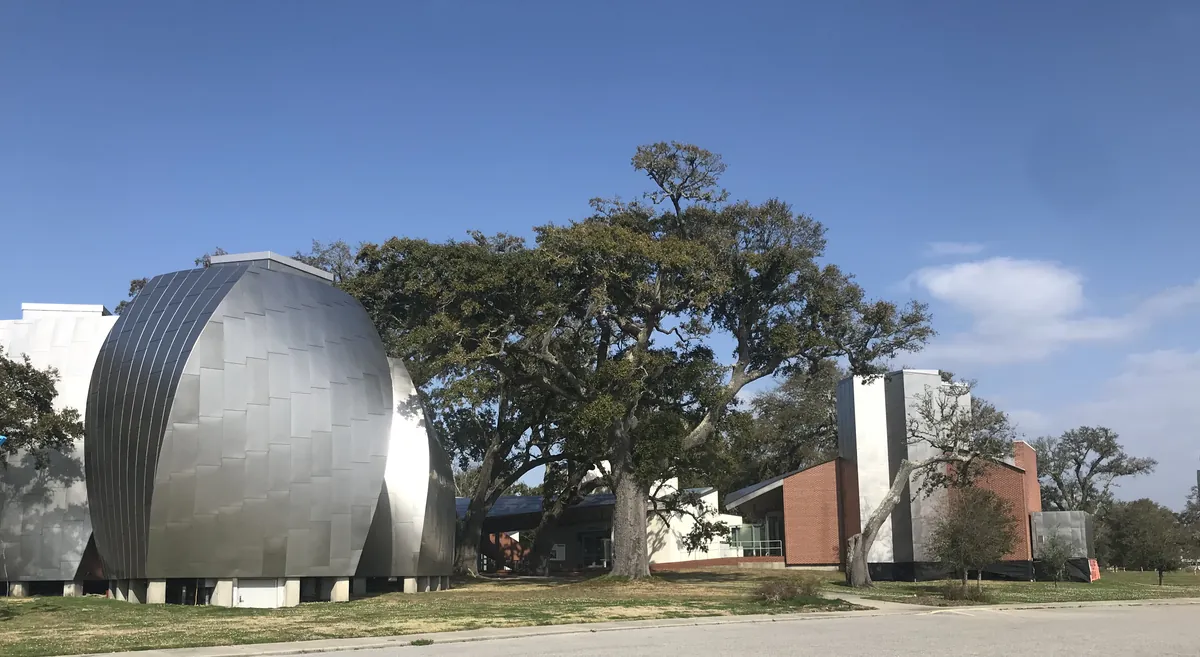 5Art·2010 (potter: 1857–1918)Ohr-O'Keefe Museum of Art
George Ohr dug his clay from the Tchoutacabouffa River in southern Mississippi. Tchoutacabouffa is the Biloxi tribe's word for "broken pot." He worked in Biloxi from the 1880s through 1910, throwing thin-walled vessels and twisting them into pinched shapes on a potter's wheel. He called himself the "Mad Potter of Biloxi," groomed himself eccentrically, and operated his studio as a regional attraction he named the "Pot-Ohr-E." He claimed to have made over 20,000 ceramic pieces. He called his work "unequaled, undisputed, unrivaled." At the 1904 St. Louis World's Fair, he traveled with hundreds of pieces and sold nothing. He sold almost nothing in his lifetime. Ohr died of throat cancer in 1918. For decades his remaining pieces sat in a garage behind his sons' gas station in Biloxi. In 1970 Jim Carpenter, an antiques dealer and barber from New Jersey, was visiting the area, saw the collection, and bought most of the pieces held by the Ohr family. Single pieces now sell for six figures. The Smithsonian calls him the father of American art pottery. Frank Gehry designed the museum. Three buildings of the new campus opened to the public on November 8, 2010. The museum holds a large permanent collection of Ohr's work. Open Tuesday through Saturday, 10am to 5pm. Admission charged. The Gehry architecture alone is worth the stop.