The ground beneath LSU was shaped into ceremonial mounds 3,500 years before a football stadium rose beside them. This trip moves from the oldest human-built structures in North America through the Italian Renaissance-style campus Huey Long built in a decade — passing a live Bengal tiger along the way — to the literary and cultural institutions he accidentally created, and the baseball stadium where six national championships were won.
The route
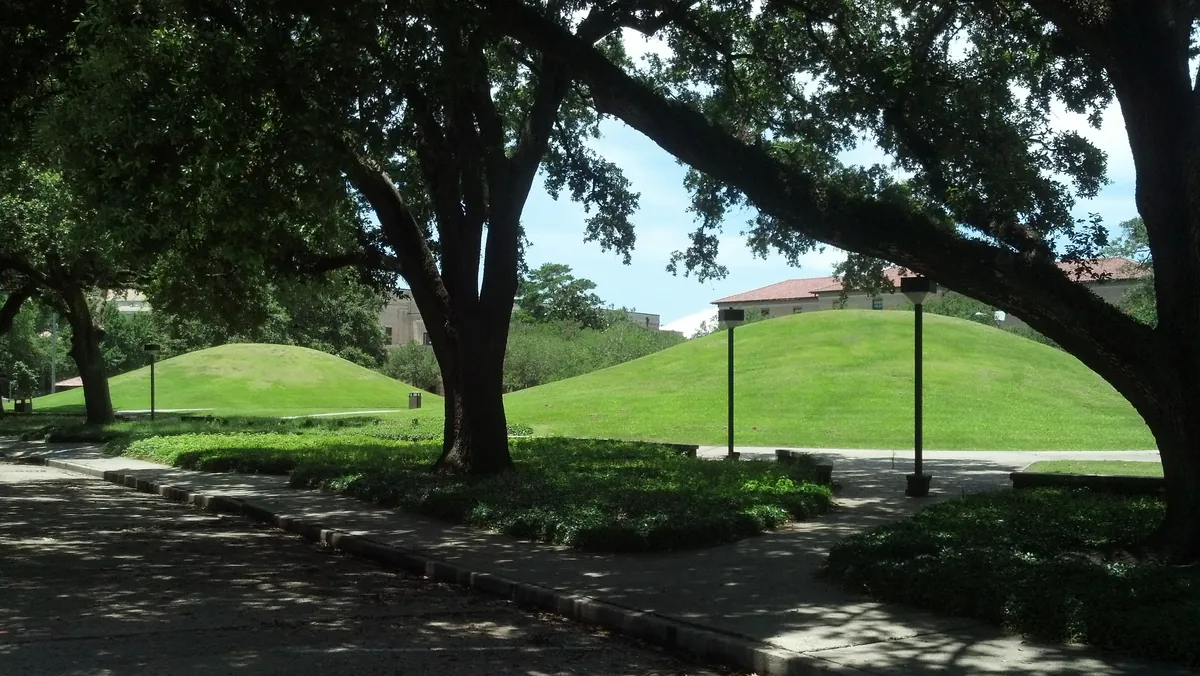 1Cultural Heritage·c. 3400–3000 BCE·NHLLSU Campus Mounds
Two earthwork mounds sit beside a football practice field on the LSU campus. Construction on the 20-foot-tall structures began more than 11,000 years ago and may have continued until 5,000 years ago — they predate the Great Pyramids of Egypt. The northern mound consists of hard clay dirt; the southern mound is more porous. Most students walk past them daily without knowing what they are. The scholarly consensus is that they were used for ceremonial and marking point purposes, rather than for burial. They are part of a larger, statewide system of mounds. In 2009, LSU professor Brooks Ellwood took core samples that revealed a layer of charcoal, possibly from a pit barbecue or a cremation. Based on his analysis, Ellwood conjectures that they contain cremated human remains and are substantially older than the existing consensus, as much as 11,300 years old. The builders are not directly connected to any modern tribal nation, making these among the more mysterious indigenous sites in Louisiana. Human habitation in the Baton Rouge area has been dated to about 8000 BC. Earthwork mounds were built by hunter-gatherer societies in the Middle Archaic period, from roughly the 4th millennium BC. By the time French explorer Sieur d'Iberville led an exploration party up the Mississippi River in 1699, many political centers were already in decline. The mounds stand as evidence of cultures that shaped this ground thousands of years before the red pole that gave the city its name. Due to their location in a heavily trafficked area of campus, the mounds began to show signs of degradation and natural erosion. The university installed a sidewalk between the mounds in 1985 and placed a low brick wall around them to prevent vehicles from crossing. In 1996, LSU Facility Services used river silt to patch damage on both mounds and seeded a hybrid Bermuda grass to prevent future problems. The mounds were listed on the National Register of Historic Places on March 1, 1999. While they were formerly used for tailgate parties, in 2010 they began to be fenced off during LSU's home football games to prevent them from being damaged. They are freely accessible south of the Quadrangle near Dalrymple Drive. No admission. Among the oldest known human-constructed features in North America, designated a National Historic Landmark.
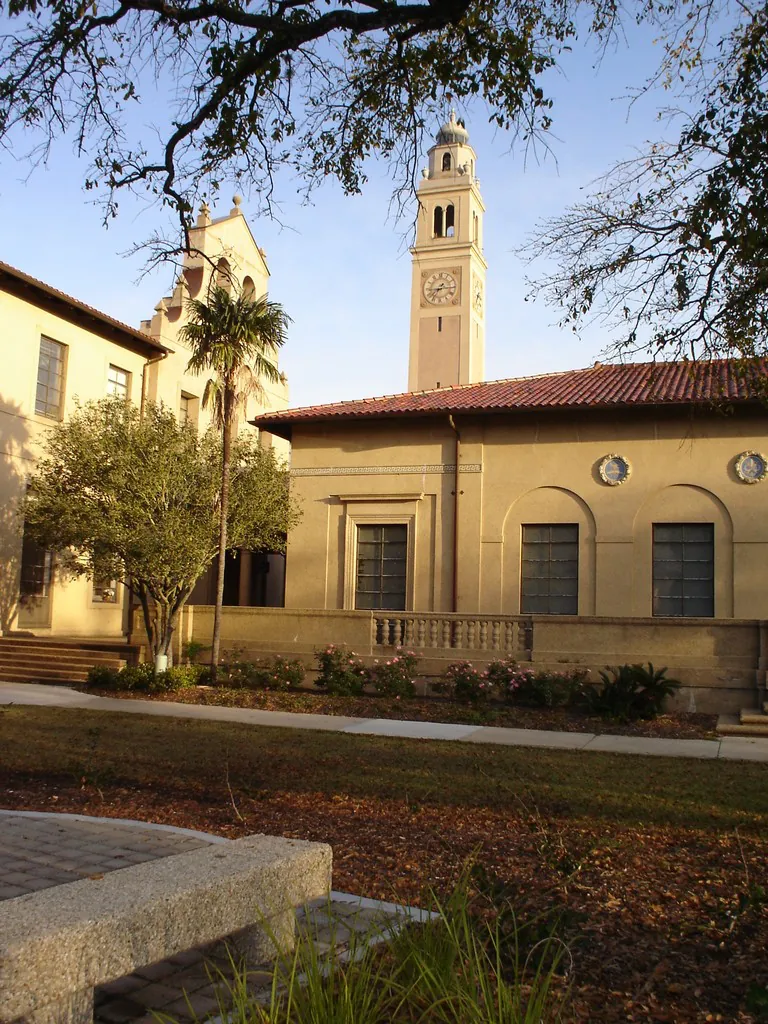 2Architecture·1926Memorial Tower — LSU
Before Huey Long remade LSU into the campus you see today—before the Italian Renaissance colonnades, before Mike the Tiger, before the stadium that holds 100,000—there was this tower. Erected in 1923 and dedicated in 1926, the 175-foot campanile stands for Louisiana's 1,447 World War I dead, their names inscribed on bronze plaques inside the rotunda. It is the one structure on campus that exists independent of Long's ambitions, a memorial that predates the expansion that followed. The Westminster Chimes mark every quarter-hour until 10 p.m. At noon, the bells play the university's alma mater. The sound carries across the quad. On Valentine's Day, the chimes ring after 10 p.m.—the only night of the year—when campus tradition brings couples to the plaza. The tradition holds that to become an official LSU student, one must be kissed under the tower when the chimes ring at midnight. The plaza hosts the university's annual Christmas Tree Lighting Ceremony. Each spring, Student Government holds the formal installation for its new president and vice president here. Inside, the rotunda holds the names. The tower also houses a military museum. Visible from Highland Road, it remains the visual anchor of the campus—not the largest structure, not the loudest, but the first thing that was here to remember what was lost.
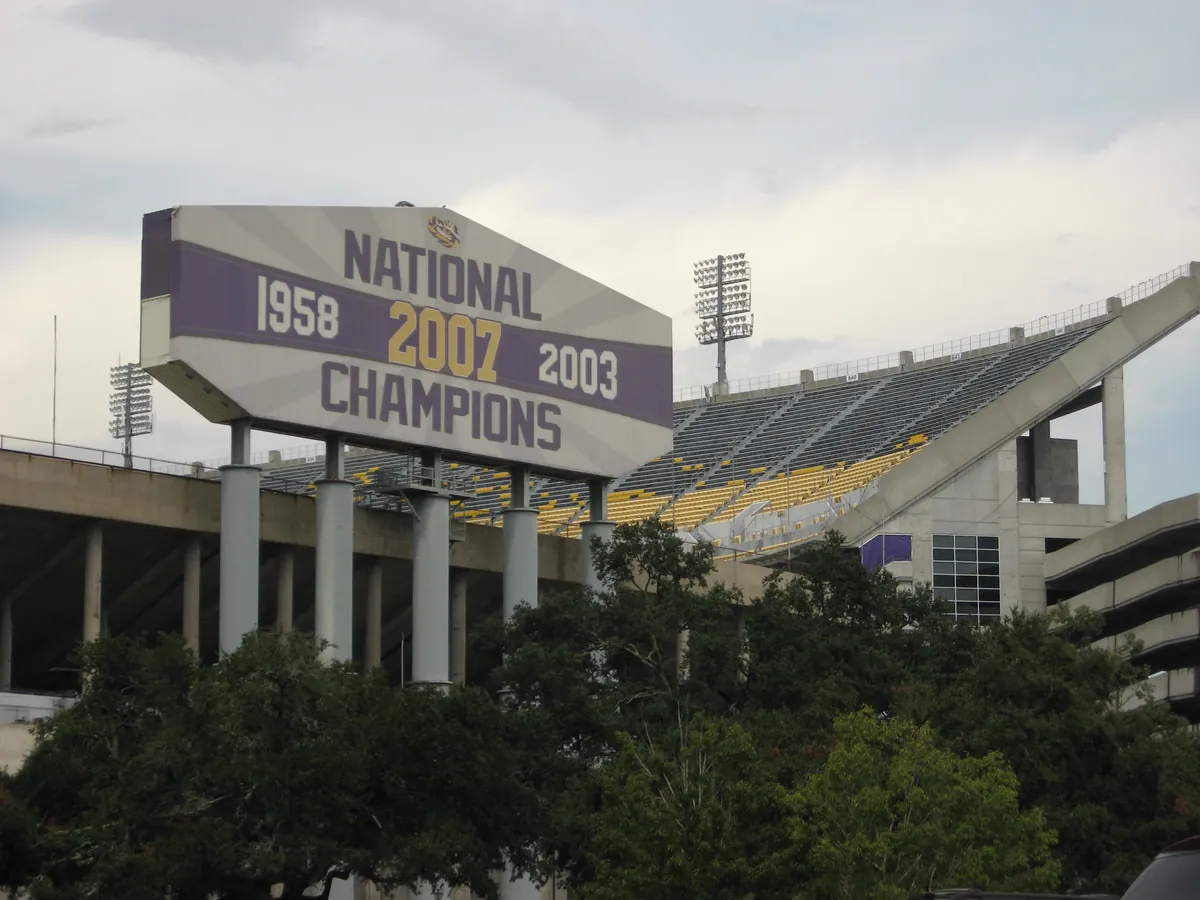 3Sports & Entertainment·1924Tiger Stadium — Death Valley
In 1924, LSU built a 12,000-seat football stadium on the south side of campus. A century later, that same structure holds 102,321, the seventh-largest stadium in the world and the fifth-largest in the NCAA. It was never demolished and rebuilt. Each expansion was added onto the existing bowl, decade by decade. In 1931, 10,000 seats were added to the existing grandstands — and night games were introduced, a 35-0 victory over Spring Hill under the lights. In 1936, capacity more than doubled with 24,000 seats in the north end zone, turning the stadium into a horseshoe. According to local legend, Governor Huey P. Long ordered that dormitories be built in the stadium, with seating above the student living quarters. The idea actually came from athletic director T. P. "Skipper" Heard, though Long helped in other ways. The dormitories were inhabited until the early 1990s. In 1953, more than 21,000 seats were added in the south end zone, creating a 67,720-seat bowl. In 1978, the first of two upper decks was added to the west side, bringing capacity to approximately 78,000. The east upper deck, seating 11,600, was completed in 2000. In 2014, an $80 million south end-zone upper deck expansion added 70 Tiger Den suites, over 3,000 club seats, and 1,500 general public seats. Since 1960, LSU is 201–59–3 at night in Tiger Stadium and 21–22–3 during the day. Bear Bryant once remarked that Baton Rouge is "the worst place in the world for a visiting team. It's like being inside a drum." In 2007, ESPN named it "the scariest place to play." In 2013, the NCAA ranked it the loudest stadium in all of college football. In 2024, ESPN.com polled 14 college football writers for the best stadiums in the sport; Tiger Stadium was awarded first place with a score of 247 points out of a possible 280. In 1988, LSU played Auburn in what became known as the Earthquake Game. Quarterback Tommy Hodson completed a game-winning touchdown pass to running back Eddie Fuller in the waning seconds; LSU won 7–6. The crowd reaction registered as a legitimate earthquake on the seismograph in the Louisiana Geological Survey office on campus — the origin of the Death Valley nickname. LSU has won five national championships in football: 1958, 2003, 2007, 2011 (BCS), and 2019. Since the first game in 1924, LSU has posted a 439-154-18 record in Death Valley. Tiger Stadium uniquely sports H-style goal posts, as opposed to the more modern Y-style used by other schools. This allows the team to run through the goal post in the north end zone when entering the field. Tiger Stadium is one of only three Division I FBS schools who still use H-style goal posts full-time. The goalposts at the north end were torn down by students in 1997 and twice in 2000. Fans rushed the field following victories in 2014, 2018, twice in 2022, and 2024. Night games in Tiger Stadium are considered among the most hostile environments in all of college football. Tailgating begins Friday night before Saturday home games. Tours are available on non-game days.
 4Cultural Heritage·2017Mike the Tiger Habitat
On game days, roughly 100,000 fans walk past a live Bengal tiger on their way into Tiger Stadium. Mike VII's enclosure sits directly adjacent to the north end zone entrance — 15,000 square feet of waterfall, stream, rock plateaus, and live vegetation backing onto an Italianate campanile that mirrors the campus vernacular. It ranks among the largest on-campus live mascot enclosures in the country. LSU has kept a live tiger continuously since 1936, when Mike I arrived from the Little Rock Zoo for $750. The original enclosure was 2,000 square feet. In fall 2001, a grassroots "I Like Mike" campaign began raising funds for a larger home. Donors bought $100 engraved bricks that now pave the walkway around the habitat. Louisiana artist George Rodrigue created a painting sold for $500, proceeds to the campaign. Torre Design Consortium built the $3 million habitat in 2005, situated between Tiger Stadium and the Pete Maravich Assembly Center. The tradition nearly ended in 2016 when animal rights groups pressured the university. LSU responded by upgrading the habitat to AZA-level standards. Mike VI died of a rare spinal tumor. Mike VII arrived in 2017 from a sanctuary in Sandstone, Minnesota. Open daily, free admission. Best viewing times are early morning and late afternoon when Mike is most active.
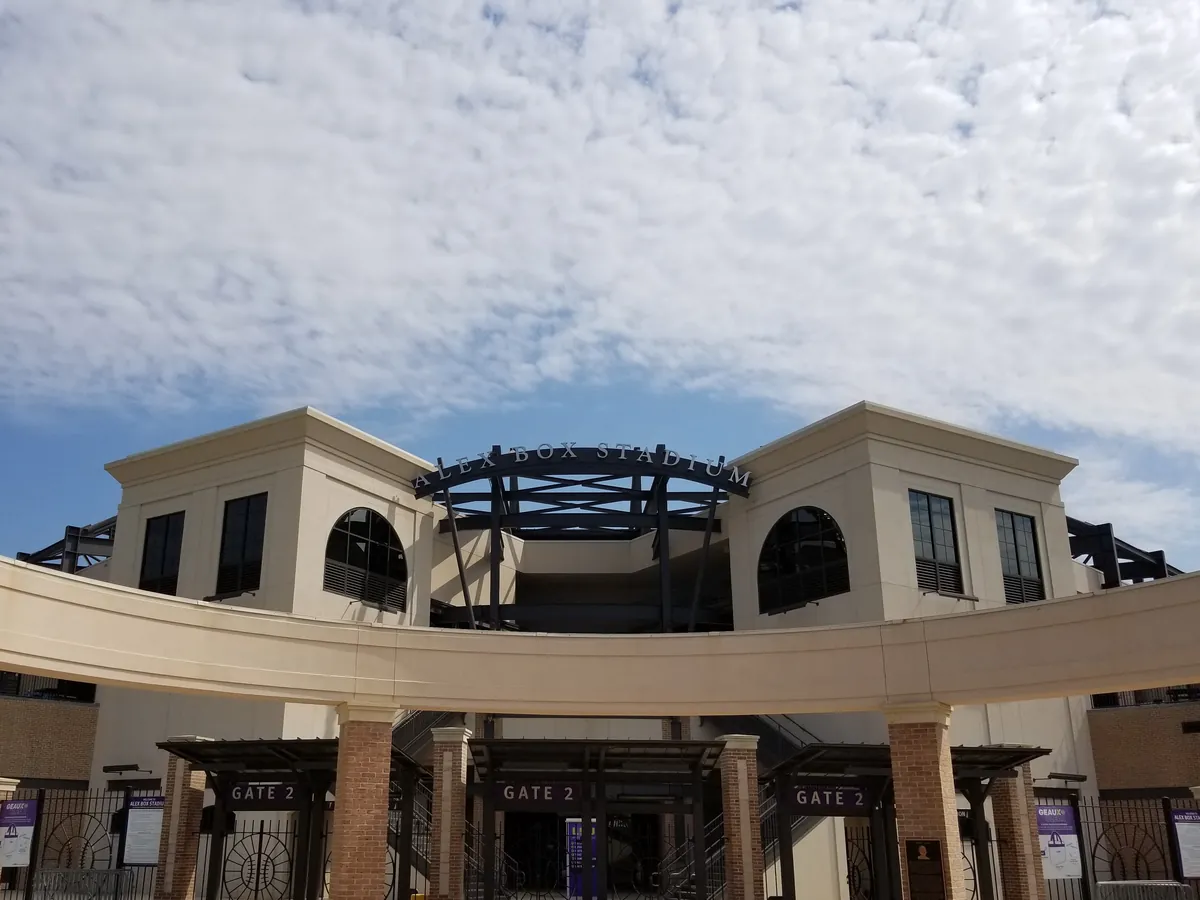 5Sports & Entertainment·2009Alex Box Stadium
The grass berms beyond the outfield hold 8,000 bodies on Friday nights in spring, and the noise they make has no relationship to their number. LSU has won six College World Series titles — more than any program in the modern era of college baseball — and the people who pack this stadium between February and June understand what that means. Friday night SEC series games sell out. If you want in, you plan ahead. The current stadium opened in 2009, replacing a beloved original that stood since 1938. Both carry the name of Simeon Alex Box, an LSU letterman killed in North Africa during World War II in 1943. The field itself is named for Skip Bertman, the coach who won five of those six national titles. The original Alex Box cost $50,000 to build. The New York Giants held spring training there in 1938 and 1939. On March 12, 1938, the Giants played the first game at the park, defeating the Philadelphia Phillies 6–5. Between 1984 and 2008, the old stadium hosted 18 NCAA Regional Tournaments and 4 Super Regional Series. The final game was played June 9, 2008 — LSU beat UC Irvine 21–7 in Game 3 of the Super Regional. Tyler Hoechlin grounded to pitcher Anthony Ranaudo, who threw to first baseman Buzzy Haydel for the last out. After the stadium was dismantled, its remnants were sold to fans. The new stadium sits 200 yards south of where the original stood, near Skip Bertman Drive on the south side of campus. If you're here in spring and it's a Friday night, you'll know why people kept the bones of the old place.
 6Museum·c. 1700–1900Rural Life Museum
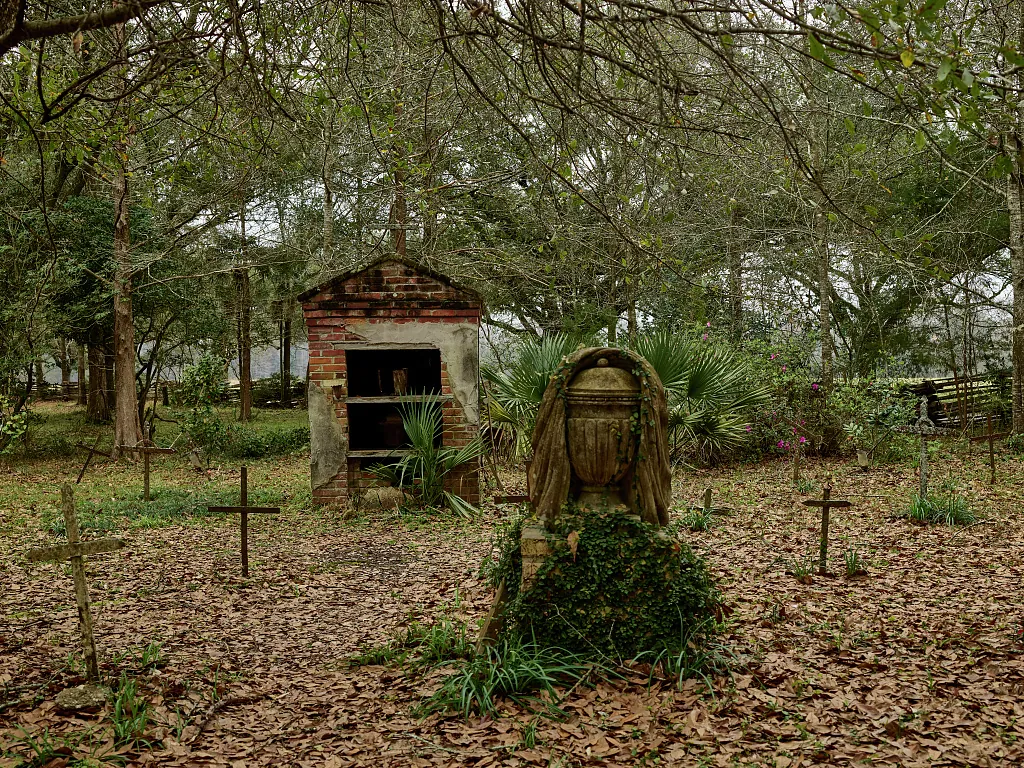
Twenty-five historic structures—commissary, overseer's house, kitchen, slave cabins, sick house, schoolhouse, blacksmith shop, sugar house, church, grist mill—were relocated to the LSU AgCenter grounds and arranged in the physical relationship they would have occupied on an operating plantation. This is one of the most comprehensive folk life museums in the American South, operated by Louisiana State University within the Burden Museum and Gardens, a 400-acre agricultural research experiment station. The museum divides into three areas. The Working Plantation illustrates the life of working people on a nineteenth-century plantation, with a main focus on the lives of enslaved persons. The Southern section includes cabins and outbuildings—the Neal home, a dogtrot house; the Stoker barn; the Stoner Athens Cabin; and a pioneer cabin originally located in Washington Parish—highlighting the contributions of American settlers to northern and central Louisiana in the nineteenth century. The Acadian section presents two Acadian-style homes, one a replica and the other built by the Bergeron family between 1800 and 1815 on Bayou Lafourche, moved to the museum in 2005. The Barn, donated in 1999 from the Stoker House property in Sabine Parish, houses artifacts from the nineteenth and early twentieth centuries: farming equipment, tools, furnishings, utensils—objects from the common life rituals of rural Louisiana. The museum commemorates the contributions made by Louisiana's various cultural groups—French, Spanish, Native American, German, African, Acadian, Anglo American—through interpretive programs and events throughout the year. Windrush Gardens features twenty-five acres of landscaped grounds with seasonal plantings; the gardens and gift shop are open year-round except major holidays. Guided tours available for groups of ten or more, booked in advance. Open daily 8am–5pm. Admission charged.
 7Literary·1934Robert Penn Warren — All the King's Men
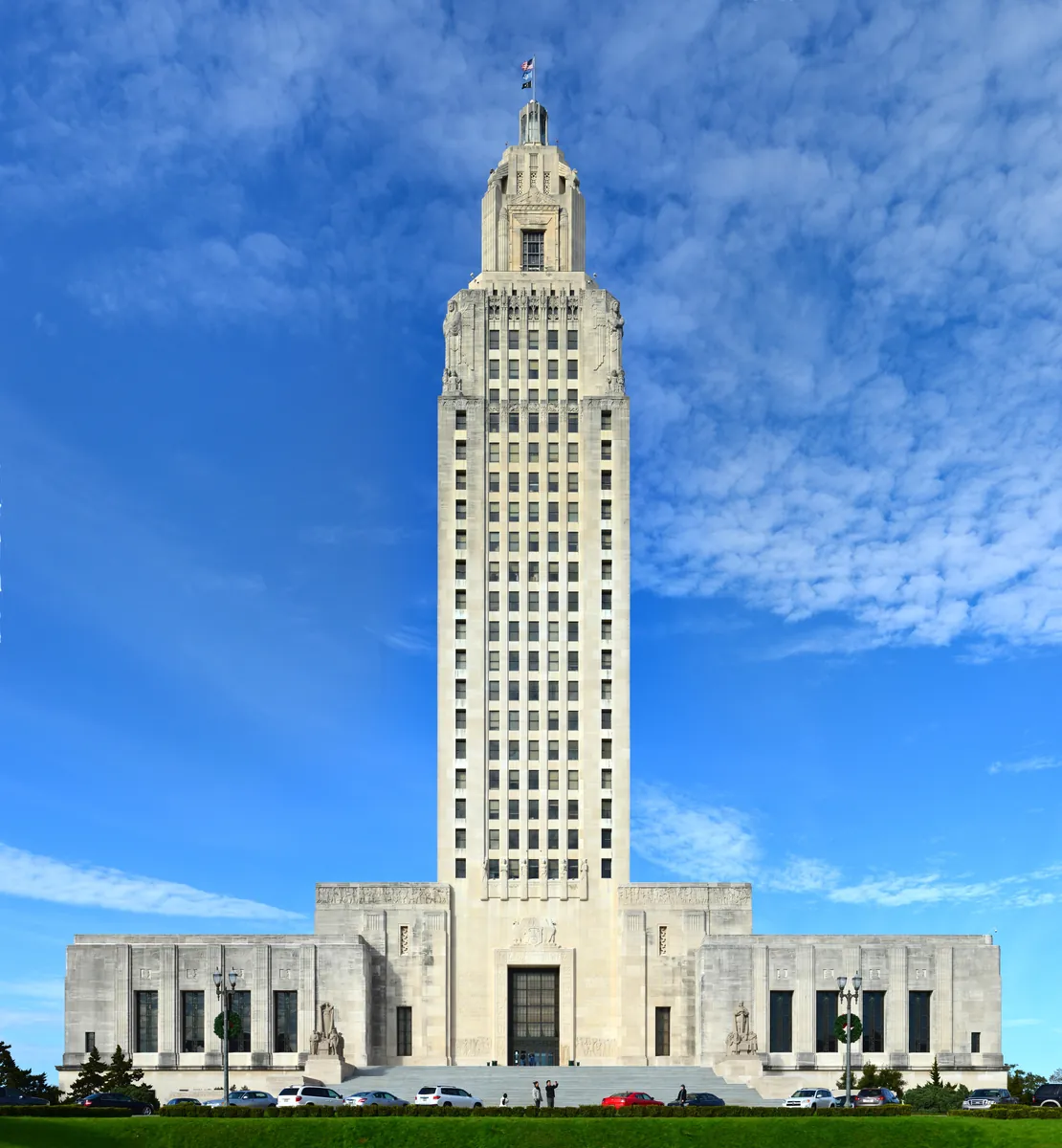
Robert Penn Warren taught at LSU from 1934 to 1942, the years Huey Long's presence defined Louisiana politics, and wrote *All the King's Men* in the shadow of Long's capitol. The novel won the Pulitzer Prize in 1947 and is widely considered the greatest American political novel. Willie Stark is a thinly veiled Huey Long, and the capitol hallways Warren walked are the ones you can visit today. Warren co-founded *The Southern Review* at LSU during this period, still one of the most important literary journals in America. The Hill Memorial Library on campus holds Warren's papers and first editions—the archive of a writer who turned Louisiana's formative political catastrophe into American literature's most searching interrogation of power and complicity.
 8Nature & ParksBurden Museum & Gardens
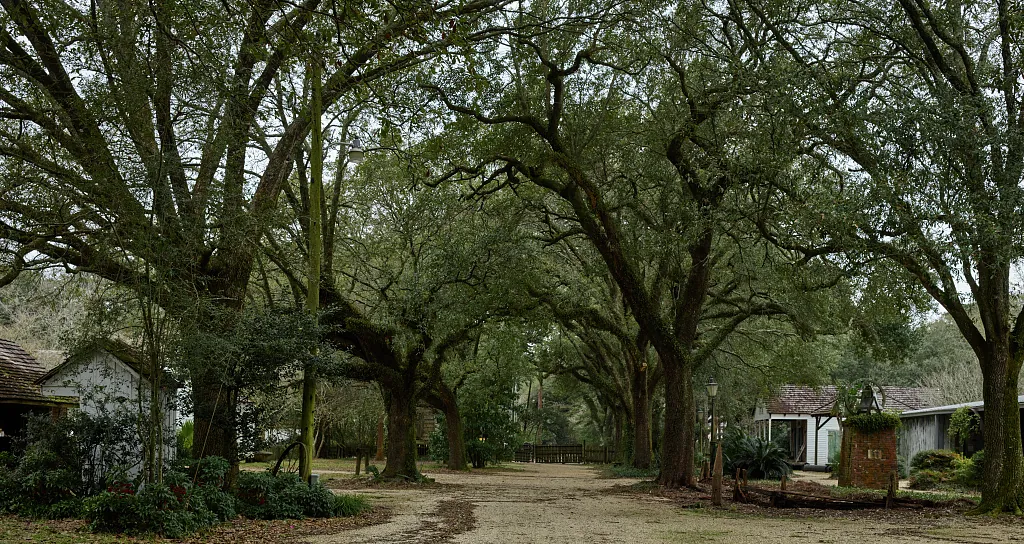
Four hundred forty acres that feel like they belong to a different century. The Burden family donated this land to LSU, and what remains is formal gardens, working farm buildings, and mature live oak allées. The place feels completely detached from the city surrounding it. Free admission, open daily, and almost nobody knows it's here. The LSU AgCenter Museum of Rural Life sits within the grounds, documenting Louisiana rural life from pre-Civil War through the early twentieth century. Museum hours vary; the gardens themselves stay open. Baton Rouge became Louisiana's capital in 1849, but the history runs deeper. French colonists established a military post here in 1721, at the site of a red pole marking the boundary between the Houma and Bayagoula tribal hunting grounds. The French called it *le bâton rouge*—the red stick. After France ceded its territory to Britain in 1763, Acadian settlers displaced from eastern Canada began arriving, the first group in 1765. They settled west and south of here, eventually calling themselves Cajuns, maintaining distinct traditions of music, food, and Catholic faith separate from later Anglo-American settlers. The Burden grounds carry a different kind of weight—not political layering, but what one family built and farmed and then gave away. Go for the oaks. Go because it's free and largely undiscovered. Go because the disconnect from the surrounding city is the entire point.