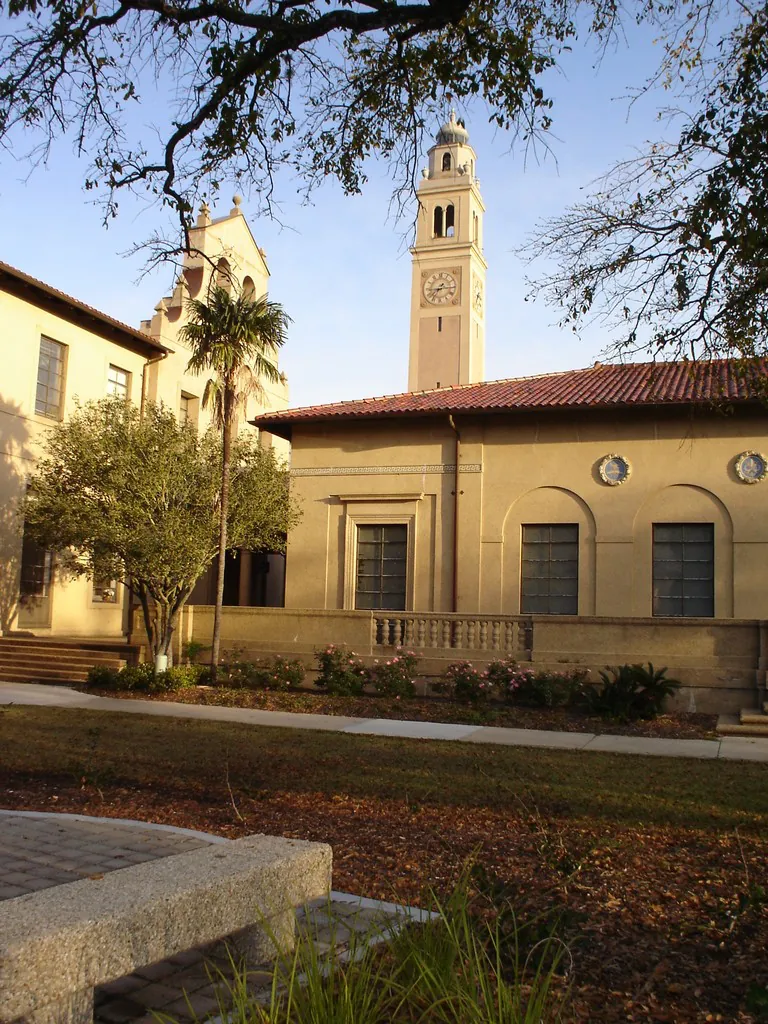
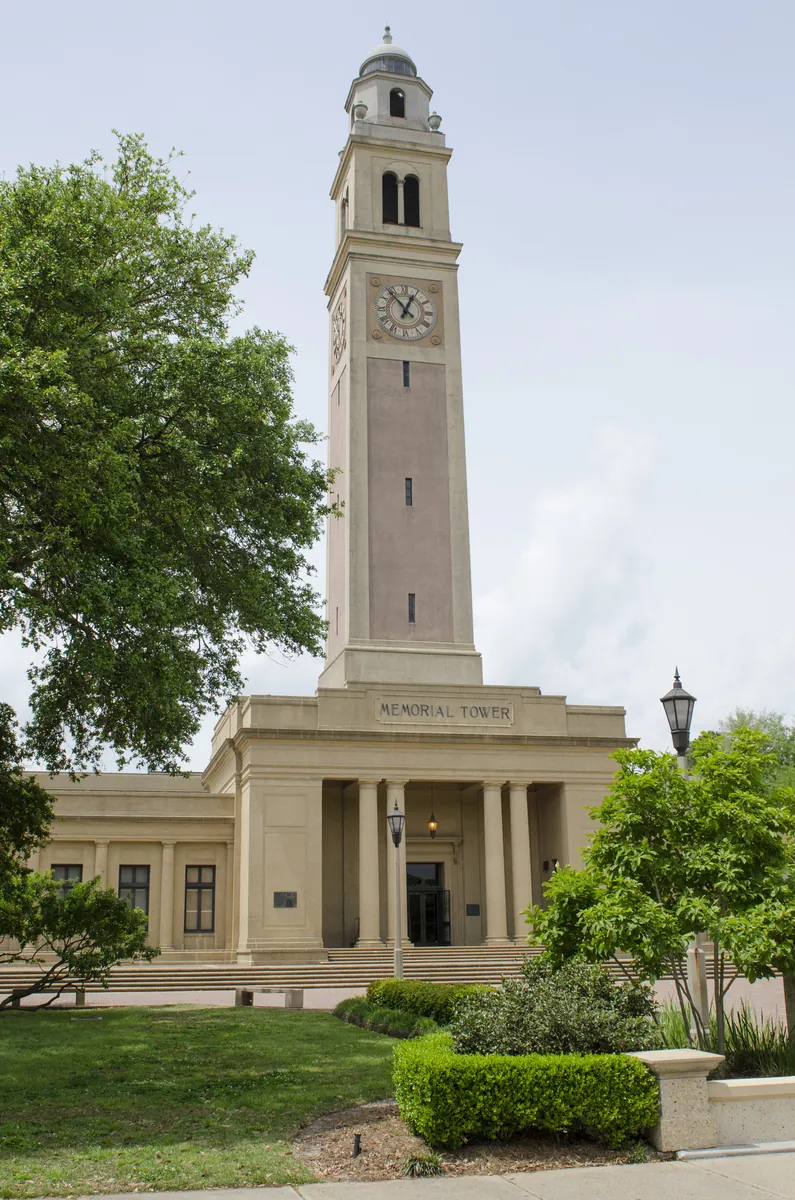
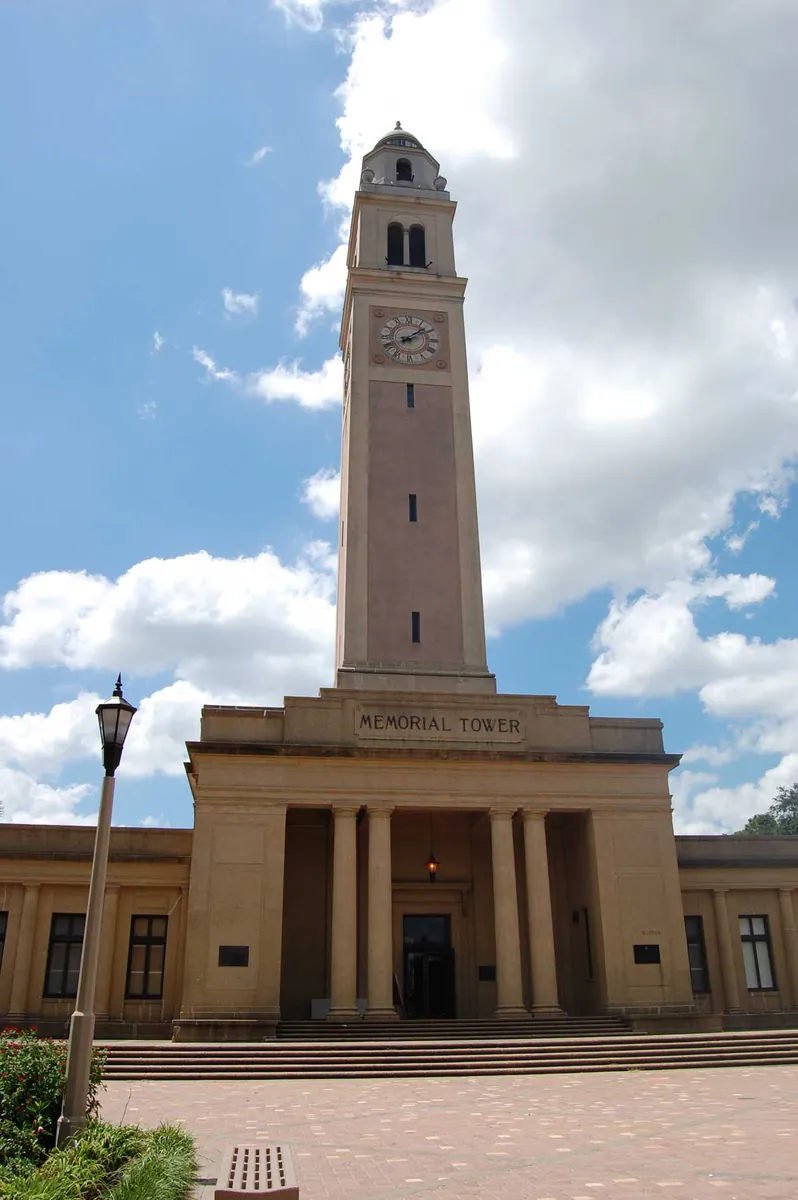
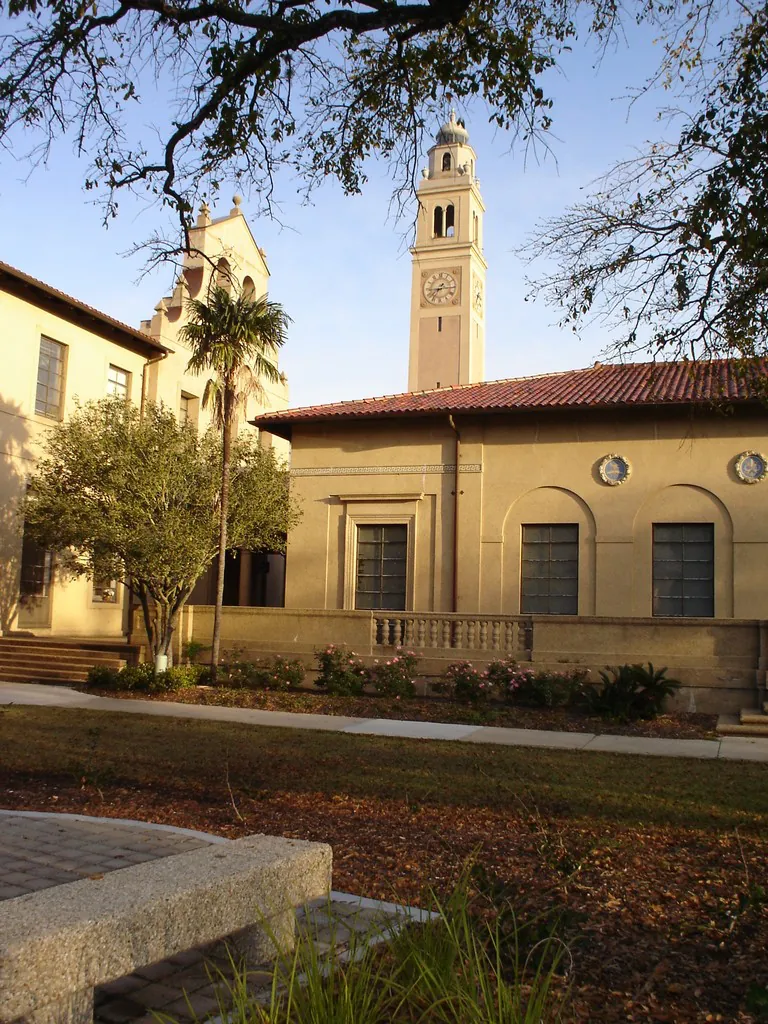
Before Huey Long remade LSU into the campus you see today—before the Italian Renaissance colonnades, before Mike the Tiger, before the stadium that holds 100,000—there was this tower. Erected in 1923 and dedicated in 1926, the 175-foot campanile stands for Louisiana's 1,447 World War I dead, their names inscribed on bronze plaques inside the rotunda. It is the one structure on campus that exists independent of Long's ambitions, a memorial that predates the expansion that followed.
The Westminster Chimes mark every quarter-hour until 10 p.m. At noon, the bells play the university's alma mater. The sound carries across the quad. On Valentine's Day, the chimes ring after 10 p.m.—the only night of the year—when campus tradition brings couples to the plaza. The tradition holds that to become an official LSU student, one must be kissed under the tower when the chimes ring at midnight.
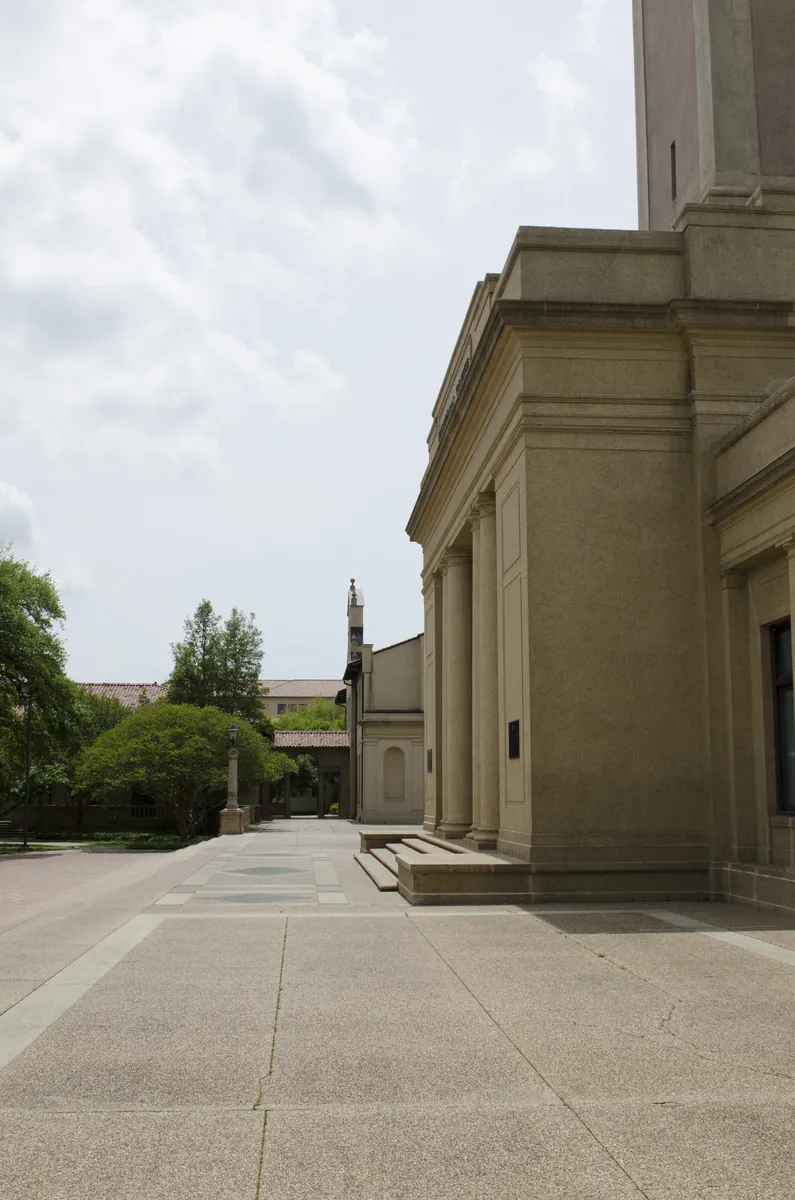
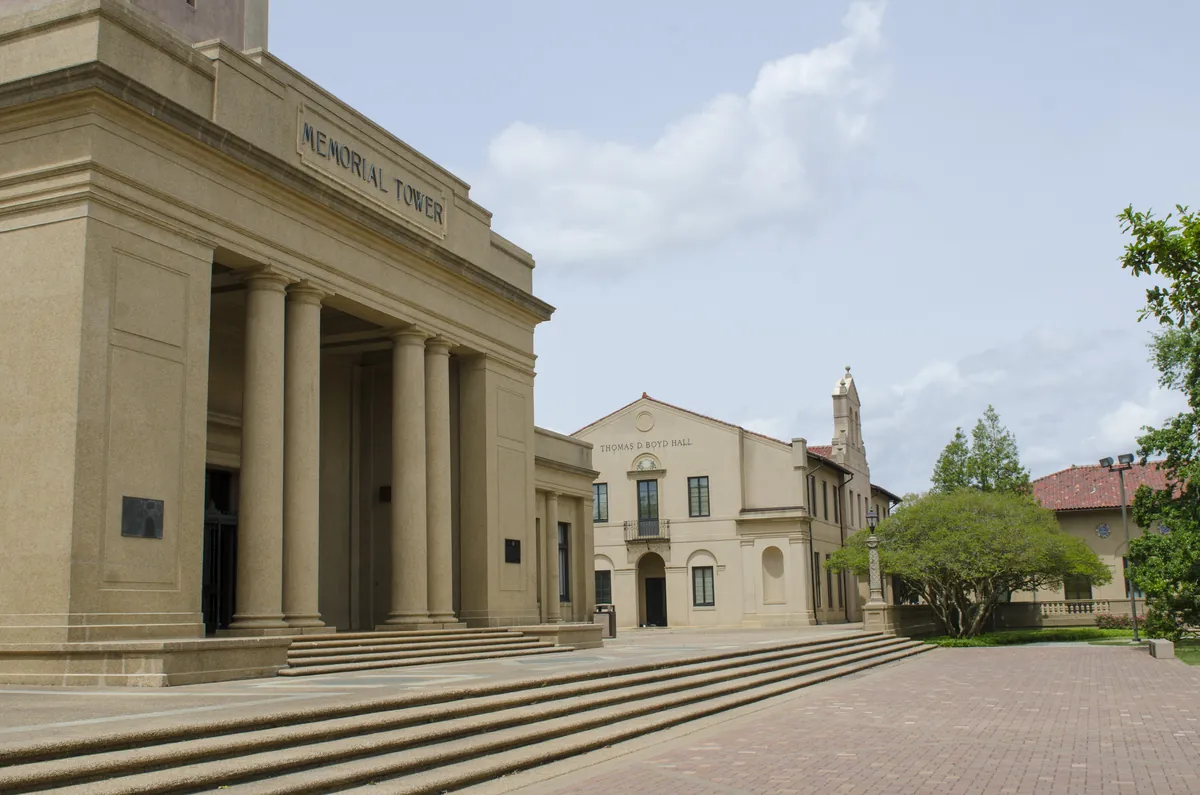
The plaza hosts the university's annual Christmas Tree Lighting Ceremony. Each spring, Student Government holds the formal installation for its new president and vice president here. Inside, the rotunda holds the names. The tower also houses a military museum.
Visible from Highland Road, it remains the visual anchor of the campus—not the largest structure, not the loudest, but the first thing that was here to remember what was lost.
- ·175-foot campanile built in 1926 as a memorial to Louisiana's 1,447 World War I dead.
- ·All names are inscribed inside the tower.
- ·The visual anchor of the LSU campus, visible from Highland Road.
- ·Bells ring on the hour; audible across the quad.
- ·Predates Huey Long's expansion — the one structure on campus that exists independent of his ambitions.
More archive
Memories
Editorial content compiled with AI assistance. Place details verified against public records.