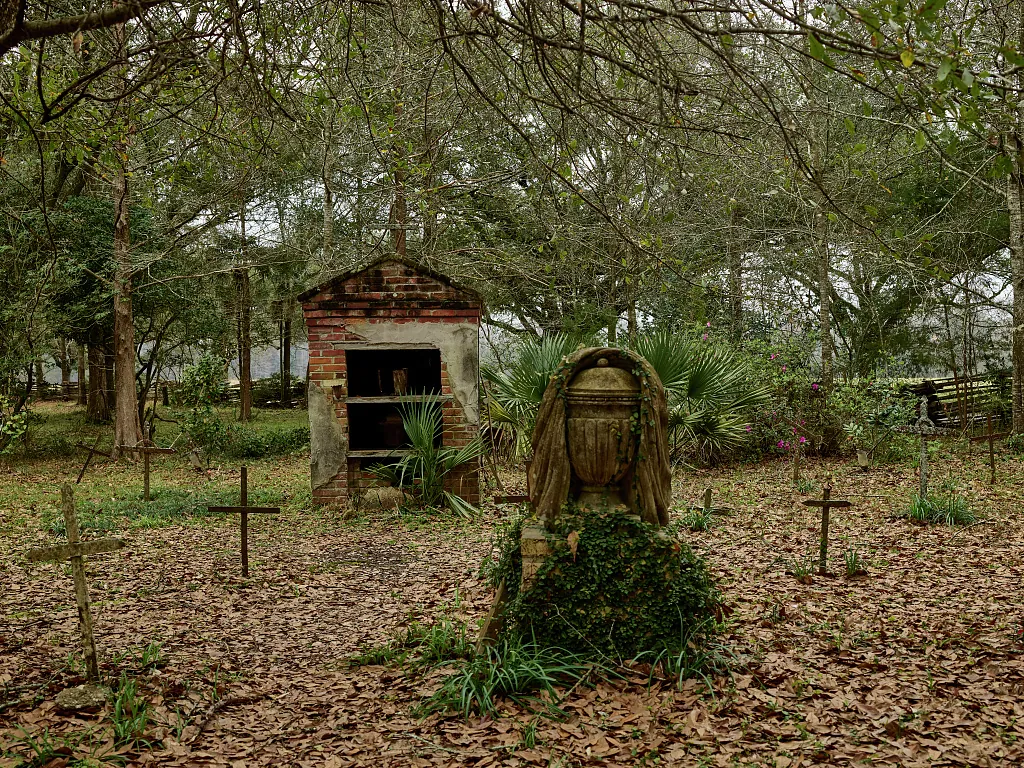
Twenty-five historic structures—commissary, overseer's house, kitchen, slave cabins, sick house, schoolhouse, blacksmith shop, sugar house, church, grist mill—were relocated to the LSU AgCenter grounds and arranged in the physical relationship they would have occupied on an operating plantation. This is one of the most comprehensive folk life museums in the American South, operated by Louisiana State University within the Burden Museum and Gardens, a 400-acre agricultural research experiment station.
The museum divides into three areas. The Working Plantation illustrates the life of working people on a nineteenth-century plantation, with a main focus on the lives of enslaved persons. The Southern section includes cabins and outbuildings—the Neal home, a dogtrot house; the Stoker barn; the Stoner Athens Cabin; and a pioneer cabin originally located in Washington Parish—highlighting the contributions of American settlers to northern and central Louisiana in the nineteenth century. The Acadian section presents two Acadian-style homes, one a replica and the other built by the Bergeron family between 1800 and 1815 on Bayou Lafourche, moved to the museum in 2005.
The Barn, donated in 1999 from the Stoker House property in Sabine Parish, houses artifacts from the nineteenth and early twentieth centuries: farming equipment, tools, furnishings, utensils—objects from the common life rituals of rural Louisiana. The museum commemorates the contributions made by Louisiana's various cultural groups—French, Spanish, Native American, German, African, Acadian, Anglo American—through interpretive programs and events throughout the year.
Windrush Gardens features twenty-five acres of landscaped grounds with seasonal plantings; the gardens and gift shop are open year-round except major holidays. Guided tours available for groups of ten or more, booked in advance. Open daily 8am–5pm. Admission charged.
- ·Twenty-five historic structures relocated to the LSU AgCenter grounds form an open-air museum of Louisiana rural life from approximately 1700 to 1900.
- ·The complex includes a working plantation layout: main house, kitchen, overseer's house, slave cabins, barn, grist mill, church, and schoolhouse.
- ·All structures are arranged in the physical relationship they would have occupied on an operating plantation.
- ·One of the most comprehensive folk life museums in the American South.
- ·The adjacent Windrush Gardens feature 25 acres of landscaped grounds with seasonal plantings.
- ·Open daily 8am–5pm. Admission charged. Located at 4560 Essen Lane.
Memories
Editorial content compiled with AI assistance. Place details verified against public records.