The largest slave revolt in American history started on this road. The only plantation museum that tells the enslaved story first is on this road. The most intact slave quarters in the country are on this road. And the first African American mayor in U.S. history was elected at the end of it. This is the River Road that the big-house tours don't lead with.
The route
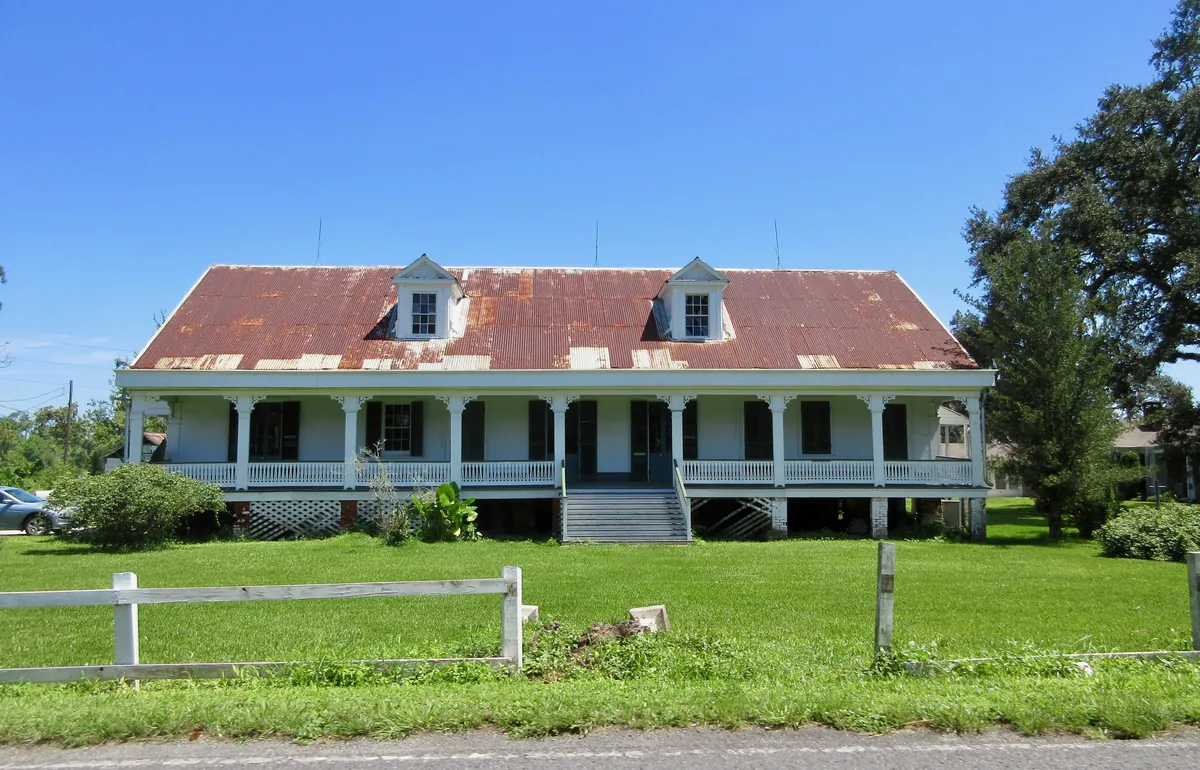 1Museum·1811Kid Ory House — 1811 Slave Revolt Site
On January 8, 1811, approximately 500 enslaved people organized on the German Coast and marched toward New Orleans — the largest slave insurrection in American history. The uprising was crushed, its leaders executed and beheaded along River Road as a warning. Charles Deslondes started the revolt at what was then known as Andry Plantation. In 1886, Edward 'Kid' Ory was born at the same site. He invented the tailgate trombone style and led the first Black jazz band to record commercially in 1921. He wrote 'Muskrat Ramble,' one of the most recorded jazz standards. The museum holds both histories. They are not unrelated stories. Housed in the historic plantation building now called the Bonnet Carre Historical Center, it holds exhibits on the 1811 revolt, Ory's life, antique phonographs, and the history of plantation life. Sisters Joy and Jo Banner of The Descendants Project purchased the property in January 2024 to preserve local Black history and environmental health. This is where the violence happened, and where the music came from. The same ground.
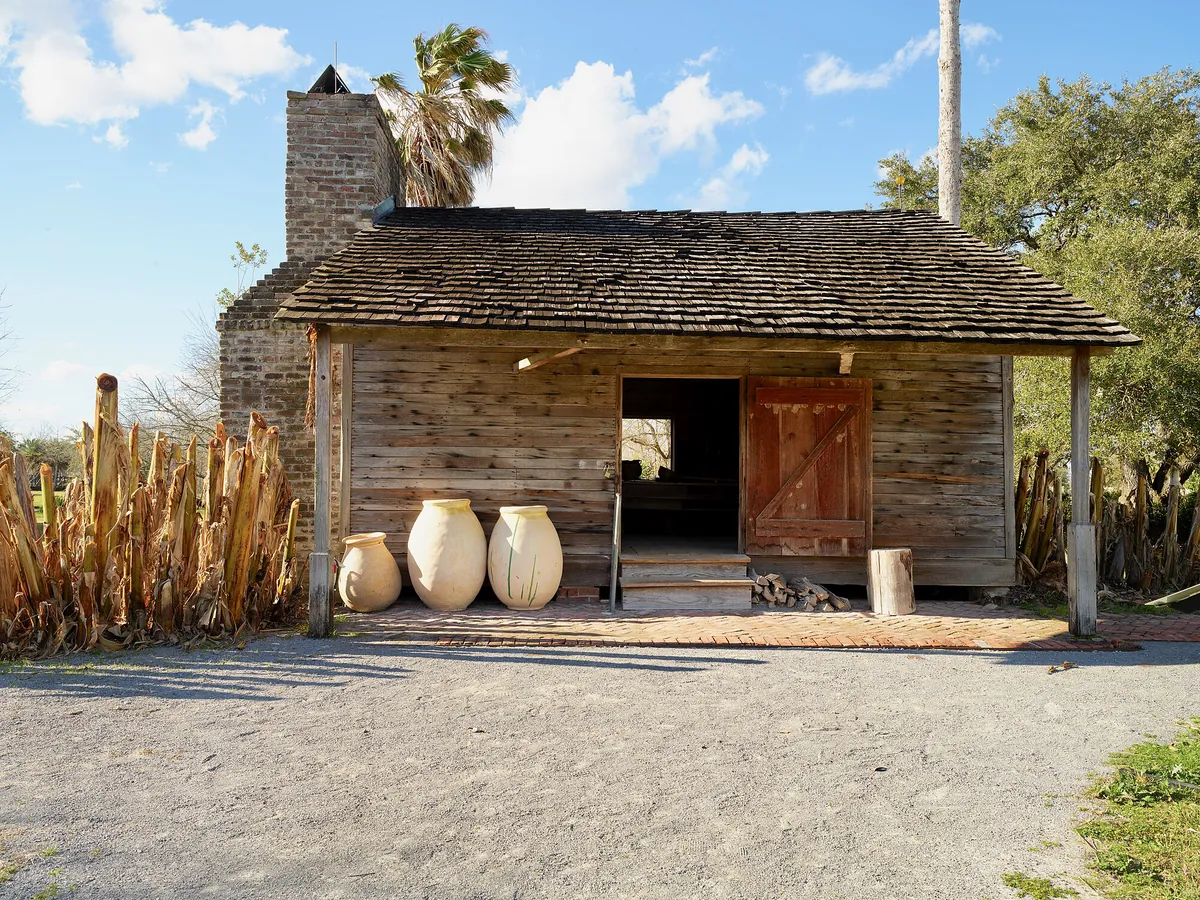 2Museum·1790·NRHPWhitney Plantation
Every other plantation museum on River Road built its story around the house. Whitney tells the story of the people who built it. It is the only plantation museum in Louisiana focused entirely on the experience of the enslaved. More than 2,200 enslaved individuals are identified by name from church records and slave inventories. Their stories are told through life-size sculptures of children, first-person testimony from the 1930s Federal Writers' Project, and intact 1790s buildings. Many of those who survived enslavement were interviewed as adults during the Great Depression. The federal government published those oral histories to preserve them. The transcripts and some audio recordings are held by the Library of Congress. What was originally known as Habitation Haydel was founded in 1752 by Ambroise Heidel, a German immigrant. His descendants owned it until 1860. In 1866, after the Civil War, businessman Bradish Johnson bought it and renamed it Whitney in honor of his daughter, who had married into the Whitney family. The plantation ceased operations in 1975. Trial attorney John Cummings acquired the complex in 1999 and spent more than $10 million of his own fortune restoring it. He worked on the project for 20 years before opening it to the public in December 2014. In 2019, he donated the Whitney. It is now a 501(c)(3) organization governed by a board of directors. The director of research is Dr. Ibrahima Seck, a Senegalese scholar specializing in the history of slavery. The grounds contain several memorial sites dedicated to the more than 100,000 men, women, and children who were enslaved in Louisiana. The French Creole raised-style main house, built around 1790, is an important architectural example in the state. The plantation has numerous outbuildings: a pigeonnier, a plantation store, the only surviving French Creole barn in North America, a detached kitchen, an overseer's house, a mule barn, and two slave cabins. Open Wednesday through Monday. Admission charged. Advance tickets recommended.
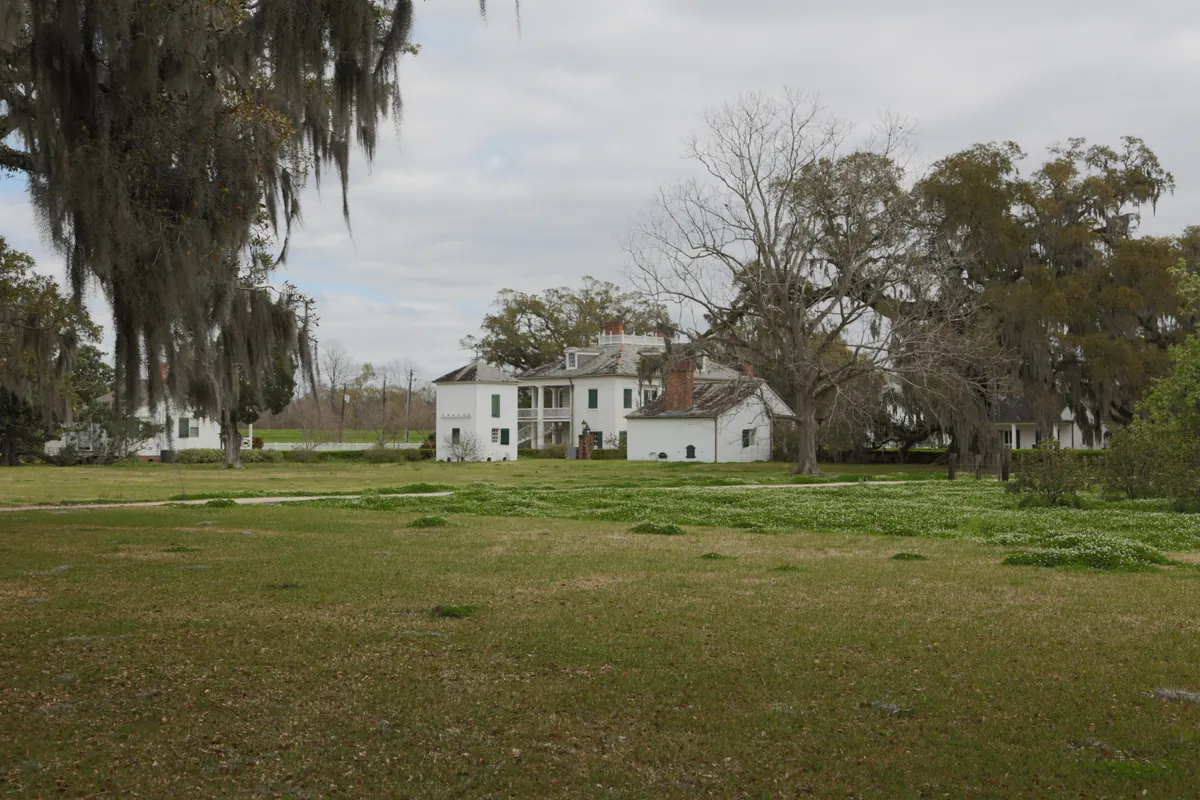 3Architecture·1790–1832·NHLEvergreen Plantation
Twenty-two slave cabins stand in their original double-row configuration along an oak allée at Evergreen, exactly as they were arranged in 1860. No other site in Louisiana — possibly in the country — preserves the physical reality of enslaved quarters at this scale. The plantation complex includes 37 buildings on the National Register, all but eight built before the Civil War, making it one of the most complete plantation complexes in the South. The main house was built mostly in 1790 and renovated to its current Greek Revival form in 1832. The crop was sugarcane, cultivated by enslaved African Americans until emancipation. The plantation operated until about 1930, when the Depression caused the owners to abandon the house. A bank took over, kept the cane operation running, and it remains a working sugarcane plantation today where people live. Heiress Matilda Geddings Gray sponsored restoration in the 1940s, using 300,000 bricks from the demolished Uncle Sam Plantation. Among the outbuildings: a garconnière for young bachelors of the family or male guests, a pigeonnier for keeping pigeons — a status marker among planters — an overseer's cottage, and late 19th-century barns. The site was designated a National Historic Landmark in 1992 and included among the first 26 sites on the Louisiana African American Heritage Trail. The house is not open for tours. A "No Trespassing" sign marks the dirt road entrance. Access policies change; tours by appointment only at (985) 497-3837. It's been used as a production site for films including Django Unchained and Antebellum. You reach it down Louisiana Highway 18 on the west bank, off the tourist circuit entirely.
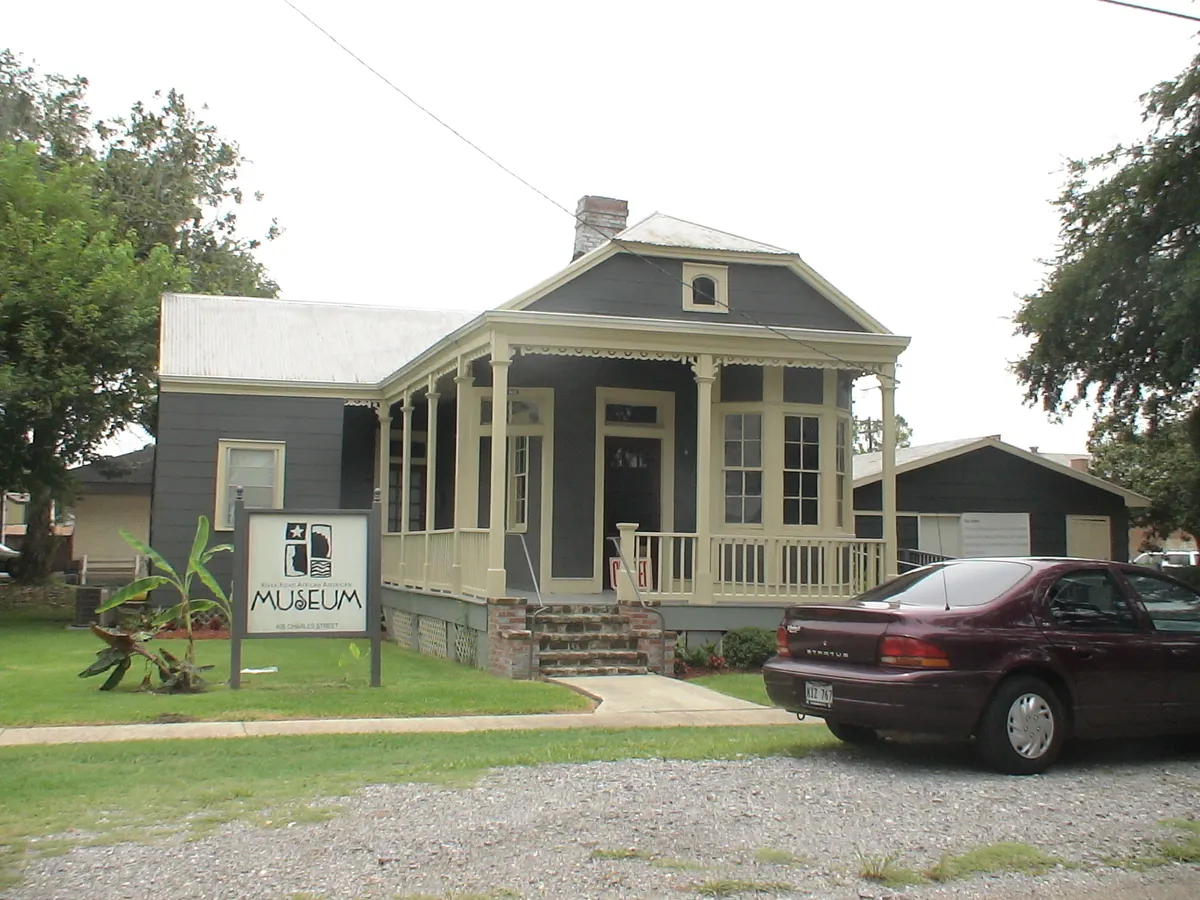 4Museum·1994–presentRiver Road African American Museum
Kathe Hambrick came home to Ascension Parish after years away and found tens of thousands of people touring plantations with no way to learn about the Africans and African Americans who built them. This was the 1990s. Academic historians had been writing social histories for a generation, but River Road plantations still told almost nothing about three centuries of Black life in the corridor. Hambrick opened the River Road African American Museum in 1994, among the first in Louisiana to tell that story. The museum holds inventories naming more than 5,000 enslaved people from Louisiana plantations. It has exhibits on Black inventors, jazz musicians, and political leaders from the area, and another on free people of color in the parish drawn from census and town records. Artifacts and memorabilia come from plantations along the River Road and from individual families. An interactive Underground Railroad exhibit traces freedom routes from southeastern Louisiana. Hambrick first established the museum at Tezcuco Plantation. After a fire in 2002, the owners decided against rebuilding. She moved the collection to Donaldsonville, a city with its own formative Black history. Slaves escaped to Union lines here and fought in the defense of Fort Butler in 1863. After the war, freedmen left rural areas to gather in Donaldsonville, establishing trades and businesses—the city had the third-largest Black population in the state. In 1868, it elected Pierre Caliste Landry, an attorney and Methodist minister, as the first African-American mayor in the United States. Hambrick relocated three buildings with historic significance to the Donaldsonville site: the first Black elementary school in Ascension Parish, the meeting house of an early African-American insurance agency, and the African Plantation house, owned by the first African-American doctor in the parish. The state included the museum as one of the first 26 sites on the Louisiana African American Heritage Trail in 2008. Open Wednesday through Saturday, 10am to 5pm.
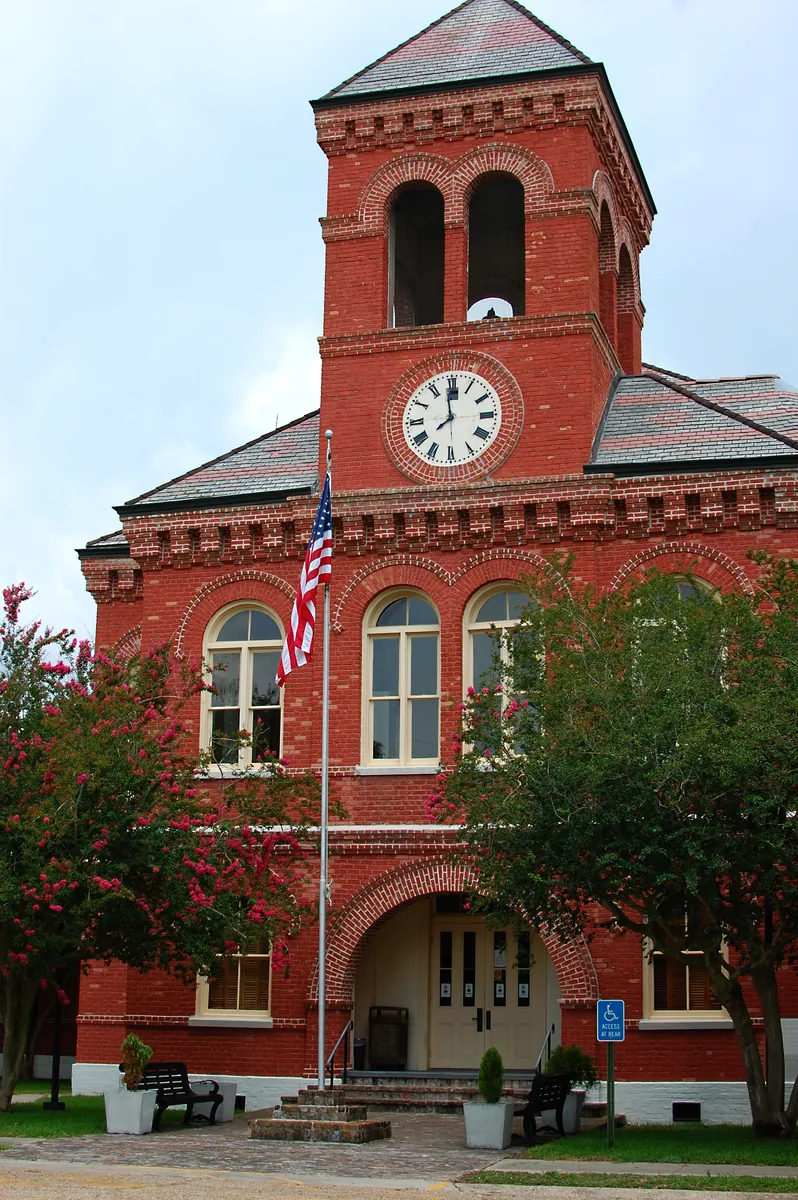 5Architecture·1806–present·NRHPDonaldsonville Historic District
In 1830, Louisiana's legislature moved upriver from New Orleans — the Anglo planters thought the Creole capital too noisy — and settled in Donaldsonville, where the bayou splits from the Mississippi. They stayed one year. The noise complaint had never been serious. What remained is a town that became more than what the legislature wanted it to be. This is the oldest incorporated city in the lower Mississippi region, and in 1868 its residents elected Pierre Caliste Landry as mayor — the first African American mayor in United States history. Landry had been enslaved, educated on a Bringier family plantation, then advanced after the war to become an attorney, state legislator, and Methodist Episcopal minister. The election followed a catastrophic transformation. In 1862, Admiral David G. Farragut bombarded Donaldsonville, destroyed much of the former capital city, and placed Ascension Parish under martial law. Union forces established a base here. Escaping slaves crossed into Union lines and helped build Fort Butler, a star-shaped earthwork and timber fortification. In June 1863, more than 1,000 Texas Rangers attacked the fort at night. Free blacks and fugitive slaves joined the 180-man garrison in defending it — one of the first times they fought as soldiers on behalf of the Union. The fort held. After the war, Donaldsonville became the third-largest black community in the state. The historic district contains the finest collection of antebellum-to-1930s architecture of any Louisiana river town above New Orleans. Among them: a wooden synagogue built in 1872 by Congregation Bikur Cholim, which disbanded in the 1940s. It now operates as a hardware store. The Jewish cemetery dates to the 1800s. Go because this is a walkable downtown where the formative violence and dignity of Reconstruction are still legible in churches, commercial buildings, and riverfront access. The town holds what happened here.