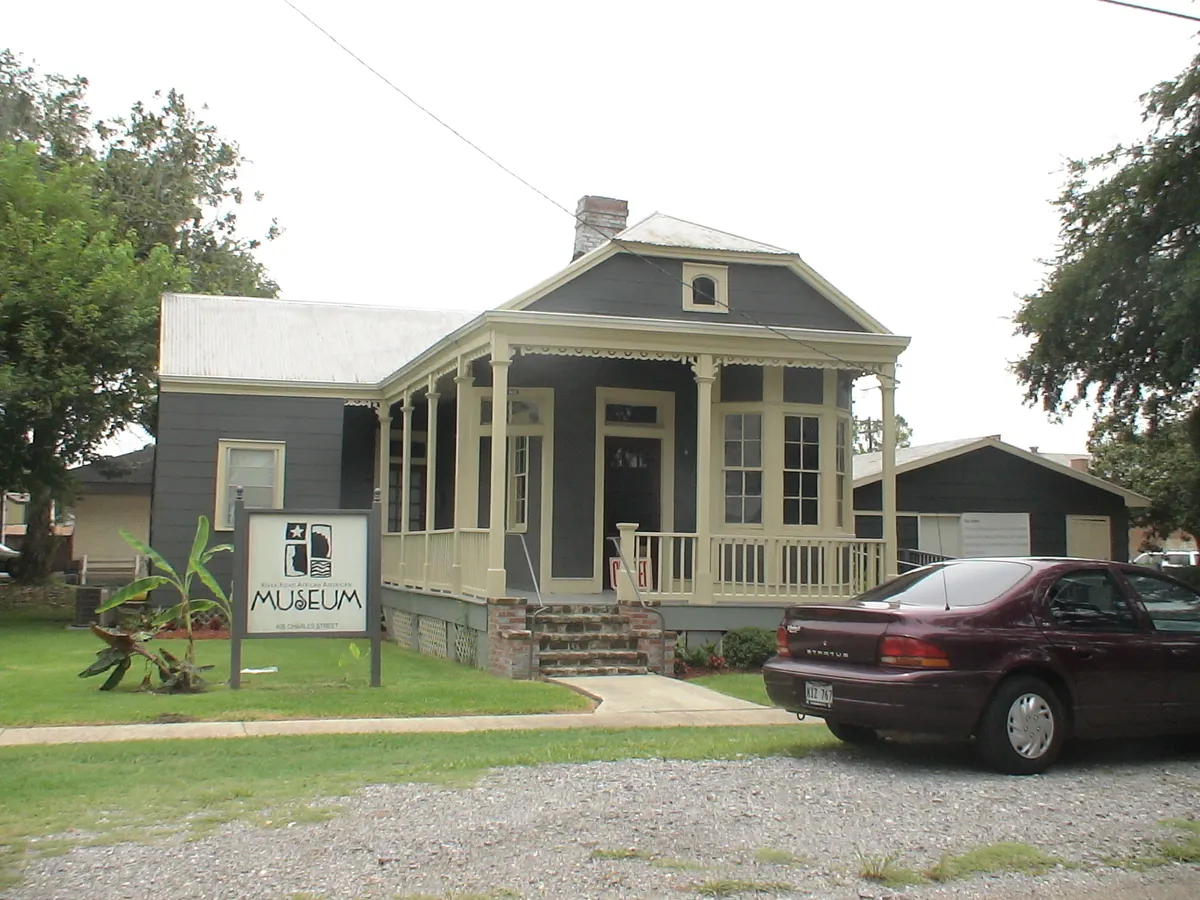
Kathe Hambrick came home to Ascension Parish after years away and found tens of thousands of people touring plantations with no way to learn about the Africans and African Americans who built them. This was the 1990s. Academic historians had been writing social histories for a generation, but River Road plantations still told almost nothing about three centuries of Black life in the corridor. Hambrick opened the River Road African American Museum in 1994, among the first in Louisiana to tell that story.
The museum holds inventories naming more than 5,000 enslaved people from Louisiana plantations. It has exhibits on Black inventors, jazz musicians, and political leaders from the area, and another on free people of color in the parish drawn from census and town records. Artifacts and memorabilia come from plantations along the River Road and from individual families. An interactive Underground Railroad exhibit traces freedom routes from southeastern Louisiana.
Hambrick first established the museum at Tezcuco Plantation. After a fire in 2002, the owners decided against rebuilding. She moved the collection to Donaldsonville, a city with its own formative Black history. Slaves escaped to Union lines here and fought in the defense of Fort Butler in 1863. After the war, freedmen left rural areas to gather in Donaldsonville, establishing trades and businesses—the city had the third-largest Black population in the state. In 1868, it elected Pierre Caliste Landry, an attorney and Methodist minister, as the first African-American mayor in the United States.
Hambrick relocated three buildings with historic significance to the Donaldsonville site: the first Black elementary school in Ascension Parish, the meeting house of an early African-American insurance agency, and the African Plantation house, owned by the first African-American doctor in the parish. The state included the museum as one of the first 26 sites on the Louisiana African American Heritage Trail in 2008. Open Wednesday through Saturday, 10am to 5pm.
- ·Among the first Louisiana museums to tell the story of Africans and African Americans, both enslaved and free, on River Road.
- ·Founded in 1994 by Kathe Hambrick after she returned to Ascension Parish and found plantation visitors could learn nothing about the people who built the corridor.
- ·Holds inventories with the names of more than 5,000 enslaved people from Louisiana plantations.
- ·Interactive Underground Railroad exhibit traces freedom routes from southeastern Louisiana.
- ·Open Wed–Sat 10am–5pm.
- ·Located at 406 Charles Street in Donaldsonville.
Memories
Editorial content compiled with AI assistance. Place details verified against public records.