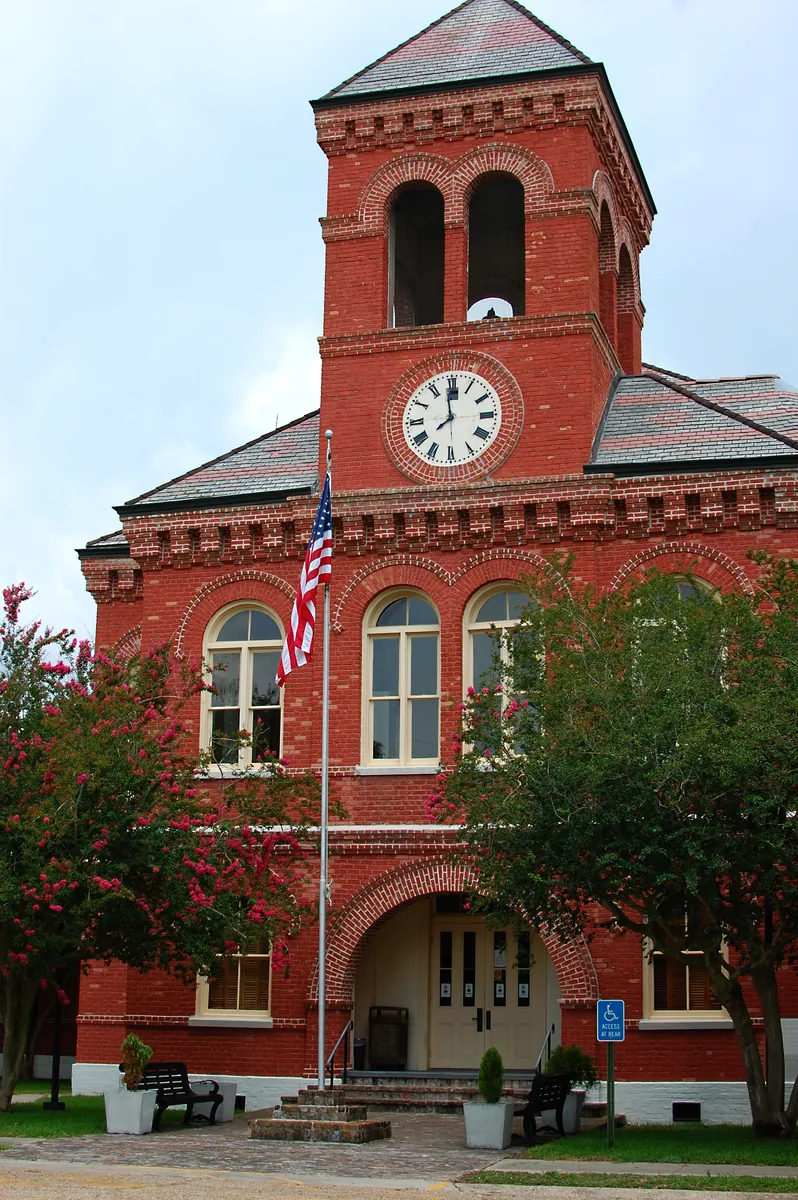
In 1830, Louisiana's legislature moved upriver from New Orleans — the Anglo planters thought the Creole capital too noisy — and settled in Donaldsonville, where the bayou splits from the Mississippi. They stayed one year. The noise complaint had never been serious.
What remained is a town that became more than what the legislature wanted it to be. This is the oldest incorporated city in the lower Mississippi region, and in 1868 its residents elected Pierre Caliste Landry as mayor — the first African American mayor in United States history. Landry had been enslaved, educated on a Bringier family plantation, then advanced after the war to become an attorney, state legislator, and Methodist Episcopal minister.
The election followed a catastrophic transformation. In 1862, Admiral David G. Farragut bombarded Donaldsonville, destroyed much of the former capital city, and placed Ascension Parish under martial law. Union forces established a base here. Escaping slaves crossed into Union lines and helped build Fort Butler, a star-shaped earthwork and timber fortification. In June 1863, more than 1,000 Texas Rangers attacked the fort at night. Free blacks and fugitive slaves joined the 180-man garrison in defending it — one of the first times they fought as soldiers on behalf of the Union. The fort held. After the war, Donaldsonville became the third-largest black community in the state.
The historic district contains the finest collection of antebellum-to-1930s architecture of any Louisiana river town above New Orleans. Among them: a wooden synagogue built in 1872 by Congregation Bikur Cholim, which disbanded in the 1940s. It now operates as a hardware store. The Jewish cemetery dates to the 1800s. Go because this is a walkable downtown where the formative violence and dignity of Reconstruction are still legible in churches, commercial buildings, and riverfront access. The town holds what happened here.
- ·Served as state capital of Louisiana from 1830 to 1831 — the legislature moved upriver from New Orleans, then thought better of it.
- ·Oldest incorporated city in the lower Mississippi region.
- ·In 1868, residents elected Pierre Caliste Landry — the first African American mayor in United States history.
- ·Sits at the confluence of the Mississippi River and Bayou Lafourche.
- ·The historic district contains the finest collection of antebellum-to-1930s architecture of any Louisiana river town above New Orleans.
- ·A walkable downtown with historic commercial buildings, churches, and riverfront access.
Memories
Editorial content compiled with AI assistance. Place details verified against public records.