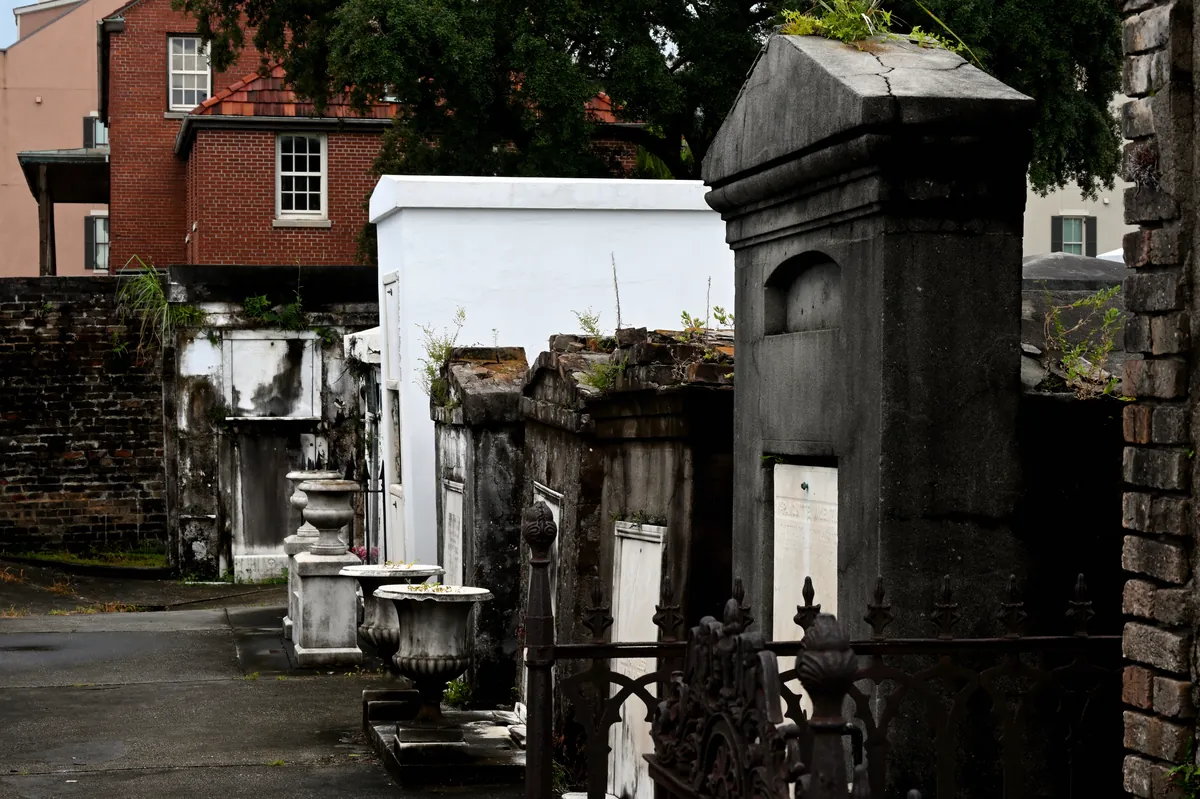
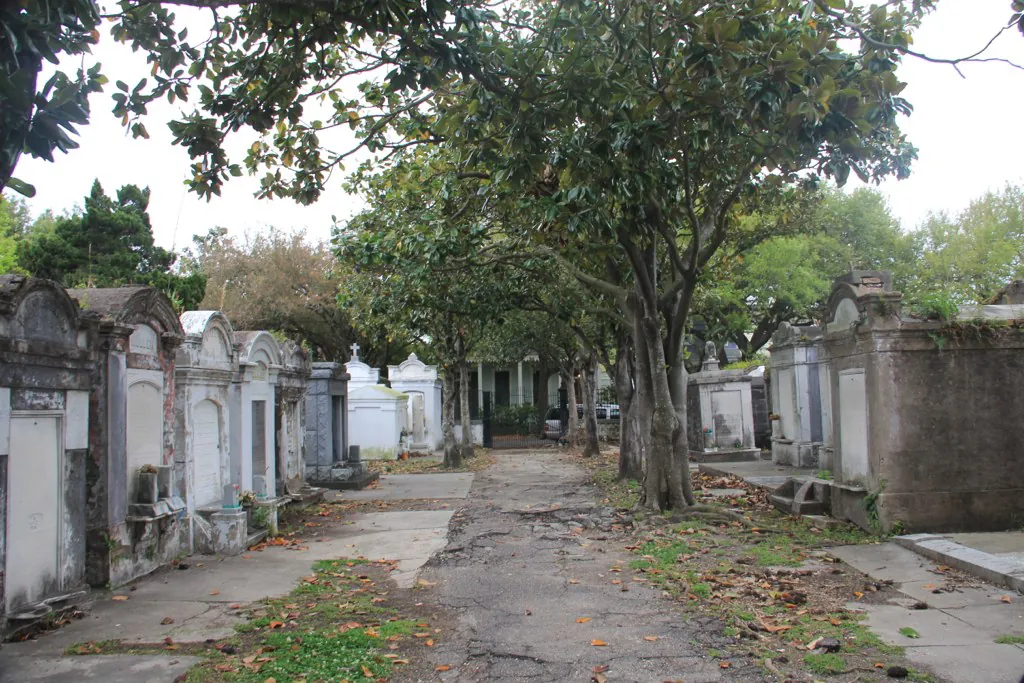
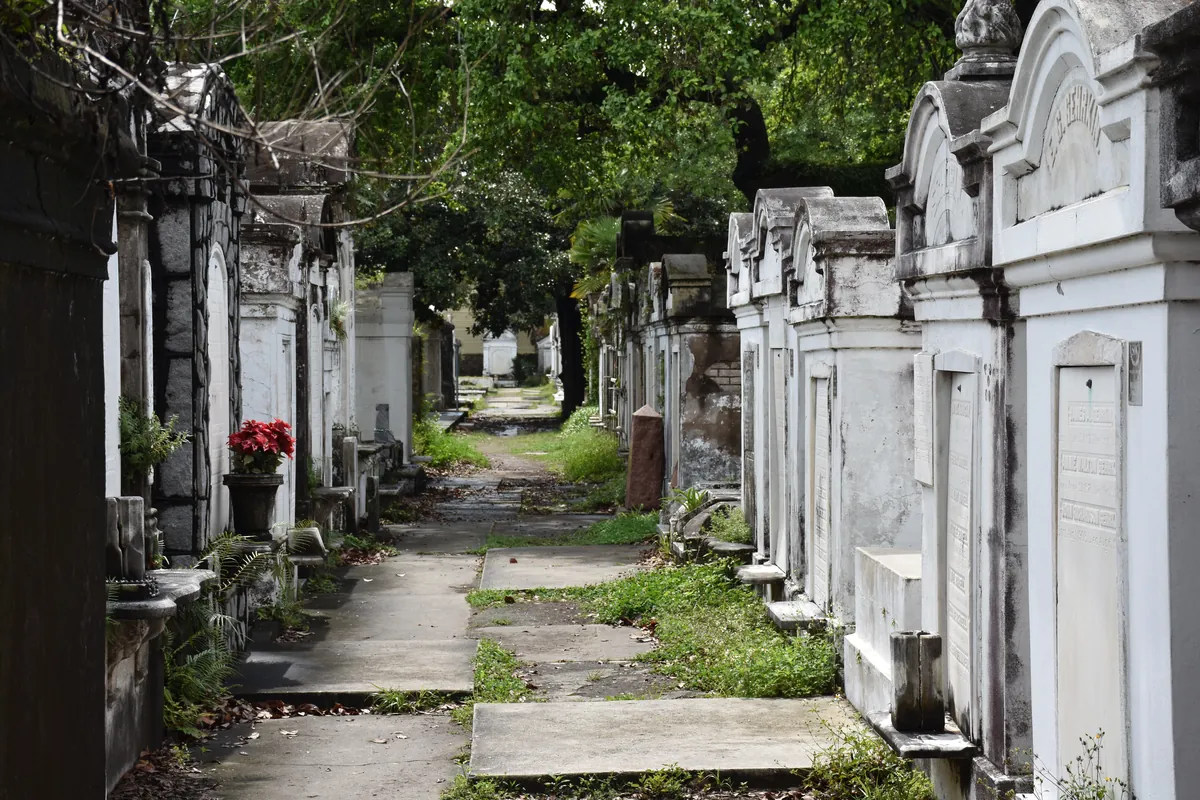
The water table sits six inches to two feet below the surface across most of New Orleans. Dig down and you hit water — a fact that made the city's relationship with its dead a problem of engineering before it was ever a question of tradition. Above-ground tombs solved it. Brick or stone, often whitewashed, stacked in rows like miniature rowhouses, they line cemetery streets in formations that earned the name Cities of the Dead.
The solution turned out to be elegant. Summer heat inside a sealed tomb can reach 300°F, naturally cremating remains within a year and making the vault reusable for the next family member. What began as necessity became identity. The French founded the city in 1718 on relatively high ground along a sharp bend in the Mississippi — high being a generous term in a delta that was deposited by silt starting around 2200 BCE. The Mississippi built the land, and the water never really left.
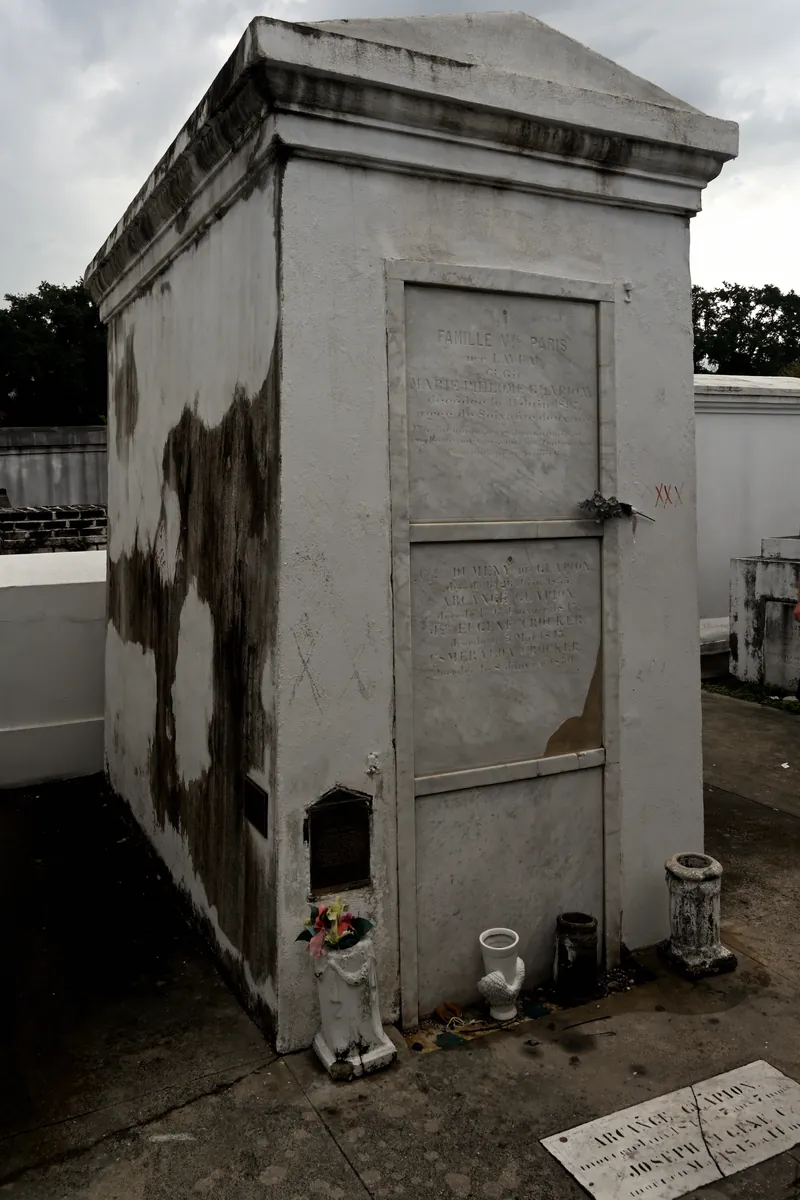
St. Louis Cemetery No. 1 is the most visited. Guided tours are required for entry. You'll see the rows of tombs the way the first settlers saw them: the price of building a city where the river wanted to stay.
- ·The water table sits 6 inches to 2 feet below the surface across most of the city — dig down and you hit water.
- ·Above-ground tombs solved the flooding problem; they're built of brick or stone, often whitewashed, and stacked in rows.
- ·Summer heat inside a sealed tomb can reach 300°F, naturally cremating remains within a year — making the vault reusable for the next family member.
- ·The 'Cities of the Dead' nickname comes from the tombs' resemblance to rows of small buildings lining cemetery streets.
- ·St. Louis Cemetery No. 1 is the most visited; guided tours required for entry.
More archive
Memories
Editorial content compiled with AI assistance. Place details verified against public records.