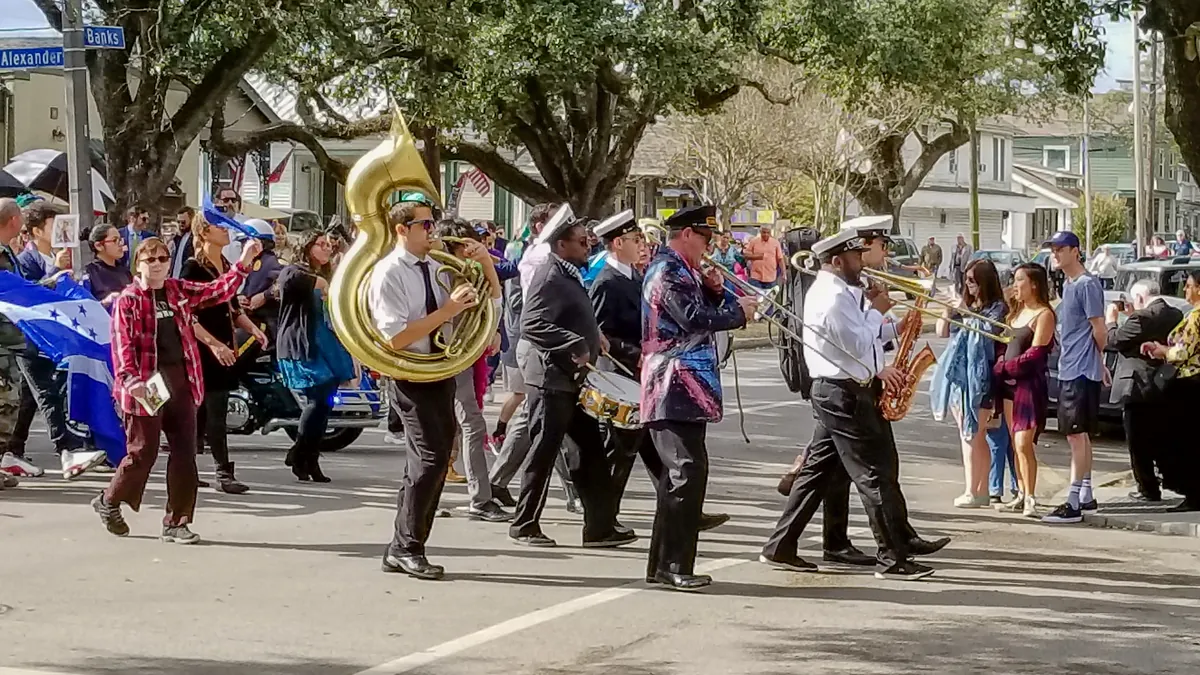
The second line is what happened when the West African circle dance straightened into a parade route behind European military brass bands — a blending that took hold in the late 19th century. The first line is the Social Aid and Pleasure Club holding the permit and the band they hired. The second line is everyone who joins in: free-form dancing, parasols, handkerchiefs, and strutting through the neighborhood behind the music.
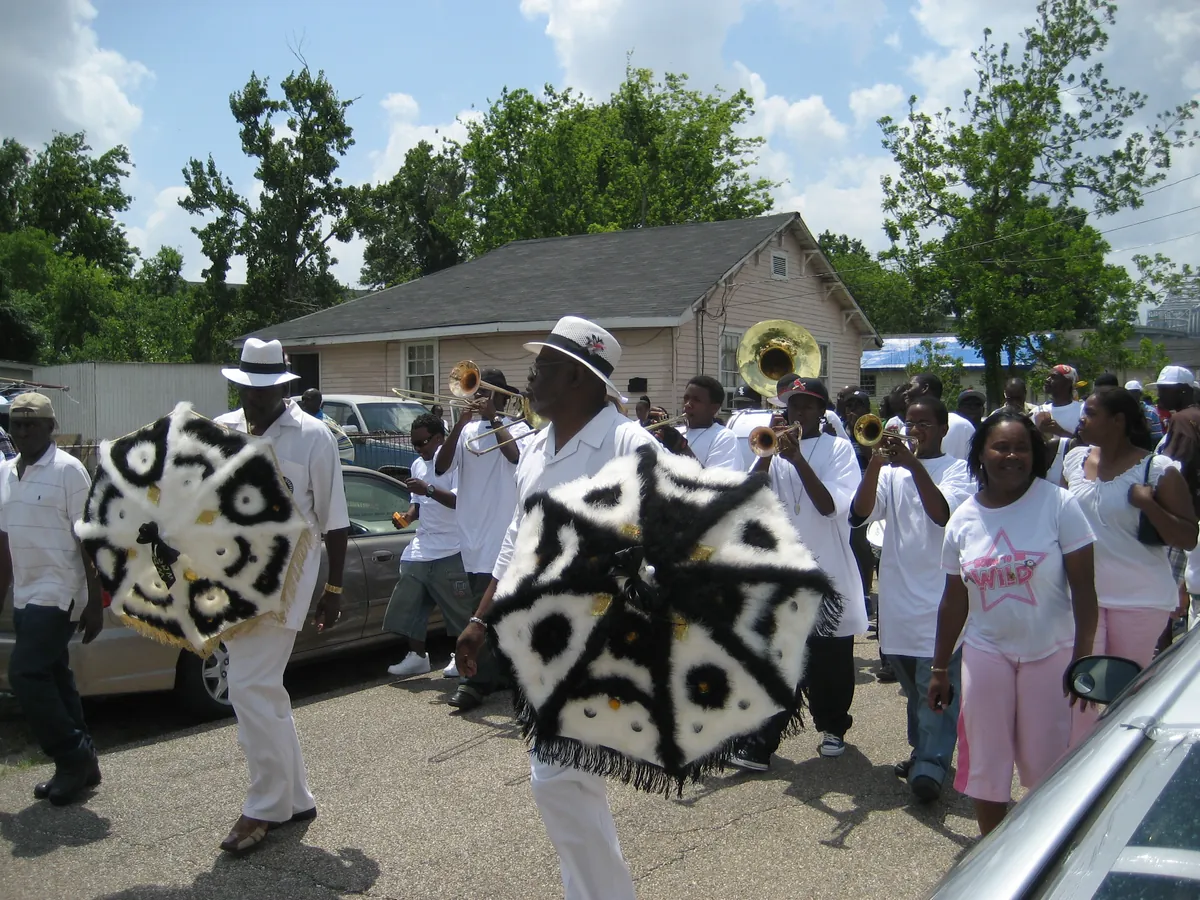
Enslaved Africans brought the tradition to New Orleans. Free and enslaved Black people formed the earliest second lines as neighborhood celebrations, and later as funeral processions. When white insurance companies refused to cover free people of color and the formerly enslaved, African-Americans formed Benevolent Societies and Social, Aid & Pleasure Clubs to assist members through illness and cover burial costs. African traditions celebrated the spirit leaving the body to return to the ancestors and God. At a jazz funeral, SAPC members march with a brass band in a dirge before the body is cut loose and the celebratory parade begins. The same clubs hold annual second line parades through their home communities — celebrations without the funeral.
The oldest club still parading is the Young Men Olympian Junior Benevolent Association, founded in 1884. During second line season — most of the year, with breaks for Mardi Gras and the hottest part of summer — parades happen most Sundays. Longer routes often stop at bars where refreshments have been arranged for members. Vendors sell soft drinks, beer, barbecue, and yaka mein. The historic predominantly African-American neighborhoods of Tremé and Central City are most strongly associated with the tradition.
The clubs never lost their African-based traditions. When New Orleans reopened to its citizens after Hurricane Katrina, the Black Men of Labor held the first SAPC second line parade in October 2005. The parades are not performances or tourist events. They are community traditions. Respectful observers are welcome.
- ·The jazz funeral tradition fuses West African funeral customs with the brass band culture that developed in post-Civil War New Orleans.
- ·The 'first line' is the family, the band, and the funeral party; the 'second line' is everyone who joins in.
- ·The band plays hymns and dirges to the cemetery, then breaks into uptempo numbers after the body is 'cut loose.'
- ·Second line parades happen most Sundays in New Orleans from September through May, organized by Social Aid and Pleasure Clubs.
- ·These are not performances or tourist events — they are community traditions. Respectful observers are welcome.
More archive
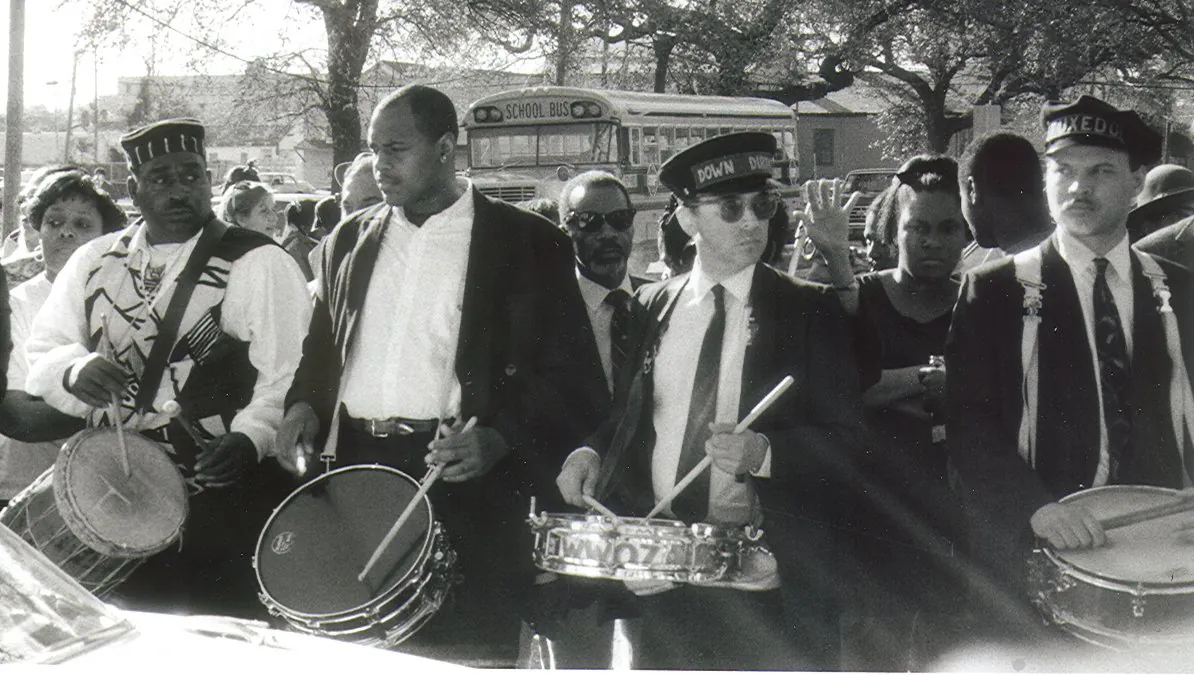
Memories
Editorial content compiled with AI assistance. Place details verified against public records.