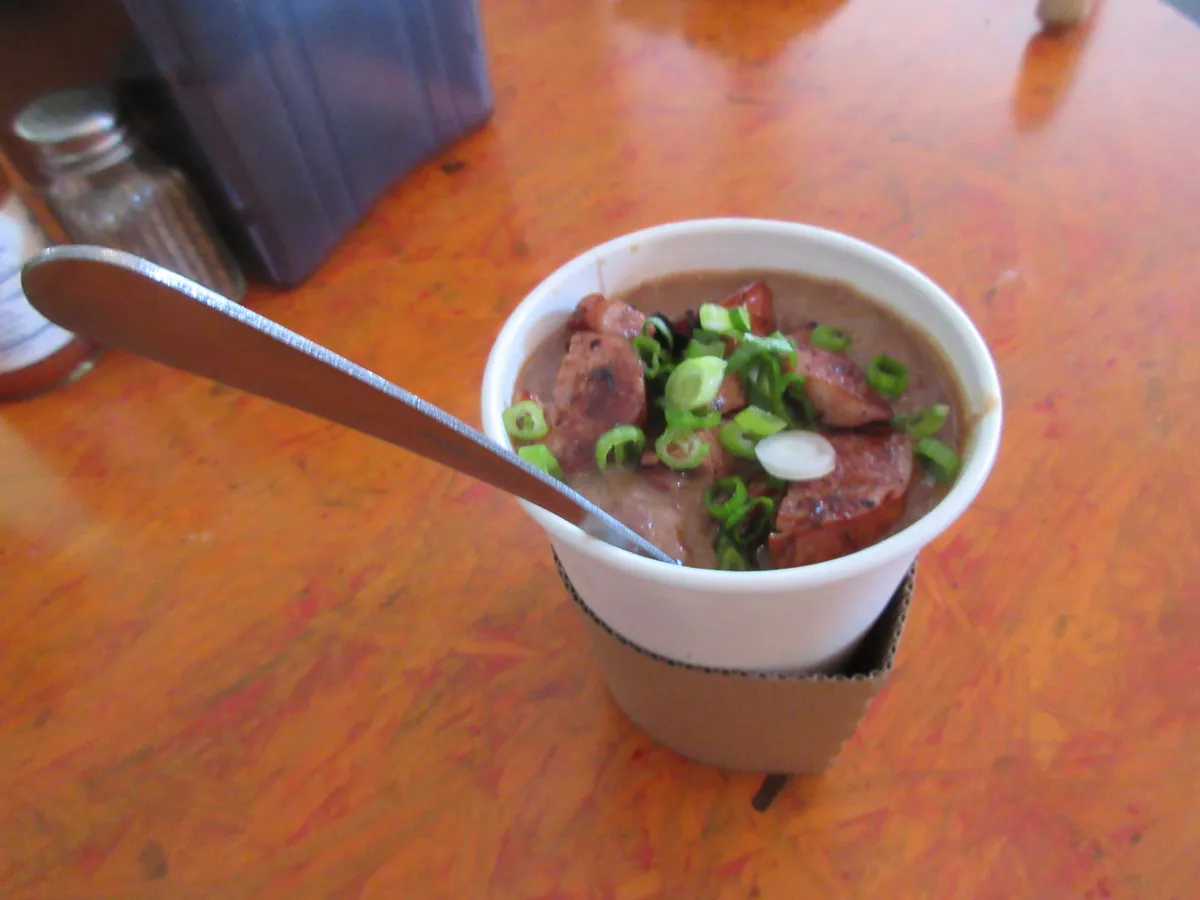
New Orleans built itself from the bottom up — laborers, longshoremen, laundresses — and the week turned on washday. Monday meant scrubbing in the yard, hanging clothes to dry, and a pot that asked nothing while it worked. Red kidney beans simmered with ham bone, onion, celery, and bell pepper all morning, unattended, while hands stayed busy elsewhere. By lunch the beans had softened into something silky, spooned over white rice, the same meal whether you lived in the French Quarter or back of town.
The tradition traces to the 19th century, when New Orleans was the largest port in the South, exporting cotton and farm products to Europe and New England — cities built on wash and sweat. The dish crossed every line the city drew. Same recipe in every neighborhood, every income level. Louis Armstrong, who grew up scraping by in this city, signed his letters *Red Beans and Ricely Yours*.
Restaurants still put red beans on the Monday special. Families still cook them at home. Camellia brand red beans are the local standard — a loyalty that runs deeper than logic. Soaking overnight is non-negotiable. This is not nostalgia. This is the week keeping its shape.
- ·Monday red beans tradition dates to the 19th century, when washday demanded a dish that cooked itself all morning.
- ·Red kidney beans simmered with ham bone, onion, celery, and bell pepper over white rice — the same recipe across every neighborhood and income level.
- ·Louis Armstrong signed his letters 'Red Beans and Ricely Yours.'
- ·Restaurants across the city still put red beans on the Monday special; families still cook them at home.
- ·Camellia brand red beans are the local standard. Soaking overnight is non-negotiable.
Memories
Editorial content compiled with AI assistance. Place details verified against public records.