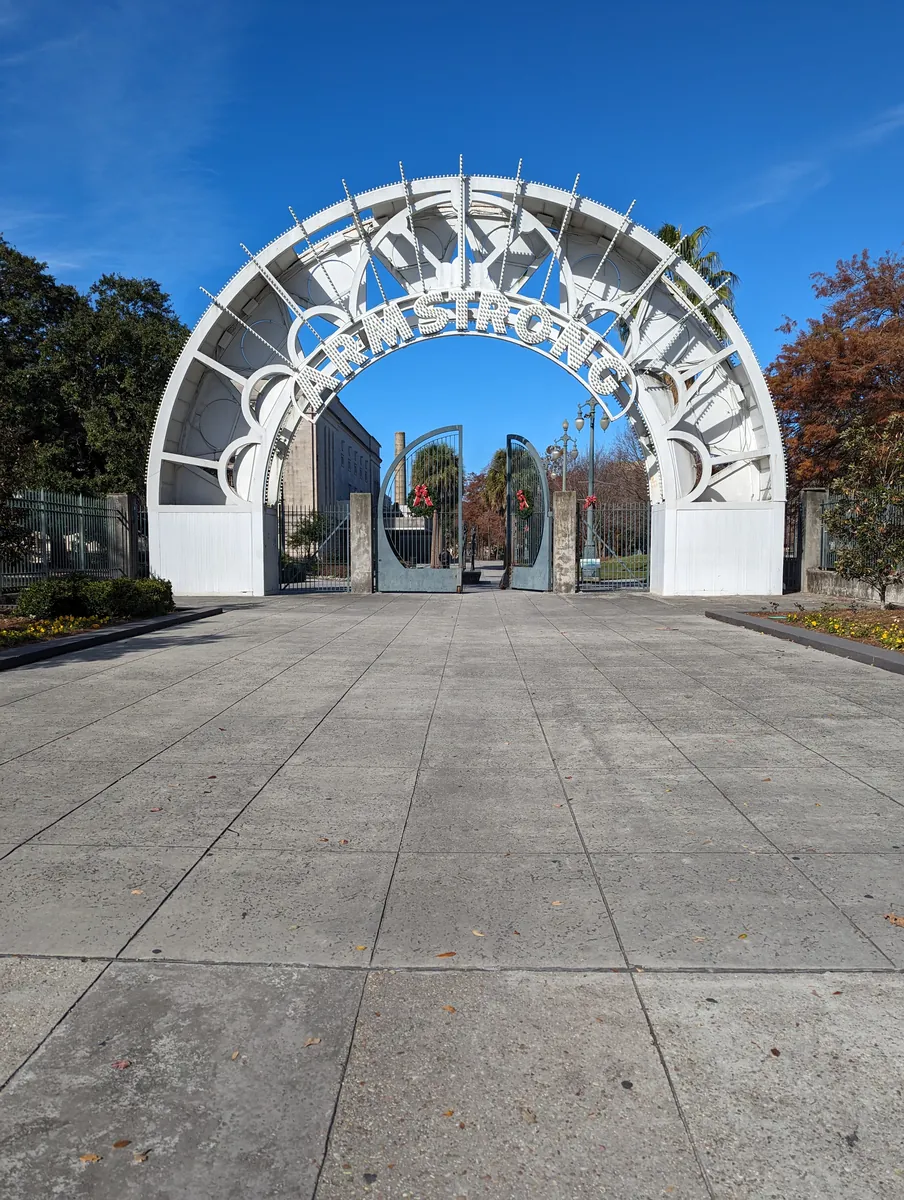
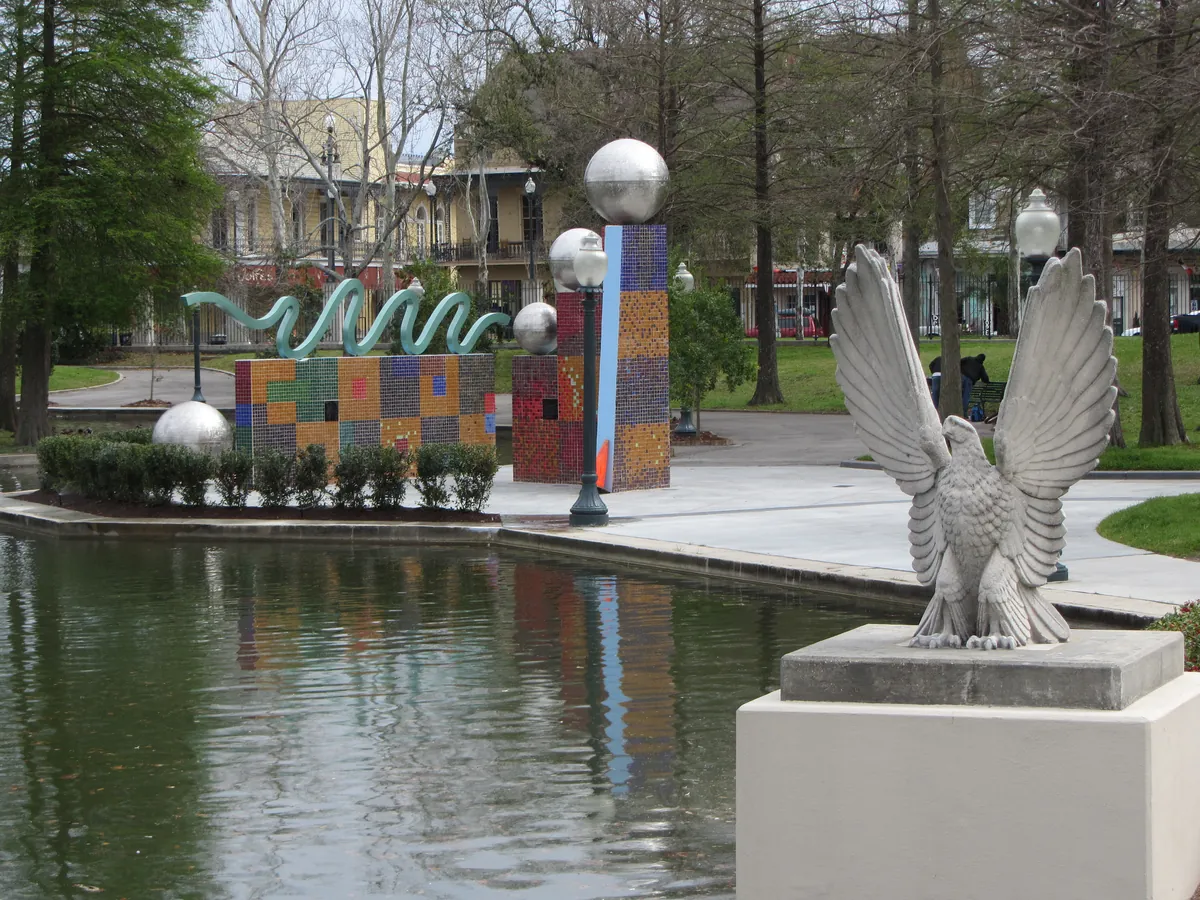
Two blocks from here, Louis Armstrong was born in 1901. The greatest musician New Orleans ever produced learned to play in streets that no longer exist — leveled in the 1960s when an urban renewal project cleared a substantial portion of Tremé to make way for this 32-acre park. After a decade of debate, the city built what architect Robin Riley designed: a fenced memorial plaza named for Satchmo, containing Congo Square, the Mahalia Jackson Theater, and a 12-foot bronze statue by Elizabeth Catlett.
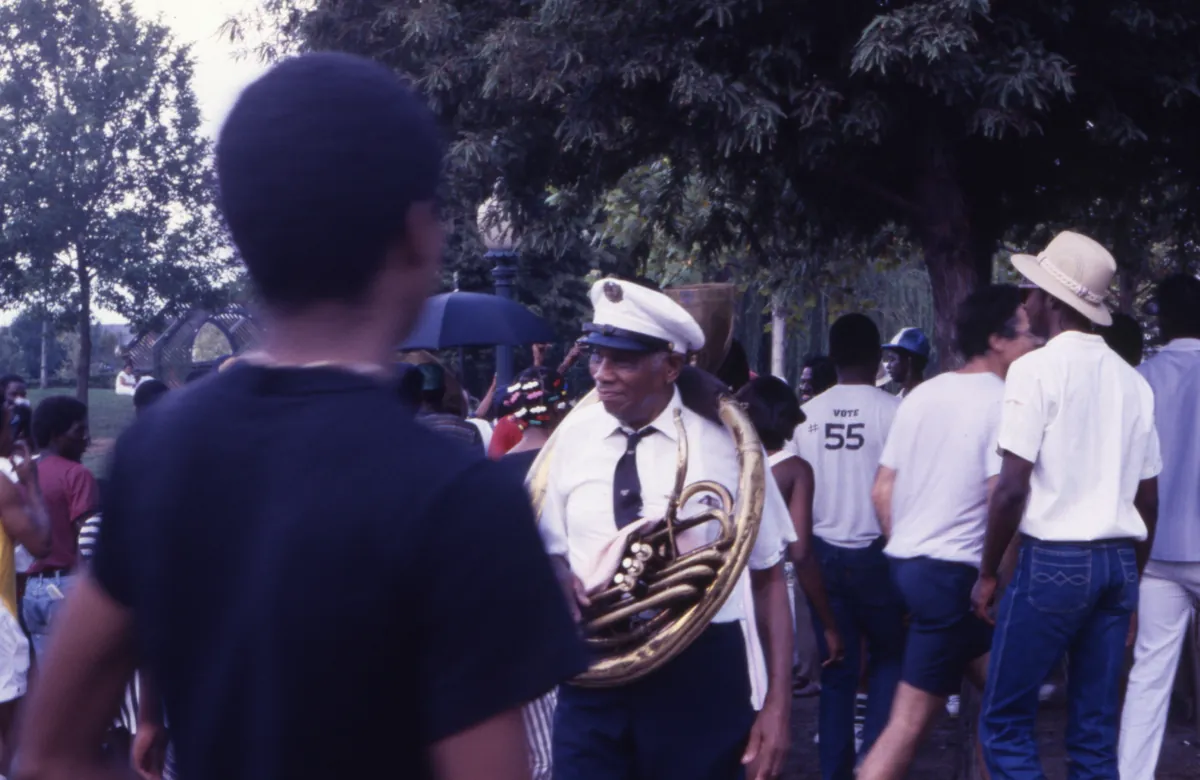
Congo Square is why you're here. The portion of the park immediately in front of the Municipal Auditorium marks the site where enslaved Africans gathered on Sundays to play music and dance — the origin point of jazz. Formerly known as Beauregard Square, it's famous for its role in the history of African American music and spiritual practice. The park also contains a bust of Sidney Bechet and a depiction of Buddy Bolden.
Residents of Tremé and the French Quarter have called for the removal of the large fence that separates the park from surrounding areas and for incorporating the concrete parking lots in the rear into greenspace. The parking lots are often attributed to high rates of subsidence and flooding along N. Villere Street. The park hosted the first New Orleans Jazz & Heritage Festival in 1970; that festival moved to the Fairgrounds, but Armstrong Park now hosts the Jazz in the Park free concert series, the Treme Creole Gumbo Fest, and the Louisiana Cajun & Zydeco Festival.
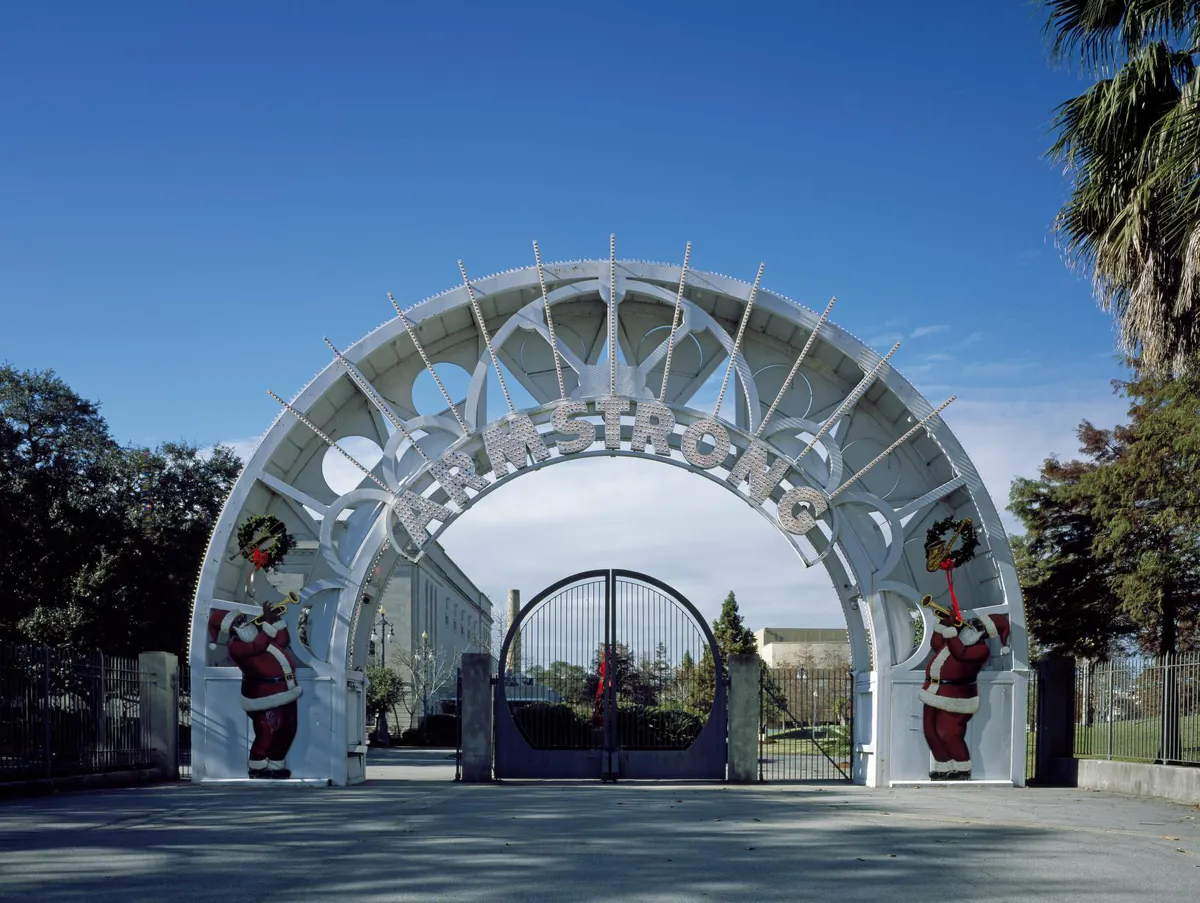
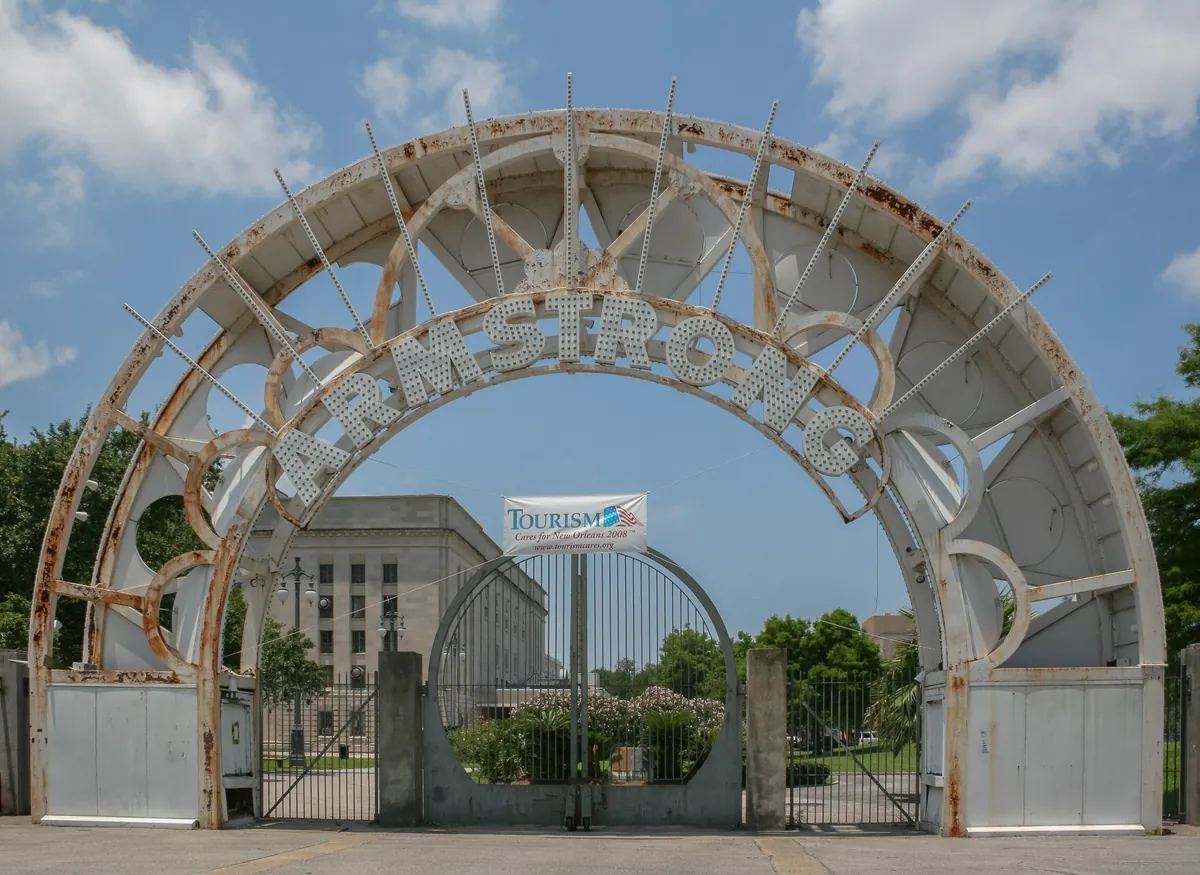
The ornamental iron entrance gates on Rampart Street are among the most photographed structures in the city. Walk through them to stand where the music began.
- ·Named for Louis Armstrong, born two blocks from here in 1901 — the greatest musician New Orleans ever produced.
- ·The 32-acre park encompasses Congo Square, the Mahalia Jackson Theater, and a 12-foot bronze statue of Satchmo.
- ·Congo Square, inside the park, is where enslaved Africans gathered on Sundays to play music and dance — the origin point of jazz.
- ·The park's 1970s construction displaced Black residents and businesses from the Tremé neighborhood.
- ·The ornamental iron entrance gates on Rampart Street are among the most photographed structures in the city.
- ·Located at 701 N. Rampart St. Open daily. Free admission. The Mahalia Jackson Theater hosts ticketed performances.
More archive
Memories
Editorial content compiled with AI assistance. Place details verified against public records.