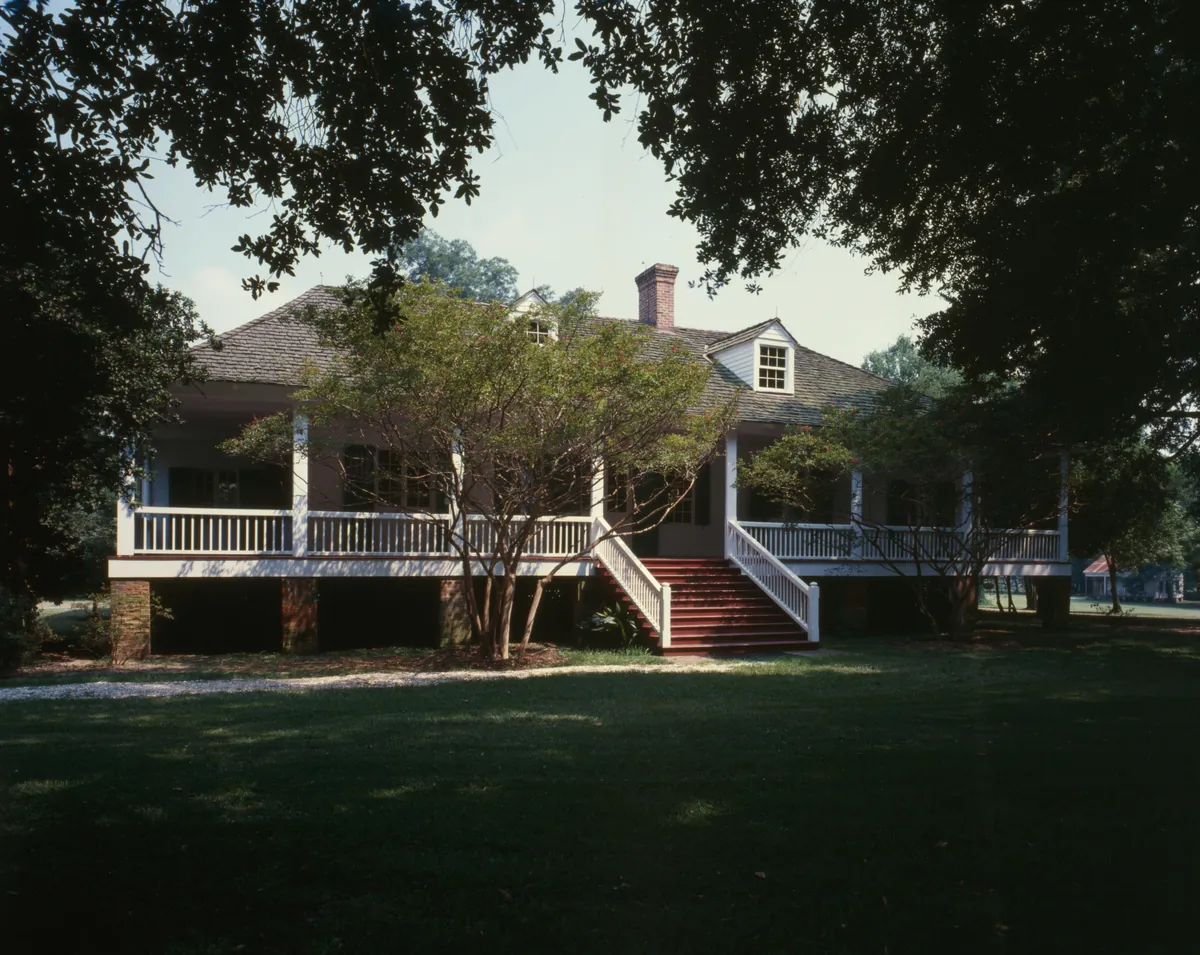
A wooden house built around 1791 on a Spanish land grant, rising from the Istrouma Bluff above the Mississippi River before Louisiana was American ground. James Hillin, a Scots settler who arrived in 1786, lived here first with his wife Jane Stanley Hillin, five children, and six enslaved Africans named Thomas, John, Lucia, Catherine, Jenny, and Anna. On December 23, 1791, John Joyce from County Cork bought the 950 acres. When he drowned on May 9, 1798, sailing from New Orleans to Mobile, he held about 50 slaves cultivating indigo, tobacco, cotton, and sugarcane under an overseer.
The widow Constance Rochon Joyce married Armand Duplantier, a former Continental Army captain under the Marquis de Lafayette. She brought 54 slaves from her estate to the marriage. From 1802 to 1805, they expanded the original four-room cottage to seven or eight rooms with a U-shaped gallery—a country house for a blended family with nine children between them. The hip roof covers everything: rooms, galleries, the life that happened underneath.
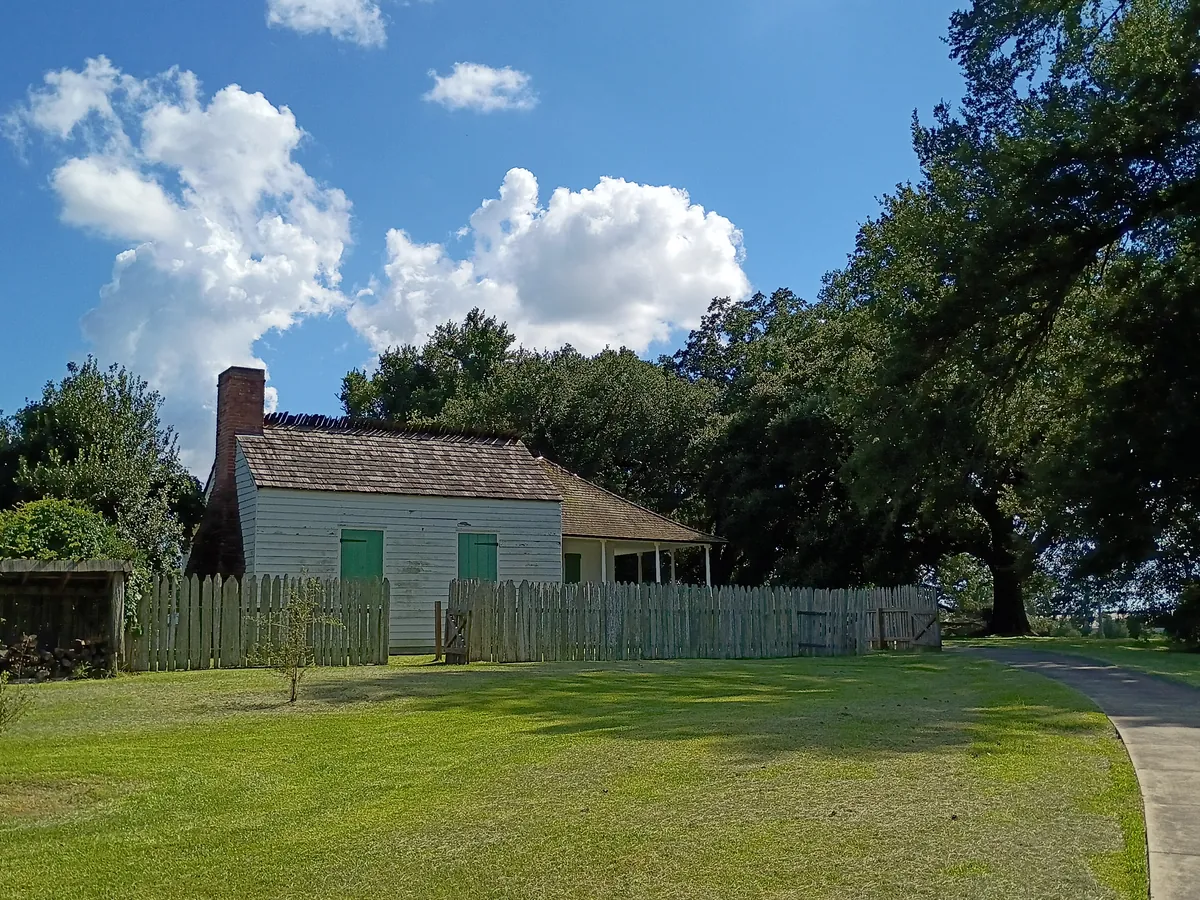
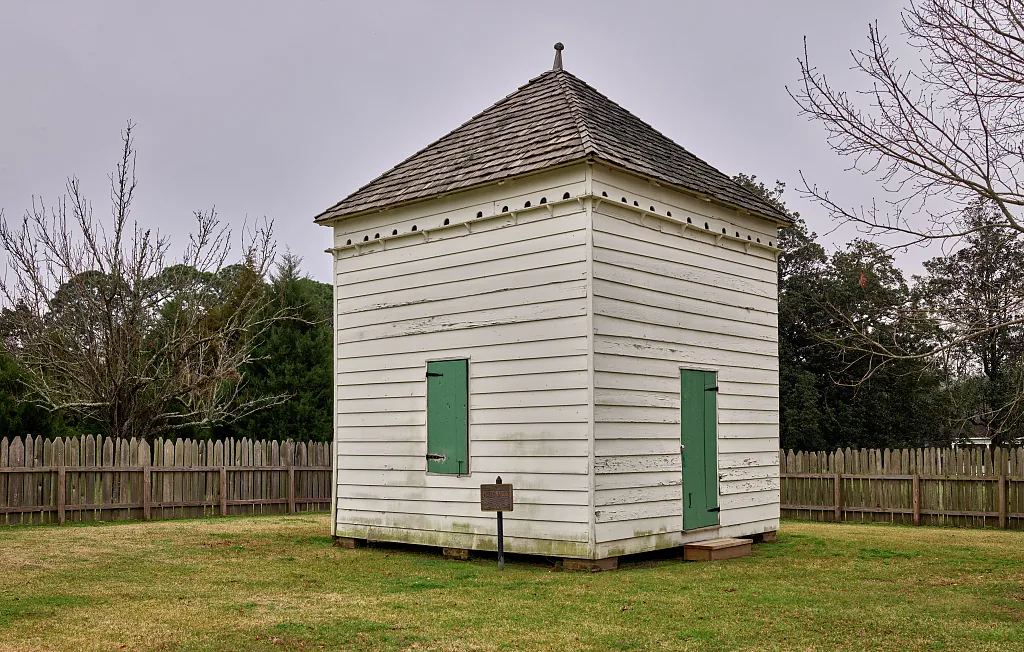
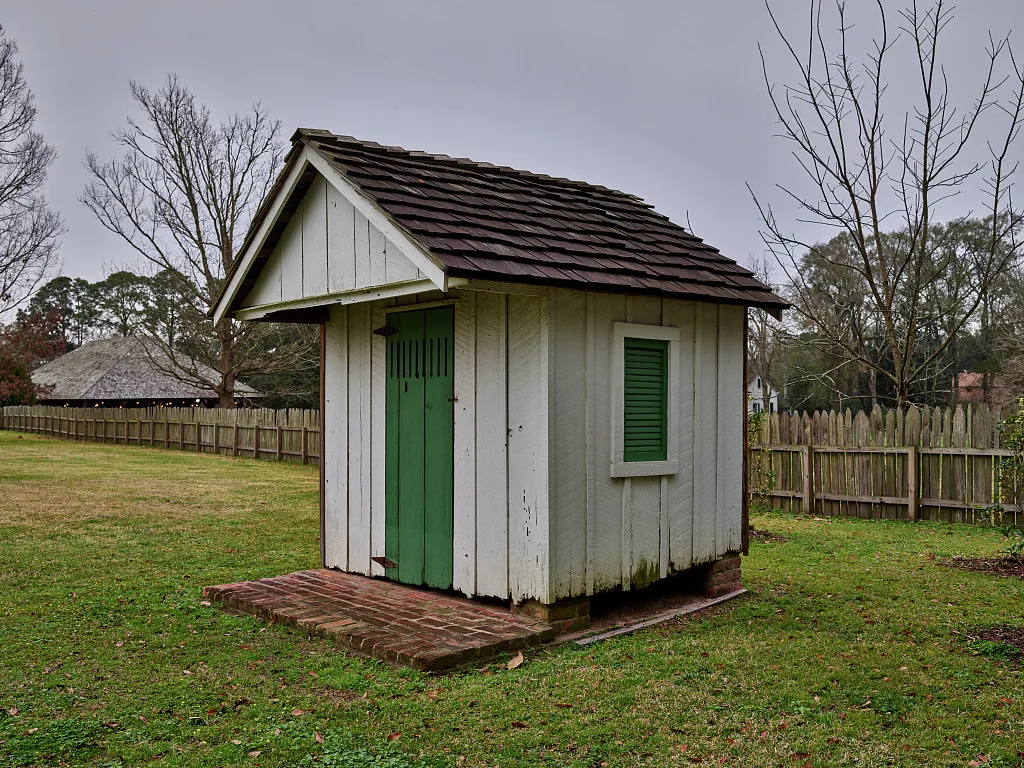
In 1966, Baton Rouge bought the deteriorated property through eminent domain to preserve what had become one of the city's oldest surviving wooden buildings. The pigeonnier from around 1825 still stands. The overseer's house from around 1870 remains. In 1998, the city moved a double slave cabin from around 1830 onto the grounds—one half furnished as it would have been, the other holding an exhibit on slave life in Louisiana. The crop garden grows the same four cash crops once worked here.
The open-hearth kitchen, reconstructed from archaeological evidence, holds spider pots, a clock-jack, sugar nips, waffle iron, and reflector ovens. Time a visit for a weekend hearth-cooking demonstration—the chance to see colonial Louisiana foodways practiced with fire and iron.
- ·Magnolia Mound Plantation in Baton Rouge was built around 1791 on a Spanish land grant.
- ·It is one of the oldest surviving wooden buildings in the city and predates U.S. statehood.
- ·The open-hearth kitchen is a rare intact example of colonial Louisiana foodways.
- ·The site interprets the lives of the enslaved community alongside the planter family.
- ·Visitor tip: time a visit for a hearth-cooking demonstration, typically held on weekends.
More archive
Memories
Editorial content compiled with AI assistance. Place details verified against public records.