The Spanish Mission Revival tower rising above the downtown riverfront once marked the most active freight terminus on the lower Mississippi. That was 1925, when the Illinois Central Railroad built this depot. In 1976, the Louisiana Art & Science Museum moved in.
The name of the city comes from a red pole the French saw in 1699, marking the boundary between Houma and Bayagoula hunting grounds. The carpenter traveling with d'Iberville wrote that the Choctaw term was *iti humma*, "red pole." The French called it *le bâton rouge*. The pole was presumably at Scott's Bluff, now the campus of Southern University. French colonists established a military post here in 1721. This became the capital in 1849.
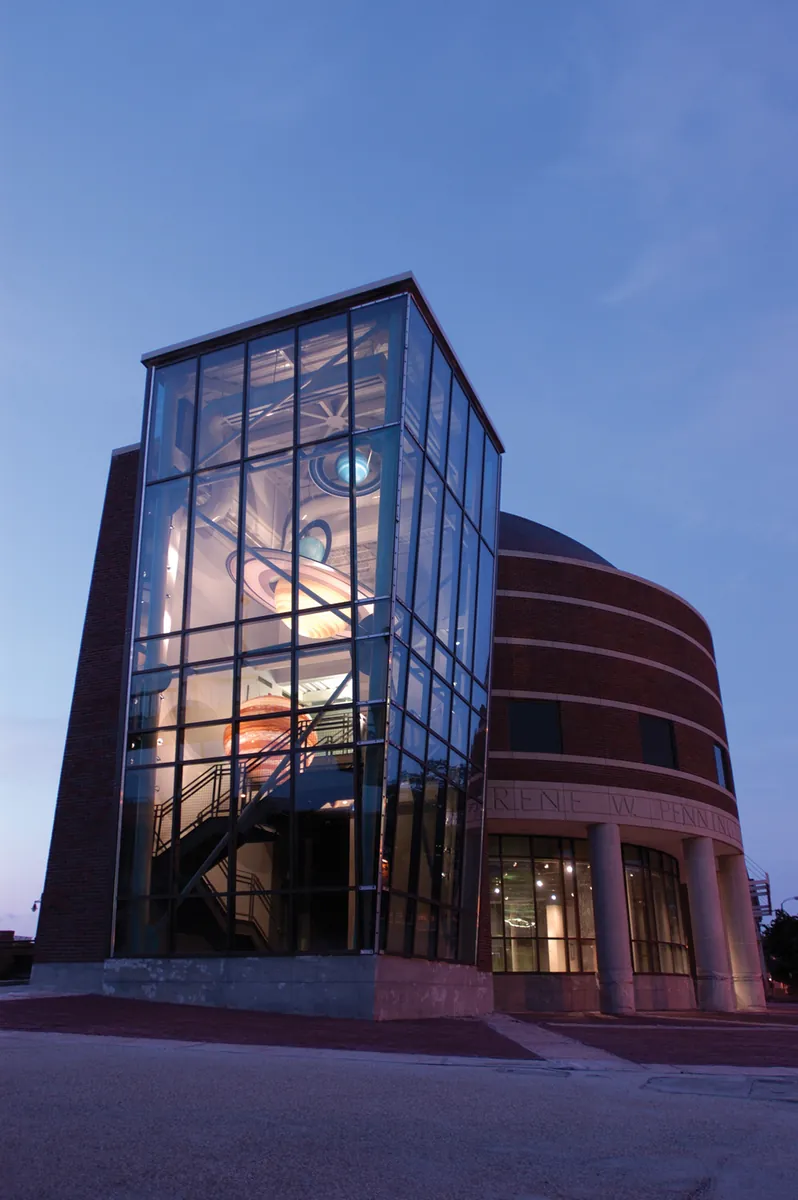
Inside the depot: an Egyptian mummy. Rotating science exhibits. Next door, the Irene W. Pennington Planetarium is the largest in Louisiana.
Open Tuesday through Saturday. Admission charged. Planetarium shows run at set times.
- ·Occupies a restored 1925 Illinois Central Railroad depot on the downtown riverfront.
- ·The Irene W. Pennington Planetarium next door is the largest in Louisiana.
- ·Collections include an Egyptian mummy and rotating science exhibits.
- ·The Spanish Mission Revival tower once marked the most active freight terminus on the lower Mississippi.
- ·Open Tue–Sat. Admission charged; planetarium shows at set times.
Memories
Editorial content compiled with AI assistance. Place details verified against public records.