How one crop built the most concentrated collection of antebellum plantation architecture in America — and destroyed the lives of hundreds of thousands of people in the process. This drive moves upriver from the oldest plantation in the valley through the Creole and Anglo houses that sugar money raised, ending at the ruins of the largest antebellum mansion the South ever built.
The route
 1Architecture·1787·NRHPDestrehan Plantation
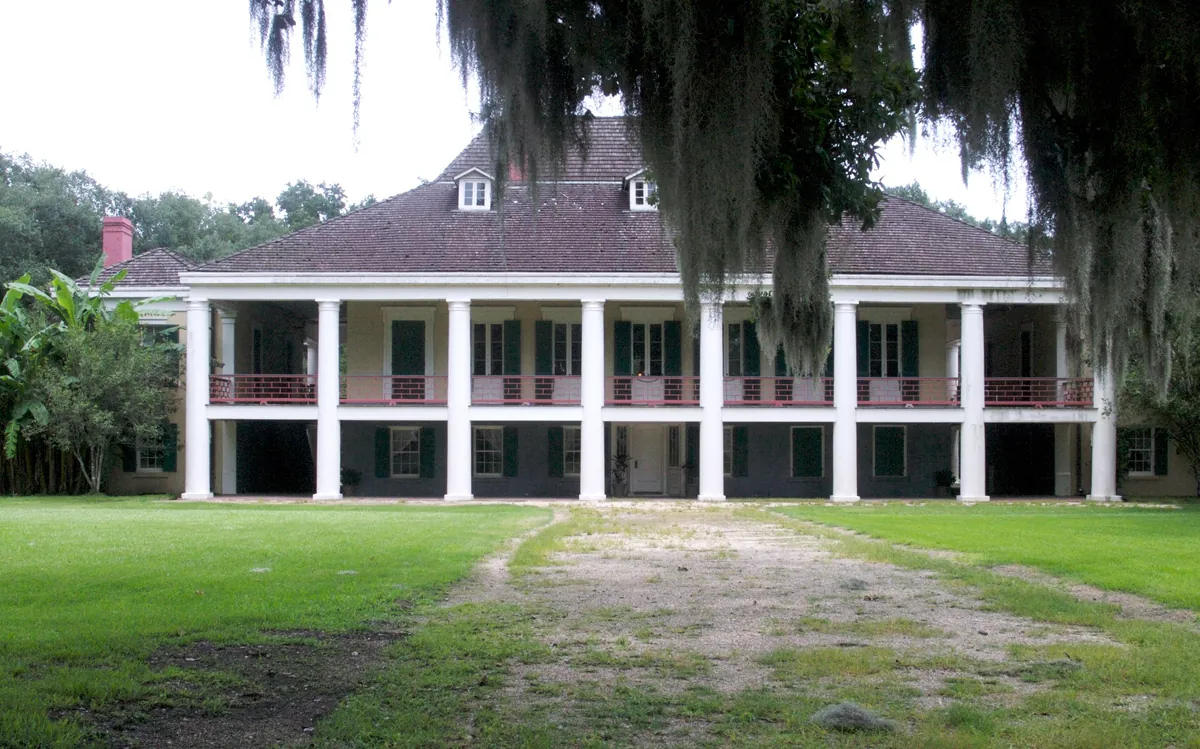
Charles Paquet built the oldest surviving plantation home in the lower Mississippi Valley in 1787. He was a free man of color. The house he made was Creole — galleries, steep hipped roof, the post-and-beam frame they built on swampy ground. That structure is still there, but you can't see it. The 1830s Greek Revival renovation buried it under columns and a front-facing façade. What endures is the original frame, hidden beneath what the next owners needed it to look like. In January 1811, the tribunal for the German Coast Uprising convened in this house. It was the largest slave revolt in American history. The condemned were executed along River Road as a warning visible from the water. The community that grew up around the plantation is named for Jean Noël Destréhan, who twice served as President of the Orleans Territory's legislative council and was elected to the United States Senate when Louisiana became a state in 1812. The house is on the National Register of Historic Places. It's open daily, 25 minutes from New Orleans on River Road. You go to see what Paquet built and what happened here — the house that was made to last and the tribunal that met to decide who would die.
 2Museum·1805·NRHPLaura Plantation
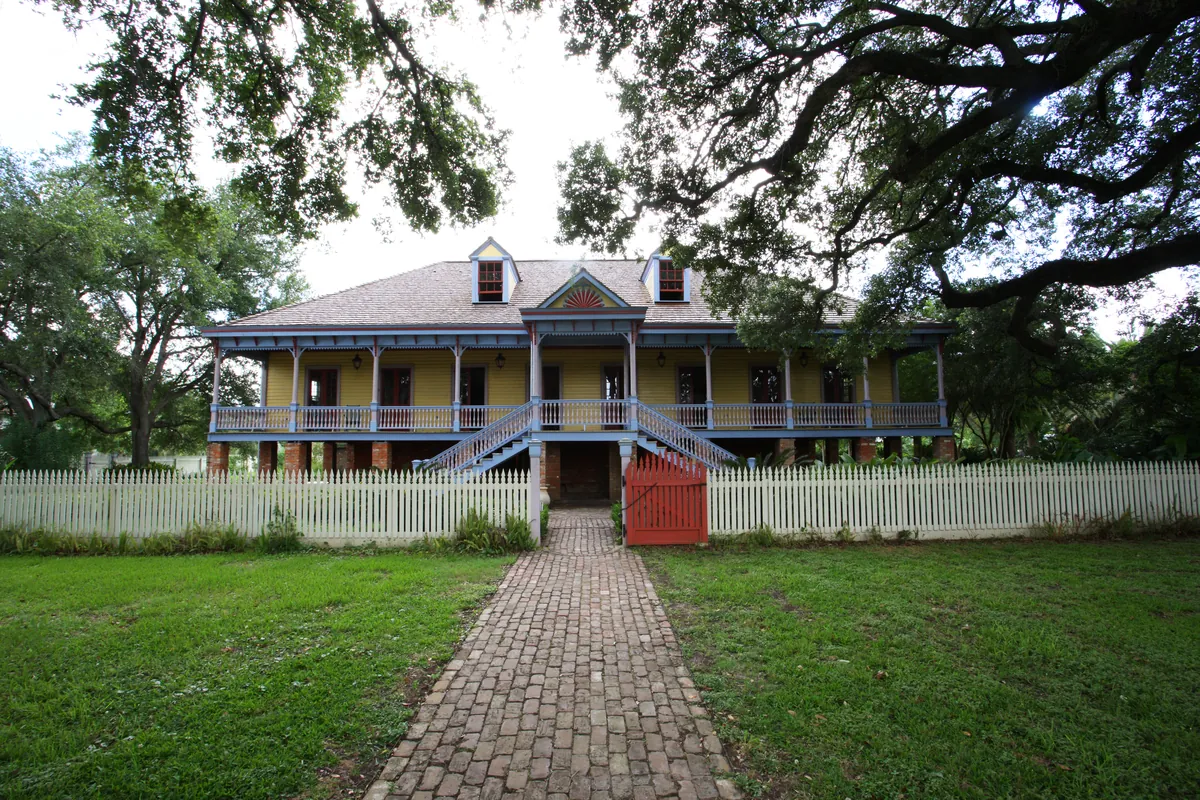
Guillaume Duparc was a Frenchman who fought in the American Revolutionary War. In 1804 he petitioned Thomas Jefferson for land. Jefferson granted him acreage along the Mississippi River. Duparc's enslaved workers built the house during 1804 and 1805. The big house has a raised brick basement story and a briquette-entre-poteaux upper floor — brick between posts. Much of the house was pre-fabricated, its wooden beams pre-cut off-site. It is one of only 30 substantial Créole raised houses in the state. The floor plan consists of two rows of five rooms that all open directly into each other without any hallways. Duparc lived at the plantation for four years, dying in 1808. His daughter Elisabeth married into the Locoul family. Laura Locoul Gore was born in the big house in 1861. She inherited the plantation and ran it as a sugar cane business until 1891, when she sold it. The plantation was run by women for three consecutive generations. The sugar mill was located about a mile behind the big house. By the time of the Civil War, there were 186 slaves working the farm. The slave quarters included approximately 69 cabins. Each cabin was occupied by two families, who had separate doors and shared a central double fireplace. Four original slave cabins survive. Farm workers continued to live in the slave quarters until 1977. It is one of only 15 plantation complexes in Louisiana with this many complete structures. In the 1870s, Alcée Fortier visited the plantation to listen to the freedmen. He collected stories told in the Louisiana Creole language about Compair Lapin and Compair Bouki — the clever rabbit and stupid fool. The Br'er Rabbit and Br'er Fox tales are variations on traditional stories that originated in Senegal and were brought by enslaved Senegalese to America around the 1720s. In 1894, Fortier published *Louisiana Folk Tales: In French Dialect and English Translation*. On August 9, 2004, an electrical fire destroyed 80 percent of the house. Restoration work was completed in 2006. The plantation is open daily. Admission is charged.
 3Architecture·1837–1839·NRHPOak Alley Plantation
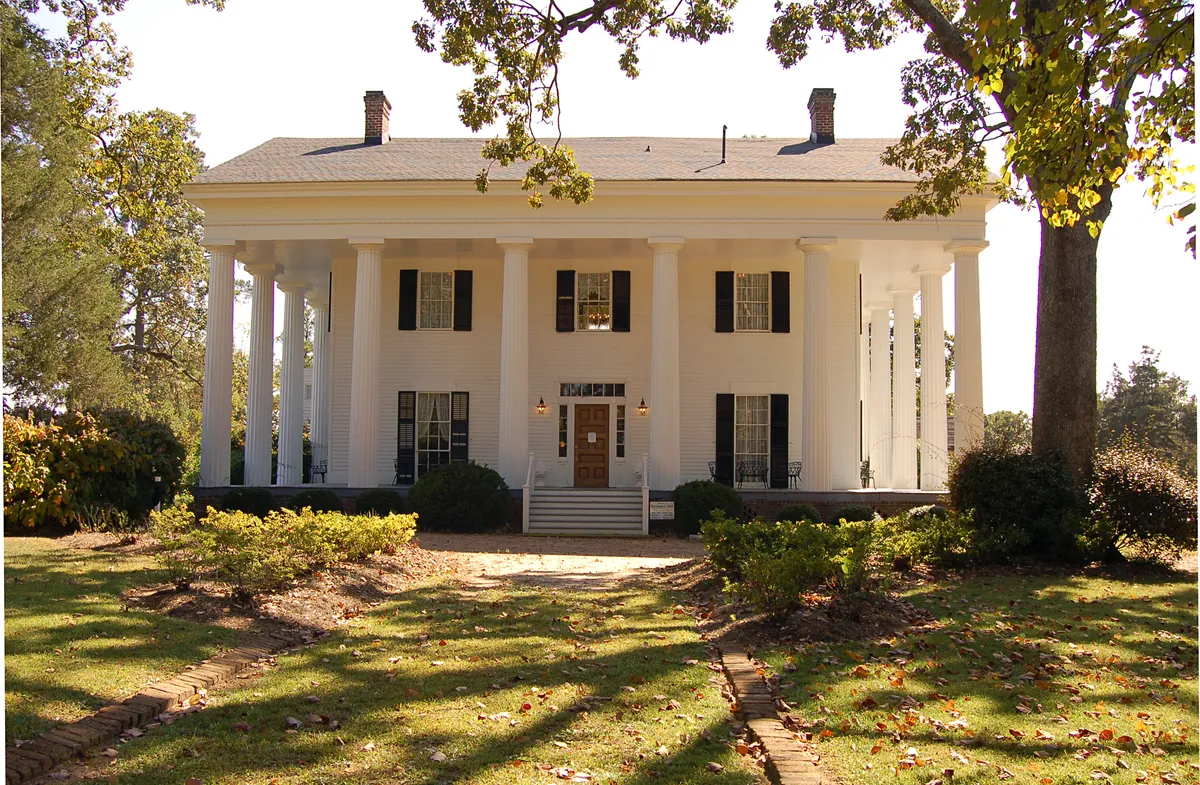
The oaks came first. Twenty-eight live oaks planted in the early 18th century, aligned in a double row 800 feet long, facing the river. The property was originally called Bon Séjour. Valcour Aime, known as the "King of Sugar" and one of the wealthiest men in the South, purchased the land in 1830 to grow sugarcane. In 1836, he exchanged it with his brother-in-law Jacques Télesphore Roman. The following year, people enslaved by Roman began building the mansion under the oversight of George Swainy. It was completed in 1839. Roman's father-in-law, Joseph Pilié, was an architect and probably designed it. The design is Greek Revival. Sixteen-inch brick walls made on site, finished with stucco painted white to resemble marble. The floor plan: a square organized around a central hall running front to rear on both floors. High ceilings, large windows, a slate roof. The exterior features a free-standing colonnade of 28 Doric columns on all four sides—corresponding to the 28 oaks in the alley. The river was the front door. In the winter of 1846, an enslaved gardener named Antoine grafted a pecan variety so successful it won a prize at the 1876 Centennial Exposition in Philadelphia. The shell was so thin it was dubbed the paper-shell pecan, cracked by hand. The property was designated a National Historic Landmark partly for this agricultural innovation. Antoine's original trees were cleared for more sugarcane after the Civil War. Jacques Roman died of tuberculosis in 1848. His wife Celina managed the estate but nearly bankrupted it with heavy spending. Their son Henri took control in 1859, but the Civil War's economic dislocations and the end of slavery made the plantation unviable. In 1866, Henri's uncle Valcour Aime and his sisters Octavie and Louise put it up for auction. It sold for $32,800. By the 1920s the buildings had fallen into disrepair. Andrew Stewart bought the property in 1925 as a gift to his wife Josephine, who commissioned architect Richard Koch to restore the house. The Stewarts ran it as a cattle ranch—Josephine had grown up on one in Texas. When she died in 1972, she left the house and grounds to the Oak Alley Foundation, which opened them to the public. The slave quarters behind the house are now interpreted as part of the tour. One of the most photographed sites in Louisiana.
 4Religious Site·1833·NRHPSt. Michael the Archangel Catholic Church
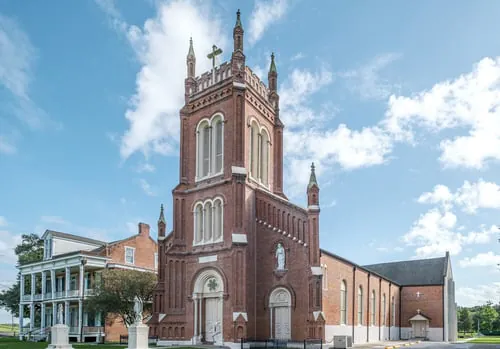
The altar dome is an overturned sugar kettle. The altar itself is covered in clam shells pulled from the Mississippi. The Lourdes Grotto, built in 1876 and believed among the first in America, is made from bagasse — charred sugarcane residue left after the juice is pressed. The parish built what it could from what the river and the fields gave it. St. Michael the Archangel Catholic Church holds the oldest working pipe organ in Louisiana, a Henry Erben instrument from 1857, still in its original location. The town of Convent takes its name from the Marist priests who built here in the 1820s. The church sits on River Road in St. James Parish and is open for visiting.
 5Architecture·1775–1840·NRHPHoumas House
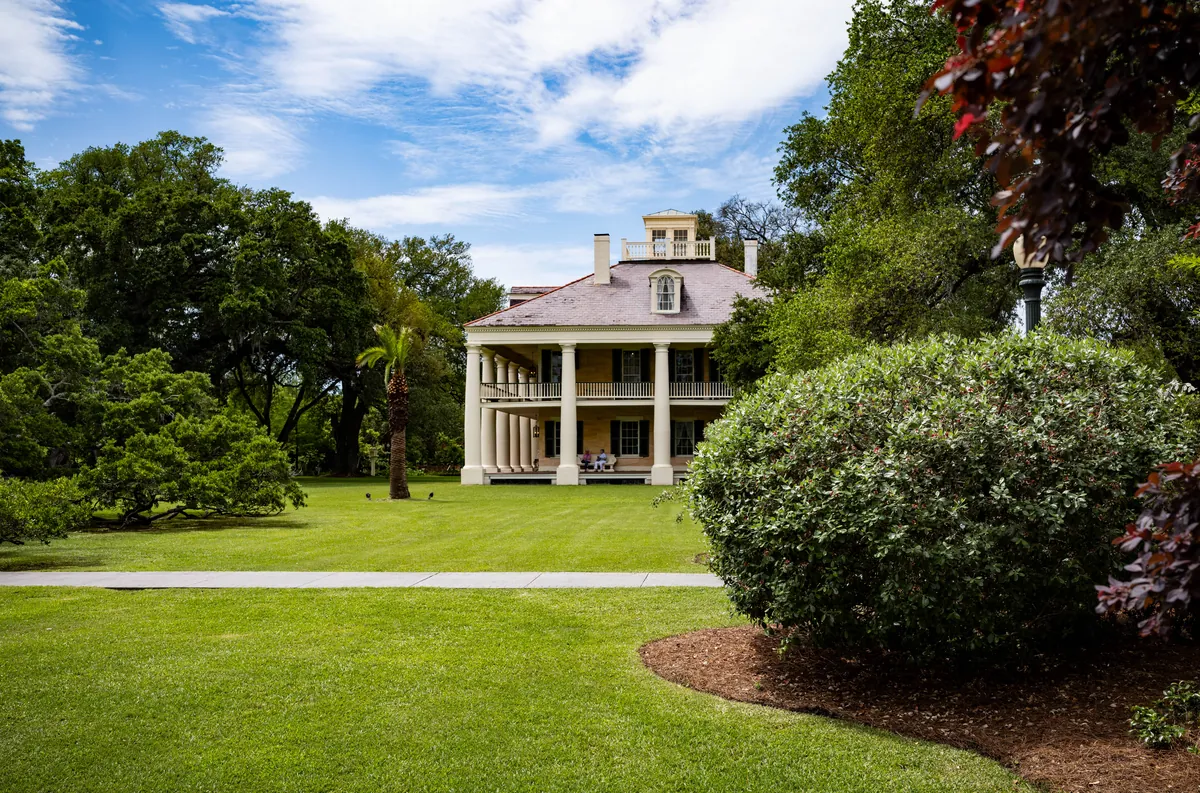
The land belonged to the Houma people until 1774. The name remained after they were gone. By 1862, Irish-born John Burnside ran the largest sugar operation in the United States from this property. Seven hundred and fifty enslaved people worked twelve thousand acres and produced five million pounds of sugar a year. When Union General Butler arrived to commandeer the house, Burnside claimed British citizenship. Butler withdrew. Two buildings stand in the same courtyard. The French Colonial cottage dates to 1775. The Greek Revival mansion came later. The older structure sits directly behind the newer one — a physical record of how wealth and architectural ambition changed hands along the Mississippi. Houmas House now operates as a hotel and event venue with a restaurant and gardens. You can tour the buildings, eat there, or stay overnight. It's in Darrow, on River Road, where the Great River Road follows the Mississippi through Louisiana.
 6Historic Site·1859 / 2025·NRHPNottoway Plantation Site
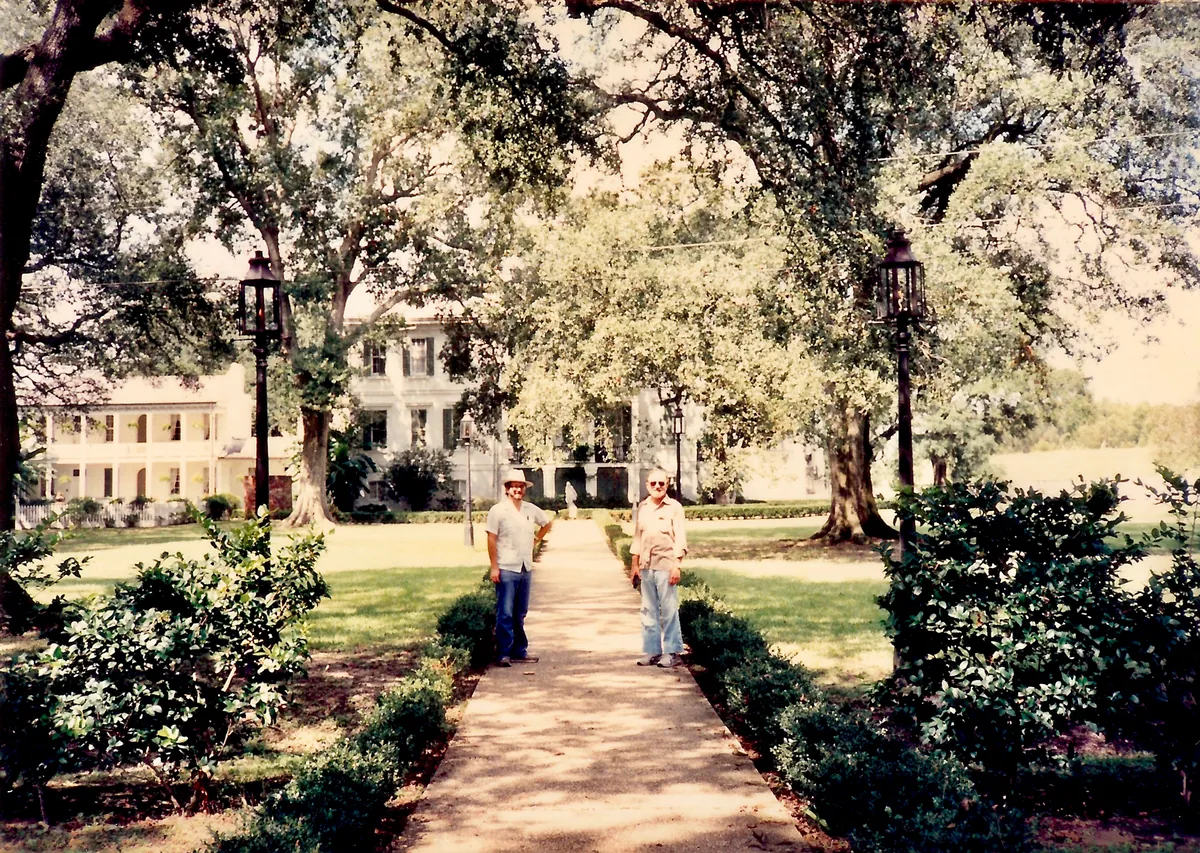
John Hampden Randolph built Nottoway in 1859—a Greek Revival and Italianate mansion of 53,000 square feet and 64 rooms on 31 acres near White Castle. It was the second largest antebellum plantation house ever constructed in the Southern United States, sitting just behind neighboring Belle Grove Plantation in Iberville Parish. On May 15, 2025, it burned. Firefighters from 10 departments fought the blaze for 18 hours. The mansion is gone. The other structures on the property survived—several dependencies and historic buildings remain intact despite the loss of the main house. Whether it will be rebuilt remains unresolved. The fire made Nottoway a Rorschach test: people grappled publicly with what it means when plantation history goes up in smoke, and what it means if someone rebuilds it. The site is not currently open to visitors. Nottoway sits along the Great River Road, the collection of state and local roads that follows the Mississippi from Lake Itasca, Minnesota, to Venice, Louisiana—a route that took 30 years of planning before it was built in 1938, now designated as both a National Scenic Byway and an All-American Road. The mansion was part of that corridor's story. Now it's a site with dependencies still standing and a question mark where the house was.