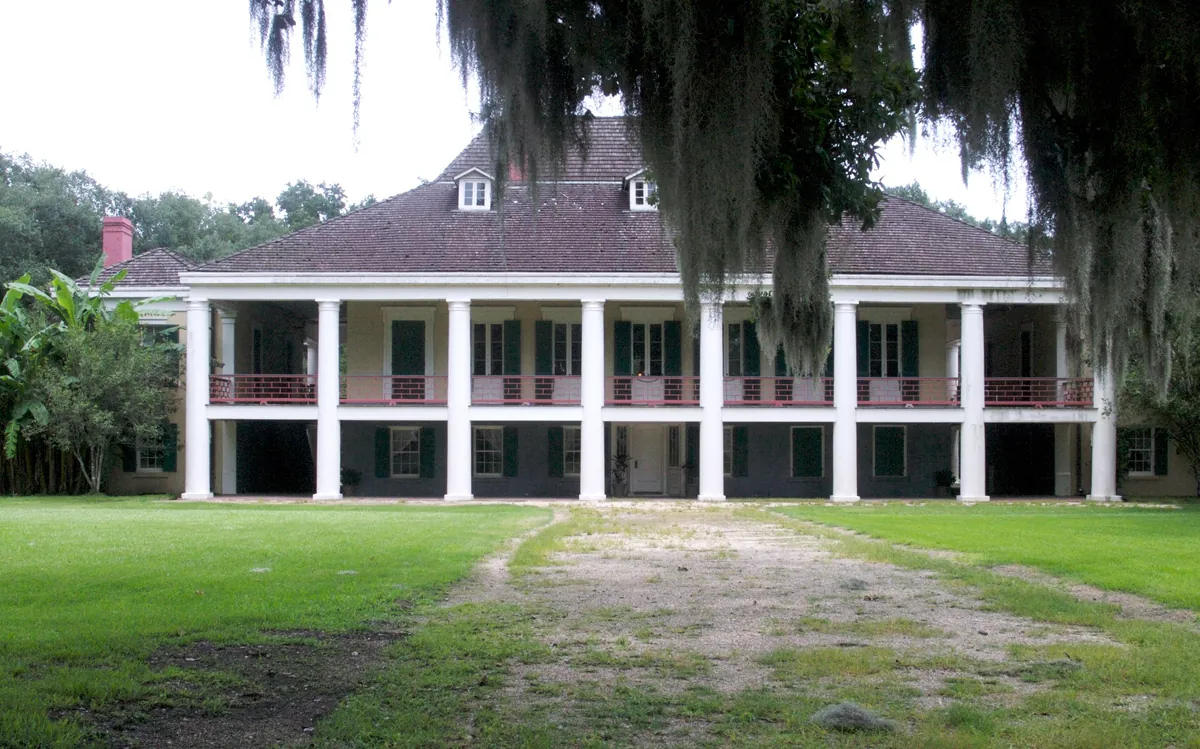
Charles Paquet built the oldest surviving plantation home in the lower Mississippi Valley in 1787. He was a free man of color. The house he made was Creole — galleries, steep hipped roof, the post-and-beam frame they built on swampy ground. That structure is still there, but you can't see it. The 1830s Greek Revival renovation buried it under columns and a front-facing façade. What endures is the original frame, hidden beneath what the next owners needed it to look like.
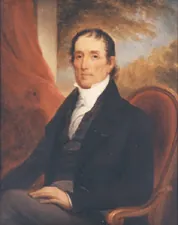
In January 1811, the tribunal for the German Coast Uprising convened in this house. It was the largest slave revolt in American history. The condemned were executed along River Road as a warning visible from the water. The community that grew up around the plantation is named for Jean Noël Destréhan, who twice served as President of the Orleans Territory's legislative council and was elected to the United States Senate when Louisiana became a state in 1812.
The house is on the National Register of Historic Places. It's open daily, 25 minutes from New Orleans on River Road. You go to see what Paquet built and what happened here — the house that was made to last and the tribunal that met to decide who would die.
- ·Oldest surviving plantation home in the lower Mississippi Valley (est. 1787).
- ·House faces the Mississippi River; designed to be approached by boat, not by road.
- ·FSA photographer Russell Lee, 1938: abandoned plantation near Destrehan captioned 'at present house is only few yards from levee, formerly was at least half a mile away' — the levee physically migrated toward the house over the preceding decade.
- ·HABS documentation: LA-1212, photographed 1933 by Richard Koch, 37 sheets. LOC item la0287. Public domain — image pipeline to rehost.
- ·Time Layer anchor: the Russell Lee caption is the before/after story in a single line.
- ·Source: LOC FSA/OWI item 2017737314; HABS LA-1212.
More archive
Memories
Editorial content compiled with AI assistance. Place details verified against public records.