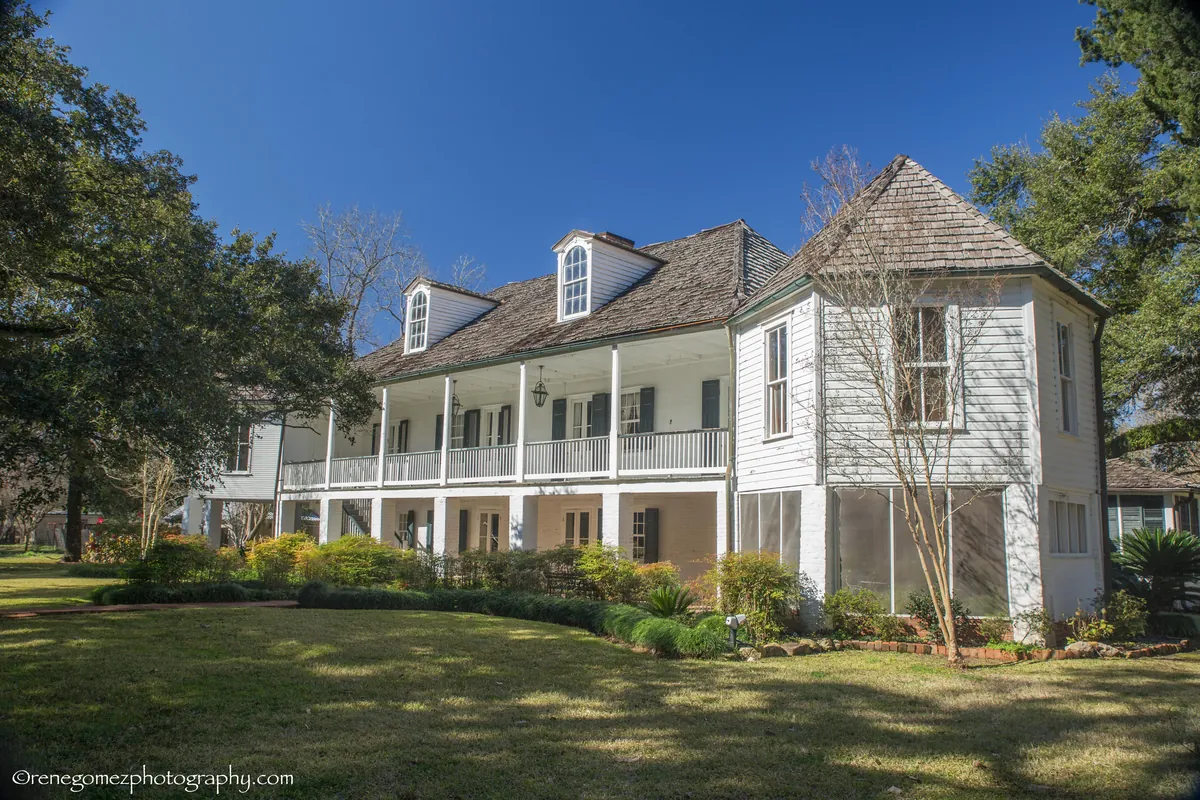
In 1796, a 911-acre tract on the Cane River was granted to Louis Metoyer, son of Marie Thérèse Coincoin, a formerly enslaved woman who became a wealthy businesswoman. Louis was himself still enslaved when he received the land — his French father would not legally free him until 1802 — but his father's wealth and standing allowed him to evade Louisiana's Code Noir, which prohibited enslaved men from holding property. The grant made possible one of the largest plantations in the United States built by and for free people of color.
Louis began construction on the Big House before his death in March 1832. His son Jean Baptiste Louis Metoyer completed it in 1833. When Jean Baptiste Louis died five years later, his estate was valued at $112,761. It passed to his young widow and minor son, neither experienced in financial matters, and both fell into debt during the depression following the Panic of 1837. In 1847, creditors sold the plantation at auction for $8,340 to the Hertzog brothers, who operated it as a cotton plantation in partnership with their sister until 1880.
The plantation changed hands again in the 1880s. In 1884, Irish immigrant merchant Joseph Henry purchased it and gave it the name Melrose. The Association for Preservation of Historic Natchitoches now owns the property and offers guided tours Thursday through Sunday. The state included Melrose among the first twenty-six sites on the Louisiana African American Heritage Trail in 2008, recognizing its significance to the Metoyer family and the broader community of Creoles of color who shaped the Cane River region. The Africa House on the grounds holds Clementine Hunter's 1955 murals depicting daily life along the river.
- ·National Historic Landmark — one of the largest plantations built by free people of color in the antebellum South.
- ·Founded by the Metoyer family, descendants of Marie Thérèse Coincoin, formerly enslaved woman turned plantation owner.
- ·The African House is an extremely rare example of African-influenced architecture in the Americas.
- ·Clementine Hunter's 1955 murals in the African House depict daily life on the Cane River — her masterwork.
- ·Managed by APHN (Association for the Preservation of Historic Natchitoches), est. 1941.
- ·Guided tours Thu–Sun. Thu–Fri 10am–5pm, Sat 10am–4:15pm, Sun 12pm–4:15pm. Gift shop on site.
Memories
Editorial content compiled with AI assistance. Place details verified against public records.