West Florida Republic — The Feliciana Plantations
Seventy-four days in 1810, a sliver of land between the Mississippi and the Pearl declared itself a sovereign nation. The flag flew over Baton Rouge; the wealth flew over the Felicianas. This trip starts where the rebels stormed the Spanish fort, then climbs into the parish where the plantations they were defending still stand.
The route
 1Architecture·1810Republic of West Florida — The 79-Day Nation
On September 23, 1810, armed rebels led by Philemon Thomas stormed Fort San Carlos at Baton Rouge in a sharp and bloody firefight, killing two Spanish soldiers and capturing the Spanish governor. They raised a flag bearing a single white star on a blue field — sewn by Melissa Johnson, wife of a cavalry commander in the assault — and declared the Republic of West Florida. The new nation's capital was St. Francisville, upriver on a Mississippi bluff. The revolt grew from a boundary dispute left open by the Louisiana Purchase. When France sold Louisiana to the United States in 1803, the U.S. claimed West Florida — the territory between the Mississippi and Perdido Rivers — was included. Spain disagreed; it had controlled West Florida as a separate province since 1783. By 1810, the Baton Rouge District was almost exclusively Anglo-American settlers, many of them land speculators who stood to profit if the territory joined the Union. The Republic adopted a constitution modeled on the United States Constitution, with executive, judicial, and legislative branches. The legislature elected Fulwar Skipwith as governor on November 7. Skipwith was a cotton planter who had been appointed by George Washington in 1795 to the staff of James Monroe, the U.S. ambassador to France, served as consul general under Thomas Jefferson, and had helped negotiate the Louisiana Purchase. He moved to Baton Rouge in 1809 and joined the effort to free West Florida from Spanish control. In his inaugural address, he hinted at annexation: "The blood which flows in our veins...will return if not impeded, to the heart of our parent country." President Madison issued a proclamation annexing the Republic on October 27, 1810. William C. C. Claiborne entered St. Francisville with three hundred troops from Fort Adams on December 6 and Baton Rouge on December 10. Skipwith complained bitterly that the United States had abandoned its right to the territory by tolerating Spanish occupation for seven years and that his people would not submit without terms. John Ballinger, commander of the fort, agreed to surrender after Claiborne assured him his troops would not be harmed. At 2:30 p.m. on December 10, 1810, the men marched out of the fort, stacked their arms, saluted the flag of West Florida as it was lowered for the last time, and dispersed. The Republic lasted exactly 79 days. Baton Rouge is the only U.S. state capital that was once a foreign capital. Spain did not relinquish its title to the occupied territory until 1819. The Lone Star flag is displayed at the Old State Capitol museum.
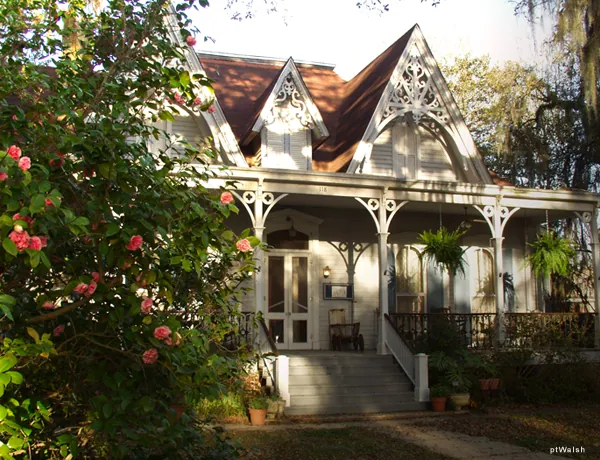 2Architecture·c. 1809·NRHPHistoric St. Francisville
In 1810, for exactly 74 days, St. Francisville served as the capital of the independent Republic of West Florida. The United States absorbed the territory after what historians call the second successful American revolution. The Spanish name translates to "happy land." The town is two miles long and two blocks wide — one of the narrowest incorporated towns in America. Ferdinand Street runs the length of it. Walk the full two miles. The whole town unfolds in about 45 minutes, and you'll have traced the spine of a place that was briefly its own country.
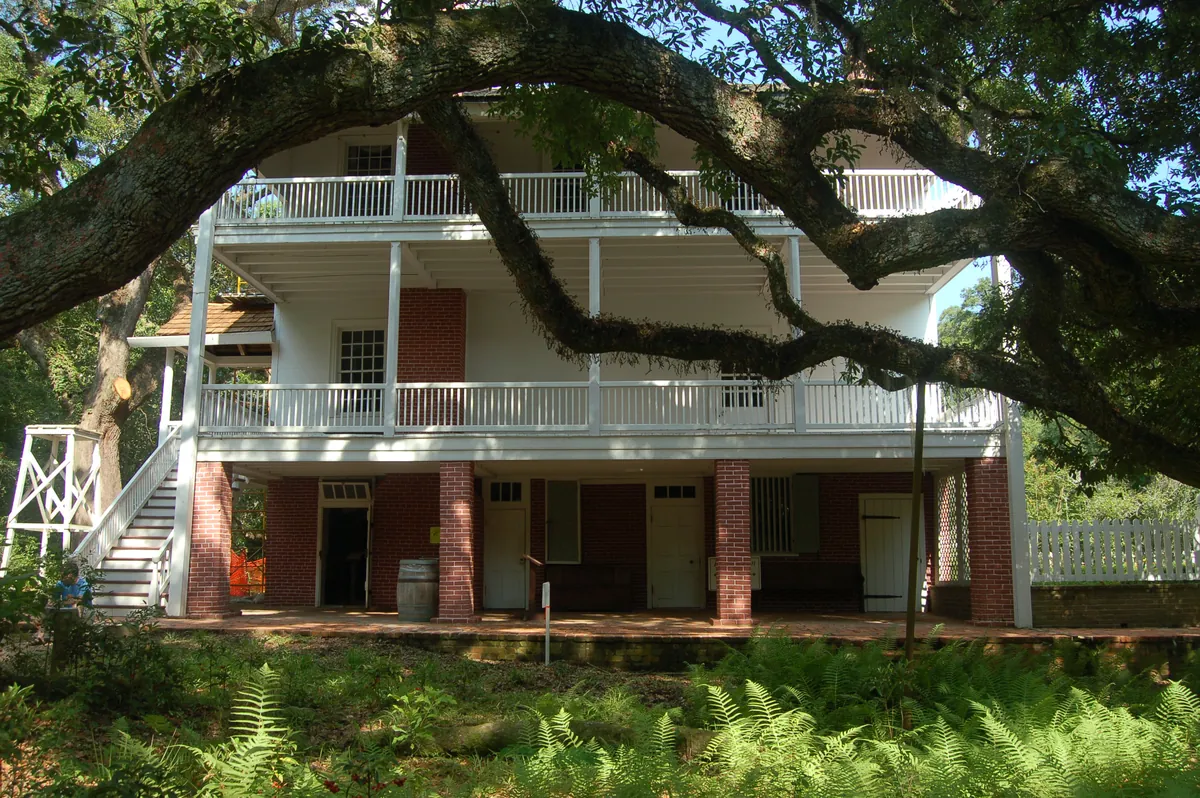 3Historic Site·1808·NRHPOakley House — Audubon State Historic Site
John James Audubon arrived at Oakley in 1821 to teach drawing to a teenager named Eliza Pirrie. The arrangement gave him room, board, $60 a month, and every afternoon free to paint. He stayed four months and produced 32 paintings that became the foundation of *Birds of America*, the most expensive book ever sold at auction. The plantation house was built circa 1806, an example of early Anglo-American architecture in Louisiana. Its interior rooms have been renovated in the style of the Federal period. The house was placed on the National Register of Historic Places in 1973. The 100-acre property contains the forest that served as setting for many of the paintings Audubon created or began at Oakley. The birds he painted still use it. The place still looks enough like 1821 that you can see what he saw.
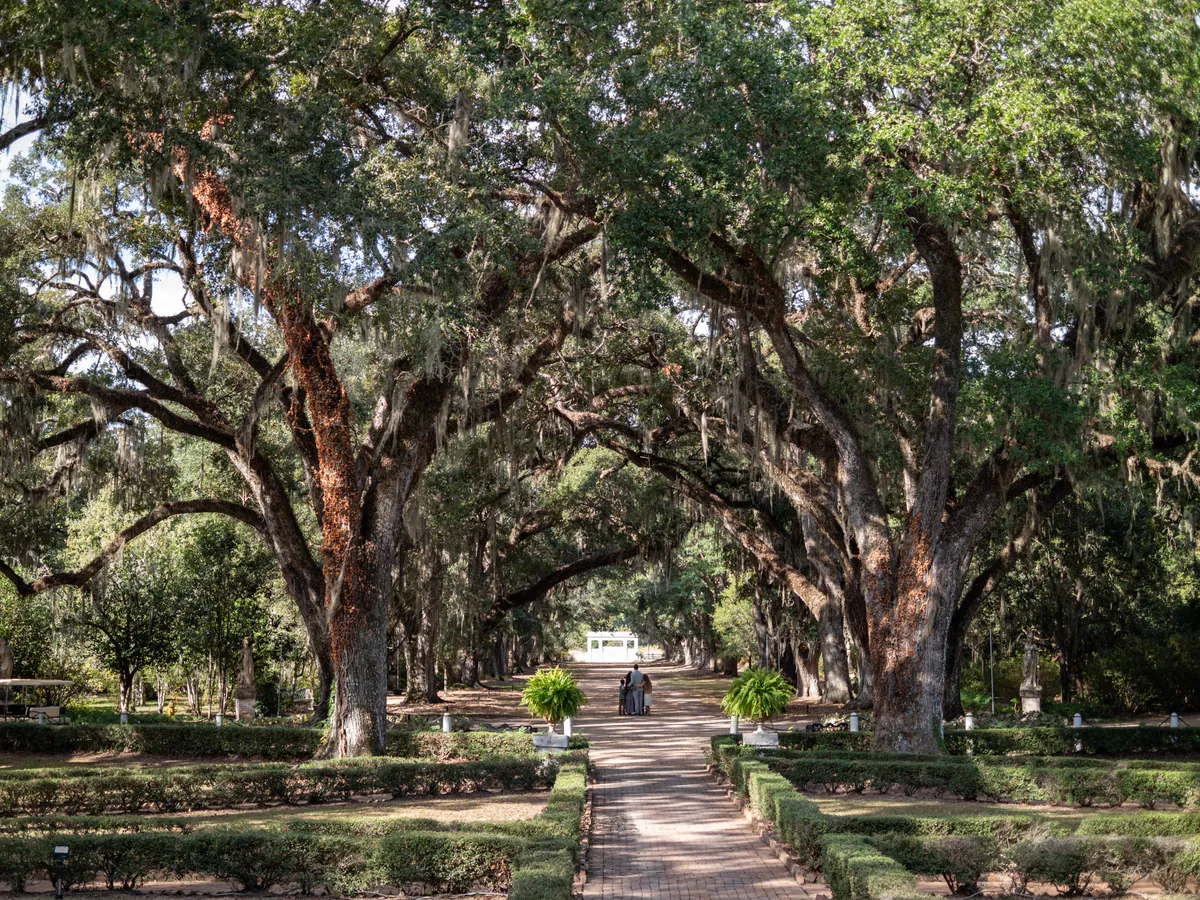 4Architecture·1835·NRHPRosedown Plantation State Historic Site
Daniel and Martha Turnbull came back from their honeymoon with a vision. They had toured European estates, and in 1835, near St. Francisville, they built a house surrounded by 28 acres of formal gardens shaped by what they had seen abroad. What makes Rosedown rare is what remains: the original house, most of its furnishings still in place. Among Louisiana plantation sites, that kind of intactness is unusual. The physical record survived—rooms as they were arranged, objects as they were owned—making the site both a Louisiana State Historic Site and a National Historic Landmark. The gardens the Turnbulls planted still hold camellias and azaleas. In March and April, when those plants bloom, the formal geometry they imagined becomes legible in color. The European inspiration is there in the layout, the deliberate lines, the borrowed vocabulary of another continent's estates translated to West Feliciana soil. Go in spring if you want to see what they were aiming for.
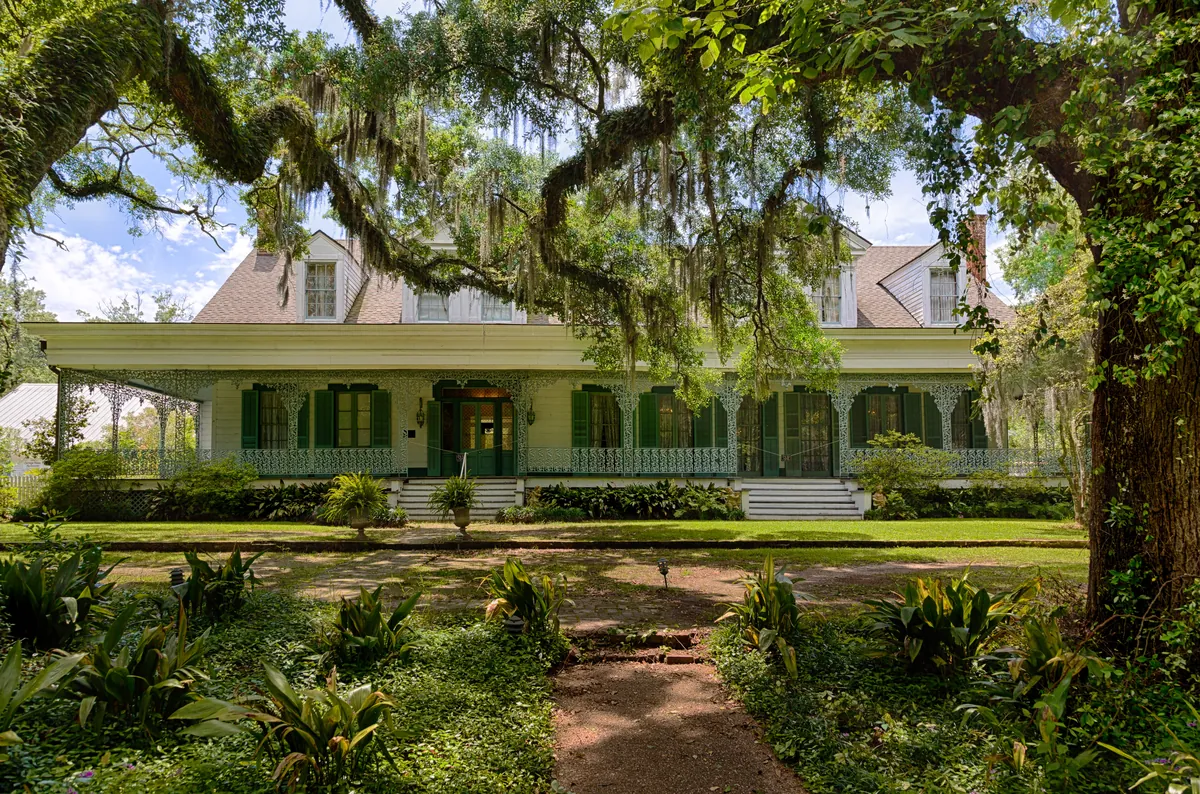 5Architecture·1796·NRHPThe Myrtles Plantation
David Bradford built this house in 1796. He'd led the Whiskey Rebellion; the house sits in what was then remote Louisiana territory. The cast-iron gallery runs 85 feet along the front facade — among the most intact plantation ironwork still standing in Louisiana. Hand-painted French stained glass crowns the front entry door. The place is widely promoted as one of America's most haunted homes. Two tours run. The mystery tour delivers ghost stories. The daytime history tour sticks to documented fact. Both run through the same rooms; you're choosing the frame, not the building. The ironwork and the stained glass remain either way, materials that survived whatever came after Bradford. The National Register lists it. If you go, decide whether you want the legend or the gallery. Both versions end at the same door.
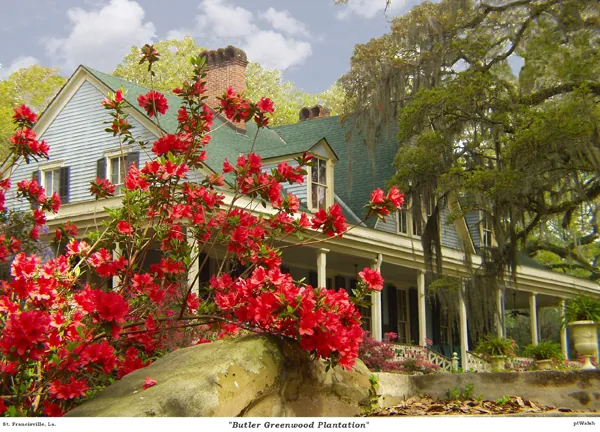
- 6Literary·1790s·NRHPButler Greenwood Plantation
A Quaker physician from Pennsylvania established what became Butler Greenwood when the territory was still British. Dr. Samuel Flower died in 1813, the year after Louisiana became a state, leaving his house bordering Bayou Sara to his daughter Harriett, then twenty years old and married to Judge George Mathews. Her husband became chief justice of the Louisiana Supreme Court. His father, General George Mathews, survived multiple stabbings during the Revolutionary War to serve as a US Congressman, military general, and two-term Governor of Georgia. Harriett and Judge George Mathews used the forced labor of enslaved people to grow indigo, cotton, sugarcane, and corn, shipping from their dock on Bayou Sara. By the 1850s they ranked among the top-producing 9% of sugar planters in the state. In 1860, the household included Harriett, her son Charles Lewis Mathews — both listing their occupation as planter — his wife Penelope Stewart, their children, an Austrian music teacher, and an Irish gardener, with 96 enslaved people living in 18 dwellings. That year the 1,400 acres produced 130 bales of cotton, 2,000 bushels of corn, 175 hogsheads of sugar, and more than 10,000 gallons of molasses. After the Civil War the labor force had fallen to 27 freedmen working for monthly wages. The raised cottage-style house holds oil portraits, Brussels carpet, gilded pier mirrors, Mallard poster beds, a French Pleyel grand piano, and a Victorian formal parlor — twelve matching pieces still in their original upholstery. The original detached brick kitchen dates from the 1790s, the garden gazebo from the 1850s. Now home to author Anne Butler and her daughter Chase Poindexter — the seventh and eighth generation of the family — Butler Greenwood has been in continuous operation since the 1790s. Anne Butler has written 25 books about Louisiana plantation life, making it one of the most documented working plantations in the state. Book an overnight in one of the bed and breakfast cottages. You can sleep in the place you've been reading about.
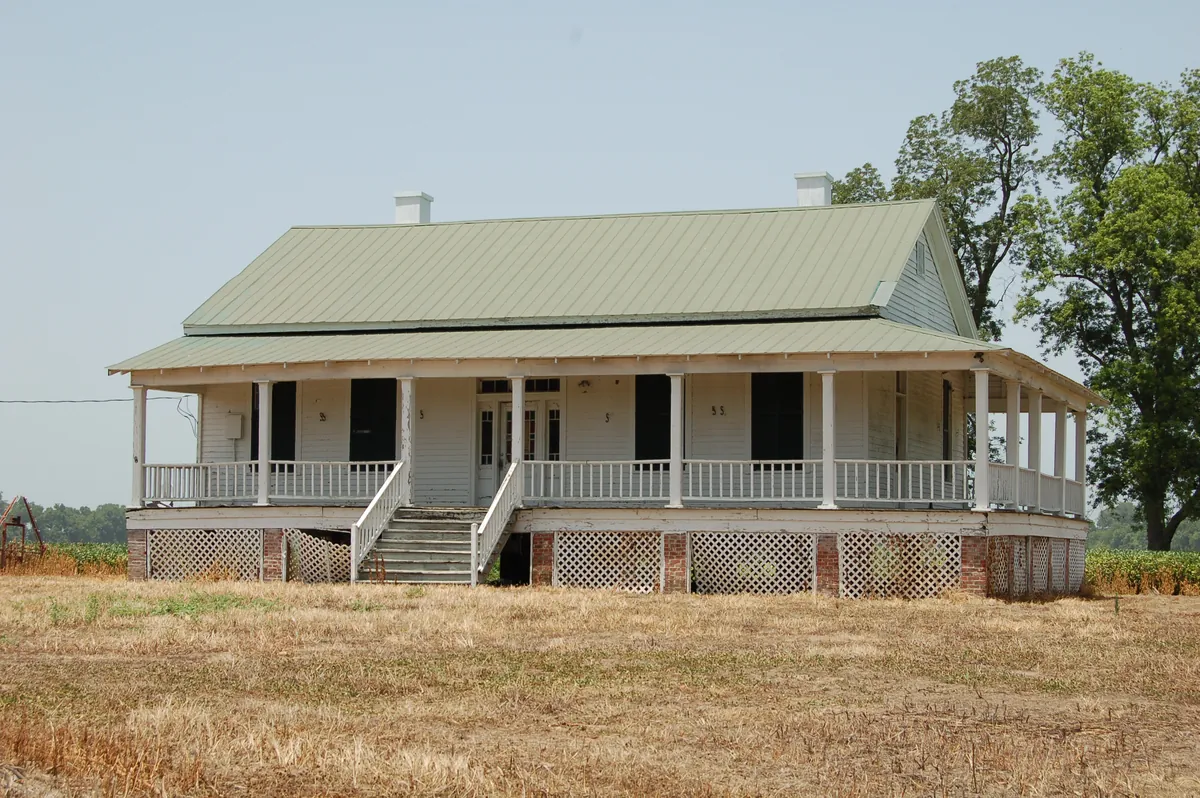 7Literary·1830sLinwood Plantation
A teenage girl named Emma LeConte grew up at Linwood Plantation near St. Francisville and kept a diary during the Civil War that became one of the most widely cited firsthand accounts of Sherman's march. She wrote what she saw — the chaos, the fear, the material collapse of daily life — and her voice has outlasted the war itself. Historians return to her pages because she recorded detail without performing for posterity. The LeConte family produced prominent scientists, including geologist Joseph LeConte of UC Berkeley. Emma was part of that lineage — sharp-eyed, disciplined in observation, trained to notice what endured and what burned. Linwood remains privately held and is not regularly open to the public. What you can do is read the diary before you come to Audubon Country. Documenting the American South hosts it free online. Walk St. Francisville with her sentences in your head, and the region's Civil War geography stops being abstract. You'll know what she saw from these hills, and why she wrote it down.
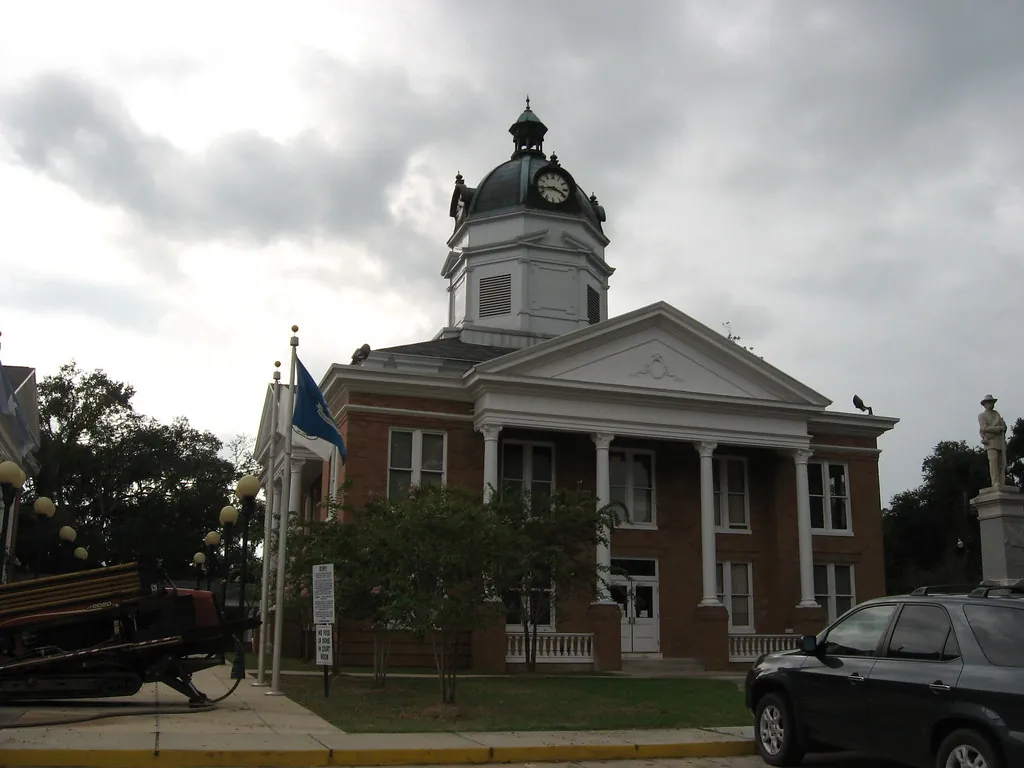
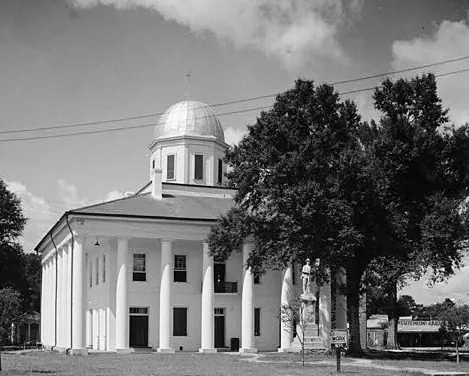 8Architecture·1840·NRHPEast Feliciana Parish Courthouse
In 1840, when most of Louisiana's civic architecture was still raw-timbered and utilitarian, Clinton built itself a courthouse that could have stood in Athens. The Greek Revival building survives as one of the state's finest antebellum civic structures — columns, pediment, proportions that announce permanence. It was built to serve East Feliciana Parish, which the state legislature had carved from the original Feliciana Parish in 1824 to give residents closer access to their government seat. That original parish took its name from Marie Felicité, wife of Spanish governor Bernardo de Gálvez, who controlled the territory before American annexation. The courthouse survived the Civil War not through luck but through repurposing: Union forces turned it into a hospital, which spared it the torch that claimed so many other Southern civic buildings. East Feliciana Parish still uses it for official business, the same function it was built for in 1840. The real exhibit isn't just the building — it's the whole square. Clinton preserves one of the most intact 19th-century courthouse-square streetscapes in Louisiana, a rare thing in a state where hurricanes, fires, and modernization have erased most of their peers. Walk the full perimeter. The streetscape tells you what a working parish seat looked like before the Civil War, and what it means that this one still functions.