In 111 years this bluff flew four national flags and one rebel one. Iberville named it in 1699 for the red pole; the French claimed it. The British took it in 1763 and built Fort New Richmond, the only British colonial fort in Louisiana. Bernardo de Gálvez took it back for Spain in 25 minutes during a thunderstorm in September 1779. In 1810, seventy-five Anglo-Protestant planters declared the Republic of West Florida — its blue Lone Star flag flew here for 79 days before Madison absorbed it. Four flags, two empires, one bluff.
The route
 1Cultural Heritage·1699Iberville's Red Stick — The 1699 Encounter
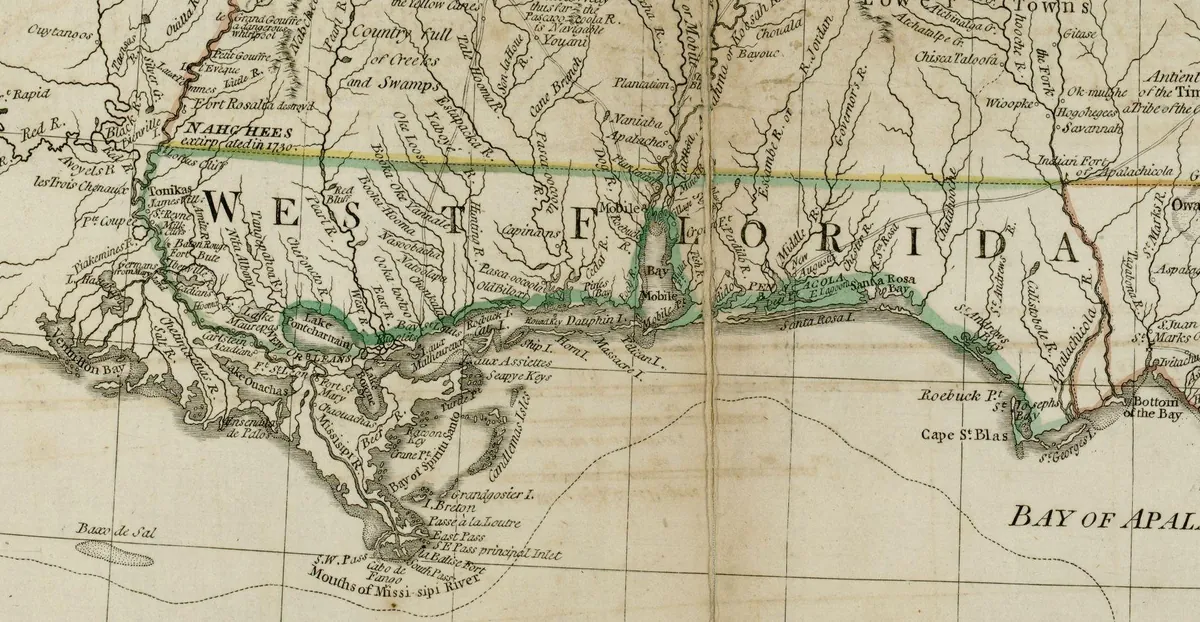
In March 1699, Pierre Le Moyne d'Iberville found a red-stained cypress pole on the bluff. The Houma and Bayougoula peoples had planted it. The pole marked the boundary between their hunting grounds — a border post in an already-organized landscape. Iberville called it le bâton rouge. He built nothing here. The name outlasted every flag that flew over the bluff for the next three centuries. No physical marker of the 1699 encounter remains. The bluff is near the current State Capitol.
 2Military·1763–1779Fort New Richmond — British Baton Rouge
After France ceded Louisiana east of the Mississippi in 1763, the British governed the territory for sixteen years -- long enough to establish the first Protestant settlers and English common law in the region -- before finally fortifying it. Fort New Richmond went up on the Baton Rouge bluff in July 1779, replacing the indefensible Fort Bute, and stood for barely two months. In September 1779, Spanish governor Bernardo de Galvez attacked with 1,400 soldiers during a thunderstorm, overwhelmed the garrison before it could respond, and raised the Spanish flag over a fort the British had considered impregnable.
 3Military·1779Bernardo de Gálvez — The Battle of 1779
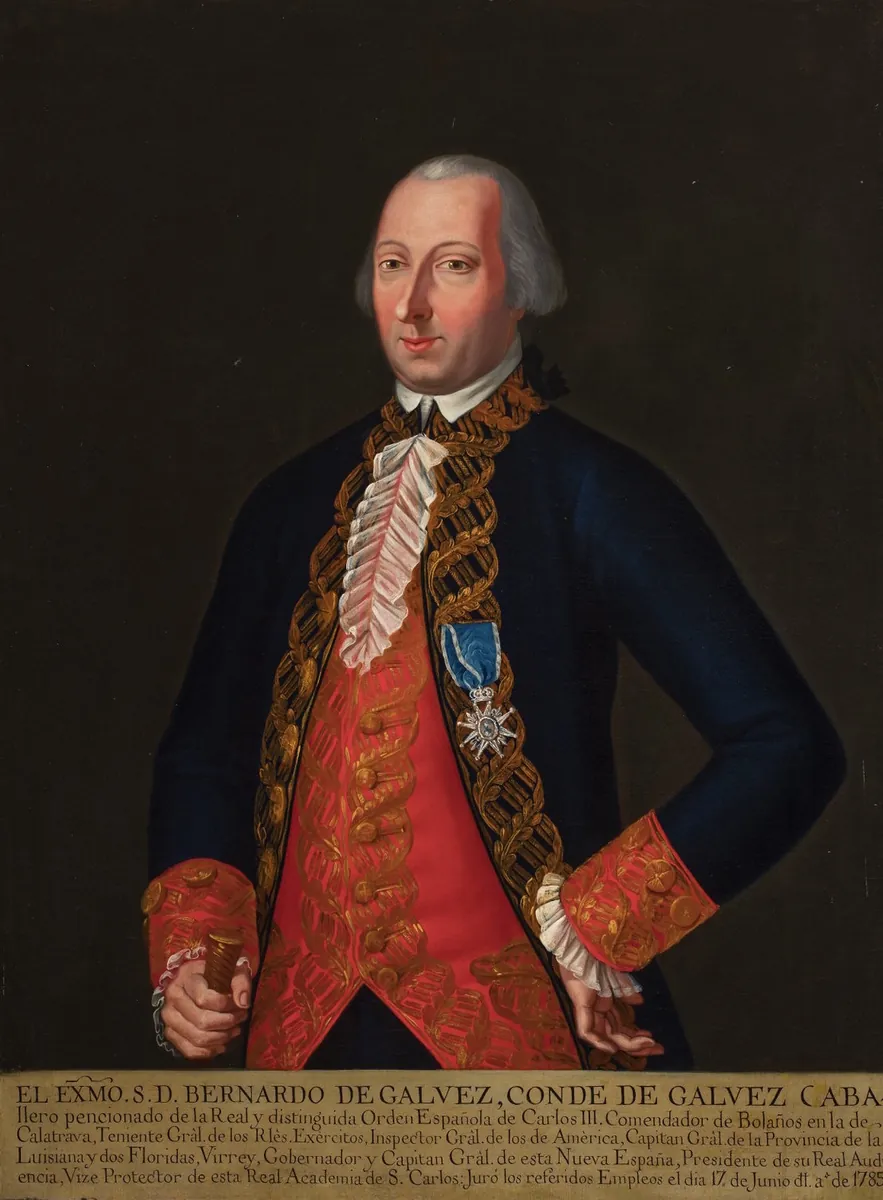
In September 1779, Spanish governor Bernardo de Gálvez intercepted a secret communication from King George III to General John Campbell at Pensacola. The British crown had instructed Campbell to organize an attack on New Orleans—to assemble fighting ships from Jamaica, gather provincial forces, recruit loyal Indians, and draw on the royal treasury. Gálvez read the letter and mobilized Louisiana for war. On September 21, 1779, Gálvez's forces defeated the British at Baton Rouge. He took Natchez weeks later, then Mobile in March 1780. On May 8, 1781, he captured Pensacola, the British capital of West Florida, from Campbell. The British lost every base on the Gulf coast. Gálvez had been appointed governor of Louisiana in 1777 with instructions to secure the friendship of the United States. The British blockade of the Thirteen Colonies had closed the Atlantic ports; the Mississippi River became the alternative. Working with Oliver Pollock, an American patriot, Gálvez shipped gunpowder, muskets, uniforms, and medicine upriver to the colonial rebels. His Gulf campaign kept British forces from outflanking the Revolution from the west. Congress issued a resolution on May 9, 1783, to display his portrait in the room where Congress met. The portrait was not hung until December 2014—the same year Congress granted Gálvez honorary citizenship, making him one of eight people ever so honored. Galveston, Texas, is named for him.
 4Military·1819–1824·NRHPPentagon Barracks
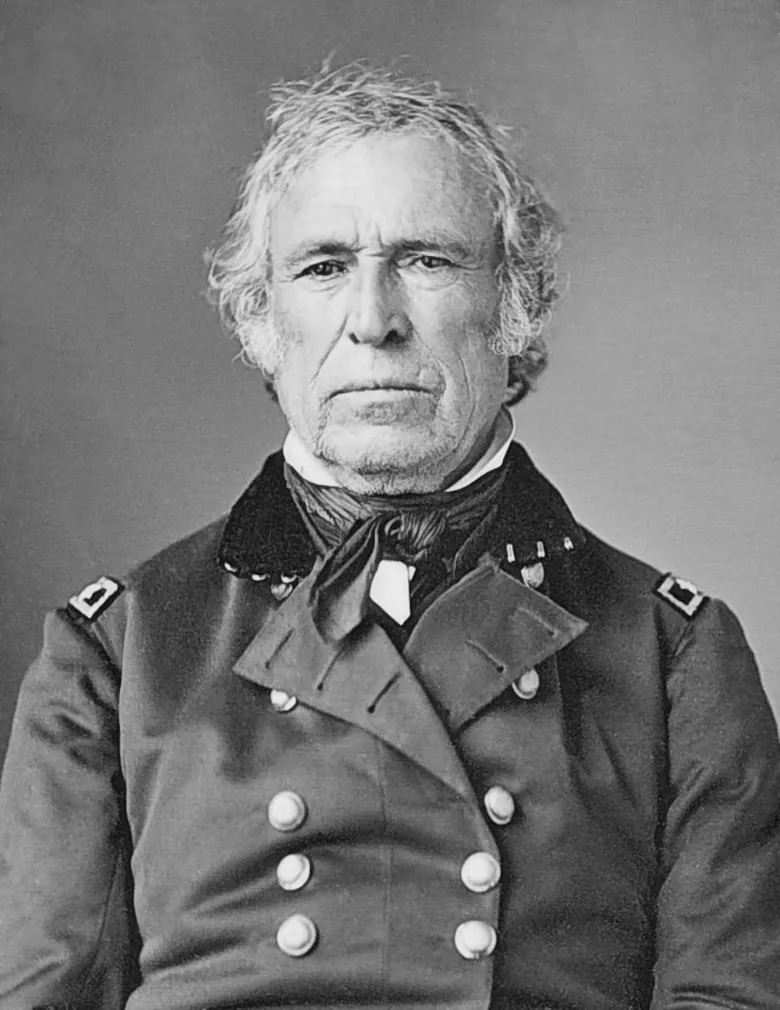
Four identical brick buildings close a pentagon above the Mississippi bluff, built from 1819 to 1825 under Captain James Gadsden of the United States Army. The soldiers completed the four two-story structures by 1825 and designed them to house one thousand troops. A fifth building — a commissary-warehouse forming the fifth side of the pentagon — went up in 1821, but faulty construction forced the Army to tear it down within months. Baton Rouge owed its strategic importance to the Istrouma Bluff, the first natural rise upriver from the Mississippi Delta. The same bluff that allowed a business quarter safe from seasonal flooding made the site worth fortifying. The British erected Fort New Richmond here in 1779. Spanish colonial governor Bernardo de Gálvez arrived on September 20, 1779, found three hundred British troops garrisoning it, and captured it the next day. Spain renamed it Fort San Carlos and held it through the Republic of West Florida's three-month life in 1810. American forces took control in December 1810, used the post as an assembly point for the Creek War and the Battle of New Orleans, then demolished the old Spanish fort in 1819 to make room for Gadsden's barracks. Robert E. Lee, Zachary Taylor, Lafayette, George Custer, Jefferson Davis, and Abraham Lincoln all passed through during the post's active military life. The United States Army occupied the barracks and adjacent arsenal until January 1861, when Louisiana seized them and turned the arsenal over to the Confederacy. Union troops retook the complex in May 1862. After a failed Confederate attempt to recapture Baton Rouge that August, Union authorities renamed the installation Fort Williams, for General Thomas Williams, killed in the battle. In 1884, the General Assembly allocated the buildings and grounds to Louisiana State University. LSU used them as dormitories from 1886 until the university moved to its current campus in 1926. Ownership transferred to the State of Louisiana in 1951. On July 26, 1973, the buildings were placed on the National Register of Historic Places. The barracks now house the lieutenant governor's offices and private apartments for state legislators. The original parade ground is still intact between the four brick buildings. The exteriors and parade ground are open to visitors. They are among the oldest surviving federal military structures in the Gulf South.
 5Architecture·1810Republic of West Florida — The 79-Day Nation
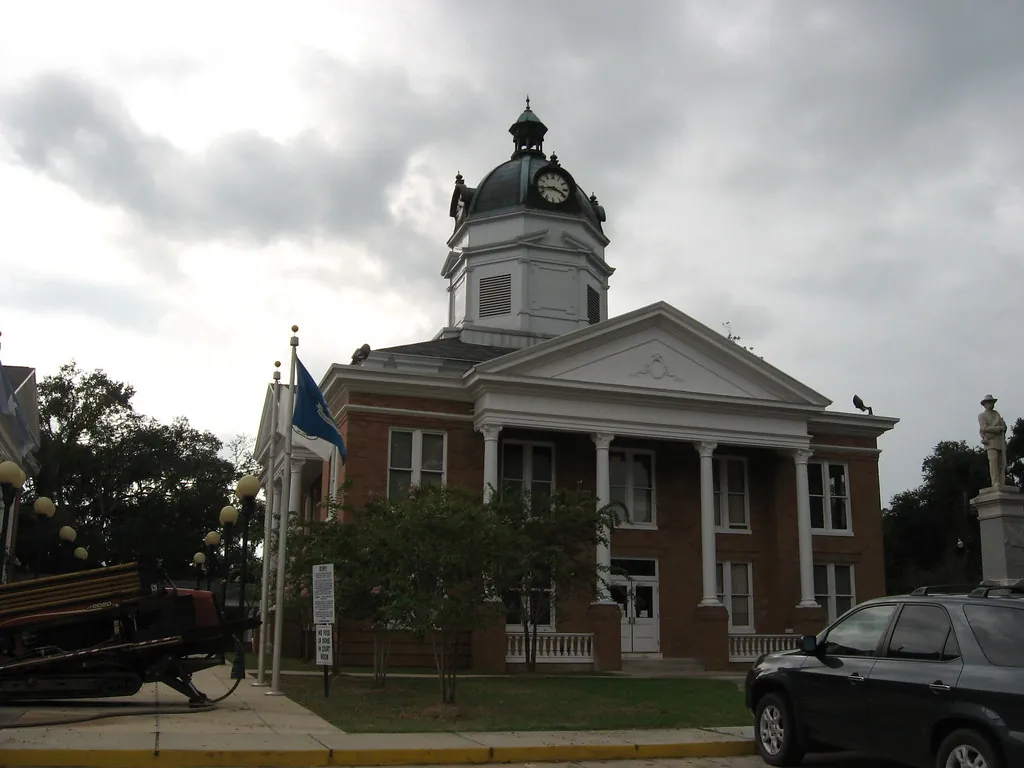
On September 23, 1810, armed rebels led by Philemon Thomas stormed Fort San Carlos at Baton Rouge in a sharp and bloody firefight, killing two Spanish soldiers and capturing the Spanish governor. They raised a flag bearing a single white star on a blue field — sewn by Melissa Johnson, wife of a cavalry commander in the assault — and declared the Republic of West Florida. The new nation's capital was St. Francisville, upriver on a Mississippi bluff. The revolt grew from a boundary dispute left open by the Louisiana Purchase. When France sold Louisiana to the United States in 1803, the U.S. claimed West Florida — the territory between the Mississippi and Perdido Rivers — was included. Spain disagreed; it had controlled West Florida as a separate province since 1783. By 1810, the Baton Rouge District was almost exclusively Anglo-American settlers, many of them land speculators who stood to profit if the territory joined the Union. The Republic adopted a constitution modeled on the United States Constitution, with executive, judicial, and legislative branches. The legislature elected Fulwar Skipwith as governor on November 7. Skipwith was a cotton planter who had been appointed by George Washington in 1795 to the staff of James Monroe, the U.S. ambassador to France, served as consul general under Thomas Jefferson, and had helped negotiate the Louisiana Purchase. He moved to Baton Rouge in 1809 and joined the effort to free West Florida from Spanish control. In his inaugural address, he hinted at annexation: "The blood which flows in our veins...will return if not impeded, to the heart of our parent country." President Madison issued a proclamation annexing the Republic on October 27, 1810. William C. C. Claiborne entered St. Francisville with three hundred troops from Fort Adams on December 6 and Baton Rouge on December 10. Skipwith complained bitterly that the United States had abandoned its right to the territory by tolerating Spanish occupation for seven years and that his people would not submit without terms. John Ballinger, commander of the fort, agreed to surrender after Claiborne assured him his troops would not be harmed. At 2:30 p.m. on December 10, 1810, the men marched out of the fort, stacked their arms, saluted the flag of West Florida as it was lowered for the last time, and dispersed. The Republic lasted exactly 79 days. Baton Rouge is the only U.S. state capital that was once a foreign capital. Spain did not relinquish its title to the occupied territory until 1819. The Lone Star flag is displayed at the Old State Capitol museum.
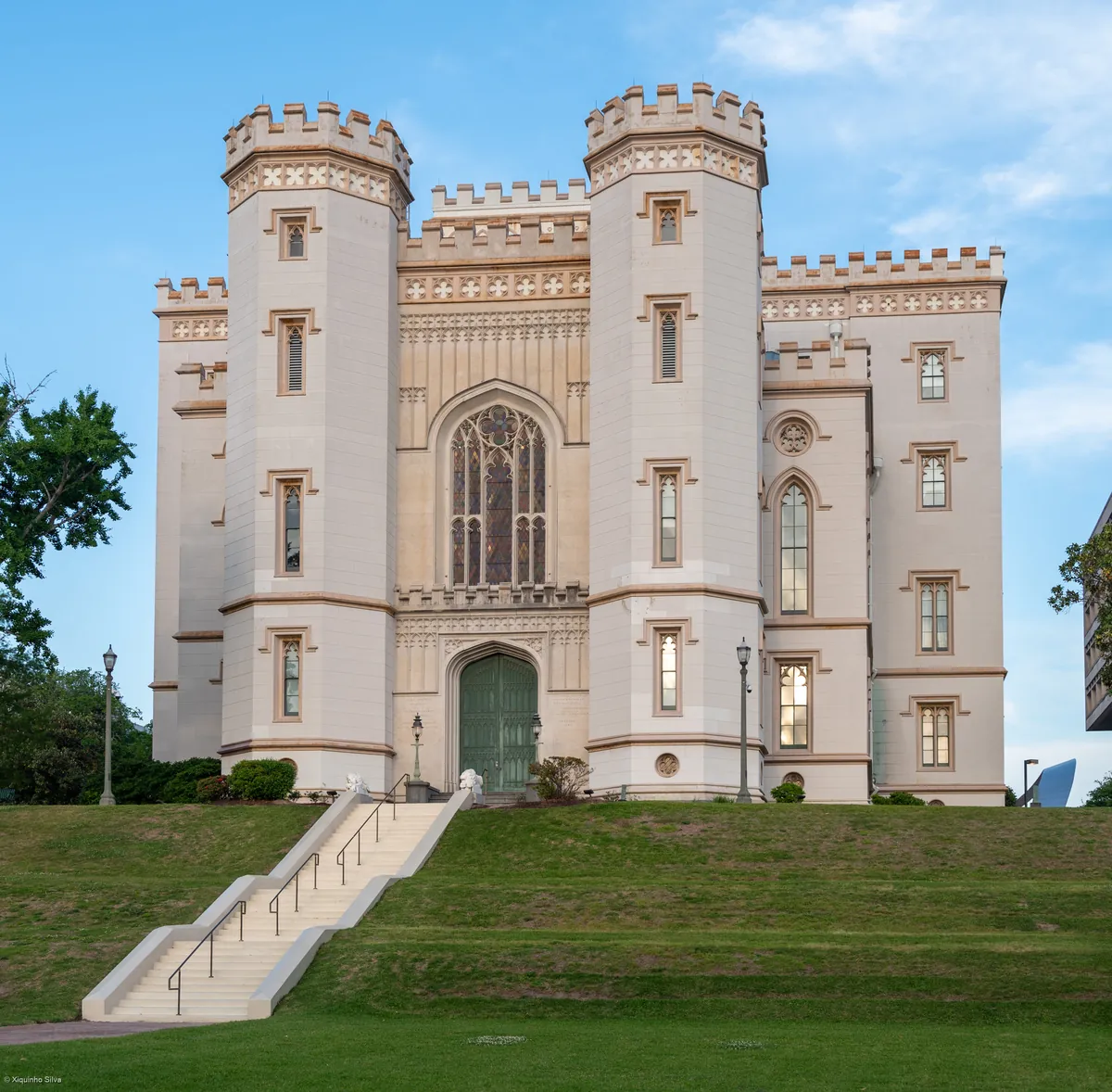 6Architecture·1852·NRHPOld State Capitol
Mark Twain piloted steamboats past this bluff in the 1850s and loathed the sight of it: "It is pathetic ... that a whitewashed castle, with turrets and things ... should ever have been built in this otherwise honorable place." The insult only increased its fame. The building had been designed by New York architect James H. Dakin after the state legislature decided in 1846 to move the seat of government from New Orleans to Baton Rouge—a city of 2,269 people facing down the fourth-largest metropolis in the United States. Representatives from other parts of Louisiana feared a concentration of power. Baton Rouge donated a $20,000 parcel of land atop a bluff facing the Mississippi in 1847, and Dakin gave them a Neo-Gothic medieval-style castle instead of the standard national Capitol knockoff most states commissioned. By 1859 it was featured favorably in De Bow's Review, the most prestigious periodical in the antebellum South. In 1862, after Union Admiral David Farragut captured New Orleans, the seat of government retreated from Baton Rouge. Union forces used the castle first as a prison, then as a garrison for African-American troops under General Culver Grover. The building caught fire twice while used as a garrison, leaving Louisiana's capitol a gutted shell. By 1882 architect William A. Freret had rebuilt it completely, installing the spiral staircase and stained glass dome that define the interior now. The legislature met here until 1932, when it was abandoned for the new Louisiana State Capitol building. Restored in the 1990s, it now houses the Museum of Political History—exhibits on Louisiana's governors, original gubernatorial ballots, an interactive gallery featuring figures including Huey P. Long. A theatrical production called "The Ghost of the Castle" brings visitors face to face with Sarah Morgan Dawson, a young Baton Rouge resident who loved the castle and wrote about it in her Civil War diary. Admission is free. The staircase and dome are reason enough to go.