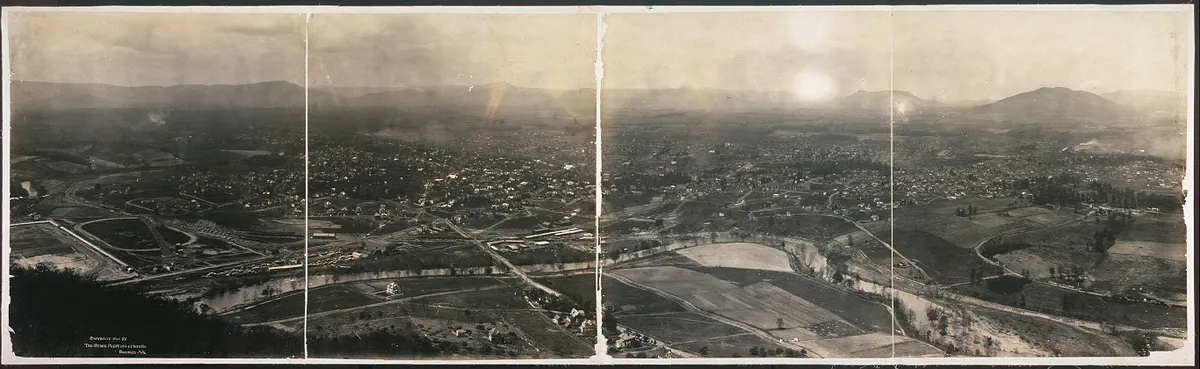
The Norfolk and Western Railway's 1882 arrival turned Big Lick into a boomtown, and in the 1890s Black workers drawn to the railroad boom settled the area just north of the tracks that became Gainsboro. Henry Street emerged as the cultural and commercial center of what Wikipedia documents as Roanoke's predominantly African American community. Between 1890 and 1940, the neighborhood produced doctors, lawyers, and entrepreneurs who built institutions—including Burrell Memorial Hospital and what is now the Gainsboro Branch of the Roanoke City Public Library, both listed on the National Register of Historic Places—despite segregation's barriers. Civil rights lawyer Oliver Hill, who later argued Brown v. Board of Education, came from here. So did Edward R. Dudley, the first Black United States ambassador. Lucy Addison, an educator, successfully petitioned for full accreditation for Roanoke's first African American high school.
Urban renewal programs of the 1960s and 1970s displaced many families and businesses, scattered a community built on forced self-reliance, and changed the neighborhood's urban fabric. The Gainsboro Neighborhood Alliance, established in the 1970s, has served as the community's advocacy group since. Today the neighborhood is seeing redevelopment, especially near the Hotel Roanoke. Walking tours of Gainsboro start from the Harrison Museum on Henry Street—still the street that anchored it all.
- ·Gainsboro is Roanoke's oldest and most significant African American neighborhood.
- ·Settled in the 1890s by Black workers drawn to the railroad boom.
- ·Produced doctors, lawyers, and entrepreneurs who built institutions despite segregation.
- ·Urban renewal in the 1950s–60s scattered a community built on forced self-reliance.
- ·Visitor tip: walking tours of Gainsboro start from the Harrison Museum on Henry Street.
More archive
Memories
Editorial content compiled with AI assistance. Place details verified against public records.