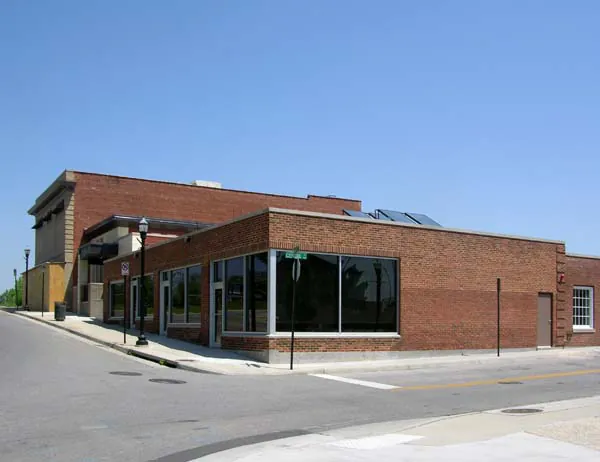
Four buildings on Henry Street hold what remains of a parallel economy that segregation forced into existence. The Hotel Dumas opened in 1917. The Strand Theatre followed in 1923. Dr. Lylburn Downing's office came around 1945. A commercial building arrived in 1951. Together they formed the central business and entertainment district for Gainsboro, the African-American neighborhood in Northwest Roanoke. Hotels, theaters, restaurants, and professional offices lined the avenue — not by choice, but because the law left no alternative.
Desegregation dismantled what it could not replace. The pattern repeated across the South: integration opened doors elsewhere and drained the customer base that had sustained Black-owned districts. Henry Street lost its concentration without gaining equivalent footing in the newly accessible downtown. What survival required under Jim Crow — pooled capital, contained trade, institutions built from necessity — dispersed when the walls came down, and the math never worked in reverse.
The district earned National Register listing in 2004. The buildings also fall within the larger Gainsboro Historic District. The Harrison Museum of African American Culture, located on Henry Street, holds the archive of what stood here and what it cost to build.
- ·Henry Street was the center of Black commerce and entertainment in segregation-era Roanoke.
- ·Hotels, theaters, restaurants, and professional offices lined the avenue.
- ·Desegregation dispersed the community without replacing what was lost.
- ·The pattern mirrors Black business districts across the South after integration.
- ·Visitor tip: the Harrison Museum of African American Culture on Henry Street preserves the story.
Memories
Editorial content compiled with AI assistance. Place details verified against public records.