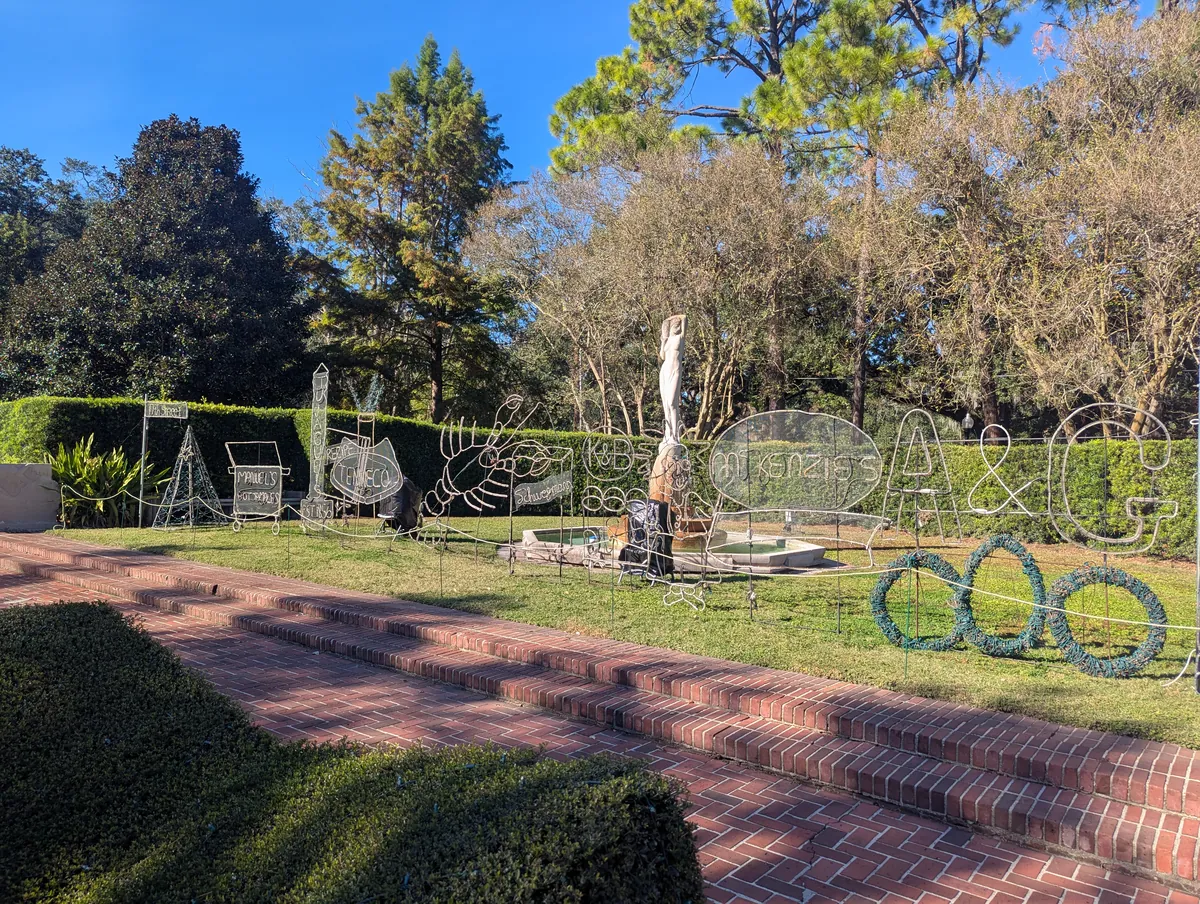
William Wiedorn designed the garden as a classical Art Deco composition — a grid of parterre beds and grassy runways anchored by sculptural fountains. Enrique Alférez, a Mexican-born sculptor who would leave work across New Orleans for the next sixty years, created the fountains. The garden opened in 1936, one of the $12 million Works Progress Administration projects that put nearly 20,000 people to work in City Park. It was New Orleans' first public classical garden, and one of five WPA-era public gardens still standing in the country.
The design held for two decades. Then the WPA funding ended, the war economy wound down, and the garden entered forty years of neglect. Vandalism was common. Attendance dropped. By 1980 the place had lost whatever had made it New Orleans' most popular public space.
The Friends of City Park hired Paul Soniat as the first director in 1982 and changed the name to the New Orleans Botanical Garden. They brought Alférez back after almost fifty years to restore the sculptures and create new pieces. The Pavilion of the Two Sisters opened in 1995. The garden had stabilized.
Then Katrina's floodwaters sat for two weeks and killed ninety percent of the plantings. The garden reopened fourteen weeks later — buildings gutted and renovated, all electrical replaced, bare beds replanted by staff and volunteers who came from across the country. It reopened for Celebration in the Oaks in December 2005, then fully in March 2006.
Ten of the twelve sculptures are Alférez's work — cast concrete, carved limestone, bronze. His last addition came in 1998. The garden now covers twelve acres. The Lord & Taylor Rose Garden holds antique tea roses and modern floribundas in beds edged by yaupon hedges. The Conservatory of the Two Sisters houses living fossils under a glass dome. The Train Garden runs 1,300 feet of track through a miniature New Orleans built of botanical materials. The Japanese Garden, funded by the Japanese Garden Society, opened in 2002 and doubled in size in 2008.
You go to see what survived twice — the WPA grid, and the ground that came back from saltwater.
- ·Built in 1936 as a WPA project — one of only five surviving WPA-era public gardens in the country.
- ·Art Deco design by landscape architect William Wiedorn.
- ·Fountains by Enrique Alférez, the Mexican-born sculptor whose work appears across the city.
- ·Katrina's saltwater surge destroyed 90% of the plantings; volunteers replanted from bare soil.
- ·Located in City Park. Open daily. Admission charged.
Memories
Editorial content compiled with AI assistance. Place details verified against public records.