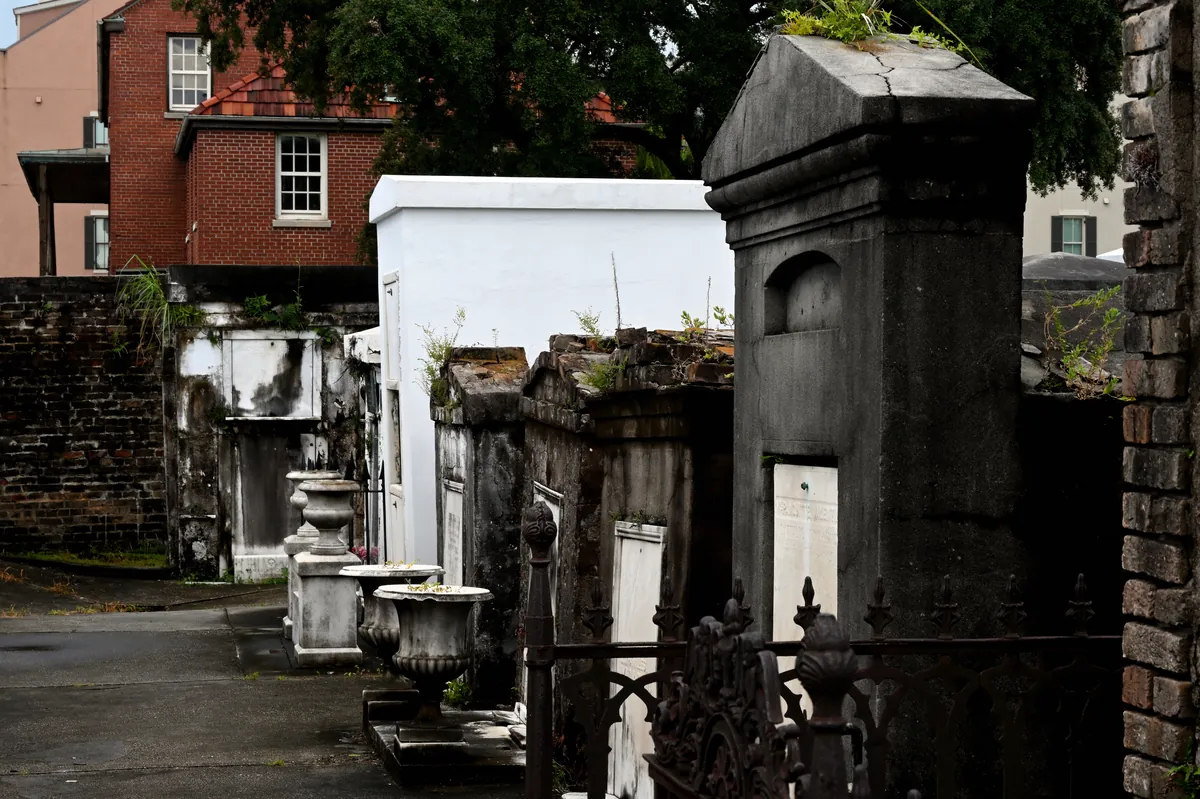
The water table in New Orleans sits one to two feet below grade across most of the city. In some neighborhoods, it is closer. This geological fact explains almost everything about how New Orleans relates to its dead.
You cannot bury people underground when the ground is already water. The saturated soil returns coffins to the surface. In the early colonial period, the French learned this quickly: wooden boxes buried in summer would be pushed back up by the next rainfall. The solution was vaults above ground — sealed masonry chambers that bake in the Louisiana sun until, after a year and a day, only dry bone remains. The remains are swept to the back of the vault, the chamber cleaned, and it is ready to receive another tenant. One vault has held dozens of people across two centuries. The cities of the dead are efficient.
What New Orleans did not do, consistently, was remember exactly where everyone was buried.
Three centuries of burial lie beneath the living city. Many burial grounds were used informally — for the enslaved, for fever victims, for the destitute — without permanent markers. As the city expanded and land values rose, some of those grounds were built over. Construction in the French Quarter and the older neighborhoods regularly surfaces human remains. It happens when new foundations are dug, when drainage lines are run, when building owners attempt to dig basements in shotgun houses. The remains are reported and, when they are, reinterred. Sometimes they are not reported at all.
Visitors who book a courtyard suite in the Quarter should know what they are standing on: three hundred years of accumulated human history, its dead built into the foundations of the living city. The ironwork and the banana trees are lovely. The ground beneath them is older than the country.
This is not morbid. It is what cities are. New Orleans is simply more honest about it than most.
Memories
Editorial content compiled with AI assistance. Place details verified against public records.