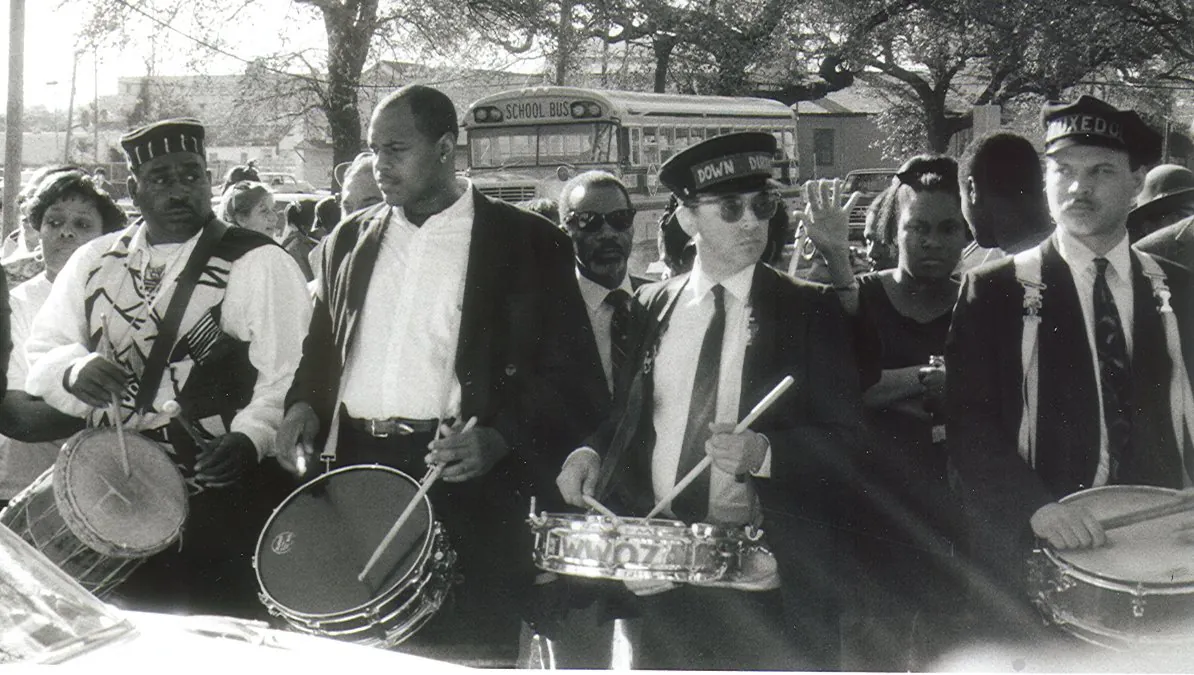
Louis Armstrong's first cornet is here, somewhere in the Old U.S. Mint building on Esplanade Avenue — part of the world's largest collection of jazz instruments, gathered over decades by the New Orleans Jazz Club and donated to the people of Louisiana on September 15, 1977. Alongside it: the 1917 disc of the first jazz recording ever made, 12,000 photographs from the early days of jazz, and architectural fragments from important jazz venues that no longer exist. In the early 1980s, the collection opened on the second floor of the Mint. The New Orleans Jazz National Historical Park, established in 1994 to preserve and interpret the origins of jazz, now operates from within the same building — but there is no park boundary in the traditional sense. The sites are spread across the city, connected by the music itself.
The park's interpretive mission frames this as the only city where jazz could have been invented. Ranger-led walking tours trace the route: Congo Square through brass bands, Storyville, and the migration to Chicago. The National Park Service runs free live performances at the visitor center inside the Mint. All programs are free. Many of the museum's educational activities — music lessons, instrument building workshops, instruction in recording technologies — are conducted in partnership with the park.
The museum sustained damage during Hurricane Katrina in 2005. It reopened in 2008. The future exhibit space will total approximately 8,000 square feet and include interactive technology spaces for visitors to create and share their own forms of jazz music. You can make an appointment to access research materials — letters, photographs, interviews — through the Louisiana Historical Center. The performance venue is on the third floor. The collection includes trumpets, cornets, trombones, clarinets, and saxophones played by Bix Beiderbecke, Kid Ory, George Lewis, Sidney Bechet, and Dizzy Gillespie — the world's largest collection of instruments owned and played by important figures in jazz, in the building where it was given to the people, at 400 Esplanade Avenue bordering the French Quarter.
- ·A National Historical Park without a single boundary — spread across multiple sites connected by the music itself.
- ·Established in 1994 to preserve and interpret the origins of jazz in the only city where it could have been invented.
- ·Free live performances at the visitor center inside the Old U.S. Mint building.
- ·Ranger-led walking tours trace jazz from Congo Square through brass bands, Storyville, and the migration to Chicago.
- ·All programs are free.
Memories
Editorial content compiled with AI assistance. Place details verified against public records.