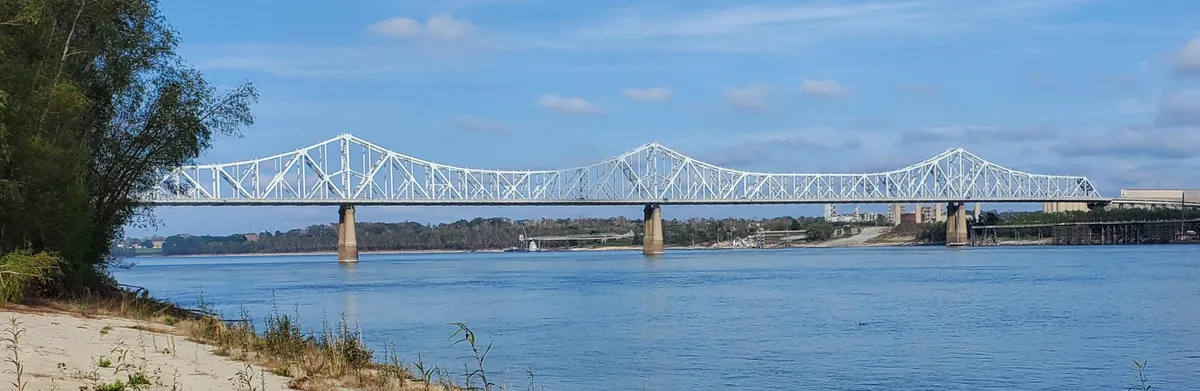
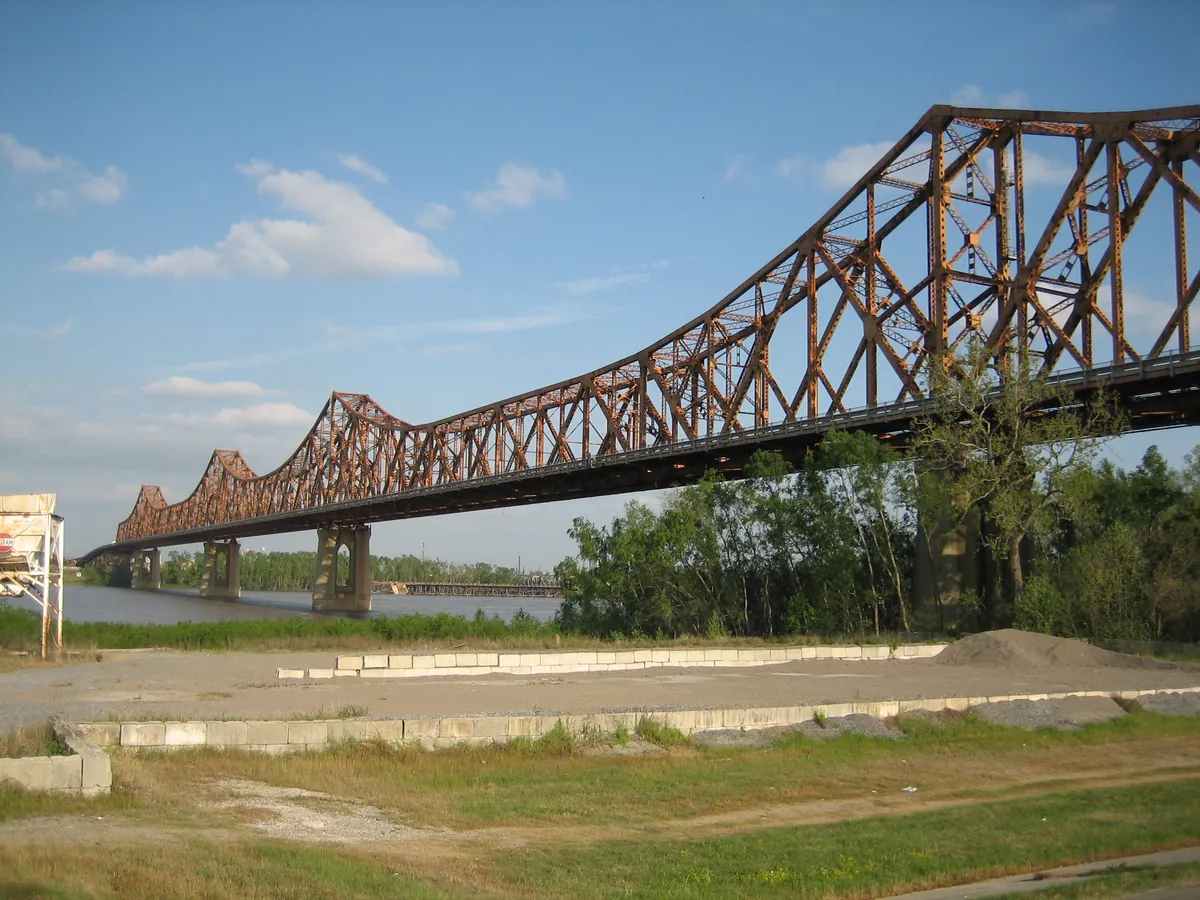
Until 1940, the Mississippi separated Baton Rouge from West Baton Rouge the way rivers once separated nations — by ferry, by patience, by the assumption that the west bank was somewhere else. The Huey P. Long Bridge, opened in August of that year at a cost of $8.4 million, was the first highway crossing at the capital, a cantilever truss spanning 5,879 feet that carried US-190 and a single rail line over water that had been a boundary since French explorers found a red pole marking Houma and Bayagoula hunting grounds in 1699. Local tradition holds that Huey Long championed the bridge before his assassination in 1935, five years before it opened under the names of Long and his successor, Governor Oscar K. Allen. What the bridge accomplished was civic: it made the west bank parishes part of the capital's daily geography. Four lanes carry roughly 26,000 vehicles a day. It was the only Mississippi River crossing in Baton Rouge until the Horace Wilkinson Bridge opened in 1968. The bridge was repainted orange in the mid-1960s to match dust from the Kaiser Aluminum plant, then restored to its original light gray between 2014 and 2016. Locals say the Port Allen side offers the best vantage at sunset — the view west over a river that no longer divides.
- ·Completed in 1940 — the first highway crossing of the Mississippi at Baton Rouge.
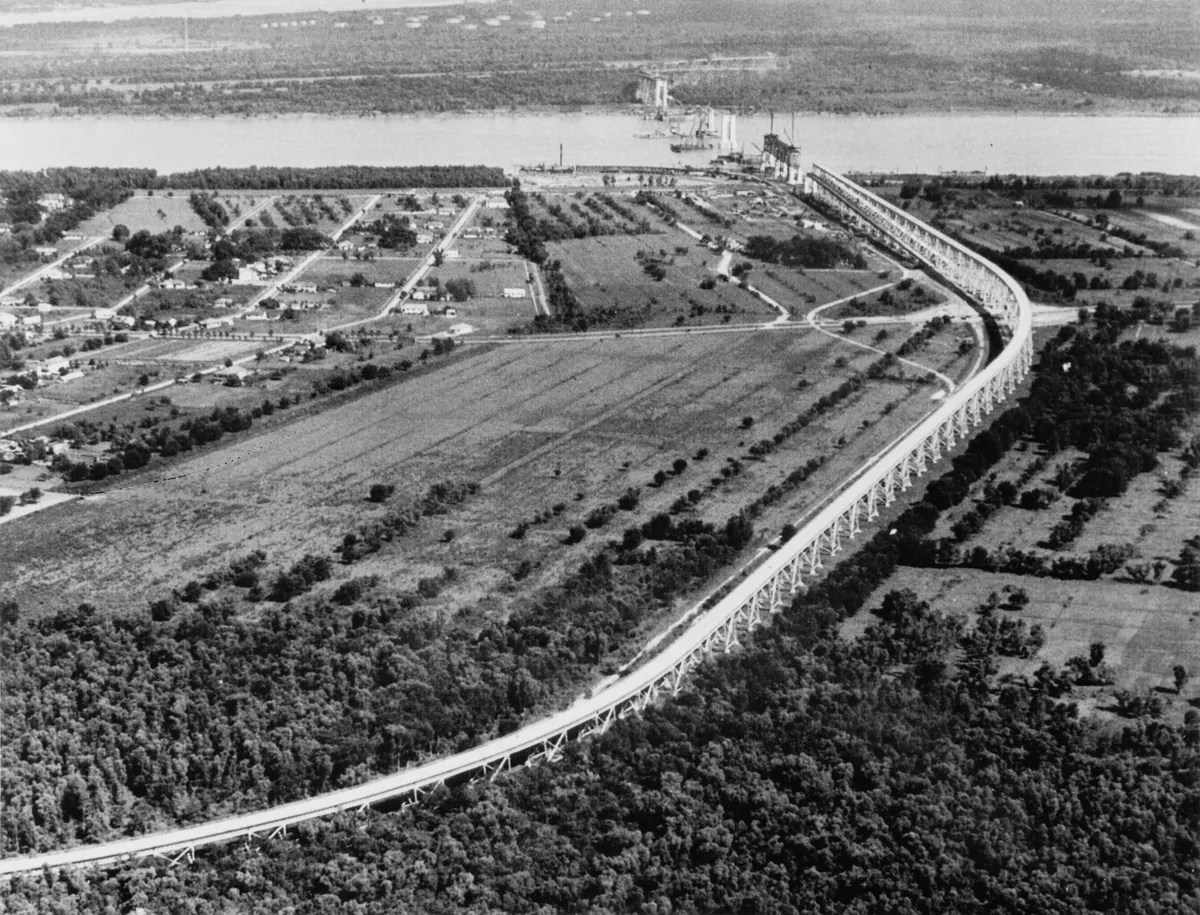
- ·At 4.4 miles including approach spans, one of the longest bridges in the United States.
- ·Huey Long championed it before his assassination; it opened five years after he died.
- ·Connected West Baton Rouge to the capital and made the west bank part of the greater city.
- ·Crosses on US-190. Best viewed from the Port Allen side at sunset.
More archive
Memories
Editorial content compiled with AI assistance. Place details verified against public records.