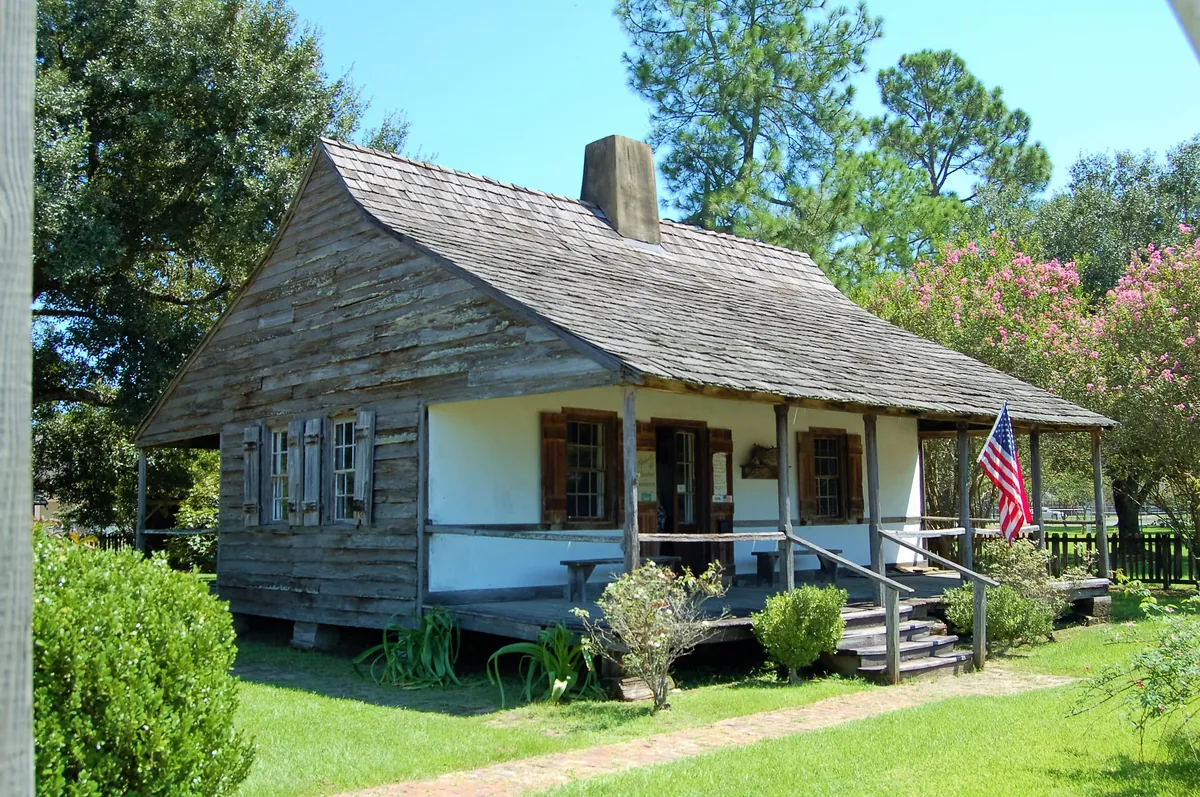
Around 1800, Hypolite Bordelon built a cottage in Marksville using bousillage — mud and moss packed between hand-hewn cypress posts, a Gulf Coast colonial technique that predates balloon framing by decades. The infill is still there. Bordelon was an early Avoyelles Parish settler of French Canadian descent, and what he left is one of the clearest surviving examples of French Creole construction methods in the region.
The walls explain themselves. Cypress posts frame the structure; the bousillage fills the gaps. The method was common along the Gulf Coast in the colonial period, practical in a landscape where timber grew dense and clay ran heavy. The cottage stands because the materials were right for the place.
It now serves as Marksville's tourist-information center and local museum. Admission is free. Pair it with Marksville State Historic Site nearby, where prehistoric mounds trace occupation back thousands of years. Two layers of settlement, both still legible.
- ·The Hypolite Bordelon House in Marksville was built around 1800 in French Creole bousillage construction.
- ·Bousillage is a mud-and-moss infill between hand-hewn cypress posts, a Gulf Coast colonial technique.
- ·Hypolite Bordelon was an early Avoyelles Parish settler of French Canadian descent.
- ·The cottage now serves as the Marksville tourist-information center and local museum.
- ·Visitor tip: admission is free; combine with a stop at the nearby Marksville State Historic Site (prehistoric mounds).
Memories
Editorial content compiled with AI assistance. Place details verified against public records.