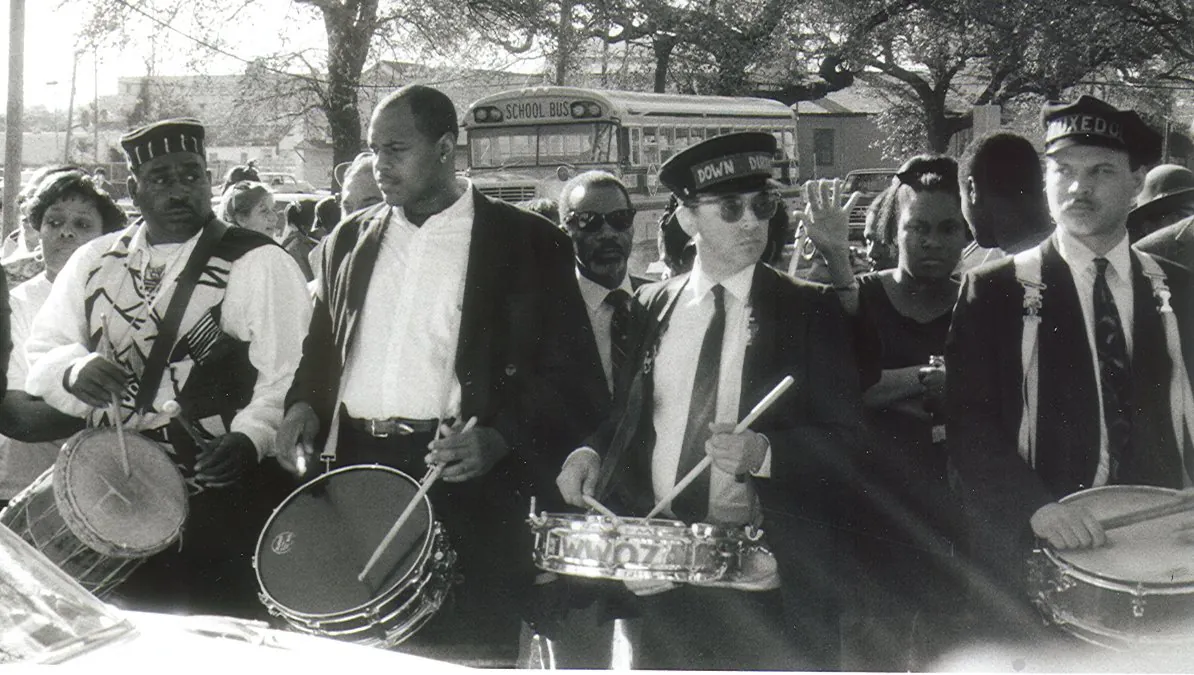
Tremé is one of the oldest continuously Black neighborhoods in the United States, and the proof-case for what free Black Americans built when they were allowed to own property. Free people of color bought lots here in the 1810s. St. Augustine Parish, founded in 1842, is the oldest African American Catholic parish in the country. Congo Square became jazz. Mahalia Jackson was born on Pitt Street. The second-line steps off from Tuba Fats Square every week of the year.
The route
- 1Historic Site·1718·NHLCongo Square — Louis Armstrong Park
Every Sunday throughout the 18th and 19th centuries, enslaved people gathered at this open space behind the French Quarter to drum, dance, and sing in African rhythms. New Orleans was unique in allowing these gatherings — the practice was suppressed everywhere else in the Americas. In 1817, the mayor issued an ordinance restricting all gatherings of enslaved Africans to this one location, where they could set up a market, perform, and earn money to purchase their freedom. The weekly assemblies became famous among visitors from across the United States, who marveled at what they heard: the beat of the bamboulas, the wail of the banzas, dances including the Bamboula, Calinda, Congo, Carabine, and Juba. Architect Benjamin Latrobe wrote in his 1819 journal about seeing 500 to 600 unsupervised enslaved people assembled for dancing, performers ornamented with tails of wild beasts, fringes, ribbons, little bells, shells, and balls. Clusters of musicians and dancers represented tribal groupings, each nation taking a different part of the square. The instruments spanned available cultures: drums, gourds, banjo-like instruments, quills made from reeds strung together like pan flutes, marimbas, violins, tambourines, and triangles. This mix of African and European styles helped create African American culture. The rhythms played here can still be heard in New Orleans jazz funerals, second lines, and Mardi Gras Indians parades. The preserved West African musical traditions became the foundation of jazz, blues, and eventually rock and roll. Creole composer Louis Moreau Gottschalk incorporated rhythms and tunes he heard in Congo Square into some of his compositions. The gatherings declined as harsher United States practices of slavery replaced the more lenient Spanish colonial style, stopping more than a decade before the Civil War ended slavery. In 1893, the city officially renamed the square for Confederate General P. G. T. Beauregard in an attempt to suppress its mass gatherings, though most locals continued calling it Congo Square. In 2011, the New Orleans City Council voted to restore the traditional name. In the 1960s, an urban renewal project leveled a substantial portion of the surrounding Tremé neighborhood; after a decade of debate, the city turned the land into Louis Armstrong Park, which incorporates the old square. Congo Square is now a National Historic Landmark inside Louis Armstrong Park. A statue of Louis Armstrong stands near the park entrance on Rampart Street. The park also contains the Mahalia Jackson Theater. It remains a venue for music festivals and a community gathering place for brass band parades, protest marches, and drum circles. Every Sunday, the Congo Square Preservation Society gathers to celebrate the history and culture through drum circles, dancing, and musical performances, carrying on the tradition. The park is free and open daily; visit during daylight hours.
 2Museum·1999Backstreet Cultural Museum
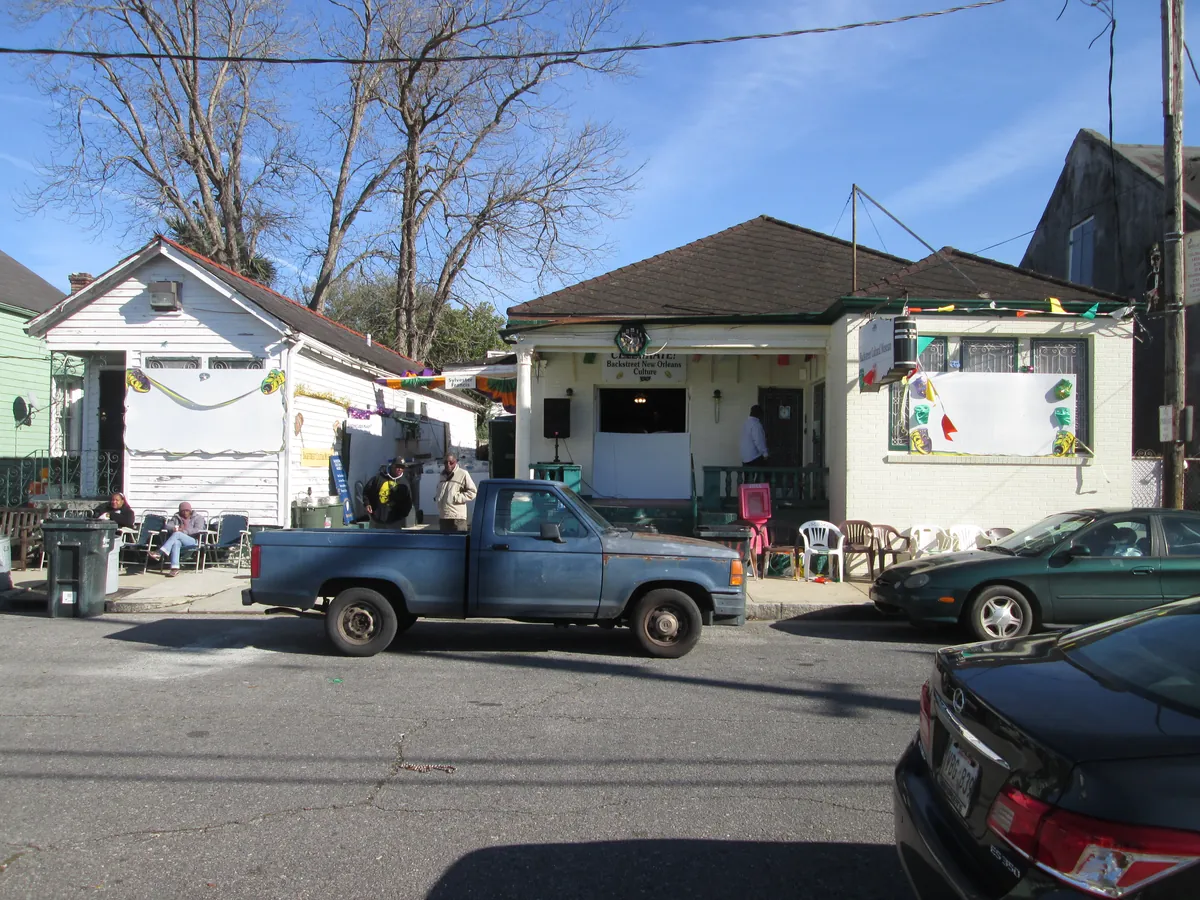
Sylvester Francis spent decades collecting what others threw away after the parades ended. The hand-beaded Mardi Gras Indian suits — each taking a full year to make, weighing up to 100 pounds, worn once — weren't museum pieces to him. They were proof that Tremé's Black parade traditions weren't footnotes to the city's culture. They were the culture. Francis founded the Backstreet Cultural Museum in 1999. The collection documents second lines, Mardi Gras Indians, jazz funerals, and Social Aid and Pleasure Clubs — the street traditions that survived when so much else didn't. The museum holds rare photographs of Mardi Gras Indian gangs from the 1940s and elaborate suits from years past, artifacts that would have disappeared without Francis deciding they mattered enough to save. Originally housed in a former Tremé funeral home, the museum moved to a larger space in 2023. It's become a clearing house for information about upcoming Mardi Gras Indian and second-line events, and hosts ceremonies including the annual White Buffalo Day procession to Congo Square. Photography is allowed; video isn't. You go because this is where the beadwork and the photographs and the actual costumes make clear what a century of erasure tried to bury: that New Orleans street culture was built here, by these hands, in these neighborhoods, and it never stopped.
 3Religious Site·1789·NRHPSt. Louis Cemetery No. 1
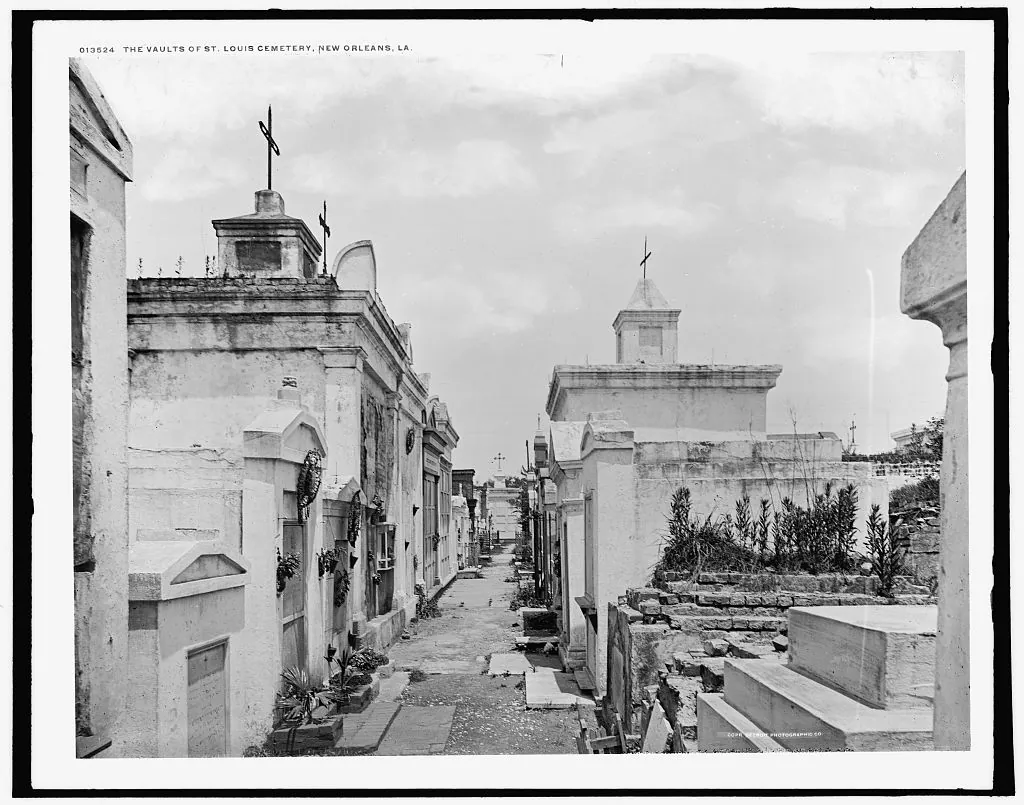
The ground here won't take a grave. The water table sits too high — dig six feet and you hit the swamp that made this port city possible. So when New Orleans opened this cemetery in 1789, replacing St. Peter Cemetery after the 1788 fire redesigned the city, builders stacked the dead above ground in whitewashed vaults. The result: row after row of crumbling plaster tombs packed into a single city block, eight blocks from the Mississippi, just beyond the French Quarter's inland border. The landscape earned the nickname "Cities of the Dead." The roster reads like a ledger of the city's formative centuries. Etienne de Boré, sugar industry pioneer and New Orleans' first mayor. Homer Plessy, whose name anchors the 1896 Supreme Court case that formalized segregation. Paul Morphy, early world chess champion. Bernard de Marigny, the French-Creole aristocrat who founded Faubourg Marigny. Delphine LaLaurie, the slave owner whose cruelty became legend. Benjamin Latrobe, the architect who died of yellow fever in 1820 while engineering the city's waterworks. Marie Laveau draws the most attention. The Voodoo priestess is believed to rest in the Glapion family crypt, and visitors still leave offerings at what they think is her tomb. In 2010, Nicolas Cage bought a pyramid-shaped vault for his own future use. The cemetery has been in continuous use since 1789. A Protestant section, generally not vaulted, occupies the northwest corner. The tombs are crumbling; preservation work continues. Since March 2015, the Roman Catholic Archdiocese — which owns and manages the cemetery — has required visitors to come with a tour guide, citing vandalism. Tour companies pay $4,500 annually for access. Families with tomb ownership can apply for passes.
- 4Civil Rights·1921New Zion Baptist Church — SCLC Founding Site
In February 1957, Martin Luther King Jr. and other Southern ministers gathered at this Tremé church to found the Southern Christian Leadership Conference. King was elected the SCLC's first president at the meeting. The organization was formed in New Orleans, not Atlanta, because the city had the infrastructure of Black churches and political organizations that made such a gathering possible. New Orleans had been the largest city in the South at the start of the Civil War, and its network of Black institutions — built through generations in a city that had served as the nation's largest port in the nineteenth century — provided the organizational foundation the SCLC needed. The church where these ministers met to coordinate the movement still holds regular services and remains an active congregation. No historical marker proportional to the event's significance currently exists at the site.
 5Music·1901Louis Armstrong Birthplace Site
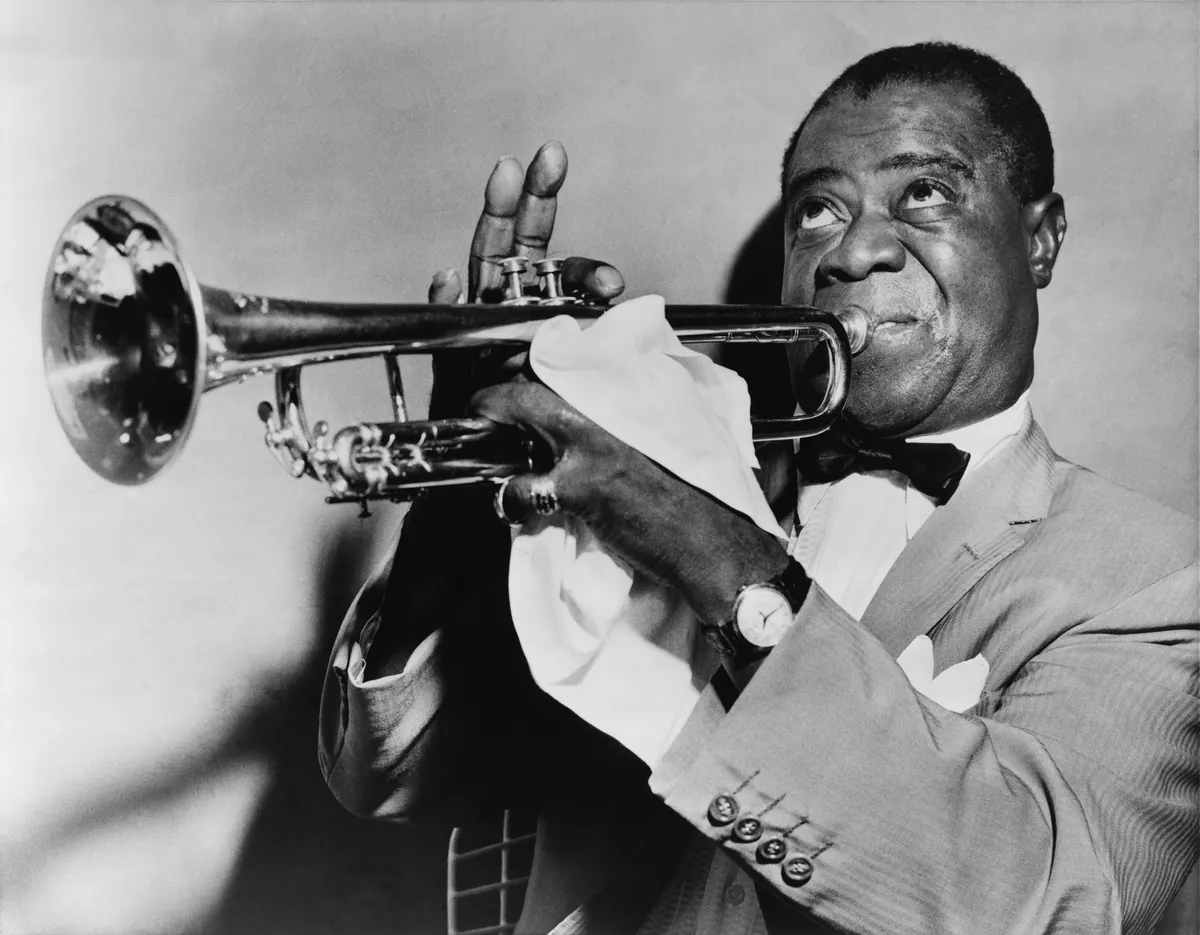
A marker on South Rampart Street near Perdido marks where Louis Armstrong was born on August 4, 1901. The house on Jane Alley is gone. The block was razed decades ago. Armstrong grew up surrounded by brass bands, street parades, and honky-tonks. At age 11, he fired a gun on New Year's Eve and was sent to the Colored Waif's Home. Peter Davis, the band director there, gave him his first cornet. That environment shaped the most important career in American music history. The marker stands on asphalt now, but what happened here traveled everywhere Armstrong went.
- 6Music·2003Tuba Fats Square
Anthony 'Tuba Fats' Lacen played the sousaphone at the entrance to the French Quarter every Sunday for decades — a one-man brass band who became the most recognized street musician in a city full of them. When he died in 2004, the intersection at Basin and St. Peter streets was renamed in his honor. Tuba Fats Square is at the Tremé edge of Louis Armstrong Park, and on Sunday afternoons it still draws brass bands and second line dancers continuing the tradition Lacen made iconic. The square is unmarked except by a street sign — which is exactly how Tuba Fats would have wanted it.
 7Music·1911Mahalia Jackson Birthplace Site
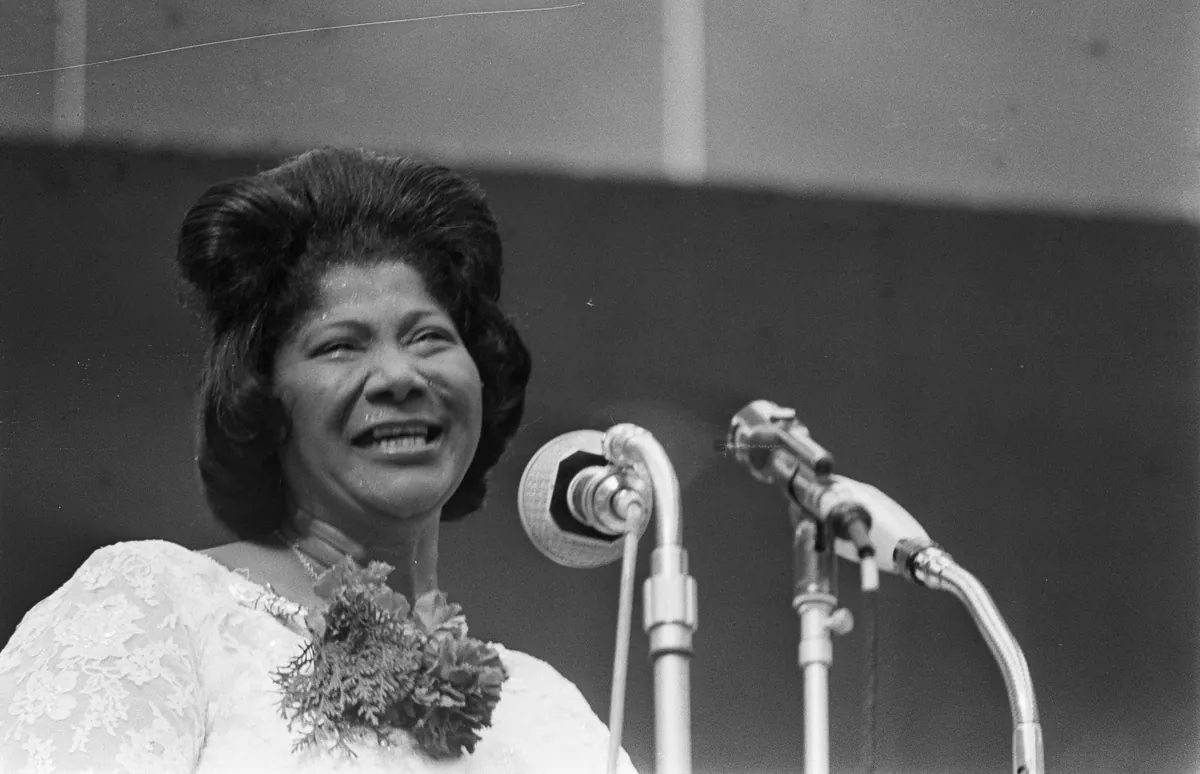
The shotgun house is gone — torn down decades ago from its site on Water Street between the Tremé and the river. Mahalia Jackson was born there on October 26, 1911. At sixteen she left for Chicago and became the greatest gospel singer in American history. New Orleans was the largest port in the Southern United States throughout the nineteenth century, exporting most of the nation's cotton and other farm products to Western Europe and New England. It was the largest city in the South at the start of the Civil War. The city's position at the trade route between the Mississippi River and Lake Pontchartrain made it a crossroads from its founding in 1718 — the French called one early settlement Bulbancha, a Choctaw word meaning "place of many tongues." Jackson's voice came from that convergence: African American sacred music formed in a city built where rivers met and cultures collided. Before King delivered "I Have a Dream" at the March on Washington, his aide whispered: "Tell them about the dream, Mahalia." King departed from his prepared text — the most famous improvised moment in American oratory, called into being by a woman who learned to sing in New Orleans. The Mahalia Jackson Theater in Armstrong Park bears her name. Chicago claimed her career, but New Orleans made her voice.
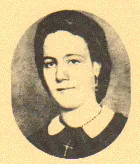 8Historic Site·1813Henriette Delille Marker — St. Claude Avenue
In 1813, Henriette Delille was born a free woman of color in New Orleans — a status that came with a prescribed path. Wealthy white men entered arrangements called placéage with mixed-race women, offering financial security in exchange for an institution that stopped short of marriage and full personhood. Delille rejected it outright. She founded the Sisters of the Holy Family in 1842, one of the first religious orders for Black women in the United States. The order operated schools and orphanages for Black children throughout the antebellum South — institutions that existed because the schools white New Orleans built did not admit them. The work continued through the Civil War, through Reconstruction, through Jim Crow. Delille is currently a candidate for canonization. If approved, she would be the first Black American saint. A marker on St. Claude Avenue in the Tremé commemorates her. It stands near the neighborhood where her order took root — the place she chose to build what the city refused to provide.
 9Nature & Parks·1994New Orleans Jazz National Historical Park
Louis Armstrong's first cornet is here, somewhere in the Old U.S. Mint building on Esplanade Avenue — part of the world's largest collection of jazz instruments, gathered over decades by the New Orleans Jazz Club and donated to the people of Louisiana on September 15, 1977. Alongside it: the 1917 disc of the first jazz recording ever made, 12,000 photographs from the early days of jazz, and architectural fragments from important jazz venues that no longer exist. In the early 1980s, the collection opened on the second floor of the Mint. The New Orleans Jazz National Historical Park, established in 1994 to preserve and interpret the origins of jazz, now operates from within the same building — but there is no park boundary in the traditional sense. The sites are spread across the city, connected by the music itself. The park's interpretive mission frames this as the only city where jazz could have been invented. Ranger-led walking tours trace the route: Congo Square through brass bands, Storyville, and the migration to Chicago. The National Park Service runs free live performances at the visitor center inside the Mint. All programs are free. Many of the museum's educational activities — music lessons, instrument building workshops, instruction in recording technologies — are conducted in partnership with the park. The museum sustained damage during Hurricane Katrina in 2005. It reopened in 2008. The future exhibit space will total approximately 8,000 square feet and include interactive technology spaces for visitors to create and share their own forms of jazz music. You can make an appointment to access research materials — letters, photographs, interviews — through the Louisiana Historical Center. The performance venue is on the third floor. The collection includes trumpets, cornets, trombones, clarinets, and saxophones played by Bix Beiderbecke, Kid Ory, George Lewis, Sidney Bechet, and Dizzy Gillespie — the world's largest collection of instruments owned and played by important figures in jazz, in the building where it was given to the people, at 400 Esplanade Avenue bordering the French Quarter.