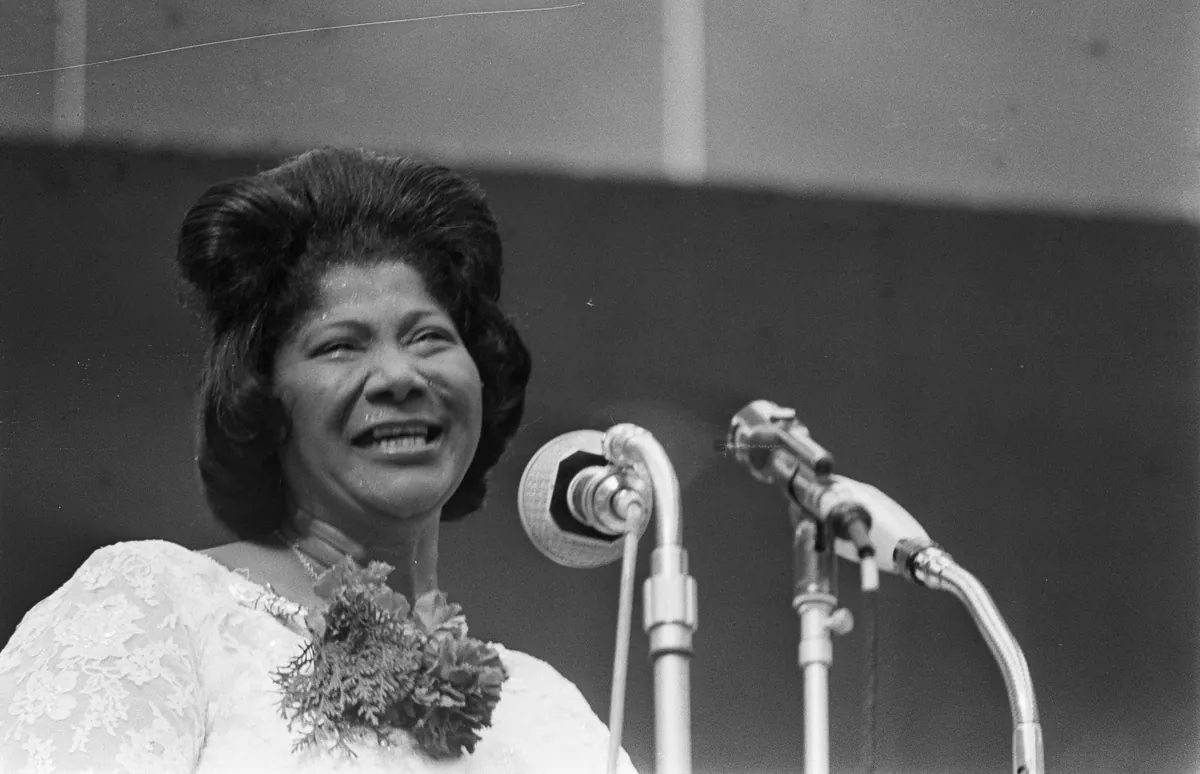
The shotgun house is gone — torn down decades ago from its site on Water Street between the Tremé and the river. Mahalia Jackson was born there on October 26, 1911. At sixteen she left for Chicago and became the greatest gospel singer in American history.
New Orleans was the largest port in the Southern United States throughout the nineteenth century, exporting most of the nation's cotton and other farm products to Western Europe and New England. It was the largest city in the South at the start of the Civil War. The city's position at the trade route between the Mississippi River and Lake Pontchartrain made it a crossroads from its founding in 1718 — the French called one early settlement Bulbancha, a Choctaw word meaning "place of many tongues." Jackson's voice came from that convergence: African American sacred music formed in a city built where rivers met and cultures collided.
Before King delivered "I Have a Dream" at the March on Washington, his aide whispered: "Tell them about the dream, Mahalia." King departed from his prepared text — the most famous improvised moment in American oratory, called into being by a woman who learned to sing in New Orleans.
The Mahalia Jackson Theater in Armstrong Park bears her name. Chicago claimed her career, but New Orleans made her voice.
- ·Mahalia Jackson was born on October 26, 1911, in a shotgun house on Water Street between the Tremé and the river.
- ·She moved to Chicago at 16 and became the greatest gospel singer in American history.
- ·Before King's 'I Have a Dream' speech at the March on Washington, his aide whispered: 'Tell them about the dream, Mahalia.'
- ·King departed from his prepared text — the most famous improvised moment in American oratory.
- ·The birth house is gone; the Mahalia Jackson Theater in Armstrong Park bears her name.
- ·Chicago claimed her career, but New Orleans made her voice.
Memories
Editorial content compiled with AI assistance. Place details verified against public records.