George Ohr dug his clay from the Tchoutacabouffa River in southern Mississippi. Tchoutacabouffa is the Biloxi tribe's word for "broken pot." He worked in Biloxi from the 1880s through 1910, throwing thin-walled vessels and twisting them into pinched shapes on a potter's wheel. He called himself the "Mad Potter of Biloxi," groomed himself eccentrically, and operated his studio as a regional attraction he named the "Pot-Ohr-E." He claimed to have made over 20,000 ceramic pieces. He called his work "unequaled, undisputed, unrivaled." At the 1904 St. Louis World's Fair, he traveled with hundreds of pieces and sold nothing. He sold almost nothing in his lifetime.
Ohr died of throat cancer in 1918. For decades his remaining pieces sat in a garage behind his sons' gas station in Biloxi. In 1970 Jim Carpenter, an antiques dealer and barber from New Jersey, was visiting the area, saw the collection, and bought most of the pieces held by the Ohr family. Single pieces now sell for six figures. The Smithsonian calls him the father of American art pottery.
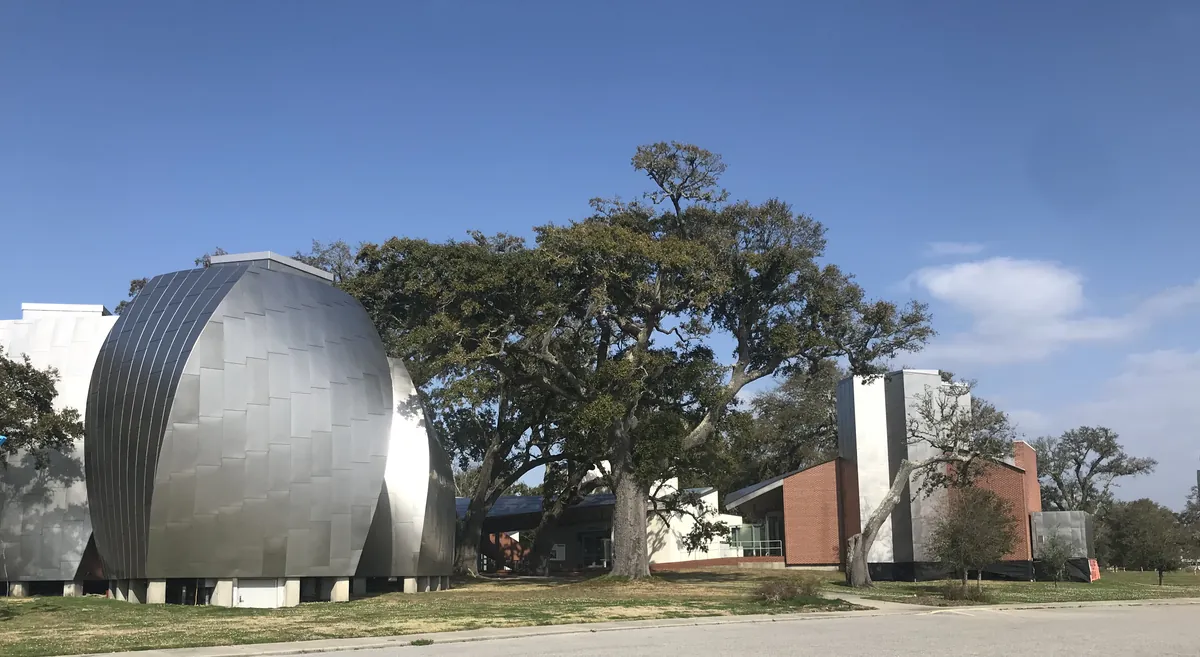
Frank Gehry designed the museum. Three buildings of the new campus opened to the public on November 8, 2010. The museum holds a large permanent collection of Ohr's work. Open Tuesday through Saturday, 10am to 5pm. Admission charged. The Gehry architecture alone is worth the stop.
- ·George Ohr worked in Biloxi from the 1880s through 1910 and sold almost nothing in his lifetime.
- ·He stored roughly 6,000 pieces in his sons' auto repair shop with instructions not to sell until the world caught up.
- ·A New Jersey antiques dealer found the cache in the 1970s. Single pieces now sell for six figures.
- ·The Smithsonian calls him the father of American art pottery.
- ·Frank Gehry designed the museum — four free-standing pods slashed open to the Gulf light.
- ·The museum survived Katrina but wasn't completed and opened until 2010.
- ·Open Tue–Sat 10am–5pm. Admission charged. The Gehry architecture alone is worth the stop.
Memories
Editorial content compiled with AI assistance. Place details verified against public records.