In September 1810, about seventy-five Anglo-Protestant planters rode into Baton Rouge, killed the Spanish commandant, and declared the Republic of West Florida. Its blue flag with a single white star — the original Lone Star — flew over St. Francisville for 79 days. The marker still stands in Jackson, the republic's commercial center, where 124 antebellum structures sit on the National Register. Clinton's 1840 Greek Revival courthouse is what those planters built once they had a country. Centenary College followed in 1825. The republic was brief; the architecture was not.
The route
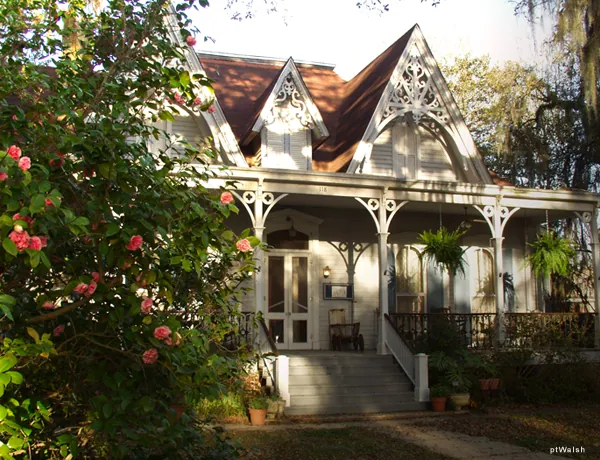 1Architecture·c. 1809·NRHPHistoric St. Francisville
In 1810, for exactly 74 days, St. Francisville served as the capital of the independent Republic of West Florida. The United States absorbed the territory after what historians call the second successful American revolution. The Spanish name translates to "happy land." The town is two miles long and two blocks wide — one of the narrowest incorporated towns in America. Ferdinand Street runs the length of it. Walk the full two miles. The whole town unfolds in about 45 minutes, and you'll have traced the spine of a place that was briefly its own country.
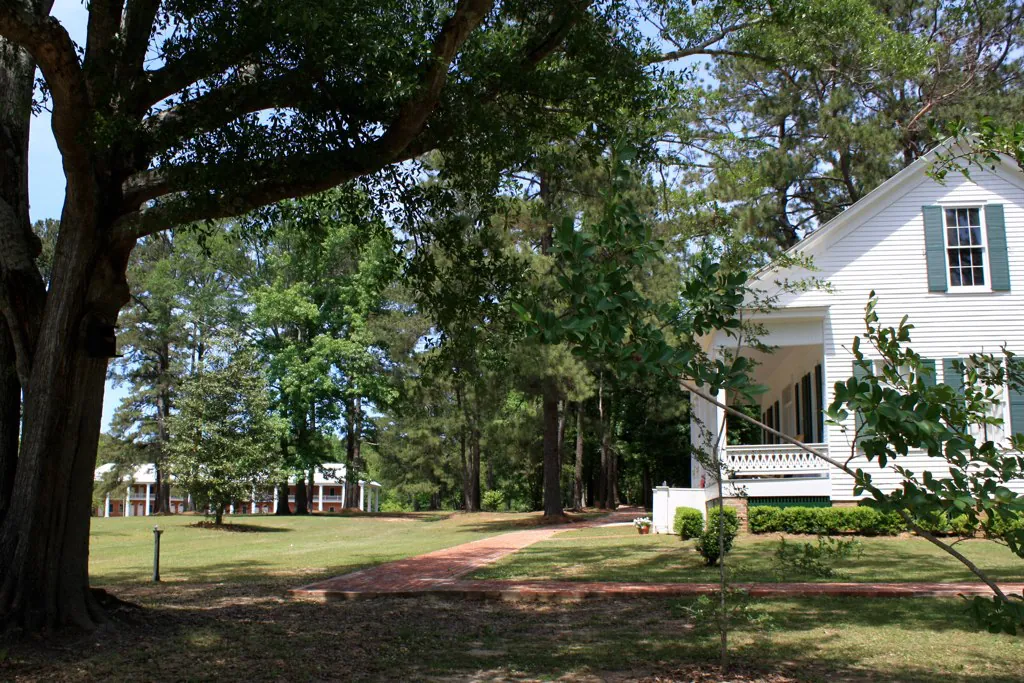 2Architecture·c. 1820–1860·NRHPJackson Historic District
Jackson incorporated in 1825 as East Feliciana Parish's original seat, and the bones of that moment are still there: 124 structures listed on the National Register, many clustered along streets that haven't moved since the 1820s. The Old Centenary Inn and former college buildings anchor the downtown core. Centenary College of Louisiana opened here in 1825, holding classes in Jackson for eighty-three years before relocating to Shreveport in 1908. For most of the nineteenth century, this was a working parish seat with a working college — administrative offices, lecture halls, boarding houses, all within walking distance of each other. The Republic of West Florida Historical Association Museum on Charter Street is a worthwhile short stop if you want the parish's longer backstory. What you get here is a rare thing: a small Louisiana town that looks like what it was, not what developers wished it could become.
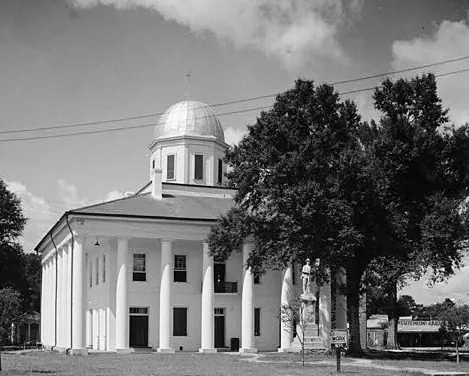 3Architecture·1840·NRHPEast Feliciana Parish Courthouse
In 1840, when most of Louisiana's civic architecture was still raw-timbered and utilitarian, Clinton built itself a courthouse that could have stood in Athens. The Greek Revival building survives as one of the state's finest antebellum civic structures — columns, pediment, proportions that announce permanence. It was built to serve East Feliciana Parish, which the state legislature had carved from the original Feliciana Parish in 1824 to give residents closer access to their government seat. That original parish took its name from Marie Felicité, wife of Spanish governor Bernardo de Gálvez, who controlled the territory before American annexation. The courthouse survived the Civil War not through luck but through repurposing: Union forces turned it into a hospital, which spared it the torch that claimed so many other Southern civic buildings. East Feliciana Parish still uses it for official business, the same function it was built for in 1840. The real exhibit isn't just the building — it's the whole square. Clinton preserves one of the most intact 19th-century courthouse-square streetscapes in Louisiana, a rare thing in a state where hurricanes, fires, and modernization have erased most of their peers. Walk the full perimeter. The streetscape tells you what a working parish seat looked like before the Civil War, and what it means that this one still functions.
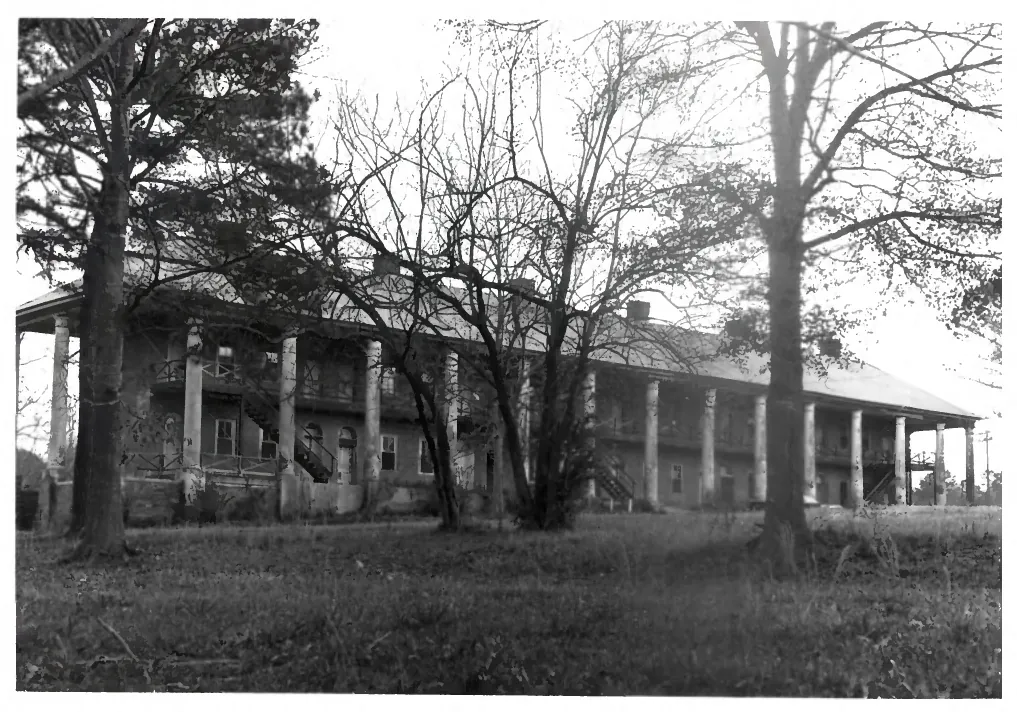 4Historic Site·1825·NRHPCentenary State Historic Site
The original college building stands in Jackson, Greek Revival and intact. Centenary College operated here before moving to Shreveport in 1908. During the Civil War, the campus served as a Confederate hospital. After the college left, the campus sat empty for fifteen years, then became a tuberculosis hospital in the mid-1920s, then low-income housing and a trailer park from 1938 to 1965 -- a building that kept finding new uses rather than falling down. Jackson has 124 structures listed on the National Register of Historic Places -- one of Louisiana's best-preserved antebellum commercial corridors. The landmark sits within a town that kept its built fabric. You're not visiting a single monument; you're walking into a place where the whole commercial grid survived.