The Mississippi built everything on this corridor and threatens to take it back every spring. The Bonnet Carré Spillway opens every few years and floods 38,000 acres to save New Orleans. Houmas House sits inside an oil-refinery skyline now. Manresa Retreat House at Convent has gardens on a bluff that haven't moved in 190 years because the Jesuits built high while the planters built low. The river is what the trip is about; the levees are what the trip rides.
The route
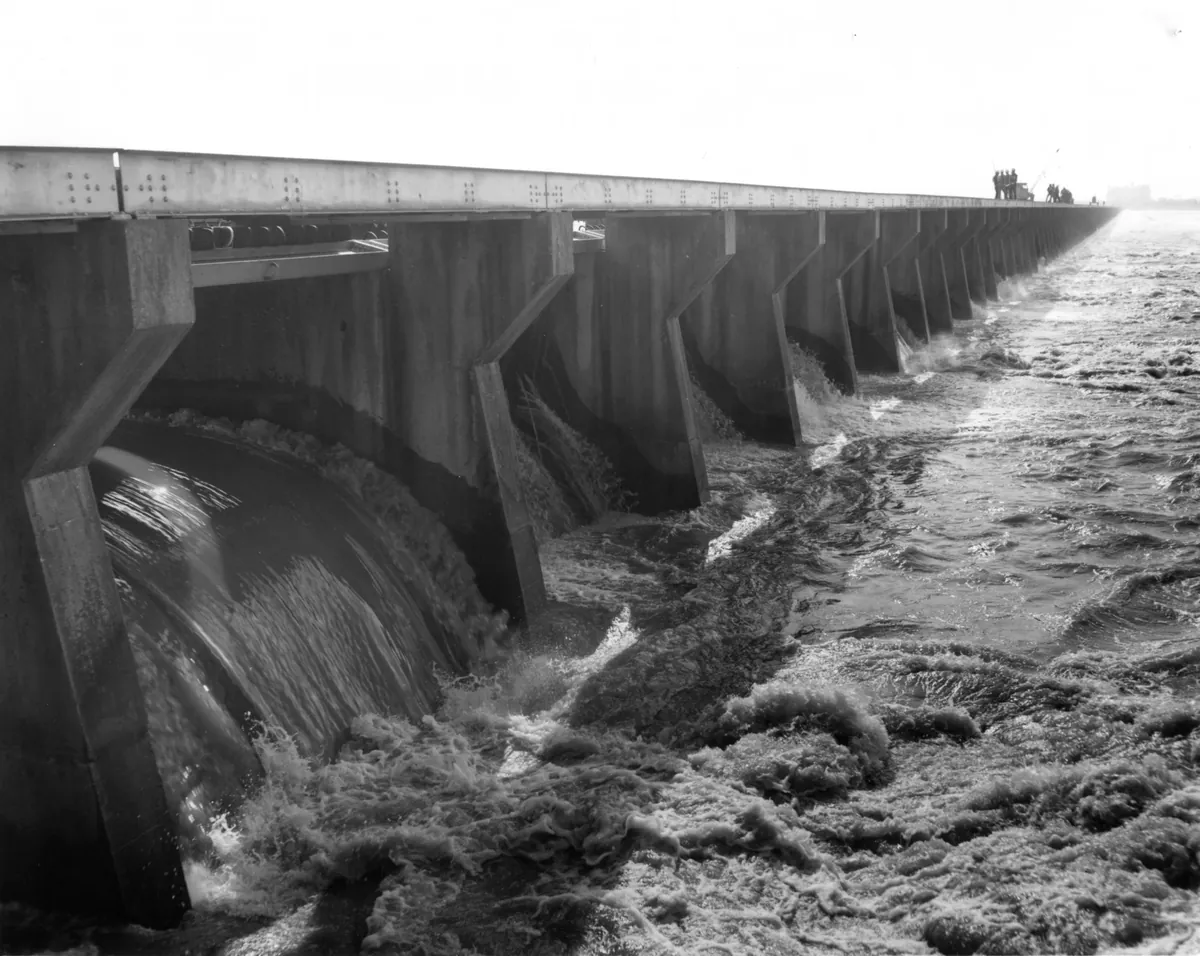 1Nature & Parks·1931Bonnet Carré Spillway
The Mississippi has breached its banks in the Bonnet Carré area for at least two centuries. After the Great Mississippi Flood of 1927 inundated much of the river basin, the Army Corps of Engineers built a spillway here between 1929 and 1931 to divert floodwater into Lake Pontchartrain before it could reach New Orleans. The control structure extends over a mile and a half along the east bank between Montz and Norco. When flood stage comes, two rail-mounted gantry cranes lift out wooden needles—8-by-12-inch beams arranged in 350 bays—to let the river through. All 7,000 needles can be removed in 36 hours, though the Corps usually does it over several days. The floodway stretches nearly six miles to the lake, with a design capacity of 250,000 cubic feet per second. It was first opened during the 1937 flood. In 2019 it opened February 27, closed April 11, then reopened May 10—the first time it was opened twice in one year. The American Society of Civil Engineers designated it a National Historic Civil Engineering Landmark. Between openings, the spillway is a wildlife management area used for off-road vehicles, biking, boating, hiking, hunting, and fishing. Clay extraction pits on the property have been stocked with bluegill and largemouth bass. Two cemeteries lie within the floodway. The Kenner and Kugler cemeteries contain the remains of enslaved persons and free African Americans from the early 1800s through 1929, buried in the cane fields of the Roseland and Hermitage plantations. Several African American Civil War veterans were moved to Chalmette National Cemetery in 1930. When the spillway opens, the cemeteries flood. The sites were placed on the National Register of Historic Places in 1987. Young live oak trees now mark where the graves lie under several feet of sediment. Interstate 10 crosses the spillway. You can see it from the highway any day it isn't actively saving the city.
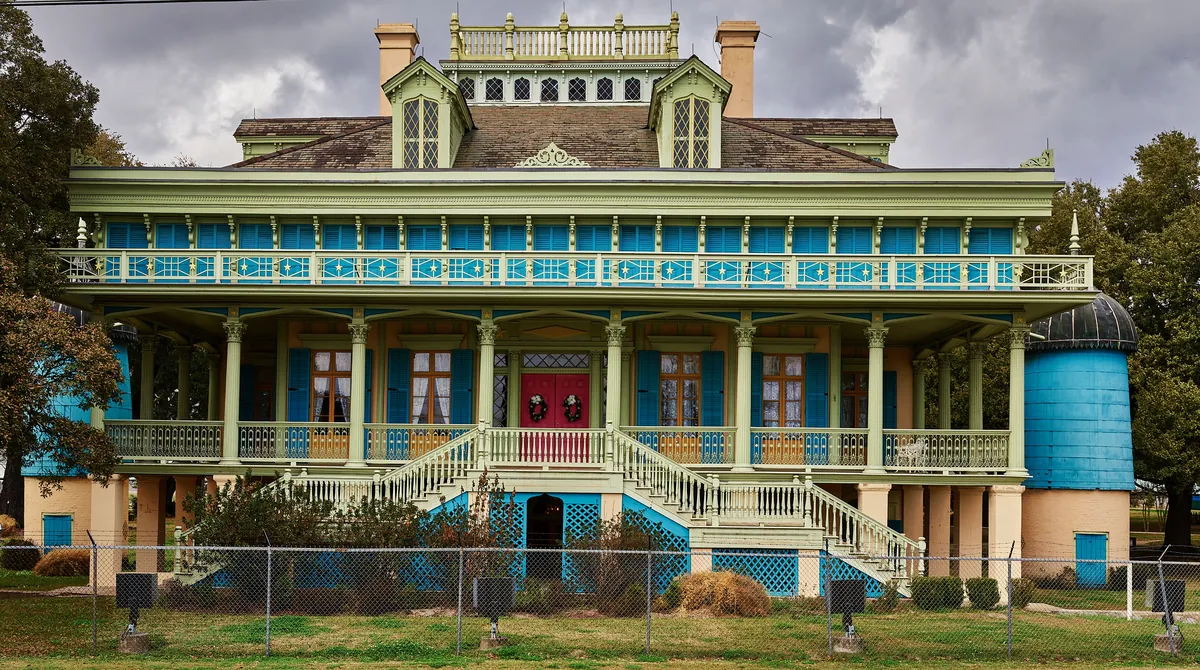 2Architecture·1853–1856·NHLSan Francisco Plantation
The house earned a name for an architectural style—Steamboat Gothic—and another name from debt. Edmond Marmillion built it 1853–1856 on the Mississippi's north bank. When his son Valsin inherited the estate, he declared himself *sans fruscins*: without a penny in my pocket. The phrase became St. Frusquin, then San Francisco in 1879 when Achille D. Bougère bought it. The styling is the flamboyance: fluted columns with iron Corinthian capitals hold an ornate porch on three sides of the main floor. The cornice overhangs deep enough to give the profile that coined the term. Inside, ceiling and door panels carry paintings attributed to New Orleans artist Dominique Canova. The structure sits on a full-height basement with brick floor and brick piers supporting the main level. Side-facing divided staircases lead to the main floor. It became a National Historic Landmark in 1974. Marathon Petroleum acquired it with the Garyville Refinery in the mid-1970s and opened it as a museum. The company's funding saved the house from demolition. It operated 47 years before Marathon closed public access in 2022. The house now stands on about 8 acres inside the refinery fence, surrounded by oil tanks. It is still maintained. You can see it from the road.
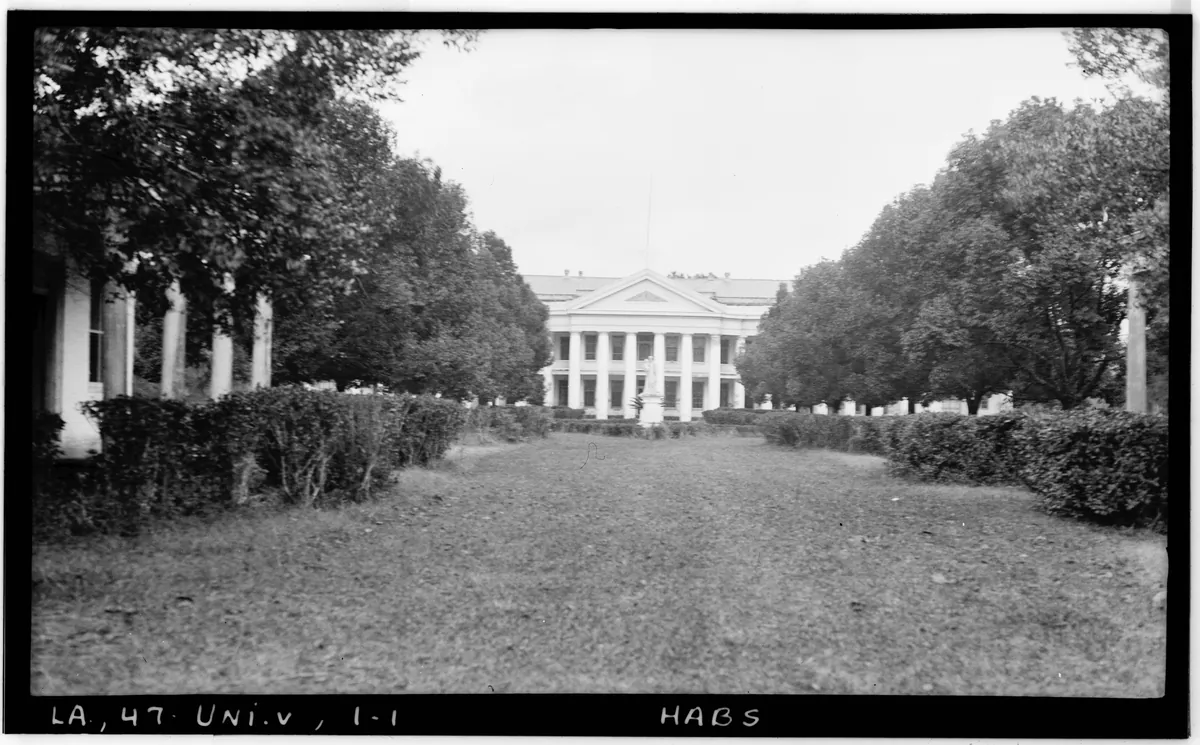 3Historic Site·1831·NRHPManresa House of Retreats (Jefferson College)
Jefferson College opened in 1831 to teach the sons of Creole planters the classical curriculum their fathers had studied in France. The Marist Brothers took over in 1859. When the Jesuits arrived in 1931, they closed the school and converted the property into a silent retreat house — the name changed to Manresa. What survived is the formal gardens on the Mississippi bluff. They are the finest example of institutional antebellum landscape design still functioning on River Road, intact through successive occupants and a complete shift in purpose. The retreat house still operates under the Jesuits. You cannot visit on a whim. Manresa is a working retreat house, not a tourist site. Check the retreat calendar at manresa-retreat.org — retreatants have access to the grounds.