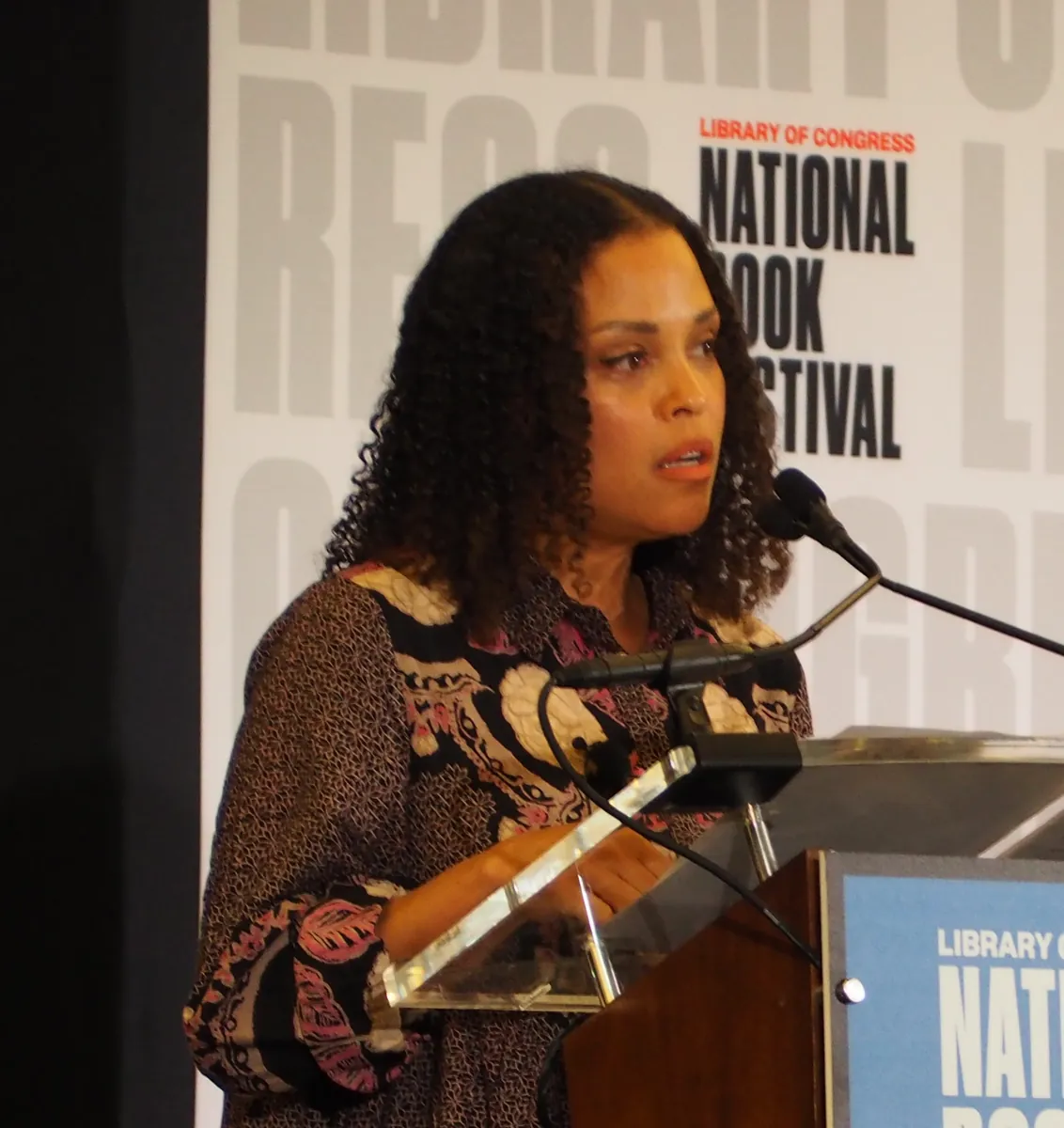
In 2011, Jesmyn Ward won the National Book Award for Fiction for *Salvage the Bones*. Six years later, she won it again for *Sing, Unburied, Sing*. She is the first woman and first Black American to win the National Book Award for Fiction twice.
The achievement is rooted in DeLisle. Ward's parents were originally from the small community between Pass Christian and Bay St. Louis — when Ward was three, they returned from Berkeley. The landscape she grew up in became Bois Sauvage, the fictional town at the center of her first three novels. The name is fiction; the place is real.
*Salvage the Bones* chronicles pregnant teenager Esch Batiste, her three brothers, and their father during the ten days leading up to Hurricane Katrina, the day of the storm, and the day after. Ward knew that story from the inside. In 2005, her family's house in DeLisle flooded rapidly. They set out in their car toward a local church, but ended up stranded in a field full of tractors. When the owners of the land eventually checked on their possessions, they refused to invite the Wards into their home, claiming they were overcrowded. Another family down the road took them in.
Ward went on to work at the University of New Orleans. Her daily commute took her through neighborhoods ravaged by the hurricane. She was unable to write creatively for three years — the time it took her to find a publisher for her first novel, *Where the Line Bleeds*. When she won the National Book Award in 2011, mainstream reviewers had largely ignored the novel. Ward told CNN the victory came as a surprise.
A Mississippi Writers Trail marker stands in DeLisle. Ward now holds the Andrew W. Mellon Professorship in the Humanities at Tulane. In 2017, she received a MacArthur "genius grant." She wrote the coast's Katrina story from the people the national media drove past.
- ·Grew up in DeLisle, a small community between Pass Christian and Bay St. Louis.
- ·Won the National Book Award twice — 2011 and 2017 — first woman and first person of color to do so for fiction.
- ·Salvage the Bones unfolds over 12 days as Katrina approaches a Black family in coastal Mississippi.
- ·The fictional Bois Sauvage is DeLisle. The landscape is real.
- ·A Mississippi Writers Trail marker stands in the community.
- ·Ward wrote the coast's Katrina story from the inside — from the people the national media drove past.
Memories
Editorial content compiled with AI assistance. Place details verified against public records.