Avoyelles Parish is Tunica-Biloxi country, and the drive moves through 2,000 years of continuous occupation. The Marksville mounds, built between 100 BC and 400 AD, are a National Historic Landmark on ancestral ground the tribe still governs — the Paragon Casino and tribal museum sit on the same land, funded by the sovereignty the federal government finally recognized in 1981. The Hypolite Bordelon House, a French Creole raised cottage built around 1800, marks the later French settlement layer. Fort DeRussy was captured and destroyed twice in the 1864 Red River Campaign. The mounds outlasted both empires.
The route
 1Cultural Heritage·c. 100 BCE–400 CE·NHLMarksville State Historic Site
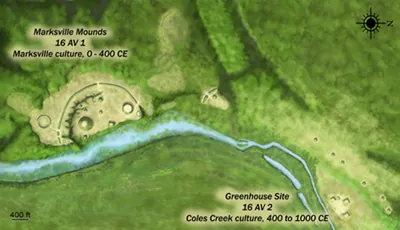
Two thousand years ago, the Marksville people raised earth into geometric forms that still stand — among the oldest intact earthworks in Louisiana. They worked within the Hopewell cultural tradition, a network of Indigenous societies that stretched across eastern North America between roughly 100 BCE and 400 CE, building ceremonial centers connected by exchange routes that moved copper, mica, and carved stone across a continent. The federal government recognized the site as a National Historic Landmark in 1964, a designation reserved for places that possess exceptional value in illustrating American history. But the most important recognition came later: the Tunica-Biloxi Tribe of Louisiana, on whose ancestral territory the earthworks stand, now stewards the site. Visit with the Tunica-Biloxi cultural center. The interpretation is Indigenous-led, which means the story of what was built here — and why it endures — is told by the people whose ancestors shaped this ground.
 2Museum·1994Paragon Casino Resort & Tunica-Biloxi Museum
The Tunica-Biloxi Tribe received federal recognition in 1981. What they built with that sovereignty sits in Marksville: Paragon Casino Resort, tribally owned and operated, with gaming revenue directed to healthcare, education, and language-preservation programs. The economics matter because they fund the work of cultural survival. Attached to the resort, the Tunica-Biloxi Cultural and Educational Resources Center holds tribal artifacts and archives — material evidence of presence in the Avoyelles region across generations. The collection makes the case the legal fight could not: continuity, adaptation, endurance. Tour the museum first. It reframes what the casino floor represents.
 3Military·1862–1864·NRHPFort DeRussy State Historic Site
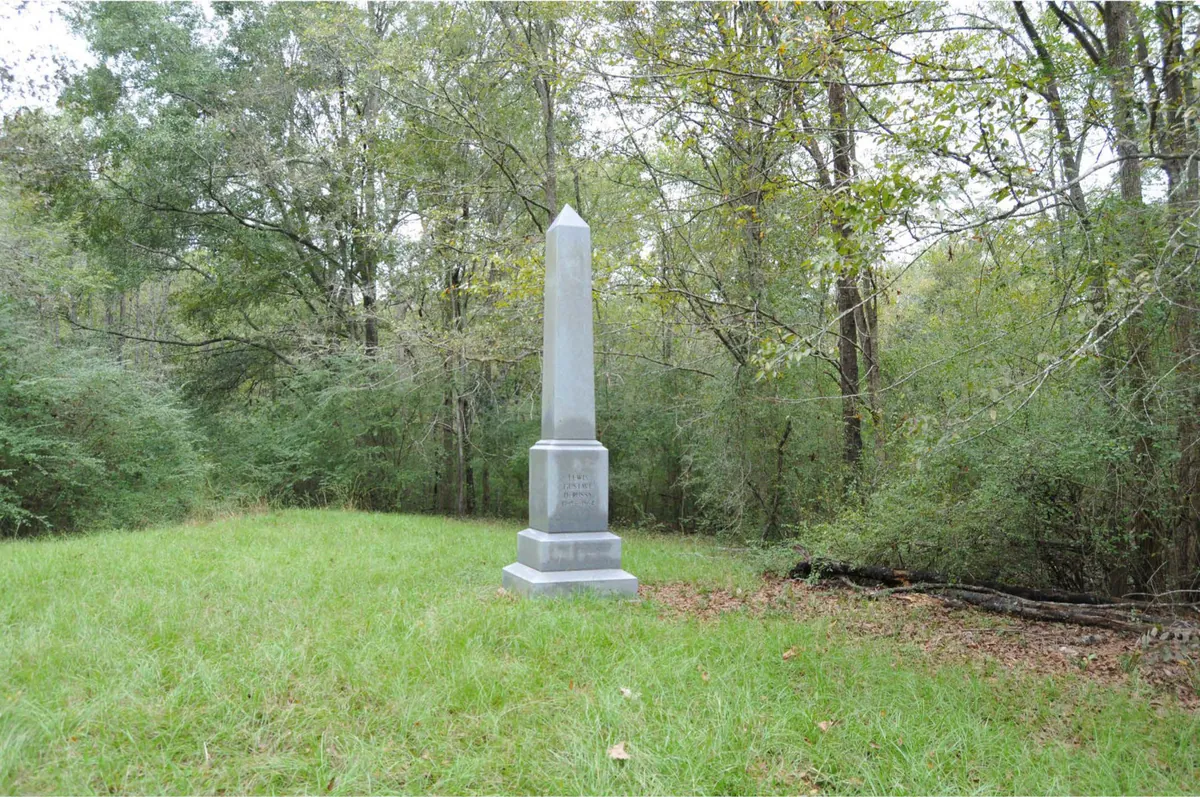
The earthworks rise from Red River bottomland four miles north of Marksville, built in 1862 to defend the lower valley. The fort took its name from Colonel Lewis G. DeRussy, the oldest West Point graduate to serve in the Confederate Army — a New York-born engineer first stationed in Louisiana in 1826, where he lived nearly forty years. After service in the Mexican War and a civilian career as a prominent engineer, he also ran a cotton plantation and served in the state house and senate in the 1850s. When the war came, he returned to uniform and oversaw construction of the fortifications. He died of a heart attack at his plantation in December 1864. A portion of Rear Admiral David D. Porter's Mississippi Squadron captured the fort on May 5, 1863. The USS Benton destroyed parts of it four days later. The garrison's remnants surrendered to General A. J. Smith's Union Army on March 14, 1864. The fort's fall opened the Red River to Union gunboats advancing toward Shreveport. The property was designated a state historic site in 1994. The colonel's remains were exhumed from an abandoned grave and reinterred on the grounds on September 26, 1999. The fort and water battery were listed on the National Register of Historic Places in 2016. The seventy-acre site preserves some of the most intact Civil War earthworks in Louisiana. The American Battlefield Trust and partners have acquired and preserved eighty acres of the battlefield in three transactions since 1999. The site is undeveloped — wear boots and bring bug spray.