The neighborhoods south and west of downtown are where Roanoke lives when it's not performing for visitors. Old Southwest has the largest intact collection of late Victorian architecture in Southwest Virginia. Black Dog Salvage made architectural salvage into a television show. The Grandin Theatre has been screening movies since 1932. Roanoke College in Salem has been educating students since 1842. This is the residential city the railroad built.
The route
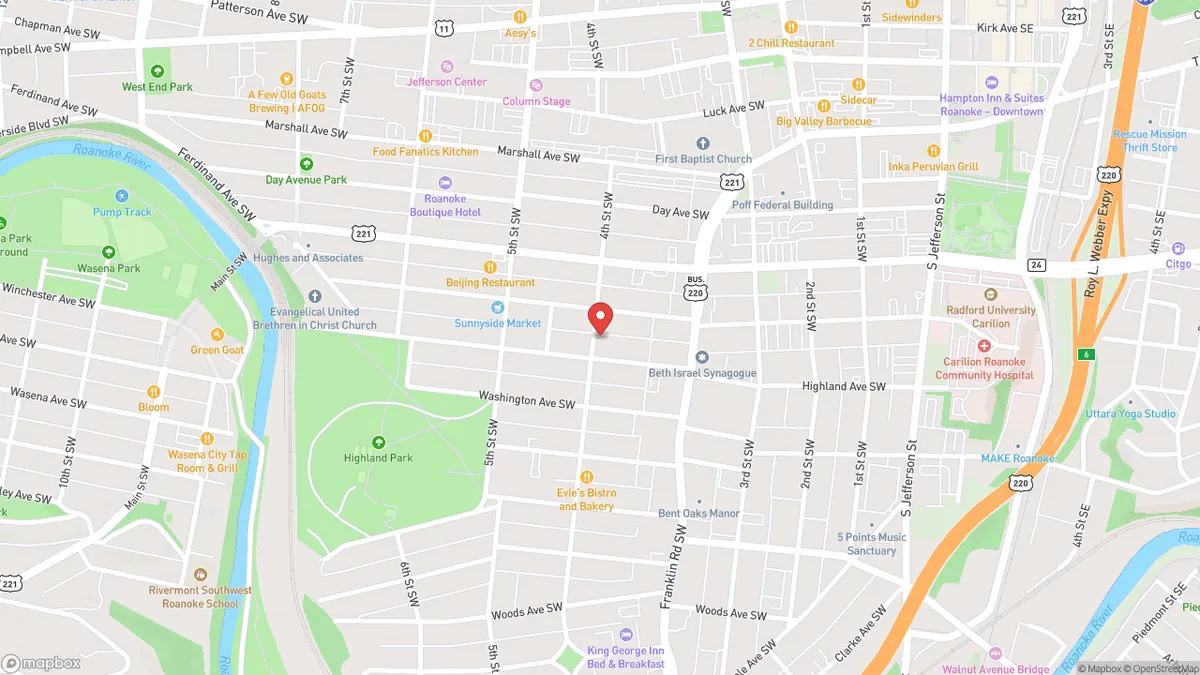 1Architecture·1890·NRHPOld Southwest Historic District
The best-preserved Victorian residential neighborhood in southwestern Virginia — six blocks of Queen Anne, Colonial Revival, and Craftsman houses built between 1890 and 1930 for the railroad managers, doctors, and merchants who ran the boomtown. The neighborhood went on the National Register as a district in 1985. The annual holiday parlor tour each December opens private interiors — original tile, leaded glass, carved staircases — that you'd never see otherwise.
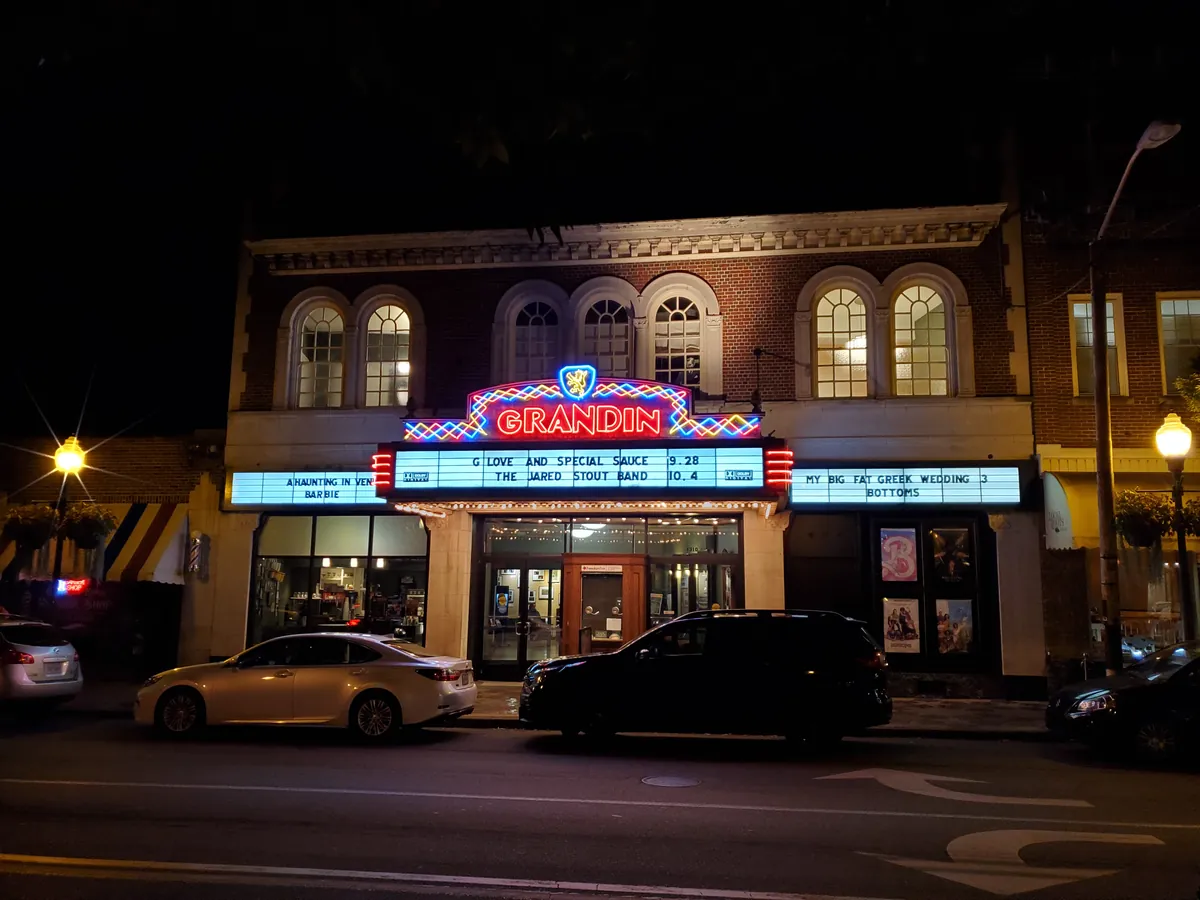 2Sports & Entertainment·1932Grandin Theatre
The Grandin opened in 1932 — Roanoke's first suburban movie house, designed by Eubank & Caldwell in an eclectic mix of revival styles. The Depression was on, but the theater held. It ran continuously until November 11, 2001, when deterioration forced it to close. The Grandin Theatre Foundation raised enough money to renovate and reopen it on October 20, 2002. It survives as the only historic movie theater left in the Roanoke Valley. The interior retains original detailing from the Depression era. Now run as a nonprofit, it shows independent and classic films, plus live music events. Tickets are affordable. The theater anchors Grandin Village, a three-block stretch of independently owned bookstores, coffee shops, and restaurants at the intersection of Grandin Road and Memorial Avenue — one of Roanoke's best examples of a mixed-use urban village. The district traces its origin to 1906 with the establishment of the Virginia Heights Land Corporation, developed after the opening of Memorial Bridge connected southwest Roanoke to downtown. A streetcar line arrived in 1911 and accelerated the commercial build-out; most of what you see went up between 1917 and 1945. Streetcar service ended on July 31, 1948 — the last day of streetcar transit in Roanoke altogether. After mid-century decline, the area rebounded and now functions like a small town inside the city. Check the marquee or the website for showtimes.
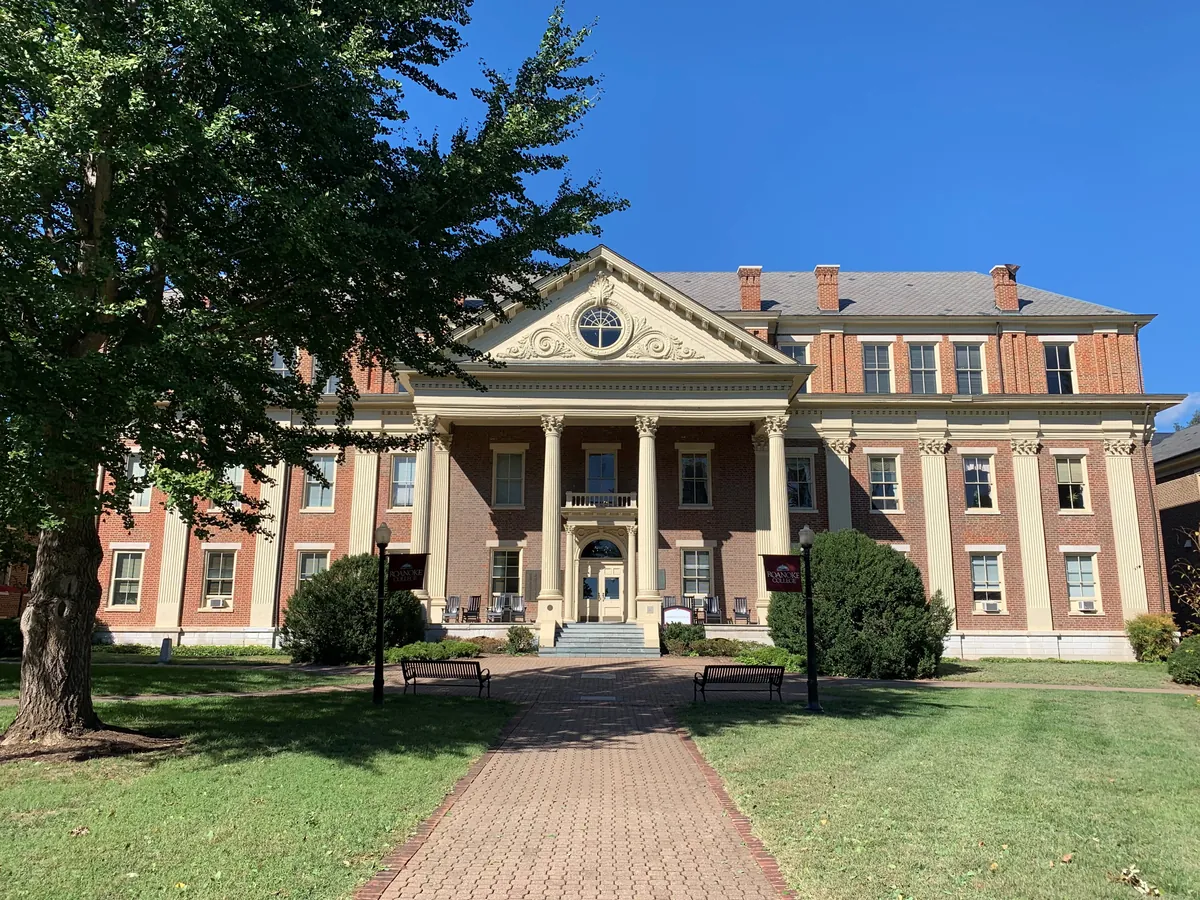 3Museum·1842·NRHPRoanoke College
Lutheran pastors David F. Bittle and Christopher C. Baughmann loaded everything a college owned into a single covered wagon in 1847 and moved it from Augusta County to Salem, a railroad town developing into a commercial center in the Roanoke Valley. Six years later the Virginia General Assembly granted a college charter and approved the name Roanoke College—second-oldest Lutheran-affiliated college in the United States, after Gettysburg. The Administration Building went up in 1848, brick by brick made on-site. It survived the Civil War because Union troops converted it into a hospital. The student body had been organized into a corps of cadets; they fought Confederate forces near Salem in December 1863, were quickly outmatched, surrendered, and were paroled back to their studies by the Union commander. The college stayed open through the war—one of the few Southern institutions that did. Roanoke enrolled its first international students in the late 19th century: the first Mexican in 1876, the first Japanese in 1888. In 1898, Surh Beung Kiu became the first Korean to graduate from an American college or university. The institution went coeducational in 1930, opening Smith Hall as its first women's residence in 1941. Seven buildings on the 80-acre Salem campus are listed on the National Register of Historic Places, including Miller Hall (1857), Trout Hall (1867), and Bittle Hall (1879). The campus holds the largest Rock Elm in the United States, near the library, and the only Alice Aycock sculpture in Virginia. Olin Hall galleries host rotating exhibitions and are open to visitors. The college produces more Fulbright scholars per capita than most schools twice its size—approximately 2,000 students representing 40 states and 30 countries, one of 280 colleges with a Phi Beta Kappa chapter. Robin Yerkes, the most decorated athlete in Roanoke history with 12 All-American honors, won the Division III women's 400m track and field championship in 2009. Mark Samuel won the NCAA Division III Wrestling Championship in March 2025. The walkable campus is a showcase of 19th- and 20th-century college architecture—brick sidewalks, mountain views, and the persistence of a school that moved everything it owned in a wagon and never closed.