Alexander Gish built his Federal-style brick house in 1834, when the place was still called Big Lick — named for the salt deposits that drew game to clearings where the Great Wagon Road crossed through the Roanoke Valley. Gish ran a tavern and stagecoach stop here, serving travelers on the colonial road network that followed old Native American trails through the Appalachians. The house is the oldest surviving building in Roanoke.
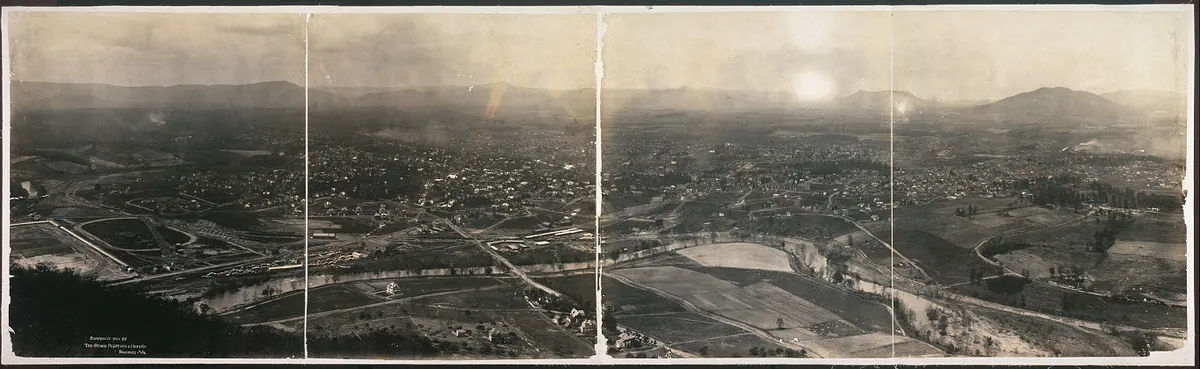
Big Lick was a crossroads village when Gish built. In 1882, the Norfolk and Western Railway chose it as the site of corporate headquarters and railroad shops. Within two years, the settlement had become the City of Roanoke. The population grew by twenty-two times in the 1880s. The railroad brought boomtown transformation — most of what Big Lick had been disappeared under what came next.
Gish's house endured. It stands in Old Southwest now, a private residence visible from the street, the physical link between the village at the salt lick and the railroad city that replaced it.
- ·The Gish House is the oldest surviving building in Roanoke, built 1834.
- ·Federal-style brick home built by Alexander Gish when the settlement was called Big Lick.
- ·Gish ran a tavern and stagecoach stop on the Great Road.
- ·The physical link between the crossroads village and the railroad city that replaced it.
- ·Visitor tip: located in Old Southwest; private residence but visible from the street.
More archive
Memories
Editorial content compiled with AI assistance. Place details verified against public records.