Before Roanoke was a city, it was a village called Big Lick. In 1882, the Norfolk and Western Railway chose it as the junction for its new main line, relocated its headquarters there, and built the Roanoke Shops. Within two years, Big Lick had incorporated as a city. The railroad didn't just pass through — it conjured the place.
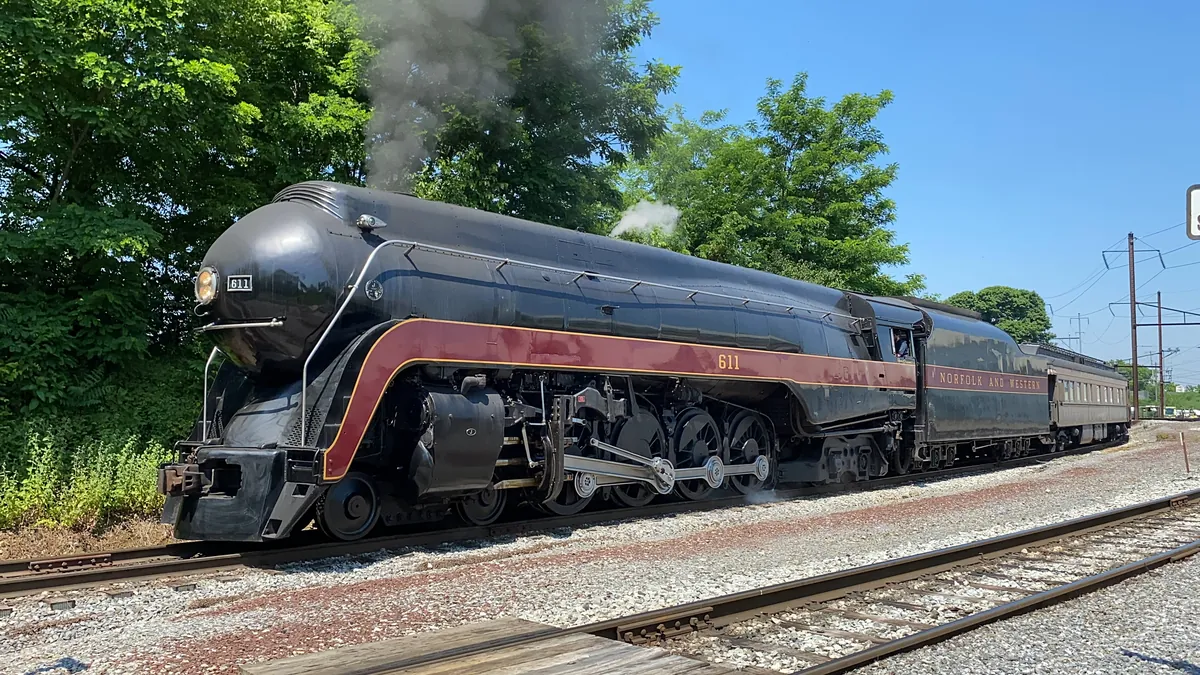
What made the Shops unusual was what happened inside them. The N&W designed and built its own steam locomotives, a practice rare outside Britain and nearly unheard of among American railroads. The Class J 611 and Class A 1218 were both built here, in East End, by craftsmen who refined their designs over decades. The Shops were large enough and complete enough that the N&W needed only one other heavy repair facility, in Portsmouth, Ohio, to cover the western end of its system. Thousands worked here at peak.
Coal ran through everything. It was the primary commodity the railroad hauled, and for years it powered the locomotives that hauled it. That loop kept steam alive at N&W longer than anywhere else in the country — the railroad held out until 1960, making it the last major American Class I railroad to abandon steam for diesel. The Roanoke Shops kept building and repairing rolling stock until Norfolk Southern closed them in 2020, ending 139 years of operations.
The N&W's locomotive work earned it nicknames: "King Coal," "British Railway of America." Both stuck because both were earned here.
Most of the original shop buildings survive in East End as industrial conversions. The district is actively redeveloping. A self-guided drive-by works, or check whether the Virginia Museum of Transportation is running Rail Heritage tours — the interpretive context matters if you want to understand what, exactly, this city was built to do.
- ·The N&W Locomotive Shops in East End were among the largest railroad manufacturing complexes in the South.
- ·At peak, the shops employed thousands building and repairing coal-hauling engines.
- ·The Class J 611 and Class A 1218 were both built here.
- ·Most of the shop buildings survive as industrial conversions today.
- ·Visitor tip: East End is actively redeveloping; self-guided drive-by or check Rail Heritage tours.
Memories
Editorial content compiled with AI assistance. Place details verified against public records.