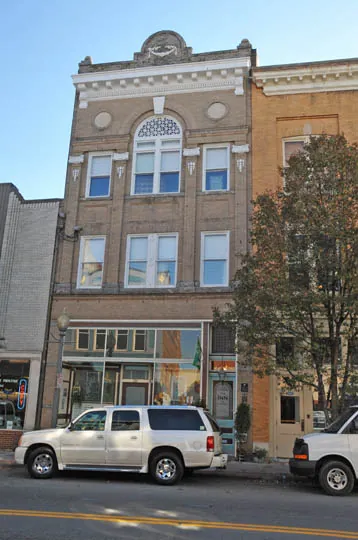
The Norfolk and Western Railway made Roanoke a boomtown in 1882 — Big Lick became a city in two years, railroad money pouring into downtown. Campbell Avenue got the result: five three-story brick buildings over stone foundations, built between 1892 and 1909, Beaux Arts and Tudor Revival details for the new merchant class. The Victorian storefronts held the city's commercial spine through the middle of the 20th century, then nearly emptied when retail fled to the suburbs in the 1970s.
The revival started with the market and spread block by block. In 1991, the street earned listing on the National Register of Historic Places as the Campbell Avenue Complex. Now it's dense with restaurants and bars, walkable from the City Market. Campbell Avenue on a Saturday evening is the best argument that small downtowns can come back — the storefronts are full again, the sidewalks crowded, the railroad money's architecture doing the work it was built for.
- ·Downtown Roanoke's main commercial street — cycled through boom, bust, and revival.
- ·The Victorian storefronts were built for railroad money in the 1890s.
- ·The street nearly died when retail fled to the suburbs in the 1970s.
- ·The revival started with the market and spread block by block.
- ·Campbell Avenue on a Saturday evening is the best argument that small downtowns can come back.
- ·Walkable from the City Market. Dense with restaurants and bars.
Memories
Editorial content compiled with AI assistance. Place details verified against public records.