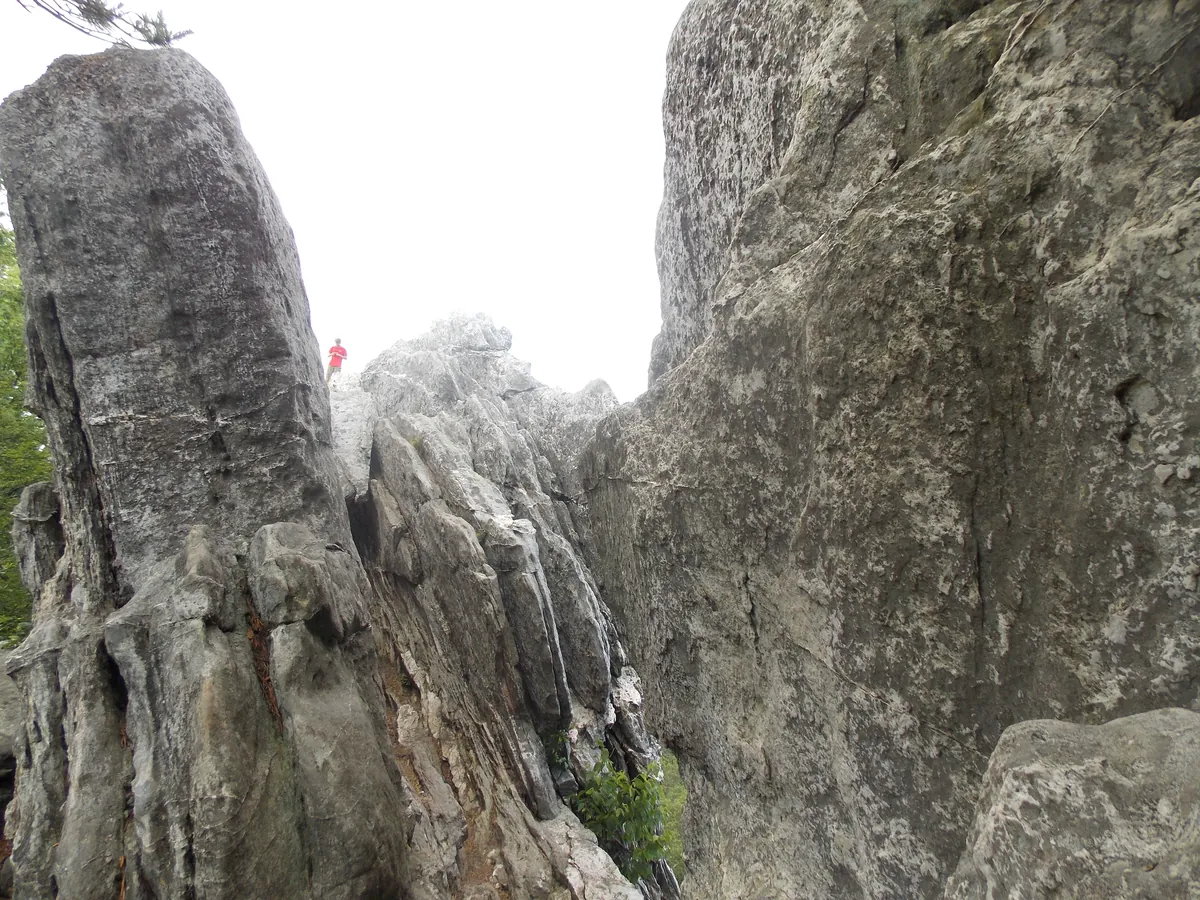
Roanoke sits in the Blue Ridge because the mountains were already here when the railroads arrived—a city built in the lap of older geology. The Dragon's Tooth is what that geology looks like when it refuses to settle: a 35-foot spire of Tuscarora sandstone jutting from the ridgeline like a broken tooth, the kind of feature that makes you wonder what the rest of the jaw looked like before erosion had its way.
This is the most technical of the Virginia Triple Crown hikes. The 4.6-mile round trip from the Route 311 trailhead comes with significant elevation gain, and the summit scramble requires hands on rock. The final approach is exposed—not recommended for those with vertigo. You are committed to the stone, and the stone does not care.
The reward is a 360-degree view from a rock pillar that feels like the edge of the world. You stand where the ridge cracked and a single tooth of sandstone stayed standing. What you see from the top is the same range that shaped Roanoke's location, that determined where the rails would go, where the city would form. The Dragon's Tooth doesn't care about any of that. It was here first, and it will be here when the trails wash out. You go because it's still there, still sharp, still asking you to put your hands on it and climb.
- ·A 35-foot spire of Tuscarora sandstone jutting from the ridgeline like a broken tooth.
- ·The most technical of the Virginia Triple Crown hikes — the summit scramble requires hands on rock.
- ·4.6-mile round trip from the Route 311 trailhead with significant elevation gain.
- ·Not recommended for those with vertigo; the final scramble is exposed.
- ·The reward is a 360-degree view from a rock pillar that feels like the edge of the world.
Memories
Editorial content compiled with AI assistance. Place details verified against public records.