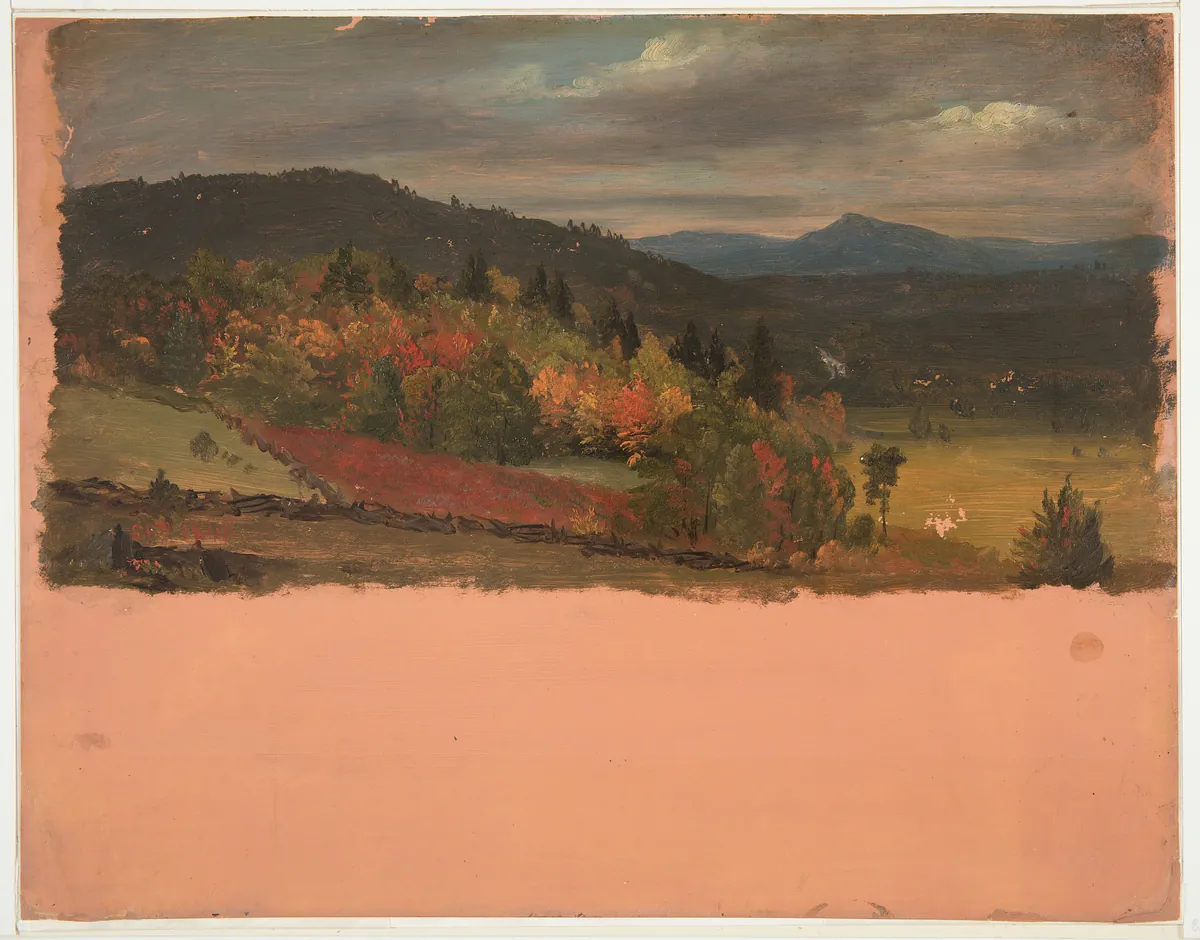
The only one-way road on the entire 469-mile Blue Ridge Parkway is a four-mile loop, and it exists because someone in the National Park Service understood that a road climbing to 2,161 feet deserved more than a turnaround. Built in the 1960s as a scenic detour off milepost 120, it was kept one-way to manage congestion — a small act of design that changes the whole experience.
The mountain was called Yellow Mountain before it took the name of the valley below. That valley has a story worth knowing before you drive up into it. In 1882, the Norfolk and Western Railway chose a small town called Big Lick for its corporate headquarters and railroad shops. Within two years, the town had become the City of Roanoke. In the 1880s, the population grew by twenty-two times. The railroad built this place, and the place grew around the railroad for a century until N&W moved its headquarters out in 1982. What's spread across the valley floor when you reach the summit is the result of all of that — a city conjured by infrastructure, still here.
Two overlooks sit on the summit ridge, with views west over Roanoke and north. At the top, walk fifty yards and you have the whole valley in context. Geologically, there's a crater-like formation near the east end of the summit ridge that nobody has fully explained — a detail the mountain keeps to itself.
The road closes in winter snow. Access is free. The mountain sits two miles south of the Roanoke River and one mile east of the Parkway itself. Go for the drive. Stay for the view that puts the railroad city — and everything it became — into a single frame.
- ·The only one-way road on the entire 469-mile Blue Ridge Parkway.
- ·A 4-mile loop that climbs to 2,161 feet with overlooks every half mile.
- ·Built in the 1960s as a scenic detour; the NPS kept it one-way to reduce congestion.
- ·At the summit, walk 50 yards to a view of the Roanoke Valley that puts the whole city in context.
- ·Accessible from milepost 120 on the Parkway.
- ·Free access. Closed in winter snow.
Memories
Editorial content compiled with AI assistance. Place details verified against public records.