# Frogmore Cotton Plantation & Gins
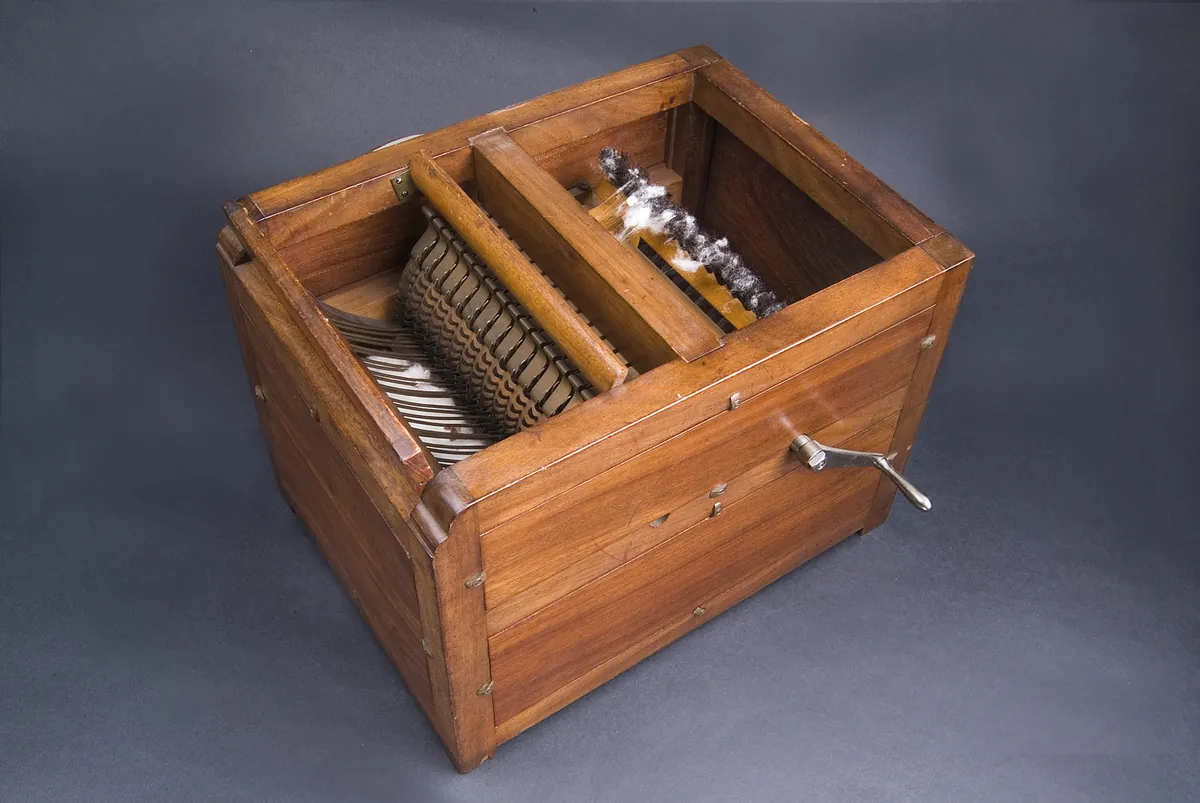
Two cotton gins stand on this property—one powered by 1800s steam, one by modern computer controls—and both process cotton every autumn. The contrast is the point. Frogmore is a working plantation that refuses to smooth over what made it work: enslaved labor, then sharecropping, then machines that made human labor cheap enough to discard.
Guided tours move through 18 original structures. The slave cabins are still standing. So is the overseer's office. So is the planter's home. The spatial arrangement tells the story before a word is spoken—who lived where, who watched whom, who profited. The tours cover all three labor systems that kept cotton moving: slavery, sharecropping, and mechanized farming. This is not a sanitized heritage site. It is a working operation that processes cotton on-site every autumn, using equipment from different centuries to show exactly how the crop moved from field to bale.
The site is listed on the National Register of Historic Places. Tours run by reservation only. Frogmore sits at 11054 Highway 84, a rural stretch where the architecture of control has not been renovated into something easier to look at. If you want to understand what "King Cotton" actually required—not in metaphor, but in wood and iron and human arrangement—this is where the accounting is still visible.
- ·Working cotton gin—both 1800s steam and modern computer-controlled
- ·18 original structures including slave cabins
- ·Tours cover slavery, sharecropping, and mechanized farming
- ·Cotton processed on site every autumn
- ·National Register of Historic Places
- ·11054 Highway 84, Frogmore—tours by reservation
Memories
Editorial content compiled with AI assistance. Place details verified against public records.