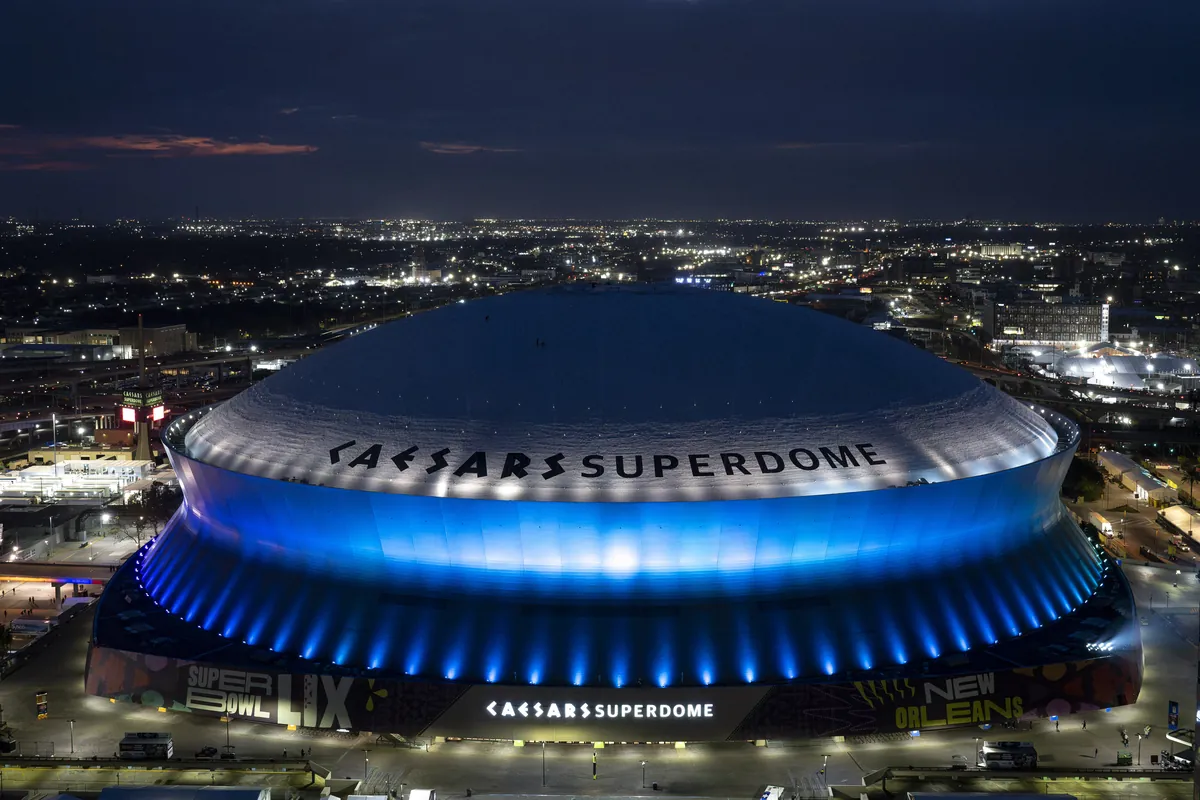
New Orleans has hosted eleven Super Bowls — second only to Miami — because the city treats a weeklong influx of 150,000+ visitors as normal operating procedure. The first was Super Bowl IV at Tulane Stadium in 1970. The most recent was Super Bowl XLVII at the Superdome in 2013.
The city wins the bid repeatedly for a combination the NFL values: an indoor mega-venue, a walkable hotel district, 24-hour bars, and world-class dining. New Orleans was built to absorb crowds. The delta city that served as the largest port in the Southern United States throughout the 19th century — exporting most of the nation's cotton output and other farm products to Western Europe and New England — learned early how to move people and feed them. Annual Mardi Gras celebrations and a convention infrastructure that survived Hurricane Katrina mean the city knows how to manage mass arrivals without breaking stride.
The 2013 Super Bowl featured a 34-minute power outage. The Beyoncé halftime show was blamed but never proven responsible. The game resumed. The city moved on. That's the point — New Orleans doesn't treat the Super Bowl as an emergency. It treats it as February.
- ·New Orleans has hosted 11 Super Bowls — second only to Miami in total count.
- ·The first was Super Bowl IV at Tulane Stadium in 1970; the most recent was Super Bowl XLVII at the Superdome in 2013.
- ·The city's combination of indoor mega-venue, walkable hotel district, 24-hour bars, and world-class dining makes it a perennial host.
- ·The 2013 Super Bowl featured a 34-minute power outage — the Beyoncé halftime show was blamed but never proven responsible.
- ·New Orleans treats a weeklong influx of 150,000+ visitors as normal operating procedure.
Memories
Editorial content compiled with AI assistance. Place details verified against public records.