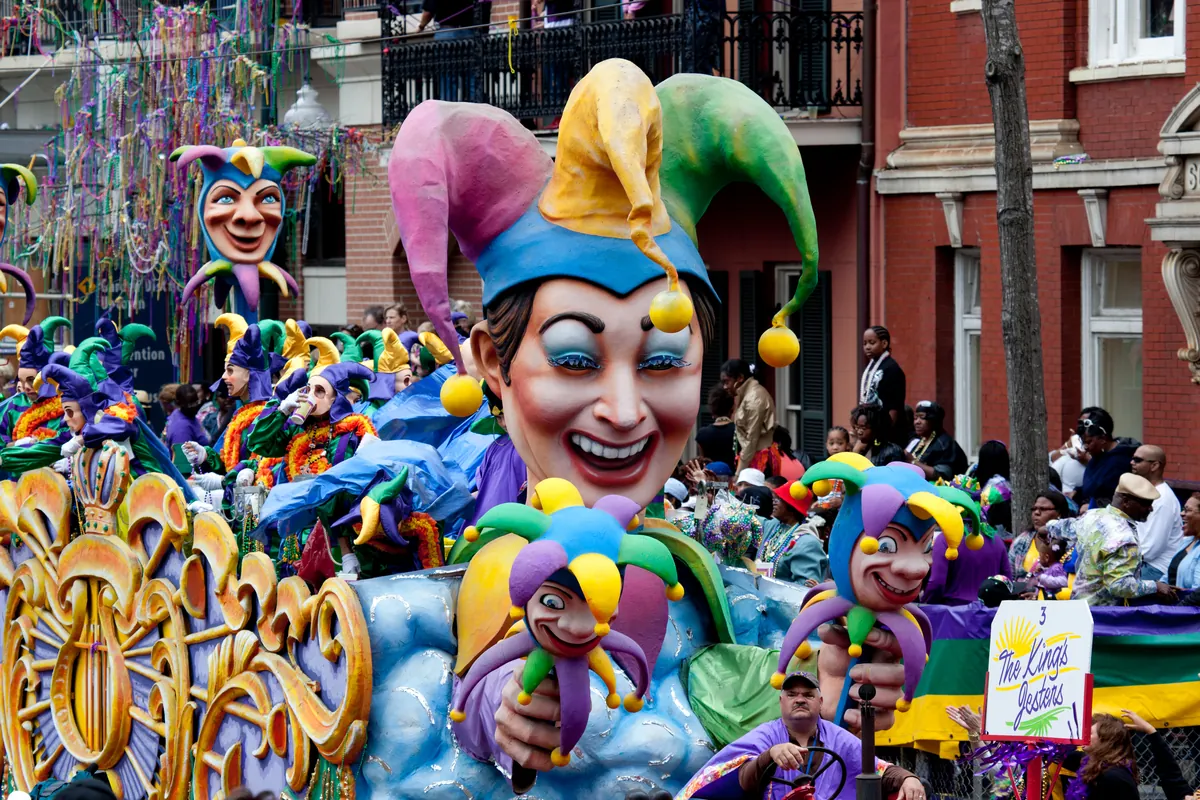
The French had been celebrating Mardi Gras in Louisiana since 1699. By 1743 the custom of Carnival balls was already established in New Orleans. But the city's first formal krewe parade didn't happen until 1857, when the Mistick Krewe of Comus staged a torchlit procession through the streets. That krewe was founded in 1856 by 21 businessmen who gathered in the French Quarter to organize a secret society. According to one historian, Comus was aggressively English in its celebration of what New Orleans had always considered a French festival—a transfer of cultural and economic power made visible on the street.
What happens on Bourbon Street during Carnival is a 20th-century tourist phenomenon. The actual cultural event is on St. Charles Avenue and Canal Street, where the major parades roll. Walking parades take place downtown in the Faubourg Marigny and French Quarter in the weekends preceding Mardi Gras Day. The practice of exposing female breasts in exchange for beads was mostly limited to tourists in the upper Bourbon Street area. In the last decades of the 20th century, the rise of commercial videotapes catering to voyeurs helped encourage the tradition. Social scientists studying "ritual disrobement" found 1,200 instances of body-baring in exchange for beads or other favors at Mardi Gras 1991. Flashers on balconies cause crowds to form in the streets of the French Quarter—a neighborhood locals generally avoid on Mardi Gras Day. The balcony scenes are concentrated between St. Ann and Dumaine Streets.
Mardi Gras brings 1.4 million visitors to New Orleans. The crowds are largest on Mardi Gras Day and the weekend before. It's worth seeing once—not because it's the best of Carnival, but because understanding what it is and what it isn't is part of understanding the city. Bourbon Street is free. Just show up.
- ·Bourbon Street's Mardi Gras reputation is the most visible and least representative version of Carnival.
- ·The real tradition started in 1857 when the Mistick Krewe of Comus organized the first torchlit parade.
- ·What happens on Bourbon during Carnival is a 20th-century tourist phenomenon; the actual cultural event is on St. Charles, in Central City, and in the Tremé.
- ·Worth seeing once — not because it's the best of Carnival, but because understanding what it is and isn't is part of understanding New Orleans.
- ·The balcony scenes that define Bourbon Street at Mardi Gras are concentrated between St. Ann and Dumaine Streets.
- ·Bourbon St, French Quarter. Free — just show up. The crowds are largest on Mardi Gras day and the weekend before.
Memories
Editorial content compiled with AI assistance. Place details verified against public records.