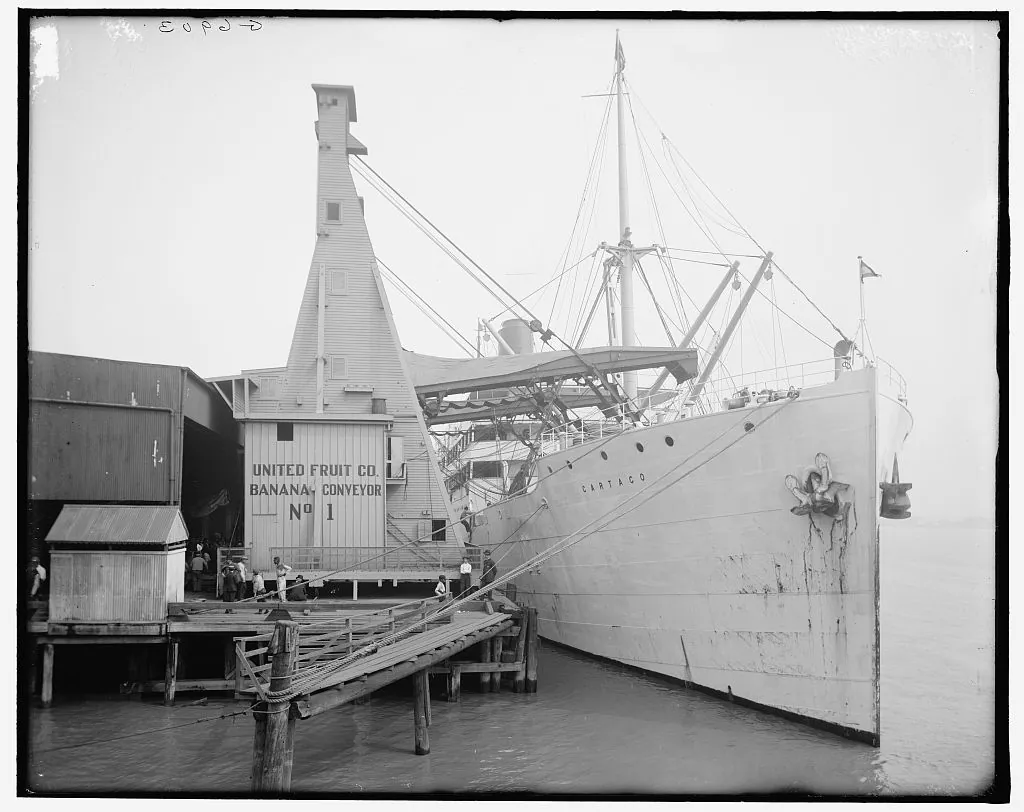
Captain Lorenzo Baker began importing Jamaican bananas through New Orleans in 1870, and within three decades the city became the world's largest banana port. By 1900, no other port on earth handled more of the fruit. The timing was not accidental — New Orleans had spent the 19th century as the largest port in the Southern United States, exporting most of the nation's cotton and farm products to Western Europe and New England. The infrastructure built to move one agricultural commodity outward became the infrastructure that moved another inward.
The United Fruit Company was born from the New Orleans banana trade. United Fruit later became Chiquita. The industry created the city's Central American immigrant communities — Honduran, Guatemalan, and Belizean — neighborhoods that remain. The banana connection explains both the city's Latin American cultural ties and the appearance of Bananas Foster on the dessert menu.
To stand in the Warehouse District is to stand where a fruit most Americans had never seen became ordinary. The trade ran through these wharves. The ships docked here. The workers who unloaded the green bunches built lives here. New Orleans had been a place of many tongues for thousands of years; the banana trade added new ones.
- ·Captain Lorenzo Baker began importing Jamaican bananas through New Orleans in 1870, making the city the banana capital of the U.S.
- ·The United Fruit Company (later Chiquita) was born from the New Orleans banana trade.
- ·By 1900, New Orleans handled more banana imports than any port in the world.
- ·The industry created the city's Central American immigrant communities — Honduran, Guatemalan, and Belizean.
- ·The banana connection explains both the city's Latin American cultural ties and Bananas Foster on the dessert menu.
Memories
Editorial content compiled with AI assistance. Place details verified against public records.