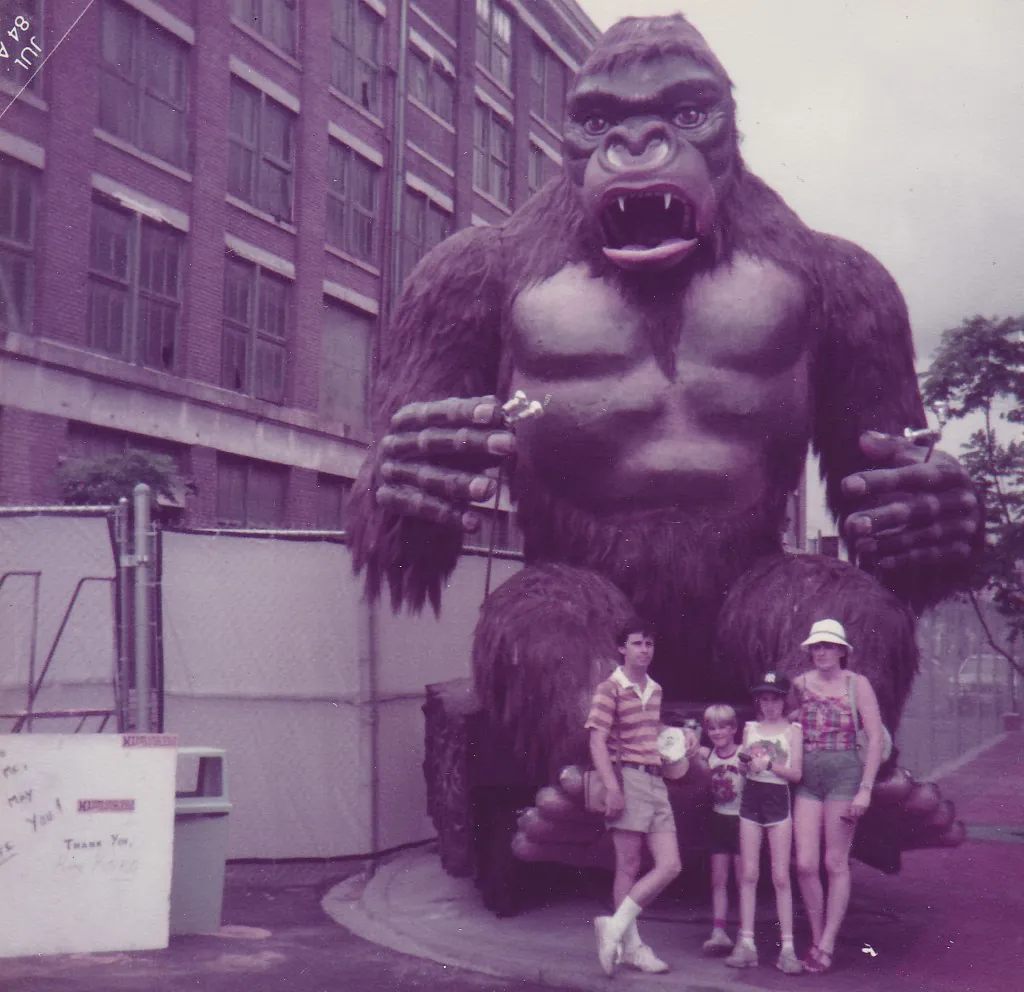
Most world's fairs leave behind a building or two. The 1984 Louisiana World Exposition left behind the bones of a neighborhood.
The fair opened May 12, 1984, on an 84-acre stretch of former railroad yards along the Mississippi River. The theme was "The World of Rivers: Fresh Water as a Source of Life." An 84-acre site was cleared of rundown warehouses. The government of Louisiana spent $5 million. The total cost to host the fair reached $350 million. It was a Class B exposition as defined by the Bureau International des Expositions — no major exhibits like the 1964–65 New York World's Fair had built.
The fair drew 7 million visitors against projections of 11 million. The first month alone came in 30,000 people short of predictions. Paychecks started bouncing. Only government intervention kept the gates open through the scheduled November 11 close. The 1984 Louisiana World Exposition became the only world's fair to declare bankruptcy during its operation. Competition likely came from the 1982 World's Fair in Knoxville, the 1984 Summer Olympics in Los Angeles, and the 1982 opening of Epcot. As of 2025, no world's fair has been held in the United States since.
The Mississippi Aerial River Transit was a gondola lift across the river from the Warehouse District to Algiers. The Space Shuttle Enterprise was on display. Seymour D. Fair — a large white costume pelican — was the first official mascot in the history of world expositions. The Wonderwall, designed by architect Charles Willard Moore and his partner William Turnbull, became one of the fair's most remembered pieces of post-modern architecture.
The fair's Louisiana Pavilion reopened in 1985 as the Ernest N. Morial Convention Center. Most other structures and the gondola were demolished after the fair closed. The monorails were moved to Zoo Miami. A steel and fiberglass bust of Neptune and the head of one of his alligators — remnants of Bridge Gate, one of the fair's entrances — stand at the corner of Tchoupitoulas and Henderson streets.
What survived was less visible and more structural. Old warehouses renovated for the fair became commercial and residential buildings. Streets were improved. Buildings meant to cater to fair guests were converted to other uses. The empty industrial zone became the arts-and-dining Warehouse District, anchored by the Julia Street gallery row and the Riverwalk mall. A bronze commemorative plaque was unveiled at Julia Street and Convention Center Boulevard on November 11, 2014, the fair's 30th anniversary.
Go to see what a financial disaster builds when it doesn't get torn down.
- ·The 1984 World's Fair went bankrupt before closing day, leaving $100 million in debt.
- ·The Convention Center, Julia Street gallery row, and the Riverwalk mall all emerged from the fair's footprint and infrastructure.
- ·Attendance fell far short of projections — roughly 7.3 million visitors against an expected 11 million.
- ·The empty warehouses cleared for the fair became the arts-and-dining Warehouse District that exists today.
- ·The fair's theme was 'The World of Rivers: Fresh Water as a Source of Life.'
Memories
Editorial content compiled with AI assistance. Place details verified against public records.