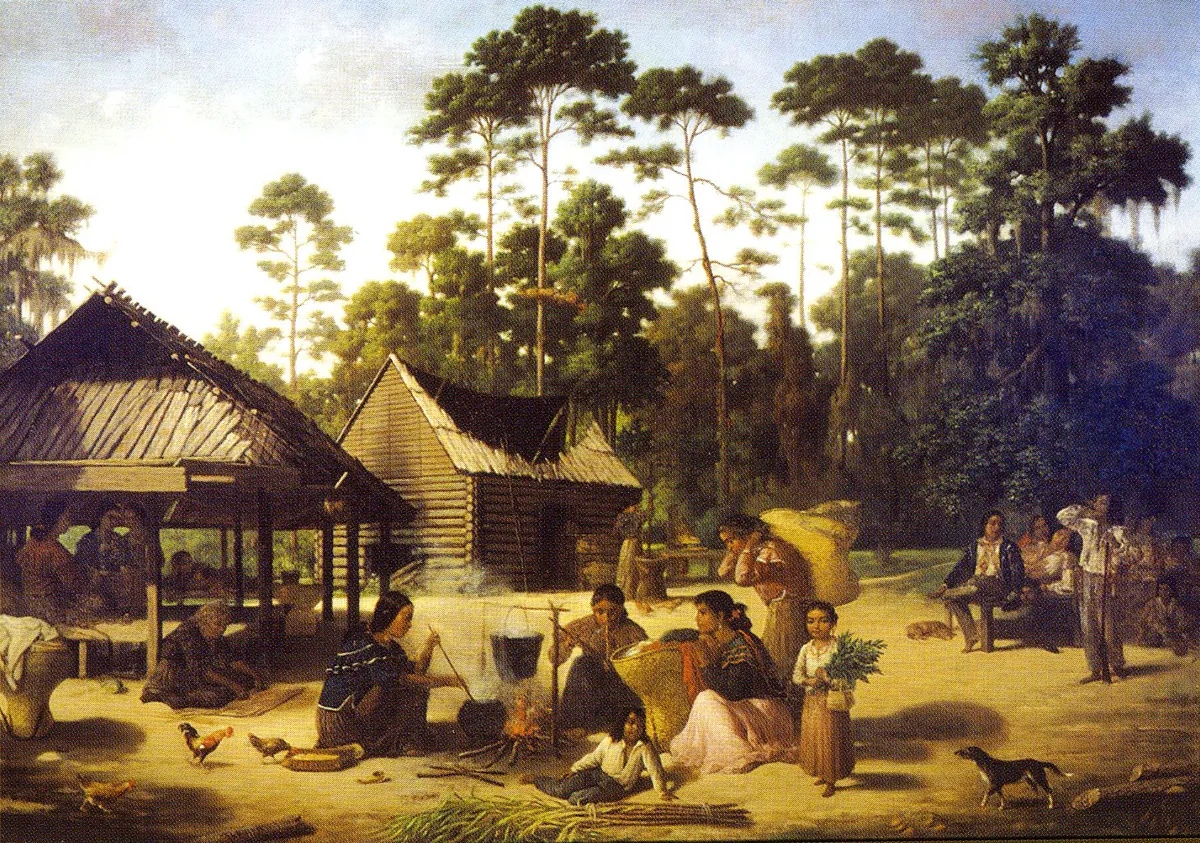
The Chitimacha, Houma, Choctaw, and Natchez nations called it Bulbancha — "place of many tongues" in Choctaw. The name describes what already existed: a multilingual trading hub that functioned for thousands of years before the French arrived in the 1690s. Archaeological evidence shows settlement here dating back to at least 400 CE. The Mississippian culture peoples built mounds and earthworks in the area. Later, Native Americans created a portage between the headwaters of Bayou St. John and the Mississippi River, which became an important trade route.
When Jean-Baptiste Le Moyne de Bienville founded La Nouvelle-Orléans in 1718, he was building on ground the river had deposited around 2200 BCE and a trade network Native peoples had maintained for over a millennium. The city's polyglot character wasn't invented by the French.
Contemporary Native artists and scholars have reclaimed the name. Bulbancha Is Still a Place runs programming, publications, and events year-round — a working effort to make the name functional again, not commemorative. New Orleans was a place of many languages before it was New Orleans. It still is.
- ·Before it was La Nouvelle-Orléans, the Chitimacha, Houma, Choctaw, and Natchez nations called this Bulbancha.
- ·The name means 'place of many languages' — a multilingual trading crossroads predating European contact by centuries.
- ·Contemporary Native artists and scholars have reclaimed the name.
- ·The city's polyglot character wasn't invented by the French.
- ·Visitor tip: follow Bulbancha Is Still a Place for programming, publications, and events year-round.
Memories
Editorial content compiled with AI assistance. Place details verified against public records.