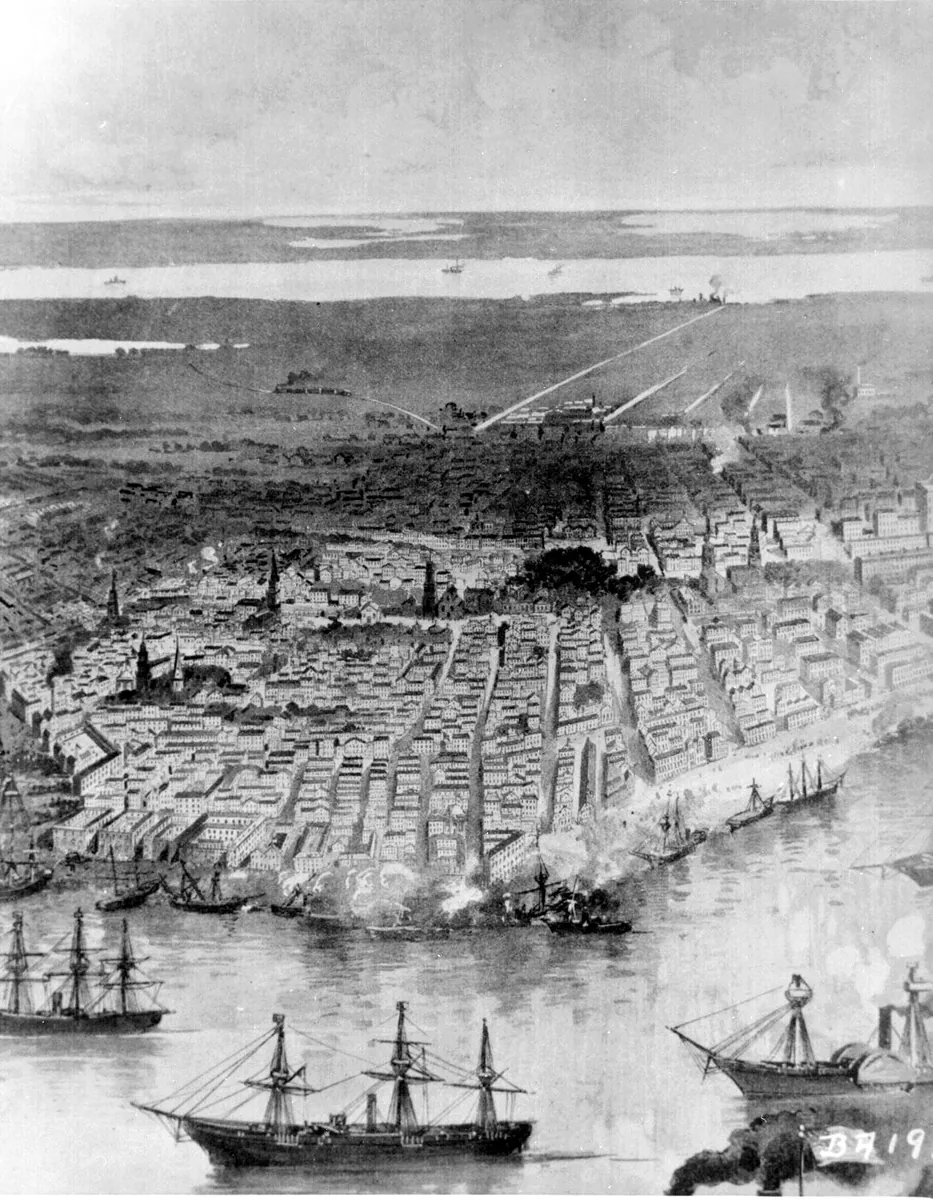
Admiral David Farragut's fleet ran past Forts Jackson and St. Philip on the night of April 24, 1862, losing only one ship in the passage. New Orleans—population over 168,000, the largest city in the Confederacy—fell without a land battle.
When Union forces reached the city, Mayor John Monroe refused to formally surrender. Union marines raised the U.S. flag over City Hall themselves.
The fall of New Orleans cut the Confederacy off from its most important port and commercial hub. The city spent nearly three years under occupation—longer than any other major Confederate city. One night's passage on the river decided the fate of a city that had taken generations to build into the South's commercial center. The fleet got through. The occupation that followed lasted until the war's end.
- ·Farragut's fleet ran past Forts Jackson and St. Philip on the night of April 24, 1862, losing only one ship in the passage.
- ·New Orleans was the largest city in the Confederacy — population over 168,000 — and fell without a land battle.
- ·Mayor John Monroe refused to formally surrender; Union marines raised the U.S. flag over City Hall themselves.
- ·The city spent nearly three years under occupation — longer than any other major Confederate city.
- ·The fall of New Orleans cut the Confederacy off from its most important port and commercial hub.
Memories
Editorial content compiled with AI assistance. Place details verified against public records.